
17-04-2021 11:45
Karl Soler KinnerbäckHi!Could this be a Nigrograna? I first thought it
12-04-2021 19:35
Mirek GrycHello everyone.I'm not sure if it was a branch of

16-04-2021 22:29
 Yannick Mourgues
Petites touffes d'hyphes partant d'une base noirâ
16-04-2021 16:33
 Edvin Johannesen
Hi! Black (when dry), solitary or somewhat cluste
16-04-2021 16:55
Karl Soler KinnerbäckHi!I believe this to be Massariosphaeria alpigena.
16-04-2021 14:58
 Chris Yeates
Bonjour tous Clearly not a Micropeziza but the fo
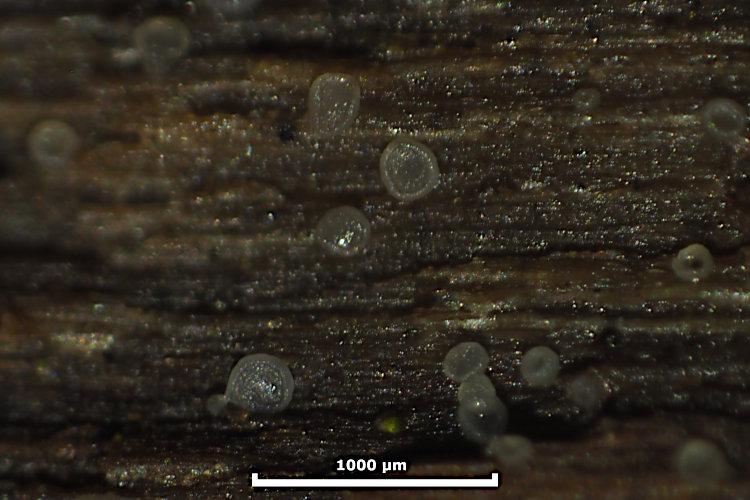
Tiny discos on Populus
Juuso Äikäs,
17-04-2021 19:34
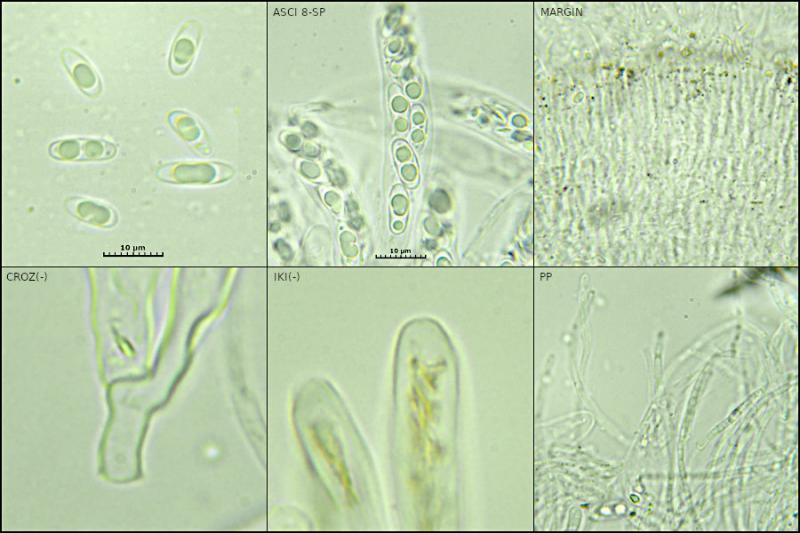
The spores measure 9.4 - 13.1 × 3.9 - 4.2.
Any idea what might be the species/genus?
Hans-Otto Baral,
18-04-2021 16:10

Re : Tiny discos on Populus
This would require a section. Is the excipulum porrecta? gelatinized?
Perhaps a Hyaloscypha (minuta, intacta...)?
Juuso Äikäs,
19-04-2021 15:20
Re : Tiny discos on Populus
Thank you for the reply.
Unfortunately these are so small that I won't be able to make a section. But I studied the sample a bit more.
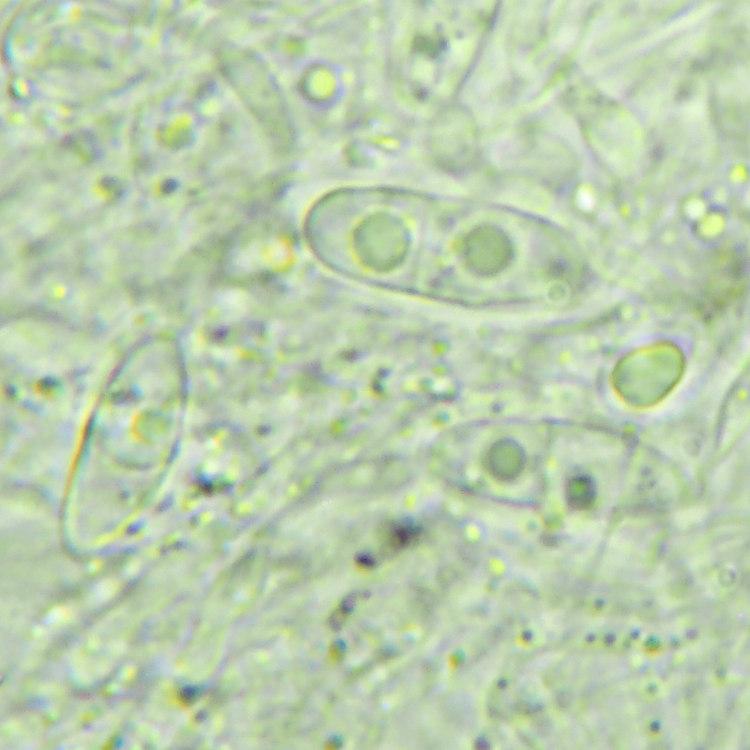
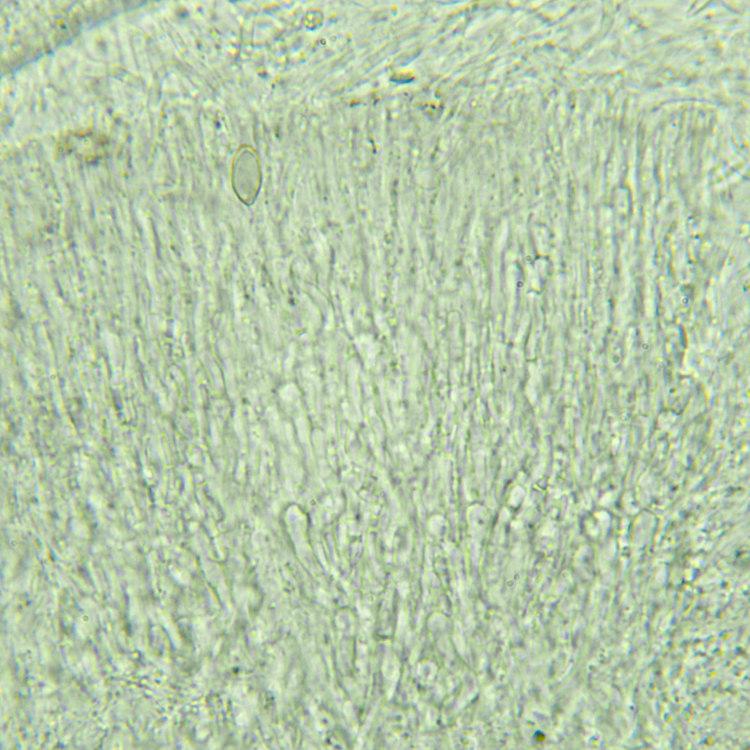
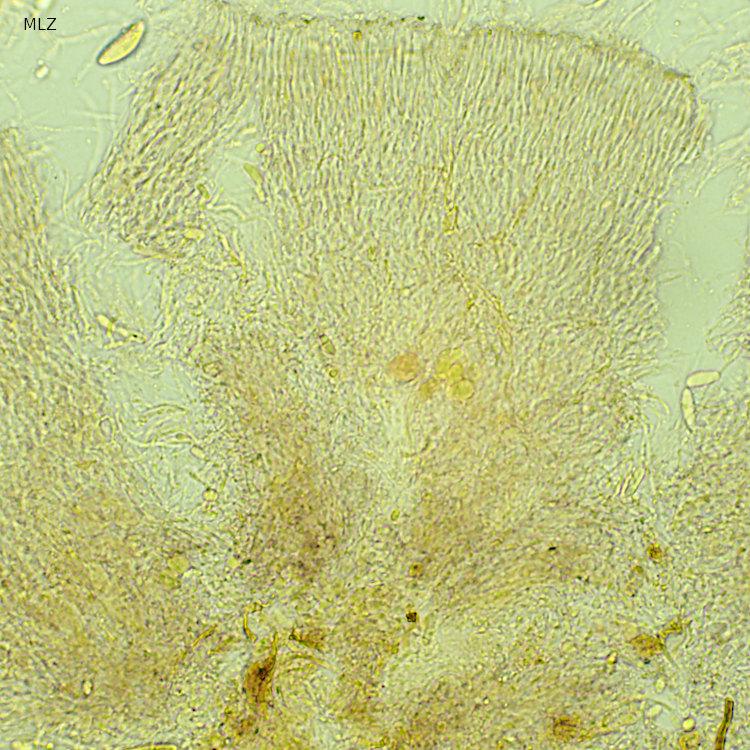
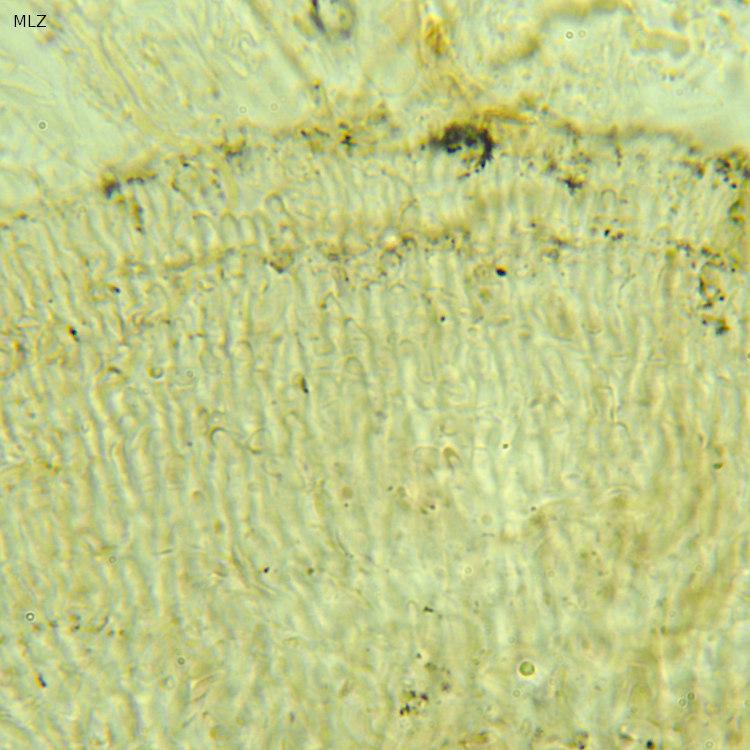
Some spores have a septum and there is a rection with the excipulum and the margin with Melzers'. I measured three asci and they were 57 - 65 × 9 - 10.5 (H2O).
H. minuta isn't found on our species list or in the monograph, but H. intacta is. It seems to fit in other parts, but there weren't even short hairs to be found. Is there a hairless version of this?
Unfortunately these are so small that I won't be able to make a section. But I studied the sample a bit more.
Some spores have a septum and there is a rection with the excipulum and the margin with Melzers'. I measured three asci and they were 57 - 65 × 9 - 10.5 (H2O).
H. minuta isn't found on our species list or in the monograph, but H. intacta is. It seems to fit in other parts, but there weren't even short hairs to be found. Is there a hairless version of this?
Hans-Otto Baral,
19-04-2021 16:15
Re : Tiny discos on Populus
H. minuta is newly combined and you find it in my Hyaloscypha folder. Yes, it is a hairless member or may have very very short hairs. It is not easy to be separated from H. intacta. Sequences exist, and as a preliminary result the two species are the same. Of course, the types are relevant in this concern. That of H. minuta I have redescribed in detail, and that of intacta Seppo has.
Strange is that the two species were described in the same year.
B.t.w., dextrinoid reactions of the ectal excipulum have variously been recorded by Huhtinen.