
27-04-2026 20:52
 Lothar Krieglsteiner
Found on hanging tiwg of Olea europaea in dried-ou
27-04-2026 18:48
Tony MoverleyCollected 23rd April 2026, Norfolk, EnglandSwarms
27-04-2026 17:41
Lothar Krieglsteiner
.. Algarve, same leaf than the last post. The con
27-04-2026 18:05
Lothar Krieglsteiner
... still attached at standing tree. The green con
27-04-2026 17:16
Lothar Krieglsteiner
.. Algarve, moist lying.The conidiomata look like
27-04-2026 12:54
Steve ClementsBonjour. Ce petit champignon blanc résupiné et
27-04-2026 09:59
Pauline. PennaBonjour Can anyone advise me on these pycnidia fo

22-04-2026 20:54
 Enrique Rubio
Hi to everybody.This Pyrenopeziza grew in moist le
Capronia
Enrique Rubio,
28-07-2025 12:34
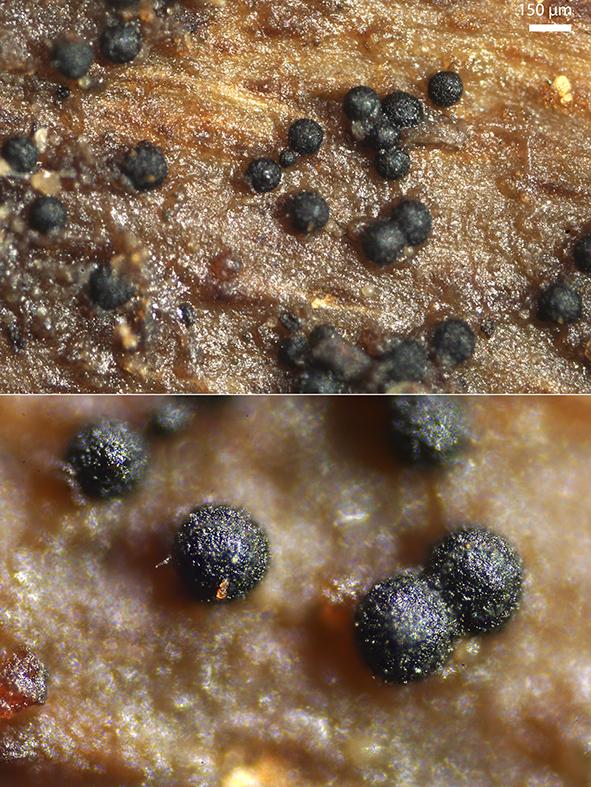
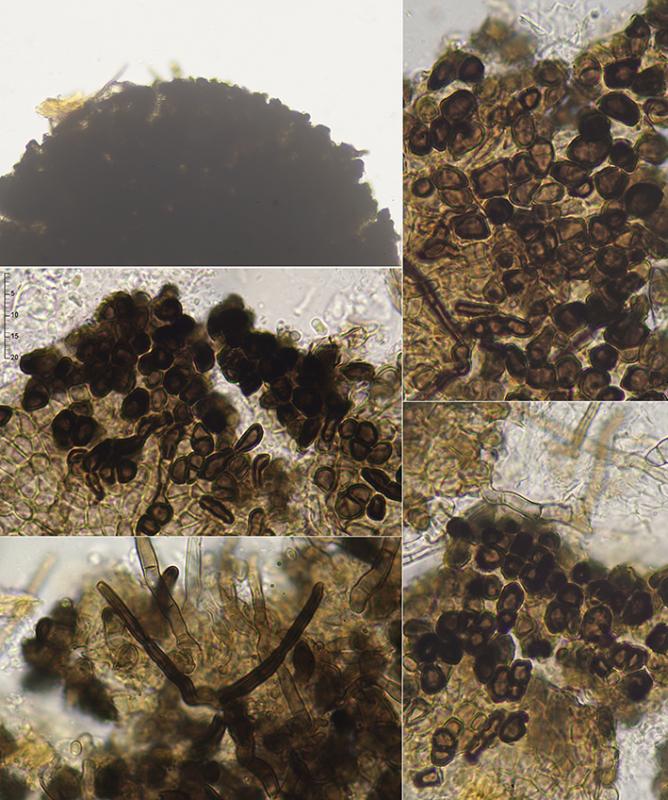
Hi to everybody.I would appreciate any ideas about this small Capronia with small pseudothecia measuring 250-300 microns in diameter, with walls that are barely rough due to the presence of dark, poorly developed protruding cells. Developed hairs are barely present or are very few in number.
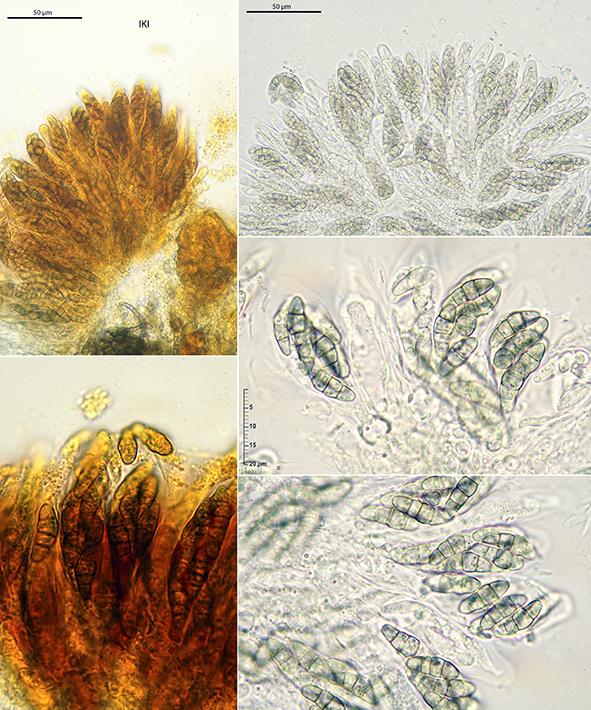
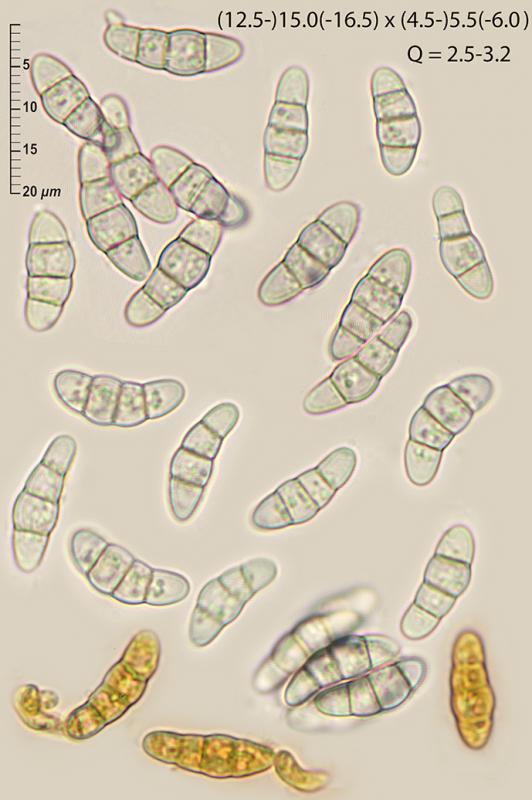
The ascospores are always tri-septate, olive-coloured and generate conidia at maturity and after their expulsion from the asci.
These ascomata grew in small groups on Fagus sylvatica wood in the vicinity of Claussenomyces prasinulus apothecia, but not on them. No other fungi have been seen in the vicinity.
Many thanks in advance for your help.
Enrique Rubio,
28-07-2025 13:08
Re : Capronia
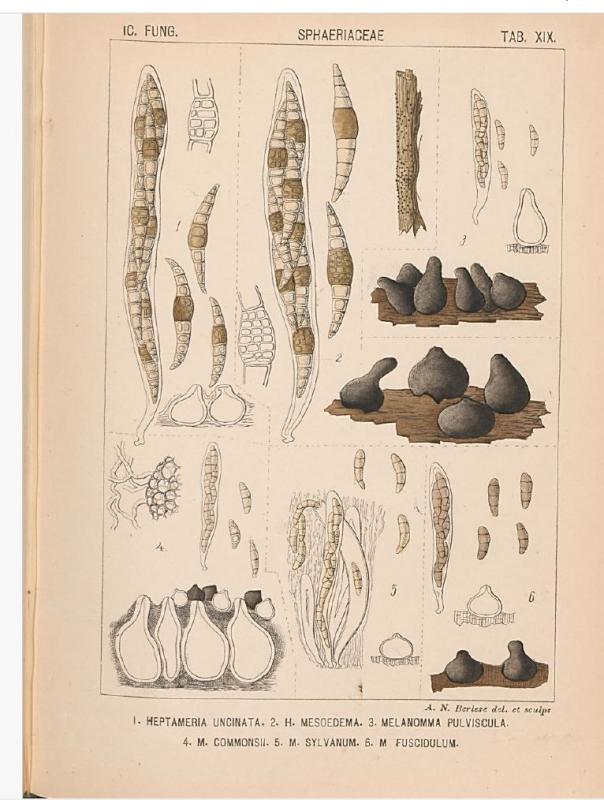
I see some similarities with Berlese's slide of Melanomma (Capronia) commonsii, but my fungus was not on any pyrenomycete at all.
Gernot Friebes,
28-07-2025 17:10
Re : Capronia
Hi, Enrique!
Purely based on morphology and ecology, I think that your collection belongs in the vicinity of C. pilosella. There are various authors who report very similar ascospore measurements, and the development of the setae is known to vary. See, for example, this quote by Untereiner (1997): "ascomata occasionally bearing only dark, protruding cells or entirely lacking setae."
Best wishes,
Gernot
Purely based on morphology and ecology, I think that your collection belongs in the vicinity of C. pilosella. There are various authors who report very similar ascospore measurements, and the development of the setae is known to vary. See, for example, this quote by Untereiner (1997): "ascomata occasionally bearing only dark, protruding cells or entirely lacking setae."
Best wishes,
Gernot
Enrique Rubio,
29-07-2025 18:36
Re : Capronia
Dear Gernot
I believe that spores of pilosella spores are quite different, generally wider, with a higher Q and less curved. But this may just be my personal opinion.Thank you very much for your help.
It is a difficult genus!
I believe that spores of pilosella spores are quite different, generally wider, with a higher Q and less curved. But this may just be my personal opinion.Thank you very much for your help.
It is a difficult genus!
Gernot Friebes,
29-07-2025 19:25
Re : Capronia
Yes, definitely in need of a proper revision...
Best wishes,
Gernot
Best wishes,
Gernot
Enrique Rubio,
29-07-2025 19:30
Re : Capronia
Best wishes, Gernot.