
15-10-2018 18:55
hannie wijersHello, I'd like some help if possibleIn Beilen I
16-10-2018 23:33
Valencia Lopez Francisco JavierHola a todos/asPeziza recolectada en el sur de Esp
03-10-2018 22:13
François BartholomeeusenGood evening forum members,Can this be Hyalorbilia
14-10-2018 19:25
Marja PennanenHi, on a Populus leaf among other things, I found


12-10-2018 20:15
Thorben HülsewigHi there,two week ago i found this asco on pine co
08-10-2018 10:08
Valencia Lopez Francisco JavierHola a todos/asScutellinia recolectada en el sur d
10-10-2018 19:04
 Bernard Declercq
Hi to all,Collected on branch of Rosa sp. in Switz
Trichoderma ot Hypocrea?
hannie wijers,
15-10-2018 18:55
I'd like some help if possible
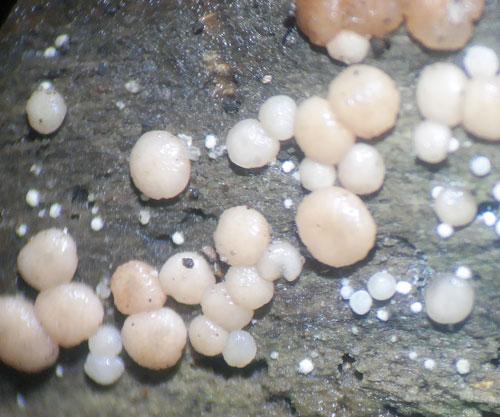
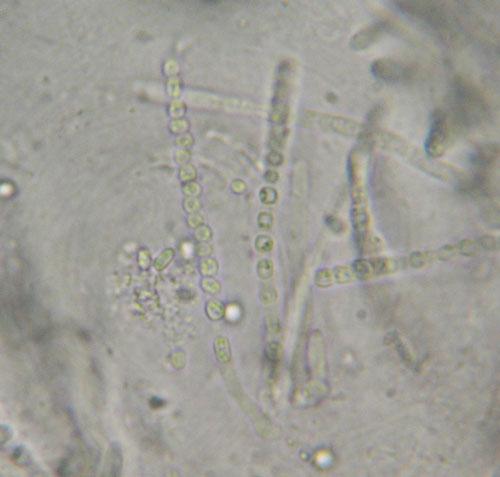
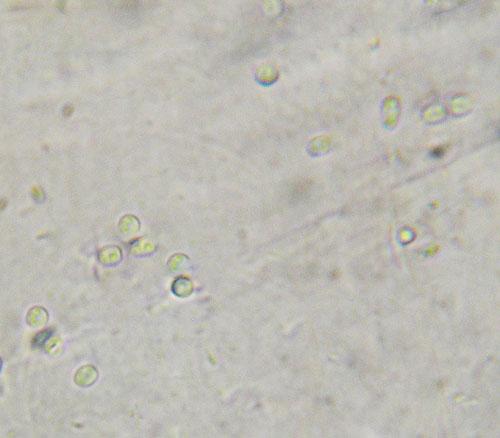
In Beilen I found a sort of compost heap on a twig of Sambucus, most probably these little cushions. I thought of the Hypocrea rufa. This morning under the microscope. 16 tracks in asci. Size of the free spores 3-5 x 3-4.
At another fourum I got suggestions that it possible could be Trichoderma sambuci. I dent some material to somebody to examen, but it got lost by the post.
I searched the web for literature about Hypocrea and Trichoderma. Without succes. Is there someone who can help me so I can close it.
Groeten
Hannie



Marja Pennanen,
16-10-2018 18:20
Re : Trichoderma ot Hypocrea?
Hi Hannie.
try to search with "Hypocrea key to species". I got two fine studies of Walter Jaklitschh first on the list.
Marja
hannie wijers,
16-10-2018 21:30
Re : Trichoderma ot Hypocrea?
thanks Marja, I saw this.
groeten
Hannie
groeten
Hannie
Michel RIMBAUD,
17-10-2018 10:15
Re : Trichoderma ot Hypocrea?
Bonjour,Je profite de ce sujet pour demander si quelqu'un peut me transmettre une clé des Creopus.
Merci d'avance.
Michel
Merci d'avance.
Michel
Christian Lechat,
17-10-2018 11:24

Re : Trichoderma ot Hypocrea?
Salut Michel,
je suppose que tu veux parler des Hypocrea à spores vertes.
Voilà la clé de Chaverri & Samuels.
Bon courage
Amitiés,
Christian
 Cle-des-Hypocrea-a-spores-vertes-Chaverri-amp-Samuels-0001.docx
Michel RIMBAUD,
17-10-2018 11:36
Re : Trichoderma ot Hypocrea?
Salut Christian,
Merci beaucoup pour ce document.
Je n'avais pas réalisé que les Creopus étaient passés dans le genre Hypocrea, oups ! excuse moi.
Sur ce domaine je possède également "Etude et Clé sur les Hypocrea à spores vertes de Walter M. Jaklitsch.
Merci beaucoup pour ce document.
Je n'avais pas réalisé que les Creopus étaient passés dans le genre Hypocrea, oups ! excuse moi.
Sur ce domaine je possède également "Etude et Clé sur les Hypocrea à spores vertes de Walter M. Jaklitsch.