
07-06-2026 15:10
 William Slosse
Hello everyone,On 05-06-26, I found following asco
07-06-2026 12:09
 François Freléchoux
Bonjour, Voici une brève description de ce qui m
05-06-2026 11:02
Thomas Læssøehttps://svampe.databasen.org/observations/10596691
07-06-2026 12:43
Steve ClementsBojour. This was a strange find on a stick on my
12-07-2015 00:05
 Nedim Jukic
This one from the same locality as the previous on
06-06-2026 17:44
Steve ClementsBonjour, This disco was on planed wood 3 x 1.5 cm
14-08-2016 23:15
 Alex Akulov
Dear friendsCan you help me to find the descriptio

04-06-2026 11:36
Gernot FriebesHi,found on Vaccinium myrtillus.Asci: IKI –, 8-s
Nitschkia
Hans-Otto Baral,
09-07-2011 13:43
 Hi all
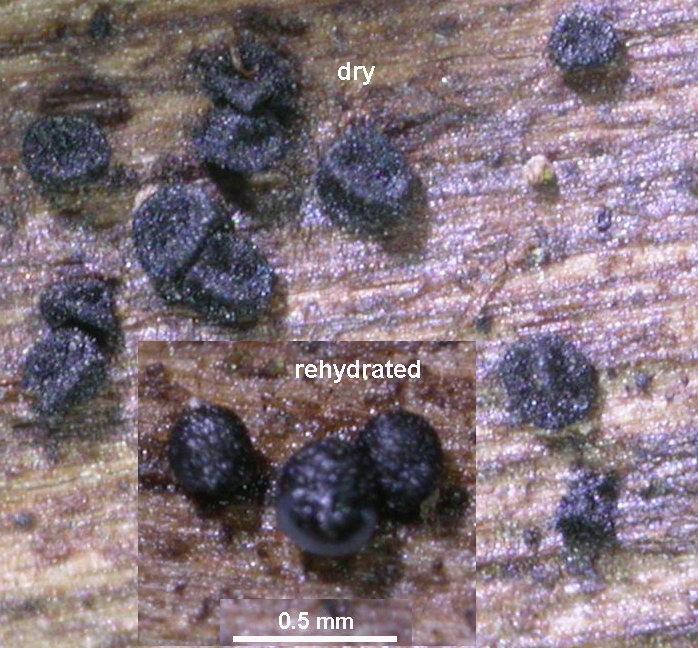
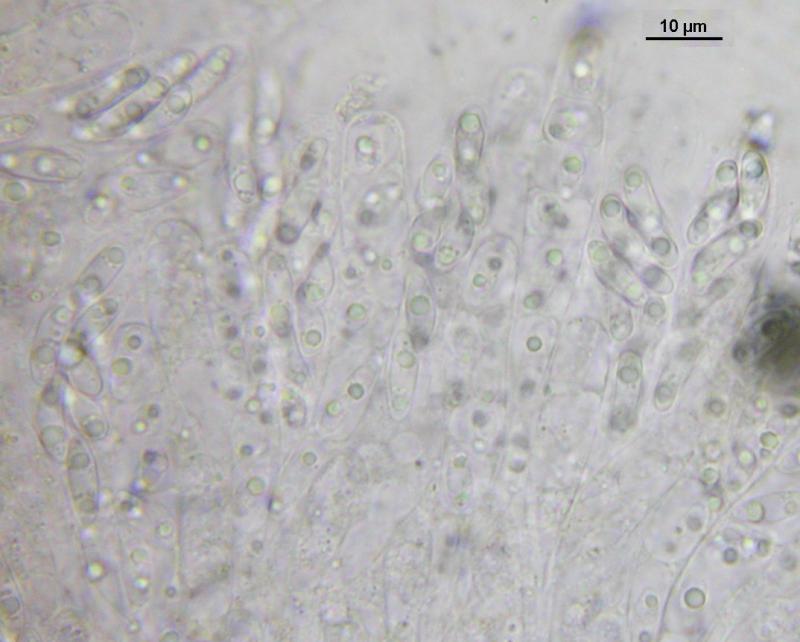
I have collected a Nitschkia? near Sheffleld (Yorkshire), on attached branch of a dead Betula standing in a swamp, with aseptate curved biguttulate spores *11-14 x 3.5-3.8 µm, 8-spored asci, and rather small almost smooth apothecia.
N. confertula would be a choice, but the spores are perhaps too long when I compare Virginia's key (Mycologia 96, 2004, p. 915). I did not yet look at the subicular hyphae which are not evident on the macro.
Any idea?
Zotto
Hans-Otto Baral,
09-07-2011 13:44
Re : Nitschkia
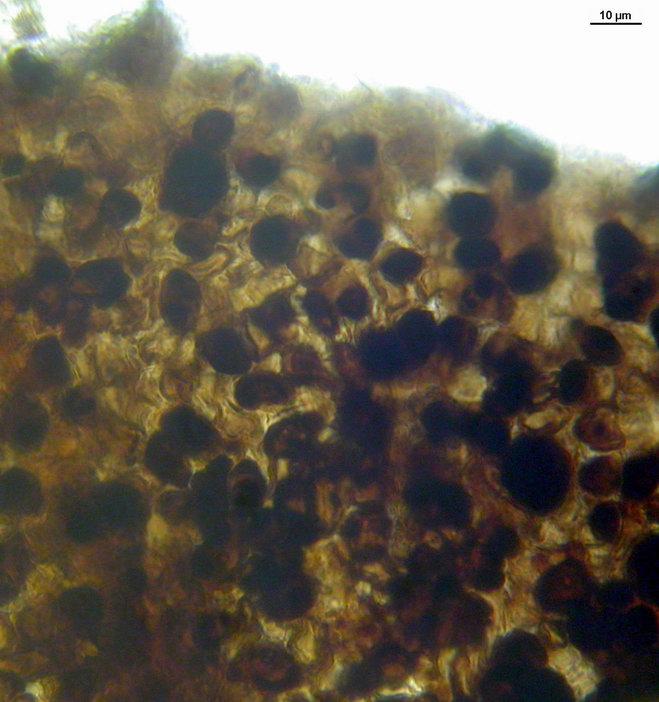
Here a view on the peridium
Hans-Otto Baral,
09-07-2011 13:44
Re : Nitschkia
Living asci and spores
Alain GARDIENNET,
09-07-2011 17:06

Re : Nitschkia
Hi Zotto,
Yes spores too long for confertula, too wide for cupularis... perhaps closer of cupularis than confertula ?
If the outer cells of the peridium are prolonged into pointed spines, it could be N. brevisipina.
Alain
Yes spores too long for confertula, too wide for cupularis... perhaps closer of cupularis than confertula ?
If the outer cells of the peridium are prolonged into pointed spines, it could be N. brevisipina.
Alain
Hans-Otto Baral,
09-07-2011 21:10
Re : Nitschkia
Hi Alain
I am sorry I dod not keep the specimen. On my photo it is clear that there are no spines , only black-brown, somewhat protruding cells.
My impression is that the spores of N. collapsa are 1-septate already when inside the living asci. I do not think this here is not mature enough, though the spores might change in an overmature stage.
Zotto
I am sorry I dod not keep the specimen. On my photo it is clear that there are no spines , only black-brown, somewhat protruding cells.
My impression is that the spores of N. collapsa are 1-septate already when inside the living asci. I do not think this here is not mature enough, though the spores might change in an overmature stage.
Zotto