
11-09-2025 16:57
 Jason Karakehian
Our revision of Marthamycetales (Leotiomycetes) is
12-11-2019 10:32
 Miguel Ángel Ribes
Hi againExactly at the same place than my previous
25-12-2019 17:54
Valencia Lopez Francisco JavierHola a todos/asEstas supuestas pezizas estaban en
28-07-2011 18:31
 Alex Akulov
Dear FriendsToday I made the pdf file of Velenovsk
12-07-2015 00:05
 Nedim Jukic
This one from the same locality as the previous on


30-05-2026 21:12
Philippe PELLICIERSur branche de mélèze (Larix) près de la neige,
31-05-2026 10:35
Hulda Caroline HolteHello,I collected this species growing on a rather
25-05-2026 16:35
 Bernard CLESSE
Bonjour à toutes et tous,J'ai trouvé récemment,
Bitunicate asco on Betula
Enrique Rubio,
19-04-2012 20:37
 Hi again
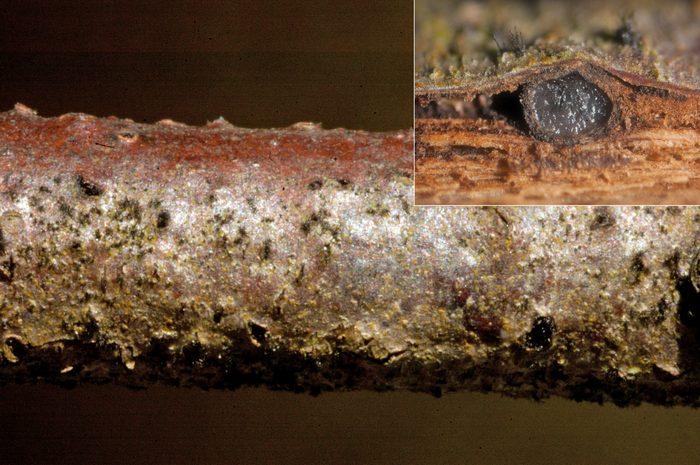
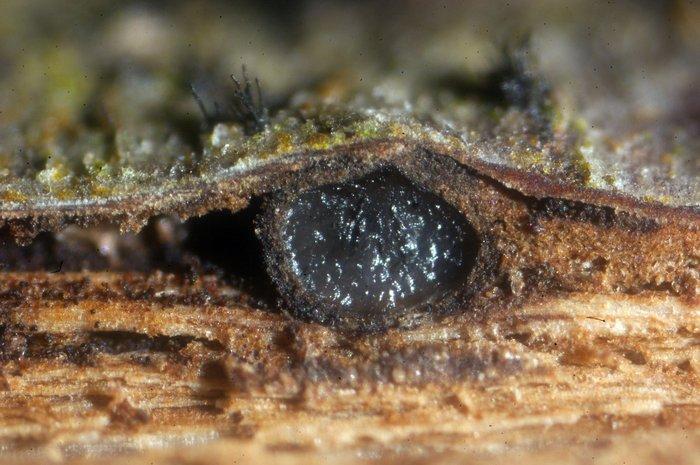
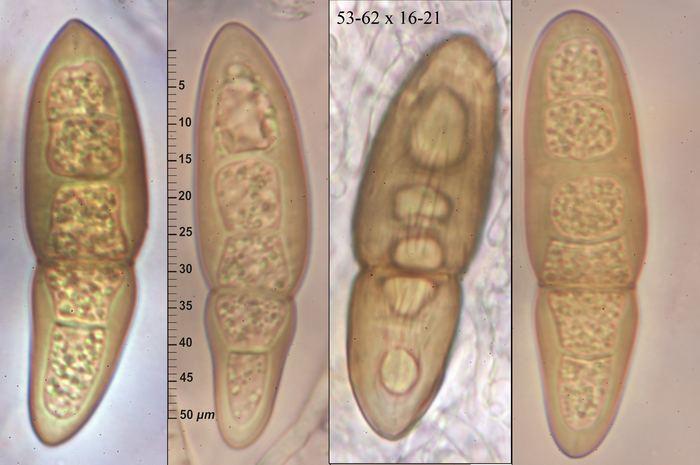
Do you know this bitunicate ascomycete with inconspicuous inmersed stromata with 1-2 pseudothecia, erumpent trought the bark of Betula small branches?
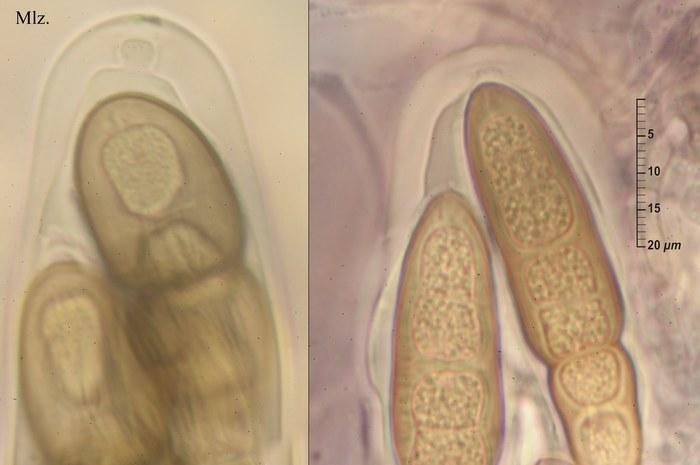
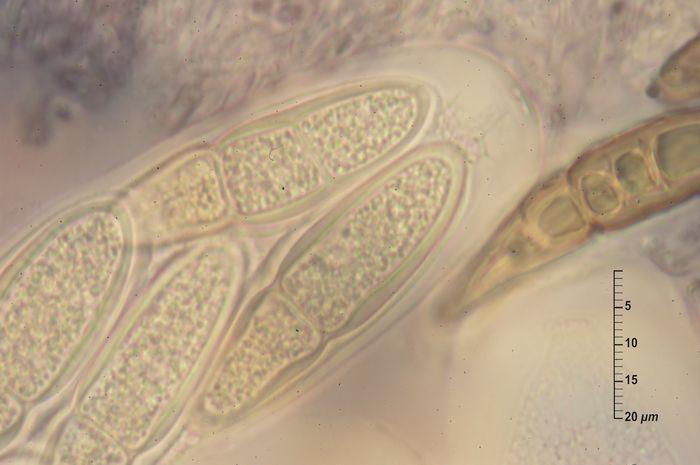
Spores are inequally two celled and their walls are longitudinally striate (only visible in Melzer). They have some pseudosepta too.
I don't know what genus belongs this fungus
Many thanks again



Alain GARDIENNET,
19-04-2012 21:18

Re : Bitunicate asco on Betula
Hi Enrique,
You should look in the Pleomassariaceae. Perhaps it could be Pleomassaria siparia = Splanchnonema siparium but striate ornementation reminds me at other species which occurs on other hosts.
I will research more.
Alain
You should look in the Pleomassariaceae. Perhaps it could be Pleomassaria siparia = Splanchnonema siparium but striate ornementation reminds me at other species which occurs on other hosts.
I will research more.
Alain
Alain GARDIENNET,
19-04-2012 21:22
Re : Bitunicate asco on Betula
I agree with René to say it isn't siparia. Personnaly, I thought at S. quercicola (on Quercus) which has striate ascopores, as yours.
Alain
Alain
Alain GARDIENNET,
19-04-2012 21:26
Re : Bitunicate asco on Betula
I think now it could be Splanchnonema argus. It occurs on Betula.
I let you verify.
Alain
I let you verify.
Alain
 argus-0001.doc
Chris Yeates,
19-04-2012 21:49

Re : Bitunicate asco on Betula
Hello Enrique
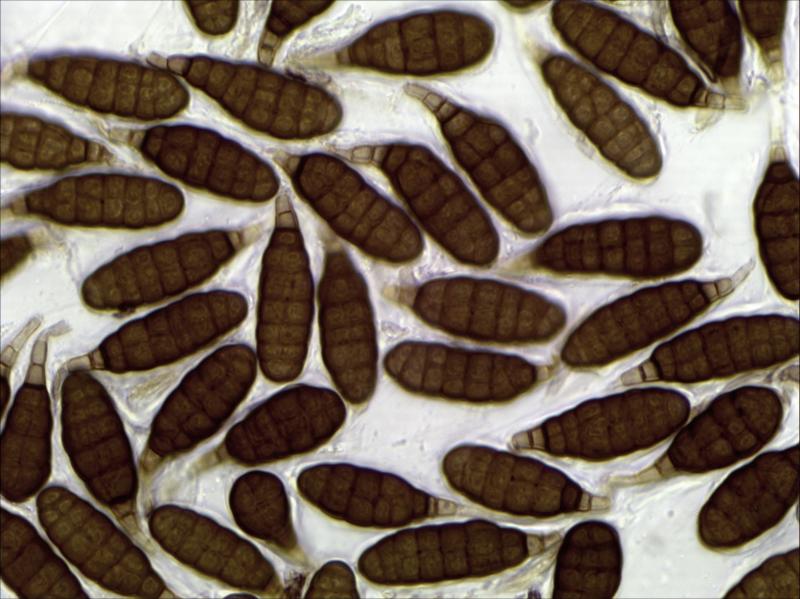
if it is S. argus keep an eye out for the distinctive anamorph Myxocyclus polycystis:
best wishes
Chris
if it is S. argus keep an eye out for the distinctive anamorph Myxocyclus polycystis:
best wishes
Chris
Norbert Heine,
20-04-2012 00:42

Re : Bitunicate asco on Betula
Hi Enrique,
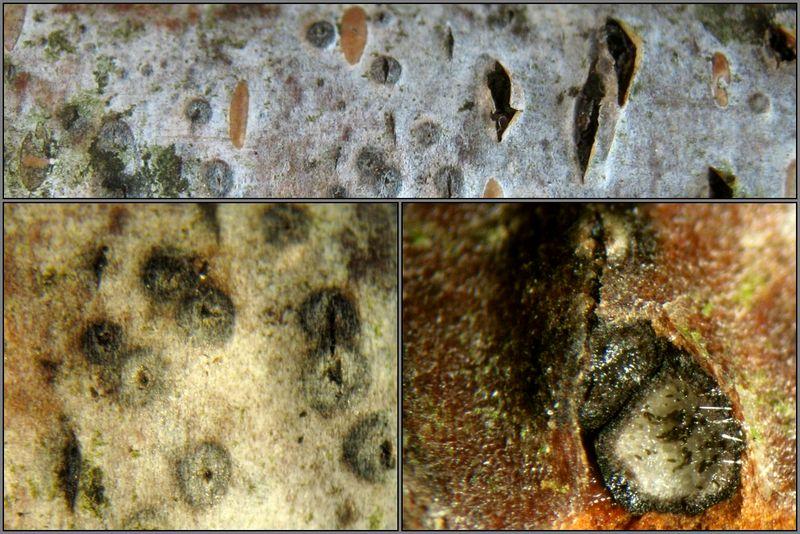
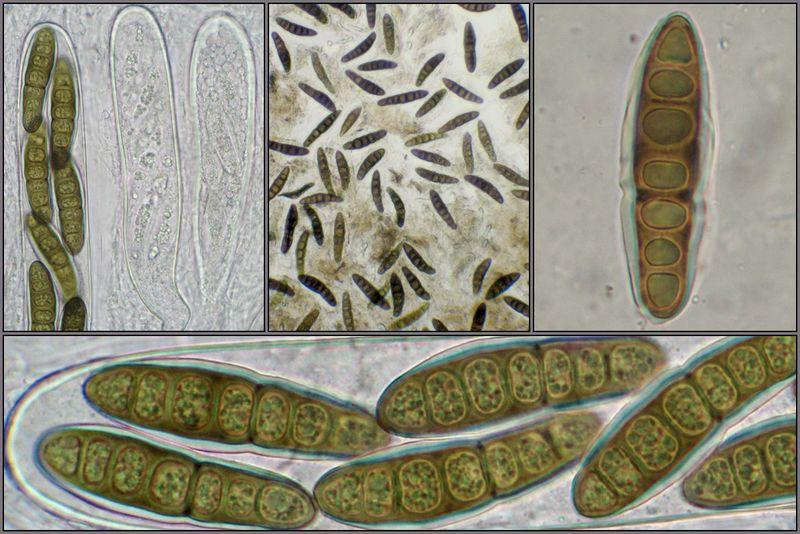
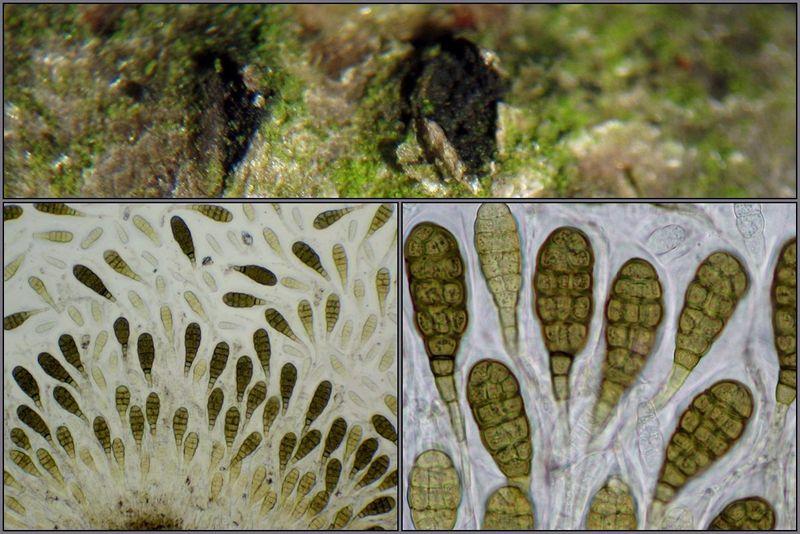
I'll give you a portrait of Splanchnonema argus and the anamorph Myxocyclus polycistis.
(By the way - fine photo, Chris!)
Some days ago I found this two species together on Betula - Twigs.
The spores of Splanchnonema argus were 60-72 x 14-17µm.
Now you can compare.
Best wishes
Norbert
PS: And here you can read something more:
http://www.ib-pan.krakow.pl/pubs-pdf/Polish%20Botanical%20Journal/2010/PBJ55-2_s373-380.pdf?
I'll give you a portrait of Splanchnonema argus and the anamorph Myxocyclus polycistis.
(By the way - fine photo, Chris!)
Some days ago I found this two species together on Betula - Twigs.
The spores of Splanchnonema argus were 60-72 x 14-17µm.
Now you can compare.
Best wishes
Norbert
PS: And here you can read something more:
http://www.ib-pan.krakow.pl/pubs-pdf/Polish%20Botanical%20Journal/2010/PBJ55-2_s373-380.pdf?
Enrique Rubio,
20-04-2012 16:50
Re : Bitunicate asco on Betula
Many thanks to all
I think my fungus is not S. argus because my ascospores with striate walls are not encapsulated.
I was looked for S. striatutulum and S. quercicola, as Alain and René said, and I think that S. quercicola is a good possibility. Do you know if this fungus has been collected in Europe?
Enrique
I think my fungus is not S. argus because my ascospores with striate walls are not encapsulated.
I was looked for S. striatutulum and S. quercicola, as Alain and René said, and I think that S. quercicola is a good possibility. Do you know if this fungus has been collected in Europe?
Enrique