
09-06-2026 18:32
Camille MertensSur morceau de roseau immergé 0,5 - 0,7 mm de dia
08-06-2026 10:16
 Spooren Marco
I don`t have a clou about this fungus,it is not in
08-06-2026 17:00
François BartholomeeusenGood day everyone, On June 5 2026, I collected de
07-06-2026 15:10
 William Slosse
Hello everyone,On 05-06-26, I found following asco
05-06-2026 11:02
Thomas Læssøehttps://svampe.databasen.org/observations/10596691
07-06-2026 12:09
 François Freléchoux
Bonjour, Voici une brève description de ce qui m
07-06-2026 12:43
Steve ClementsBojour. This was a strange find on a stick on my
12-07-2015 00:05
 Nedim Jukic
This one from the same locality as the previous on
06-06-2026 17:44
Steve ClementsBonjour, This disco was on planed wood 3 x 1.5 cm
Crocicreas (Cyathicula) on subalpine environment
Enrique Rubio,
26-06-2012 13:48
 Hi to everibody
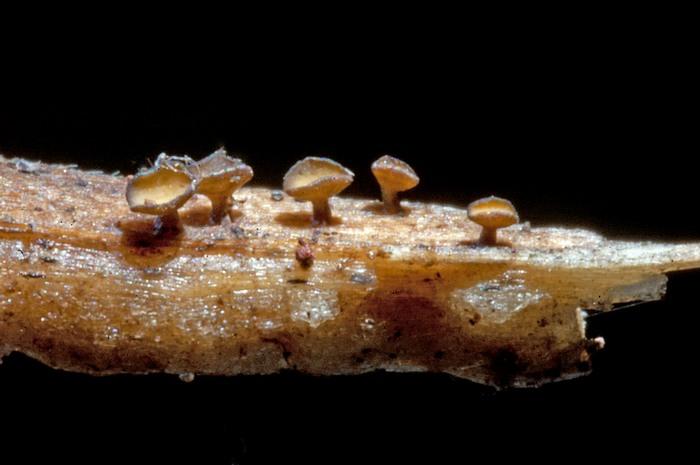
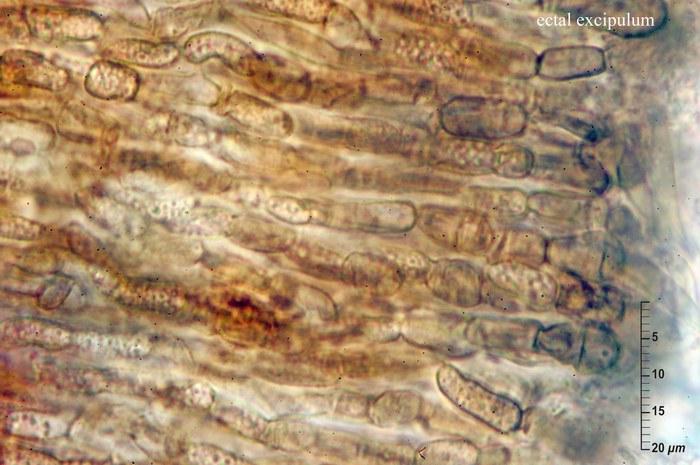
Have you some idea for our collection of this Crocicreas species growing on Veratrum album old stems at 1800 m of altitude?
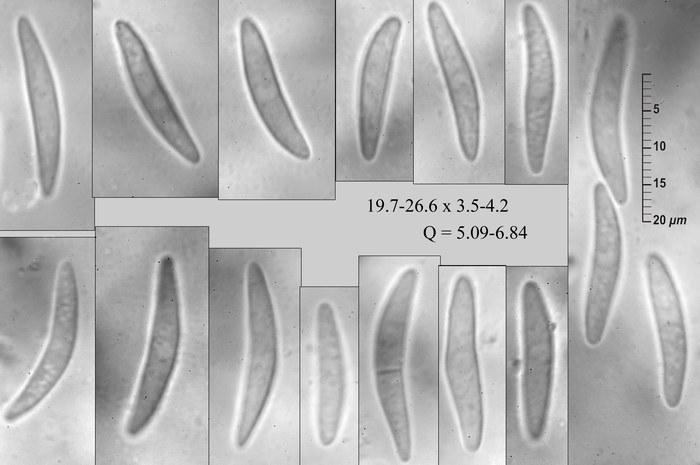
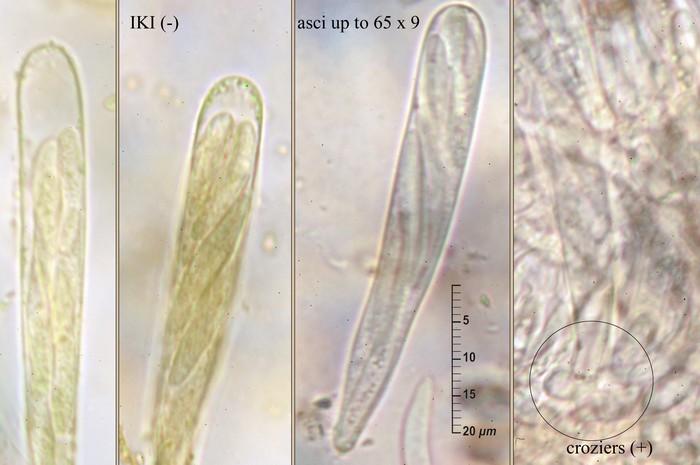
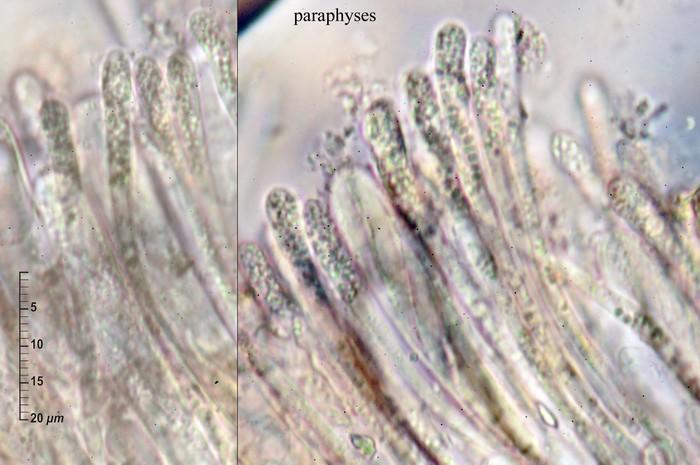
The hymenium is yellowish and the excipulum brownish or blackish. The asci are 8-spored, IKI negative, up to 65 x 9, and they have croziers.
Spores hyaline, fusoid, eguttulate, straight to curved or sigmoid.
I have seen any species (Zotto's CD, Carpenter's paper...) with these data.
Thank you for your help
Enrique
Hans-Otto Baral,
26-06-2012 17:50

Re : Crocicreas (Cyathicula) on subalpine environment
Hi Enrique
I have only Heterosphaeria veratri in my database with such spores.
No idea! C. megalospora has larger spores with oil and grows on monocots.
Zotto
I have only Heterosphaeria veratri in my database with such spores.
No idea! C. megalospora has larger spores with oil and grows on monocots.
Zotto
Enrique Rubio,
26-06-2012 18:16
Re : Crocicreas (Cyathicula) on subalpine environment
Thank you, Zotto. Really Heterosphaeria veratri is a common species at this place, but I think it's a very different fungus.
Enrique
Enrique