
09-06-2026 18:32
Camille MertensSur morceau de roseau immergé 0,5 - 0,7 mm de dia
10-06-2026 12:54
Steve ClementsBonjour encore, Pouvez-vous m'aider, s'il vous pl

10-06-2026 21:16
 François Freléchoux
Bonsoir,Le dernier du jour, en attendant votre avi
10-06-2026 21:07
François Freléchoux
Toutes les tiges de gentianes jaunes de l'an passÃ
10-06-2026 13:41
François Freléchoux
Bonjour à nouveau, Voici une trouvaille d'hier.
10-06-2026 11:53
Steve ClementsBonjour, This disco is abundant on dead stems of
10-06-2026 10:45
François Freléchoux
Bonjour à nouveau, Encore une détermination qui
08-06-2026 10:16
 Spooren Marco
I don`t have a clou about this fungus,it is not in
10-06-2026 09:24
François Freléchoux
Bonjour, J'imagine que cette détermination ne do
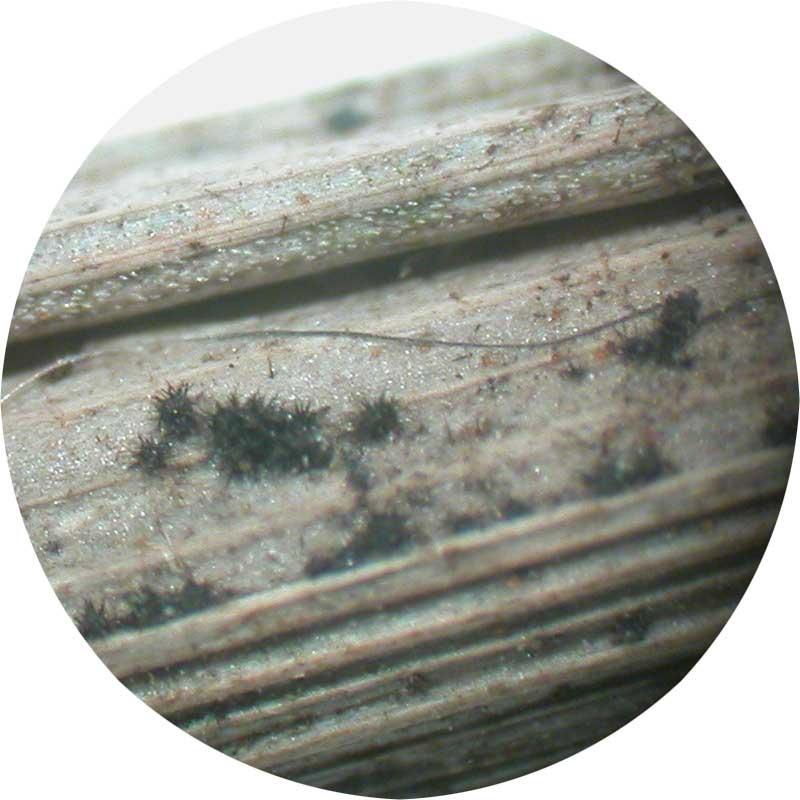
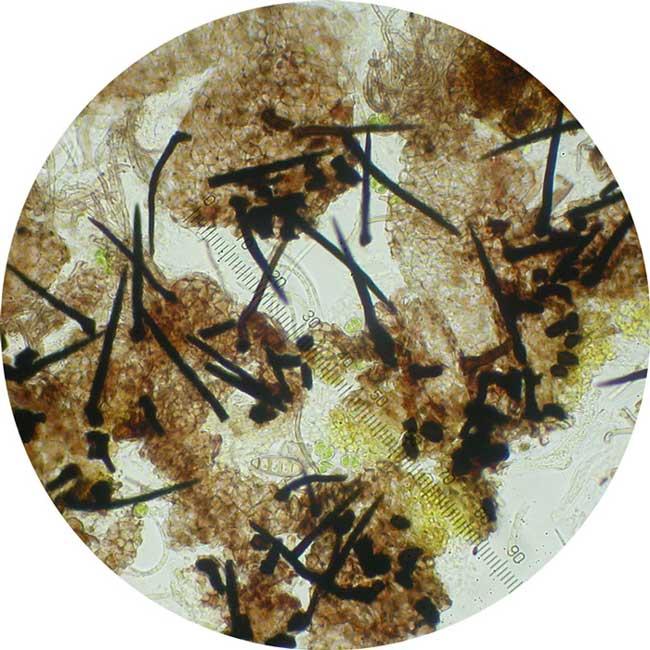
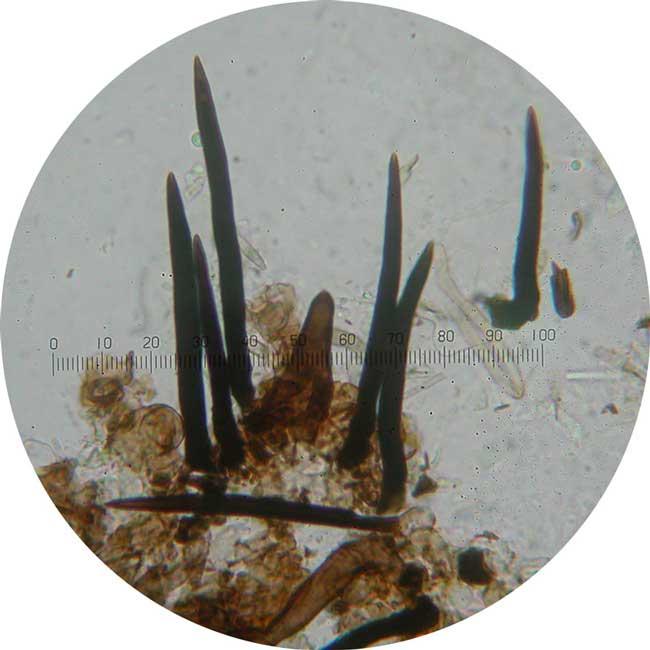
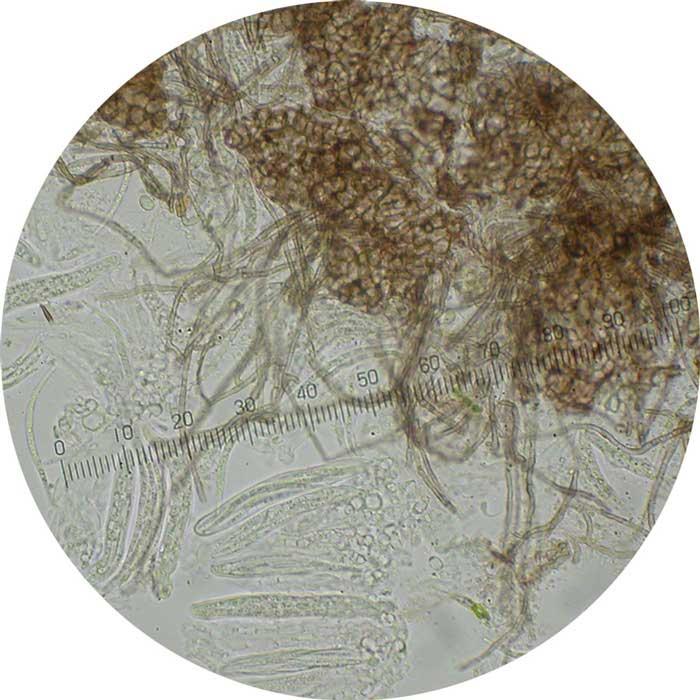
What can this be?
Piet BORMANS,
15-08-2012 11:56
 It looks a little bit like Acanthophiobolus helicosporus but it does not correspond with the spores.
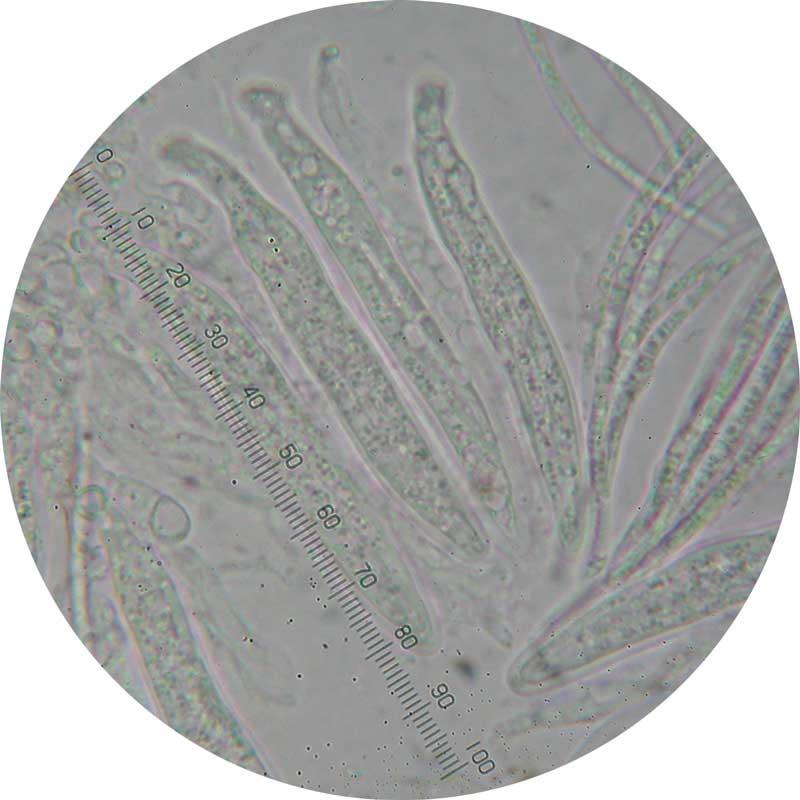
Ascomata: spherical 180 µm
Setae: black - 35 - 80 µm. Straight or slightly curved
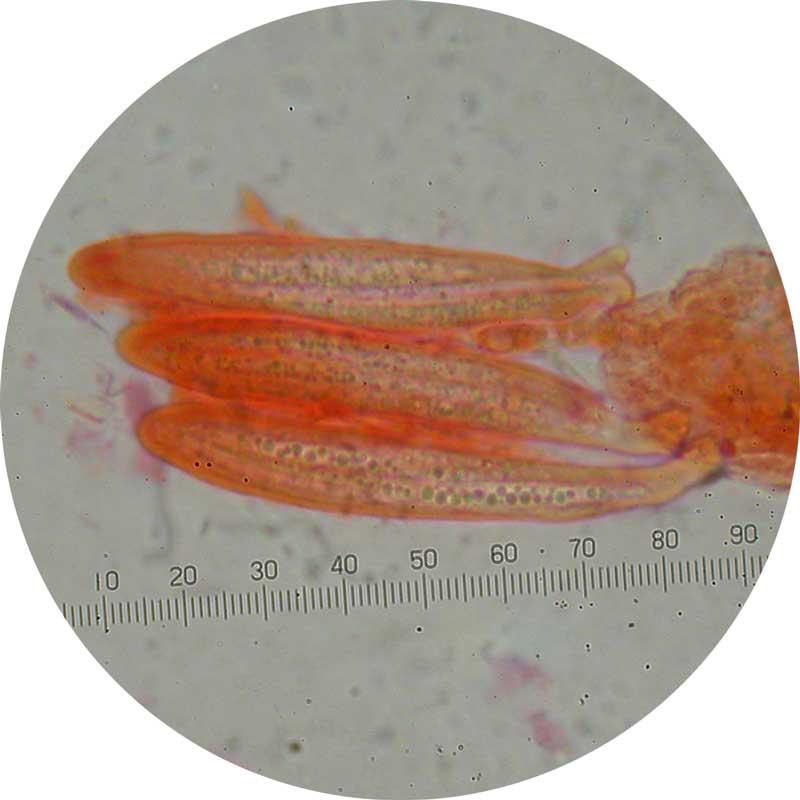
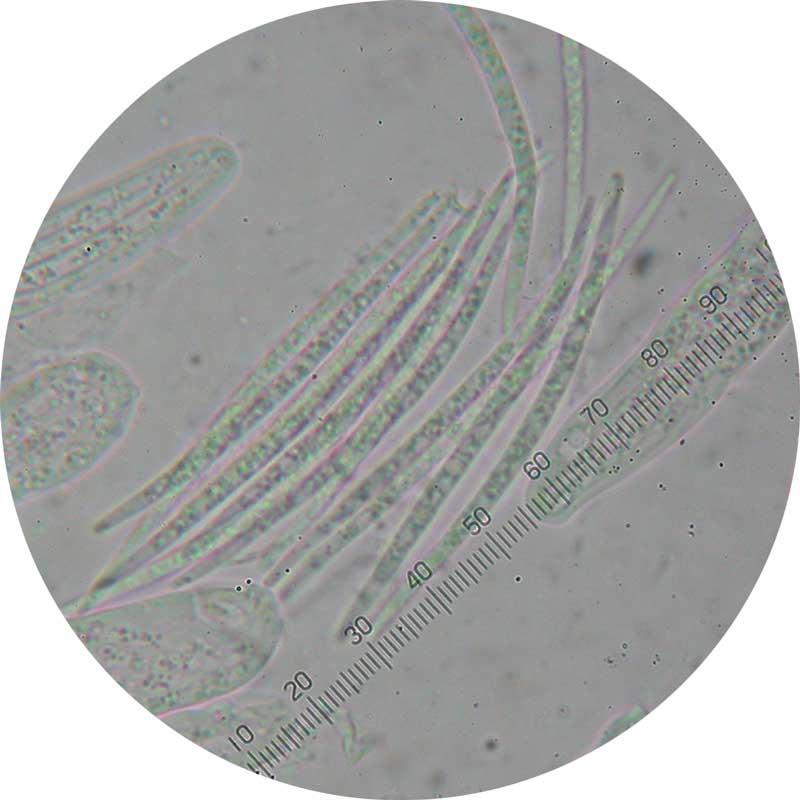
Asci: 70 - 85 x 10 - 12 µm
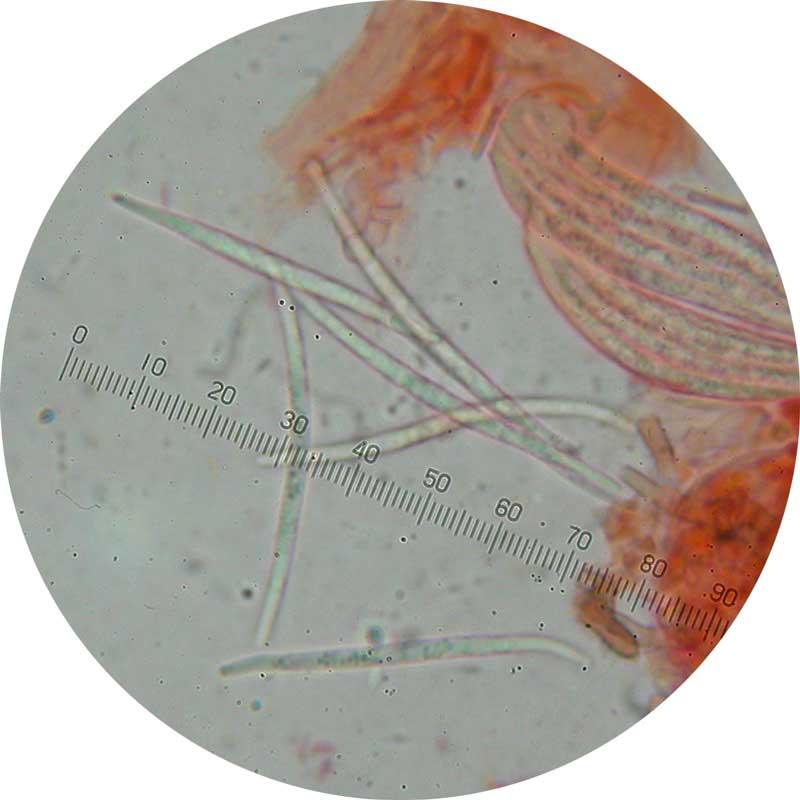
Ascospores: filiform, 45 - 75 x 2 - 3 µm
Substrat: Calamagrostis epigejos
Thanks for your response
Piet Bormans
Martin Bemmann,
15-08-2012 22:07

Re : What can this be?
Hi Piet,
it reminds me on Chaetosphaeria spinosa. Maybe Andy and/or Sabine see your posting and comment...
A description of Ch.sp. is attached.
Cheers
Martin
it reminds me on Chaetosphaeria spinosa. Maybe Andy and/or Sabine see your posting and comment...
A description of Ch.sp. is attached.
Cheers
Martin
 Fernandez-amp-Huhndorf-2005-Chaetosphaeria-Melanopsammella-Tainosphaeria--0001.pdf
Andrew N. Miller,
16-08-2012 16:16

Re : What can this be?
I'm trying to determine from the photos if the asci are unitunicate or bitunicate. If the latter, then I'm thinking this might be Acanthostigma scopulum.
Best,
Andy
Best,
Andy
Martin Bemmann,
16-08-2012 19:44
Re : What can this be?
Hi Andy,
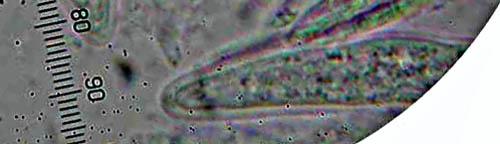
I would tend to see bitunicate asci (attached detail of Piet's photograph). At any rate no thin walled (unitunicate) as in Chaetospharia spinosa.
You are certainly right with Acanthostigma scopulum.
Best regards
Martin
I would tend to see bitunicate asci (attached detail of Piet's photograph). At any rate no thin walled (unitunicate) as in Chaetospharia spinosa.
You are certainly right with Acanthostigma scopulum.
Best regards
Martin
Bernard Declercq,
16-08-2012 20:06

Re : What can this be?
Hi Andy,
We excluded Acanthostigma as we thought this adjacent genus was lignicolous. Does Acanthostigma occurs on monocotyls?
Best regards,
Bernard
We excluded Acanthostigma as we thought this adjacent genus was lignicolous. Does Acanthostigma occurs on monocotyls?
Best regards,
Bernard
Andrew N. Miller,
16-08-2012 21:01
Re : What can this be?
I really do not know, but I suspect that many saprobic pyrenos and loculos are not that substrate specific. I have even found Cercophora scortea on wood in USA, although it is known from dung in Europe.
Andy
Andy
Jaklitsch Walter,
17-08-2012 11:09
Re : What can this be?
what about Taphrophila (Acanthostigmina, Ophiobolus, Tubeufia) trichella? This fungus occurs on graminaceous hosts. How many septa do the spores have?
Walter
Walter
Bernard Declercq,
17-08-2012 13:30
Re : What can this be?
Dear Walter,
Excellent proposal. Taphrophila trichella was described by the belgian mycologists Bommer & Rousseau who collected it on Ammophila at the Belgian coast. And Calamagrostis is mentioned in literature as another substrate. It would be great to have collected this species once again in our country after more than 120 years.
Allez Piet, check the number of septa. We did not see coiled ascospores in the ascus but that is maybe not that important.
Bernard
Excellent proposal. Taphrophila trichella was described by the belgian mycologists Bommer & Rousseau who collected it on Ammophila at the Belgian coast. And Calamagrostis is mentioned in literature as another substrate. It would be great to have collected this species once again in our country after more than 120 years.
Allez Piet, check the number of septa. We did not see coiled ascospores in the ascus but that is maybe not that important.
Bernard
Piet BORMANS,
17-08-2012 19:01
Re : What can this be?
Dear all,
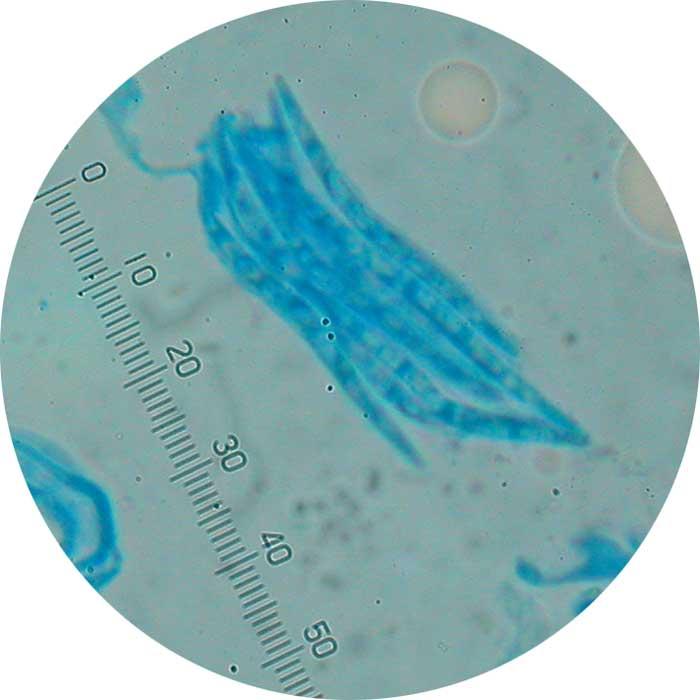
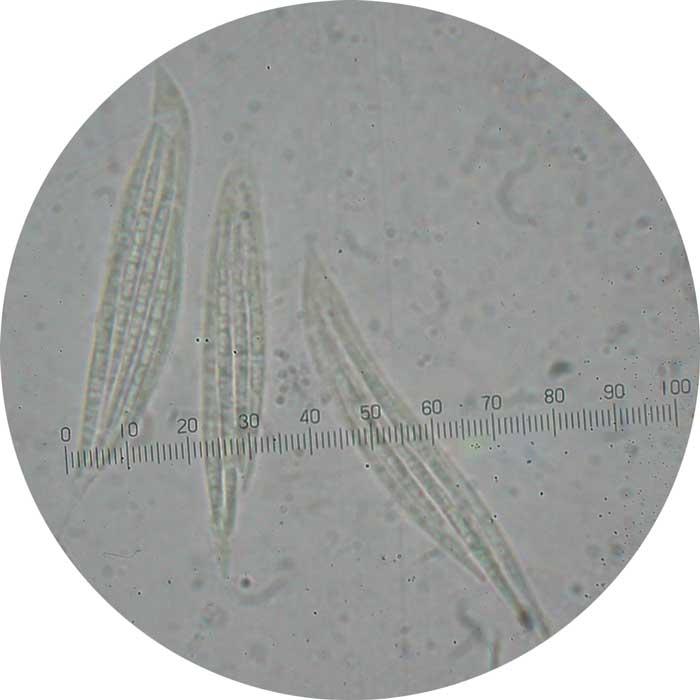
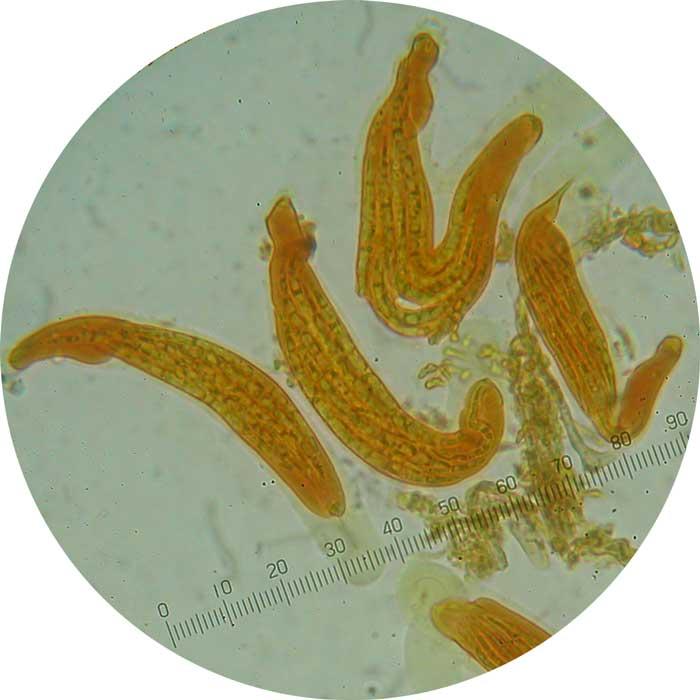
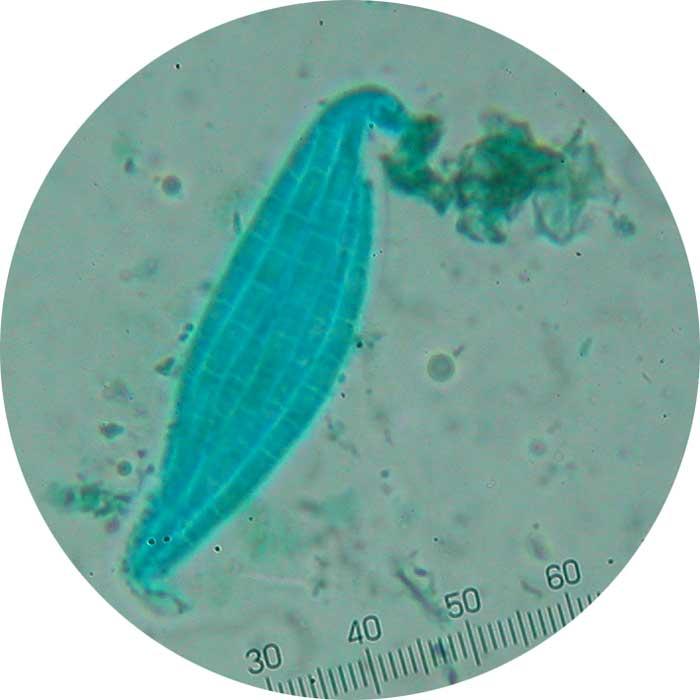
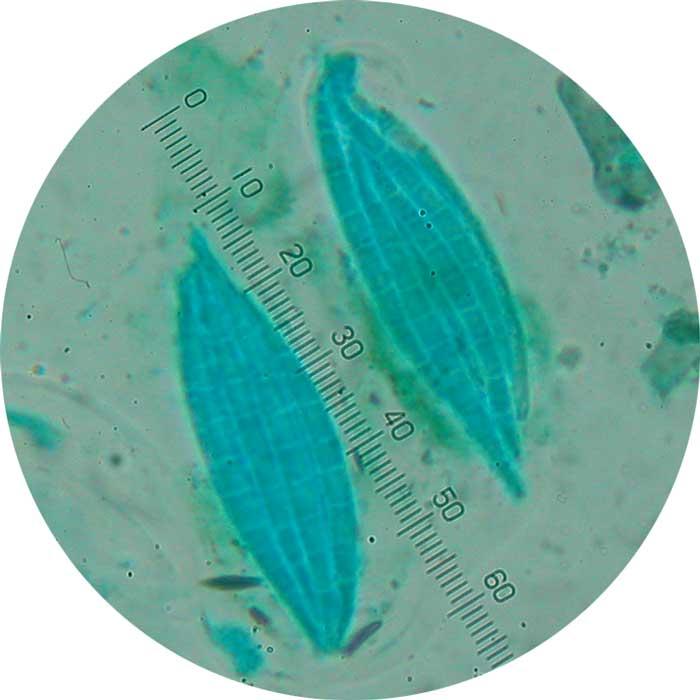
I have tried to take a photo, to show you the number of septa. I counted from 6 to 9 septa. It was not easy for me. I am still looking for the ideal method. Here is the result.
Best regards,
Piet
I have tried to take a photo, to show you the number of septa. I counted from 6 to 9 septa. It was not easy for me. I am still looking for the ideal method. Here is the result.
Best regards,
Piet
Jaklitsch Walter,
17-08-2012 22:45
Re : What can this be?
in this case it may be Taphrophila hebridensis (Dennis) Réblová & M.E. Barr
Cheers,
Walter
Cheers,
Walter
Piet BORMANS,
18-08-2012 12:31
Re : What can this be?
Thanks to Martin, Andrew, Bernard and Walter. Your help is a step forward for me. Thank you.
Best regards
Piet
Best regards
Piet