
03-06-2026 14:39
Thomas FlammerApothecia yellow, glassy-transparent, 80 - 120 ymS
16-03-2014 13:39
 Enrique Rubio
HI to all I'm looking for B. Hein's article on Wi

02-06-2026 14:33
 Nicolas VAN VOOREN
Hello.I'm searching for a PDF copy of the followin
18-10-2022 00:12
Valencia Lopez Francisco JavierHola amigos/asRecientemente encontré esta colecci
02-06-2026 17:58
Louis DENYBonjour forum, Sur feuille de Populus tremula, en

28-07-2011 18:31
 Alex Akulov
Dear FriendsToday I made the pdf file of Velenovsk
Fungi with Trumpet like apoteca
Esquivel-Rios Eduardo,
20-10-2012 02:13
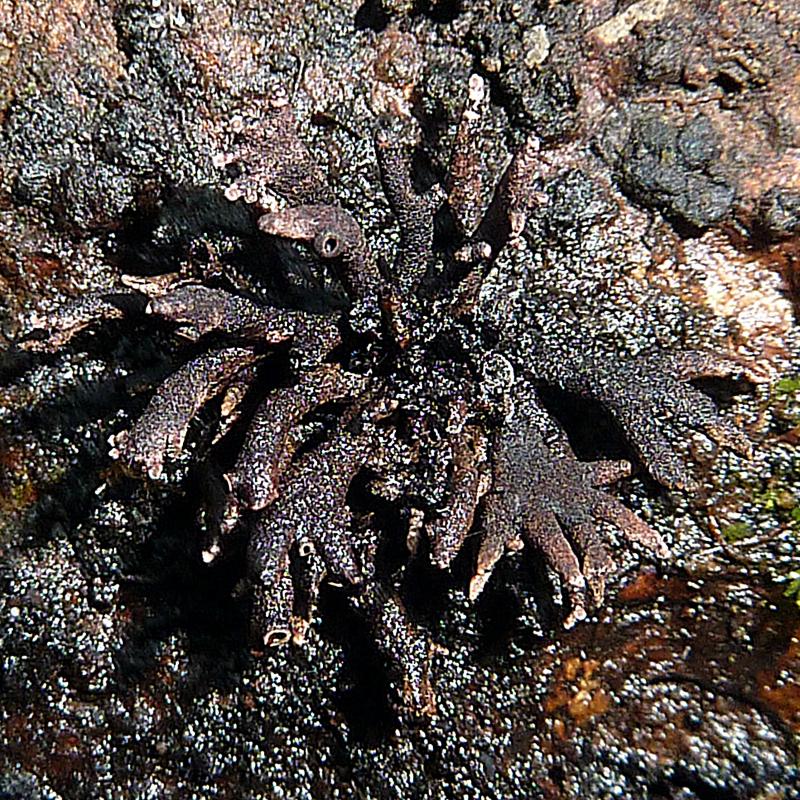
I recently found this fungus on a dead trunk, has black apothecia trumpet shaped, sometimes branched, I not observed ascospores, asci only immature, but its particular characteristics is possible that some of you will recognize.
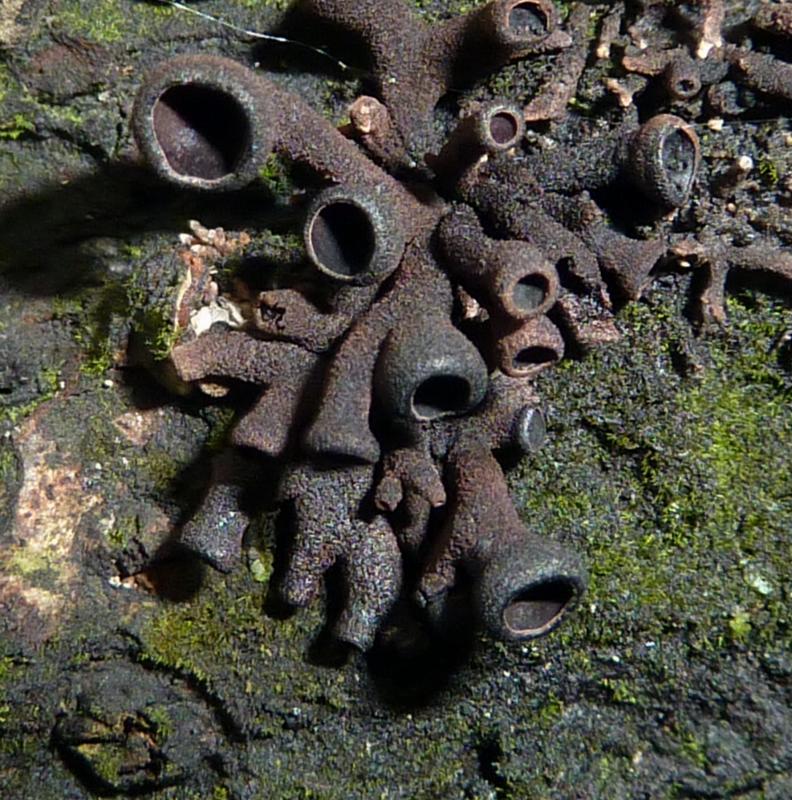
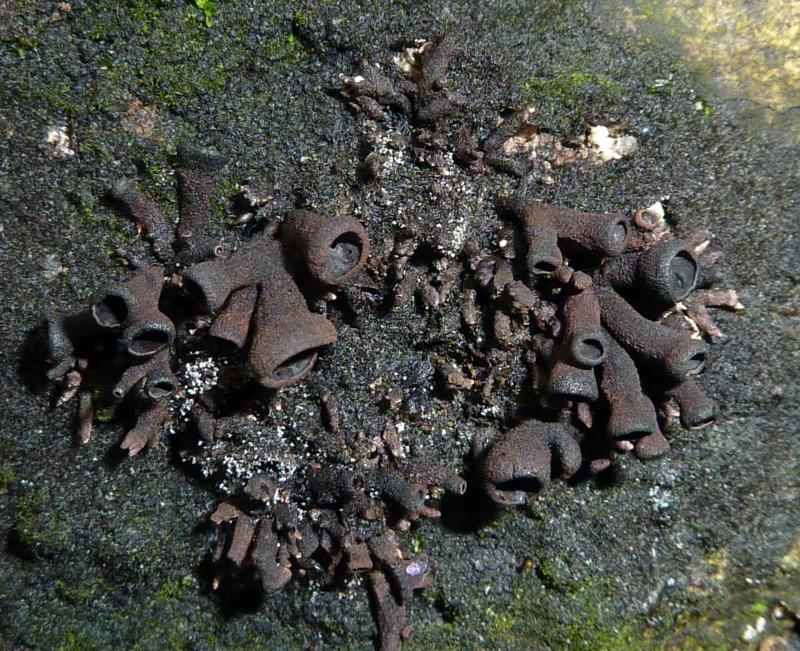
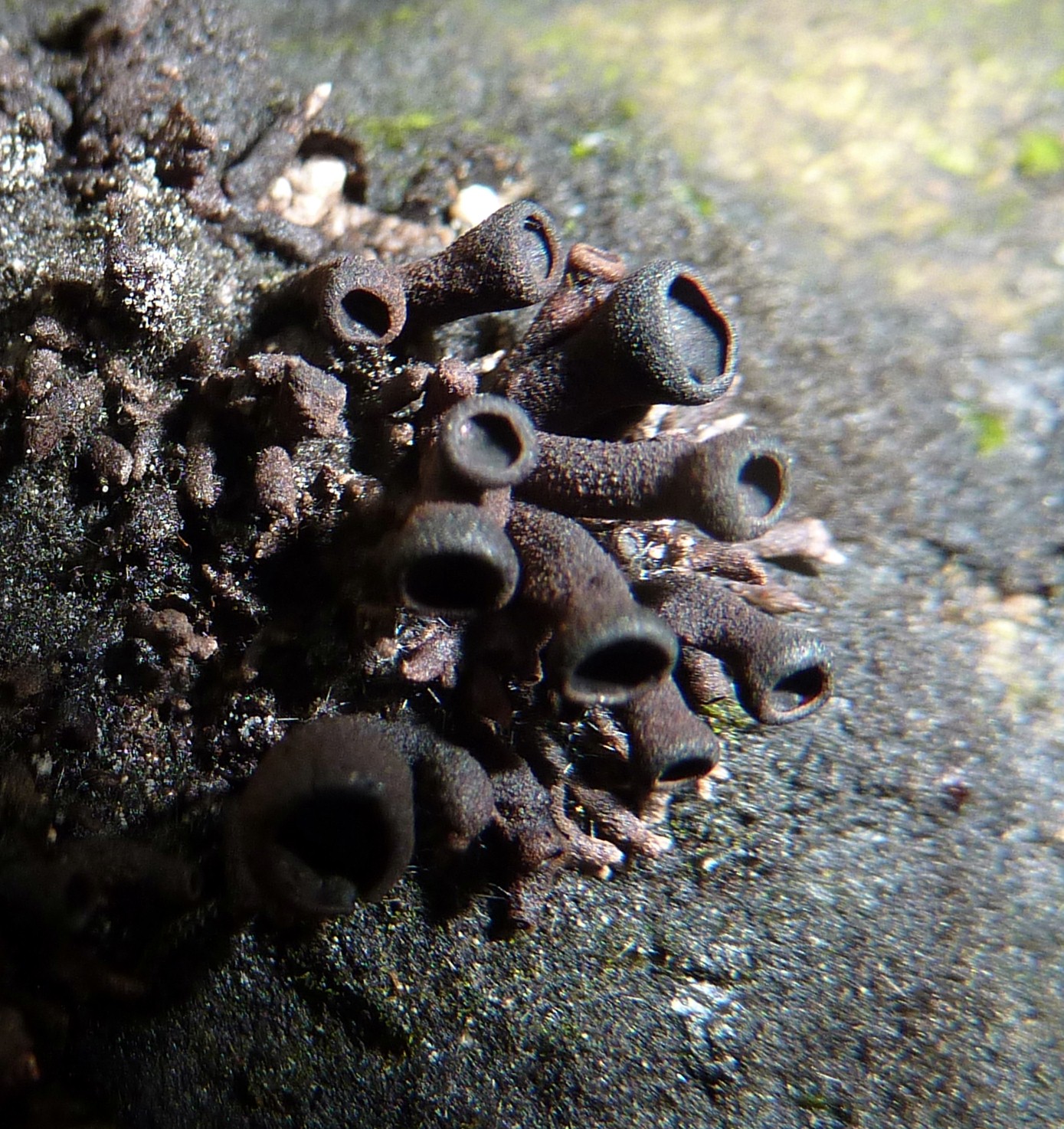 P1150322-0001.JPG
Esquivel-Rios Eduardo,
20-10-2012 02:17
Re : Fungi with Trumpet like apoteca
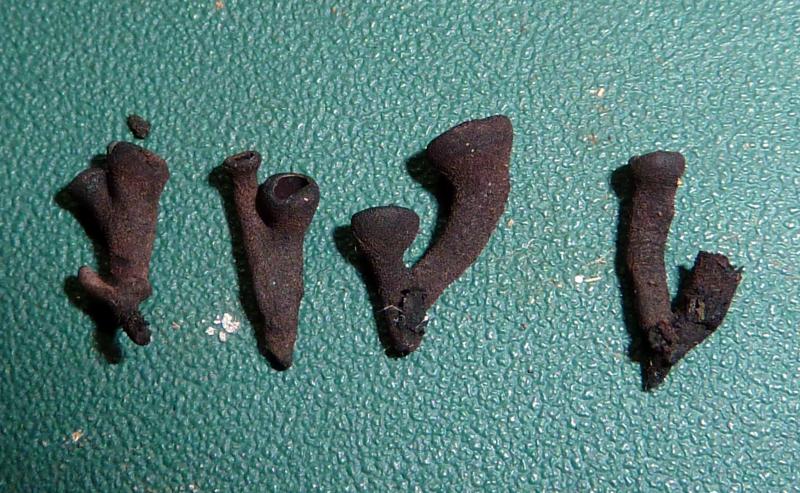
Apotecias 0.5 - 1.0 cm. long
Hans-Otto Baral,
20-10-2012 08:51

Re : Fungi with Trumpet like apoteca
Very interesting, Eduardo. Obviously an encoelioid fungus. I have no genus idea, maybe something like Cordierites. About that genus I recently talked with Kadri Pärtel who is doing a molecular analysis on Encoelioideae and so far has no member of that genus.
What you could try is a median section of perhaps 50-100 µm thickness with a razor blade, to look what kind of hairs there are on the stipe and what excipular cells on the flanks. You should do that in water, and after making some photos, add KOH and view whether a brown sap extrudes into the medium (ionomidotic reaction). Maybe th excipular stricture is now better visible.
Are the asci about as long as the paraphyses? Then you can test with IKI (I assume they are inamyloid). The paraphyses are very banal, cylindrical-obtuse?
Zotto
What you could try is a median section of perhaps 50-100 µm thickness with a razor blade, to look what kind of hairs there are on the stipe and what excipular cells on the flanks. You should do that in water, and after making some photos, add KOH and view whether a brown sap extrudes into the medium (ionomidotic reaction). Maybe th excipular stricture is now better visible.
Are the asci about as long as the paraphyses? Then you can test with IKI (I assume they are inamyloid). The paraphyses are very banal, cylindrical-obtuse?
Zotto
Esquivel-Rios Eduardo,
20-10-2012 16:30
Re : Fungi with Trumpet like apoteca
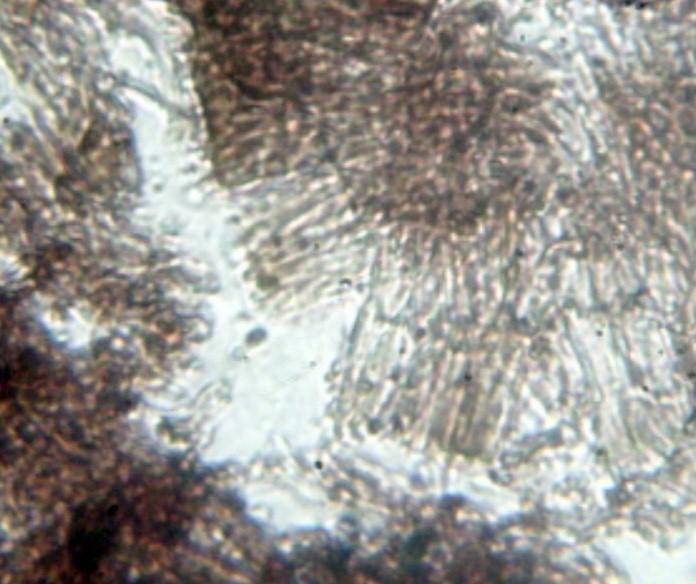
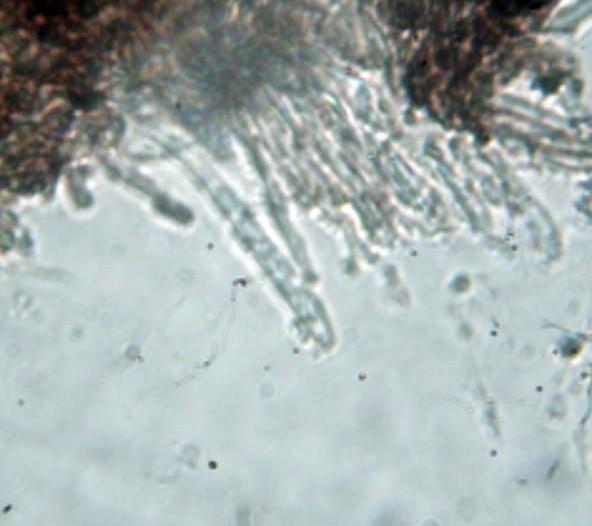
Im going make new observations following your instructions, in the old material the only photos with some details, not clear, but may be can help.
Hans-Otto Baral,
20-10-2012 16:39
Re : Fungi with Trumpet like apoteca
Well, not really. Possibly it is an ascus and some paraphyses on the second photo.
Now, Dick Korf wrote this to me:
"Somehow I am no longer able to enter comments in Ascofrance. The recent trumpet-like asco is surely a species of Unguiculariopsis. I've contacted them to find out why. The paper to consult is Zhuang, W.-y. (1988). A monograph of the genus Unguiculariopsis (Leotiaceae, Encoeliodeae). Mycotaxon 32(1): 1-83. They should look for the typical hooked hairs on the excipulum. You can suggest this on AF in the meanwhile."
This is a good idea to look for hairs at margin and flanks. I was not aware of Unguiculariopsis with such long stipes, though that genus was placed in the Encoelioideae, an opinion that was merely based on morphology.I am unaware of any molecular? data on Ungioculariopsi, I rather would place it in the vicinity of Hyaloscypha. So the future will be thrilling.
Though immature it could be interesting to investigate this specimen by molecular methods. I will ask Kadri if she has interest to do that.
Zotto
Now, Dick Korf wrote this to me:
"Somehow I am no longer able to enter comments in Ascofrance. The recent trumpet-like asco is surely a species of Unguiculariopsis. I've contacted them to find out why. The paper to consult is Zhuang, W.-y. (1988). A monograph of the genus Unguiculariopsis (Leotiaceae, Encoeliodeae). Mycotaxon 32(1): 1-83. They should look for the typical hooked hairs on the excipulum. You can suggest this on AF in the meanwhile."
This is a good idea to look for hairs at margin and flanks. I was not aware of Unguiculariopsis with such long stipes, though that genus was placed in the Encoelioideae, an opinion that was merely based on morphology.I am unaware of any molecular? data on Ungioculariopsi, I rather would place it in the vicinity of Hyaloscypha. So the future will be thrilling.
Though immature it could be interesting to investigate this specimen by molecular methods. I will ask Kadri if she has interest to do that.
Zotto
Esquivel-Rios Eduardo,
22-10-2012 03:50
Re : Fungi with Trumpet like apoteca
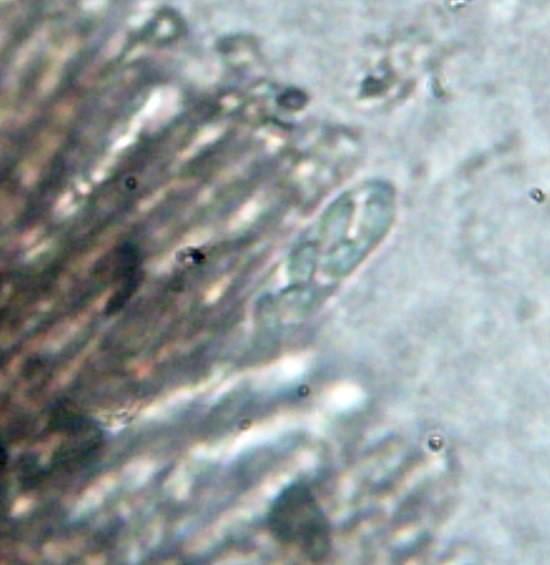
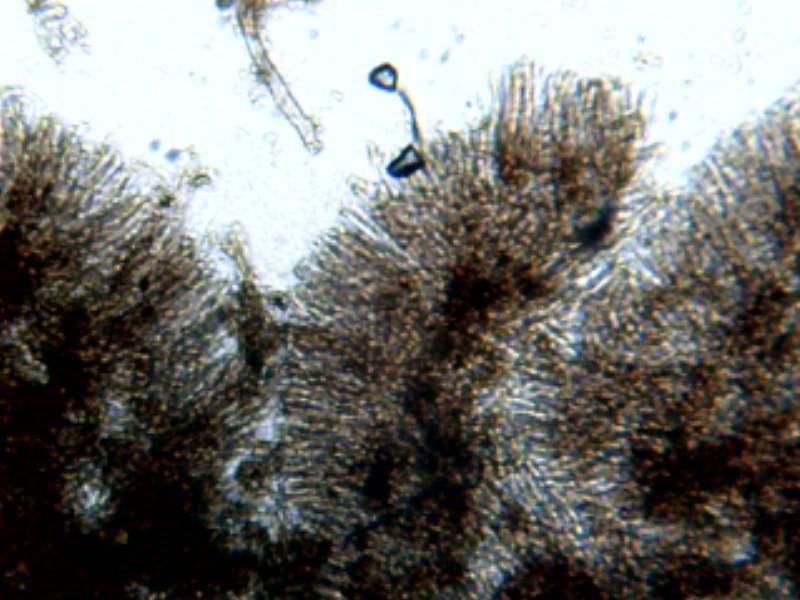
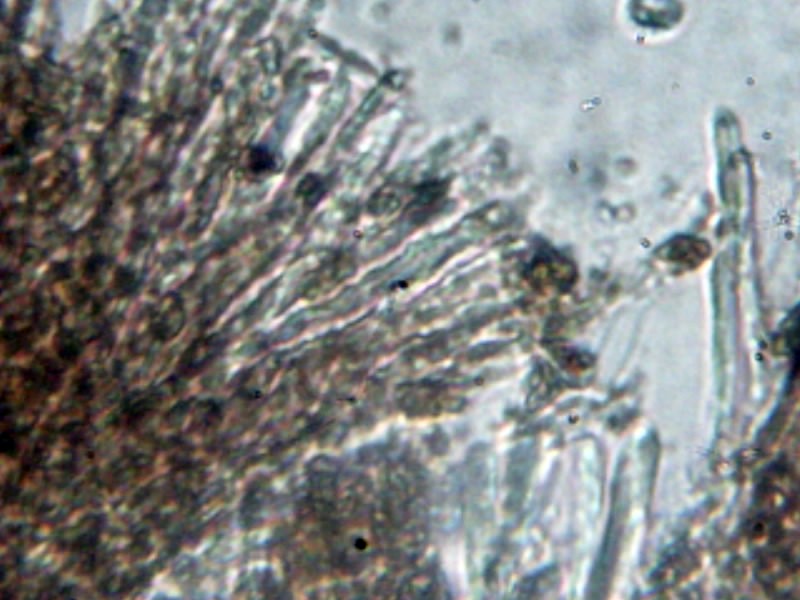
In new material i found a asci and ascospores.
 Img00017-0001.jpg
Hans-Otto Baral,
22-10-2012 09:28
Re : Fungi with Trumpet like apoteca
That's fine!! Could you gain some measurements? The spores look eguttulate?
Zotto
Zotto
Esquivel-Rios Eduardo,
22-10-2012 21:09
Re : Fungi with Trumpet like apoteca
The asci measures: 25 - 35 x 5 - 7 microns, ascospores small, ovalated, biguttulated, hyaline, smooth, 2.0 - 3.0 x 1.5- 2.0 . In new specimens some ascocarps ramificated-digitated
Hans-Otto Baral,
24-10-2012 21:23
Re : Fungi with Trumpet like apoteca
Dear Eduardo
Kadri showed great interest to study your specimen and to take a sequence.
Below is her address. I hope you can manage to send her a portion.
Thank you very much!
Zotto
Kadri Pärtel,
CuratorMycological Herbarium TAAM
Institute of Agricultural and Environmental Sciences
Estonian University of Life Sciences
181 Riia Street
51014 Tartu
Estonia
Kadri showed great interest to study your specimen and to take a sequence.
Below is her address. I hope you can manage to send her a portion.
Thank you very much!
Zotto
Kadri Pärtel,
CuratorMycological Herbarium TAAM
Institute of Agricultural and Environmental Sciences
Estonian University of Life Sciences
181 Riia Street
51014 Tartu
Estonia
?