
12-06-2026 14:50
 François Freléchoux
Bonjour, Voici la brève description d'une Mollis
10-06-2026 21:16
François Freléchoux
Bonsoir,Le dernier du jour, en attendant votre avi
11-06-2026 19:01
 William Slosse
Hello all,In an attempt to make a culture of a sus
11-06-2026 19:03
 Nicolas VAN VOOREN
Chers membres d'Ascofrance,Le site sera placé en

09-06-2026 18:32
Camille MertensSur morceau de roseau immergé 0,5 - 0,7 mm de dia
10-06-2026 12:54
Steve ClementsBonjour encore, Pouvez-vous m'aider, s'il vous pl
10-06-2026 21:07
François Freléchoux
Toutes les tiges de gentianes jaunes de l'an passÃ
10-06-2026 13:41
François Freléchoux
Bonjour à nouveau, Voici une trouvaille d'hier.
Ophiostoma sur Fomes fomentarius
Renée Lebeuf,
24-10-2012 02:35
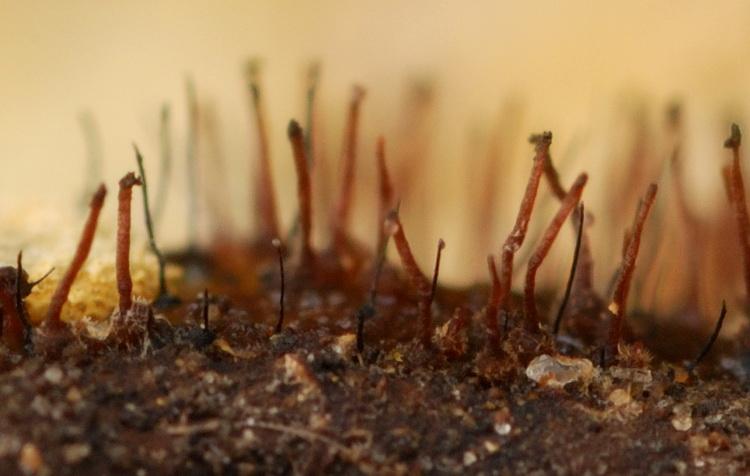
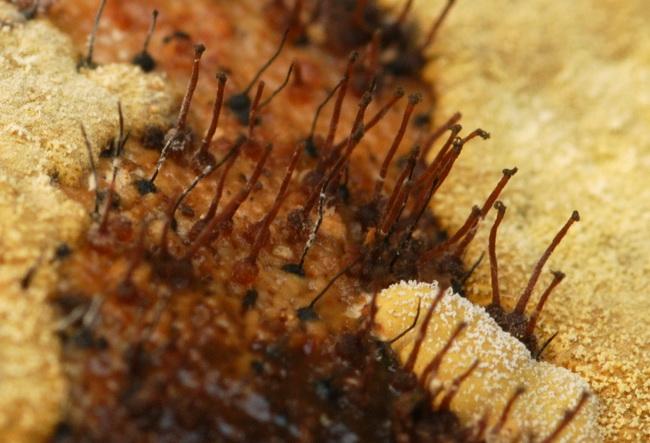
J'aimerais vous soumettre cet ascomycète que je crois être un Ophiostoma. Je possède très peu de documentation sur ce genre, et lors de mes recherches sur Internet, j'ai trouvé une espèce qui pousse sur polypore, Ophiostoma polyporicola, mais les caractères microscopiques ne concordent pas du tout. Elle poussait à côté d'Hypocrea pulvinata.
Les spécimens mesurent environ 2 mm de hauteur et le haut était recouvert d'un amas de spores vertes agglutinées dans une substance collante.
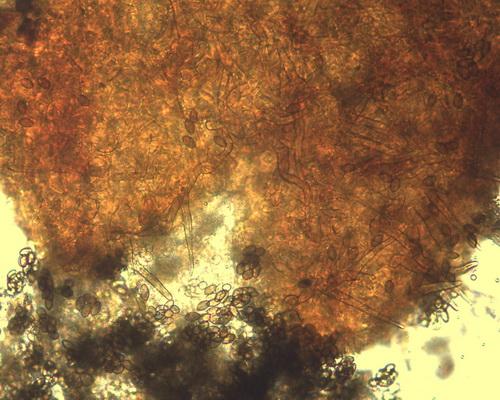
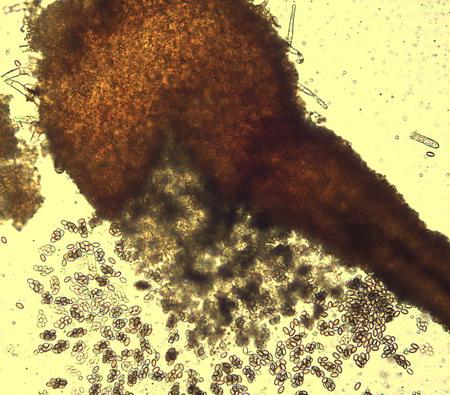
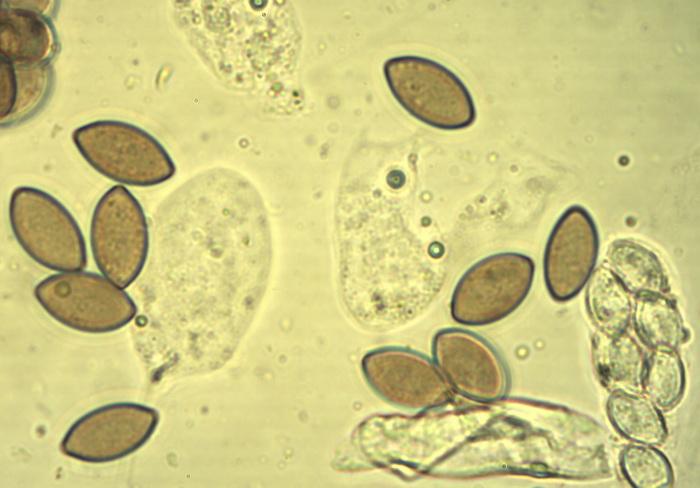
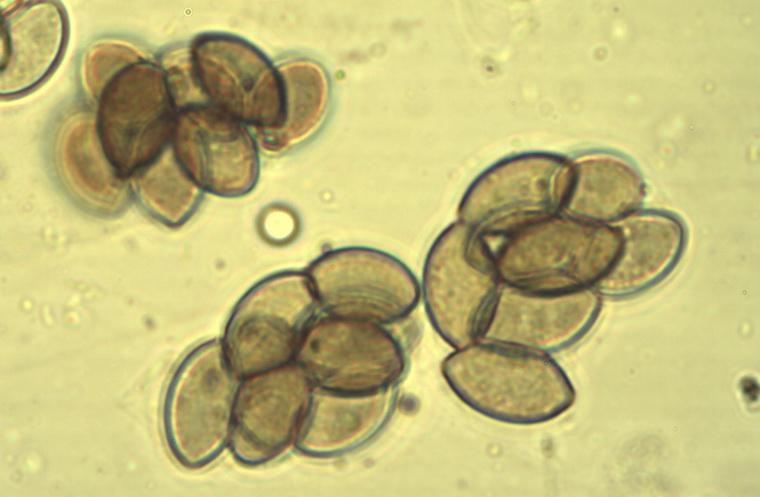
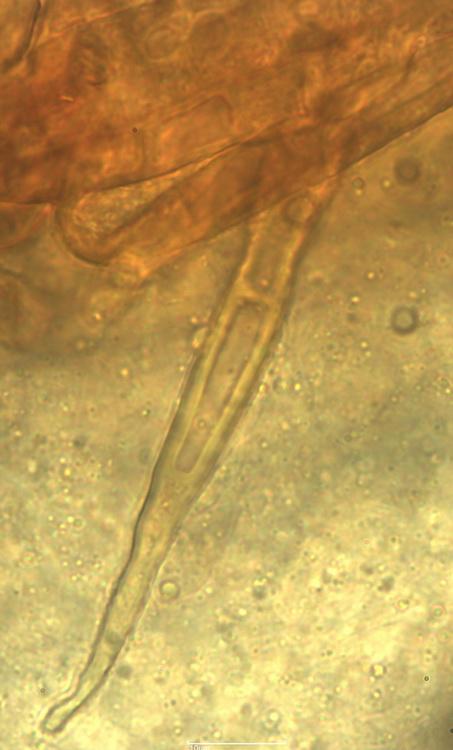
Les spores mesurent 12-13 x 6,5-7 µm. La partie renflée est recouverte de poils bruns, septés à paroi épaisse. Les asques sont gélatineux, difficiles à percevoir, octosporés.
Connaissez-vous une espèce d'Ophiostoma qui pourrait correspondre à mon espèce?
Un grand merci
Renée Lebeuf
Hans-Otto Baral,
24-10-2012 07:46

Re : Ophiostoma sur Fomes fomentarius
Melanospora?
Wilhelm De Beer,
24-10-2012 10:35

Re : Ophiostoma sur Fomes fomentarius
Dear Renee
I focus on the taxonomy of the Ophiostomatales, and although a few species have been described from basidiomycete sporocarps, I do not think that the species you found belong in the Ophiostomatales. Typically they have dehiscent asci and the ascospores are all hyaline. I have not worked with Melanospora, so am not sure if it might belong to that genus.
Greetings
Wilhelm de Beer
http://www.fabinet.up.ac.za/people/profile/p4153014
I focus on the taxonomy of the Ophiostomatales, and although a few species have been described from basidiomycete sporocarps, I do not think that the species you found belong in the Ophiostomatales. Typically they have dehiscent asci and the ascospores are all hyaline. I have not worked with Melanospora, so am not sure if it might belong to that genus.
Greetings
Wilhelm de Beer
http://www.fabinet.up.ac.za/people/profile/p4153014
Renée Lebeuf,
24-10-2012 12:19
Re : Ophiostoma sur Fomes fomentarius
Thank you, I will look in that direction.
Renée L.
Renée L.
David Malloch,
25-10-2012 15:19

Re : Ophiostoma sur Fomes fomentarius
Hi Renée,
Your photo seems to have two different fungi with long necks. The large orange one is probabaly close to Melanospora lagenaria. The smaller black one with the white spore mass on top of its neck may be a species of Ophiostoma as you suggested. It would be interesting to know what those spores look like under the microscope
Dave
Your photo seems to have two different fungi with long necks. The large orange one is probabaly close to Melanospora lagenaria. The smaller black one with the white spore mass on top of its neck may be a species of Ophiostoma as you suggested. It would be interesting to know what those spores look like under the microscope
Dave
Wilhelm De Beer,
25-10-2012 15:42
Re : Ophiostoma sur Fomes fomentarius
Dear Renee
I looked at the pictures again and I agree with Dave: the smaller black perithecia might actually be an Ophiostoma. We have about three undescribed species from basidiocarps: it would be great if you can try to get a culture or two from the material, and we can describe them together in a paper at some point. Touching the spore drop with a needle is usually sufficient to get a culture growing on MEA.
Greetings
Wilhelm
I looked at the pictures again and I agree with Dave: the smaller black perithecia might actually be an Ophiostoma. We have about three undescribed species from basidiocarps: it would be great if you can try to get a culture or two from the material, and we can describe them together in a paper at some point. Touching the spore drop with a needle is usually sufficient to get a culture growing on MEA.
Greetings
Wilhelm
Chris Yeates,
25-10-2012 16:42

Re : Ophiostoma sur Fomes fomentarius
I definitely agree with Melanospora lagenaria see: http://www.ascofrance.com/search_recolte/3013
Cordialement
Chris
Cordialement
Chris
Renée Lebeuf,
26-10-2012 02:07
Re : Ophiostoma sur Fomes fomentarius
Dear Dave, Chris and Wilhelm,
It sure looks like Melanospora lagenaria, thank you.
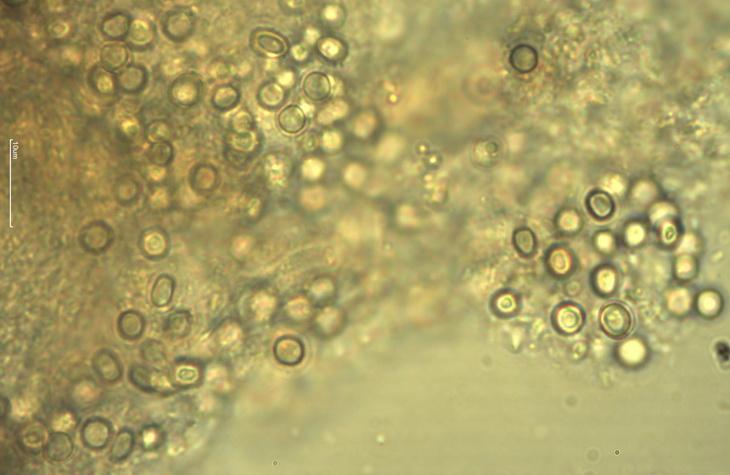
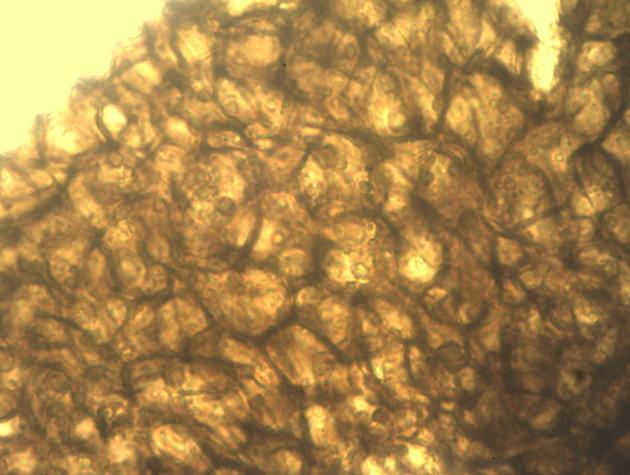
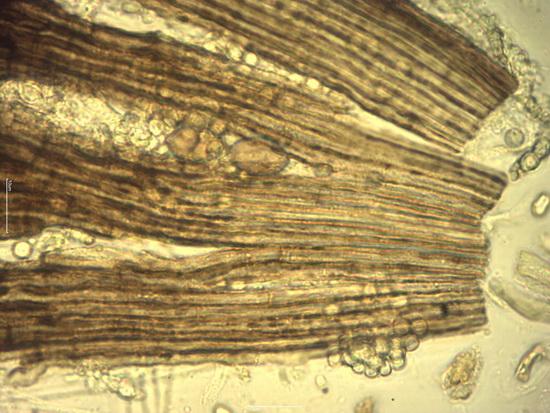
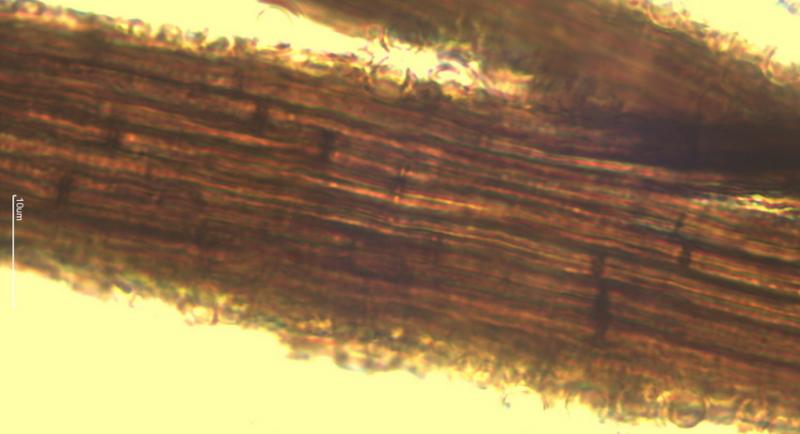
Dave, you are perfectly right: there are two species of long-necked fruitbodies. I just presumed that the black ones were old specimens of what turned to be M. lagenaria, but I was wrong. I just looked at the black ones and I found hyaline, subglobose spores, 3.5 x 3 µm. The neck is formed of parallel septate hyphae, 2-3 µm wide. The perithecium is made up of globose cells. From what I found on Internet, the spore shape doesn't seem to match with O. polyporicola.
Unfortunately Wilhelm, I don't have access to a lab and cannot do cultures. I could always send you part of the specimen if you want to culture them yourself.
Greetings
Renée
It sure looks like Melanospora lagenaria, thank you.
Dave, you are perfectly right: there are two species of long-necked fruitbodies. I just presumed that the black ones were old specimens of what turned to be M. lagenaria, but I was wrong. I just looked at the black ones and I found hyaline, subglobose spores, 3.5 x 3 µm. The neck is formed of parallel septate hyphae, 2-3 µm wide. The perithecium is made up of globose cells. From what I found on Internet, the spore shape doesn't seem to match with O. polyporicola.
Unfortunately Wilhelm, I don't have access to a lab and cannot do cultures. I could always send you part of the specimen if you want to culture them yourself.
Greetings
Renée
Wilhelm De Beer,
26-10-2012 07:57
Re : Ophiostoma sur Fomes fomentarius
Dear Renee
I will be very glad if you can send material. Please email me at wilhelm.debeer@fabi.up.ac.za">wilhelm.debeer@fabi.up.ac.za so we can organize this.
Wilhelm
I will be very glad if you can send material. Please email me at wilhelm.debeer@fabi.up.ac.za">wilhelm.debeer@fabi.up.ac.za so we can organize this.
Wilhelm