
04-06-2026 10:50
 François Freléchoux
Bonjour, J'ai trouvé hier un petit asco observé
04-06-2026 07:02
François Freléchoux
Bonjour, Voici la description d'une espèce qui p
04-06-2026 13:34
Gernot FriebesHi,I am interested to hear your opinion on this Le
04-06-2026 11:36
Gernot FriebesHi,found on Vaccinium myrtillus.Asci: IKI –, 8-s
22-05-2026 13:29
Gernot FriebesHi,I am curious to hear your opinion on this mater
18-10-2022 00:12
Valencia Lopez Francisco JavierHola amigos/asRecientemente encontré esta colecci
 Hi all,
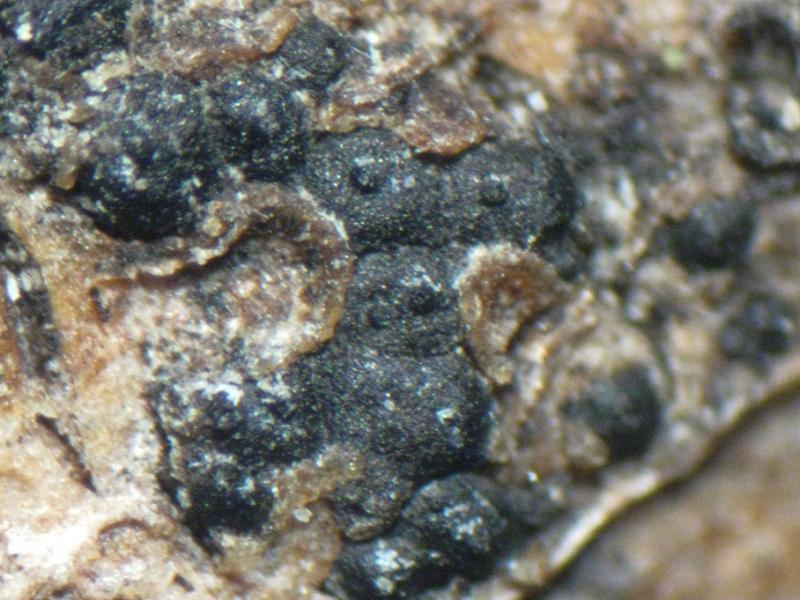
Someone gave me this fungus found on Sarothamnus scoparius.
Black perithecia globulose, 350 high x 300 wide, with a distinct short ostiole,immersed and tearing periderm.
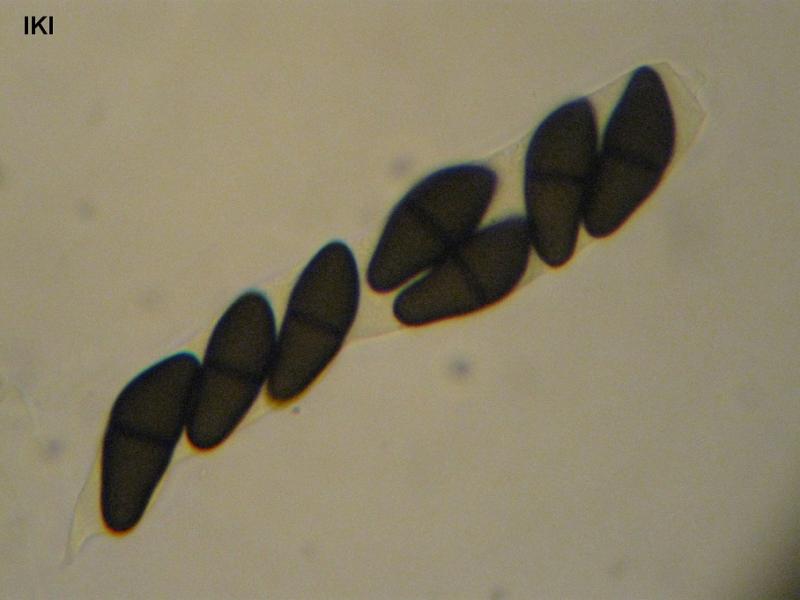
Hamathecium composed of paraphyses, hyaline, septate, 2 µm wide, and cylindrical and bitunicate asci.
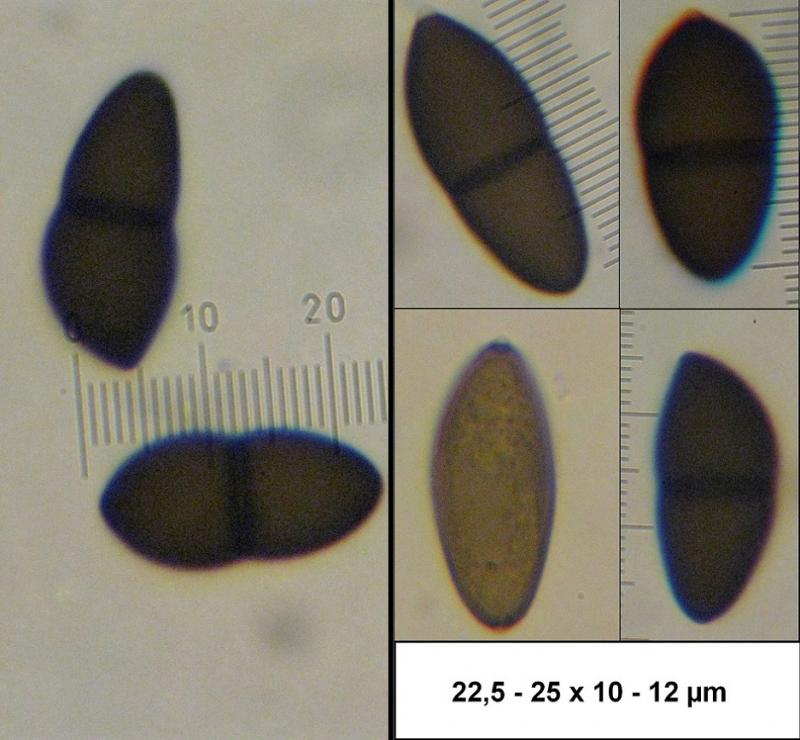
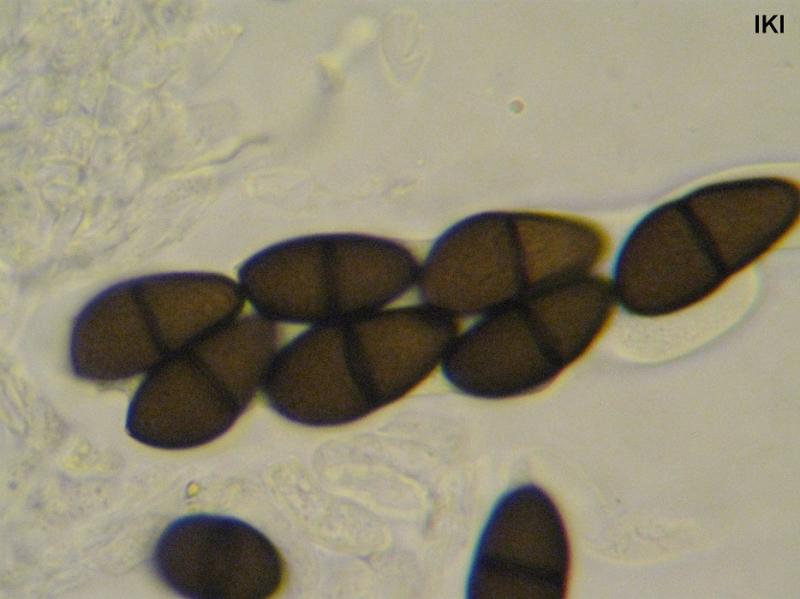
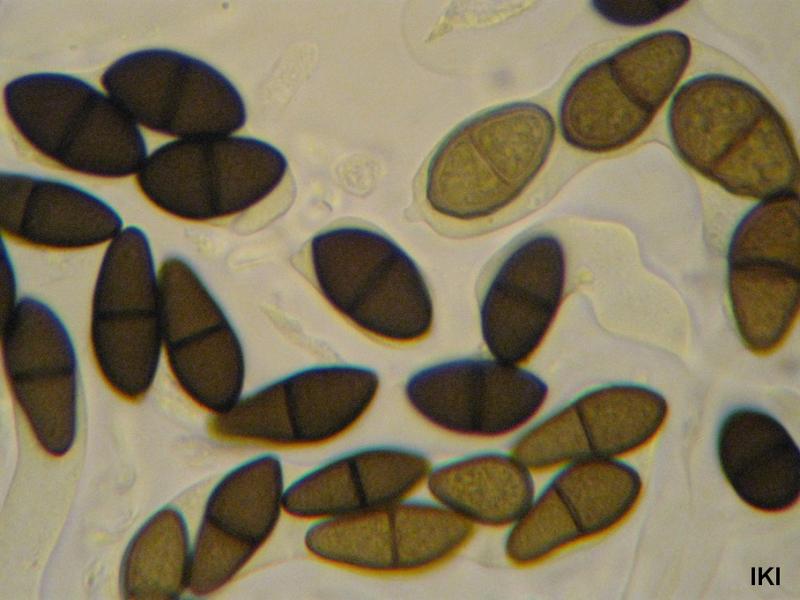
Ascospores brown, 1-septate, surrounded by a hyaline sheath, verruculose, generally asymetrical, 22,5-25 x 10-12 µm.
These precedent features are according to Didymosphaerella spartii.
BUT :
We can see hyaline rounded apical ends on the ascospores (=pore ?). I never read in litterature that this king of fungus has this feature. And I don't believe that Petrak, Chlebicki, Fabre (it comes from Vaucluse, his area of prospection) and other mycologists never see it.
What do you think ?
Do I search in another direction (Microthelia complex for example) ?
Alain

as-tu considéré le genre Dothidottia?
Je te retiens au courant.
Alain
Des nouvelles.
Il s'agirait bien d'une espèce de "Botryosphaeria" (s. l.) à spores brunes uniseptées reversées dans le genre Dothidotthia.
Deux espèces sont proches : B. viticola qui vient sur Vitis et qui a des spores presque identiques et B. iberica qui vient sur Quercus ilex, possédant des spores de même taille mais sans les appendices.
On est tout proche.
Si quelqu'un connait une espèce de ce groupe venant sur S. scoparius, je suis preneur !
Ma question : B. viticola peut-il se rencontrer sur un autre support tel ce genêt ?
Alain
Pärdon pour la nouvelle terminologie :
il faut les appeler Spencermartinsia viticola et Dothiorella iberica.