
02-05-2026 12:42
Alain BRISSARDBonjour à tousJeuidi 30 avril dernier on m'a remi
02-05-2026 13:06
Pauline. PennaBonjour Please can someone help me with this id
01-05-2026 22:45
 Thierry Blondelle
Bonjour à tous, Une récolte sur bouse séchée d
28-04-2026 20:07
 Lothar Krieglsteiner
... on twig in the air at standing Ceratonia siliq
14-04-2026 05:32
Ethan CrensonHi all, A few weeks back a friend pointed out som
28-04-2026 20:33
Vitus SchäfftleinHello, I found Trochila ilicina on Ilex aquifoliu

30-04-2026 10:28
Rot BojanHello, by appearance I would say that I am dealing
27-04-2026 18:48
Tony MoverleyCollected 23rd April 2026, Norfolk, EnglandSwarms
27-04-2026 20:52
Lothar Krieglsteiner
Found on hanging tiwg of Olea europaea in dried-ou
 Dear friends
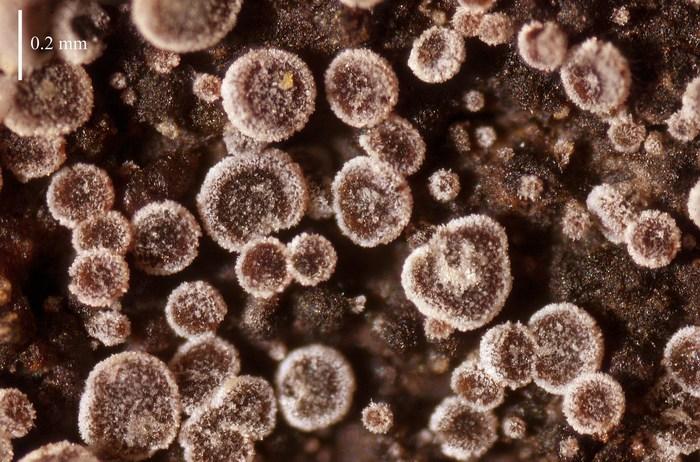
We have found these minute (up to 0.5 mm), very densely gregarious ascomata growing on
stromata of Eutypa sp. on Fagus wood. There were hundred of fruit bodys filling
the surface of the stromata that, on the other hand, were fertil. No anamorph.
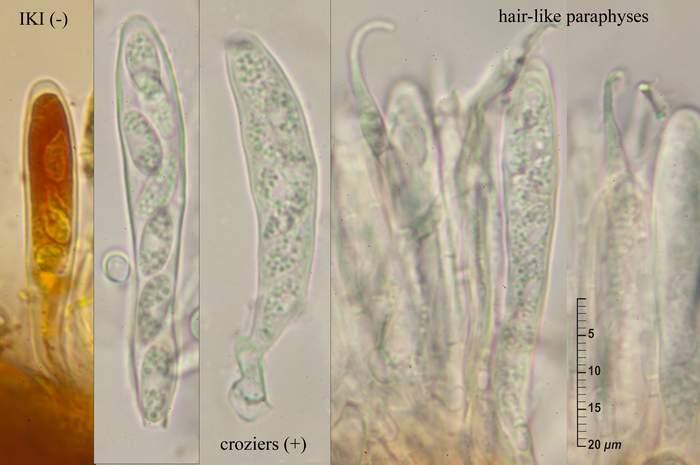
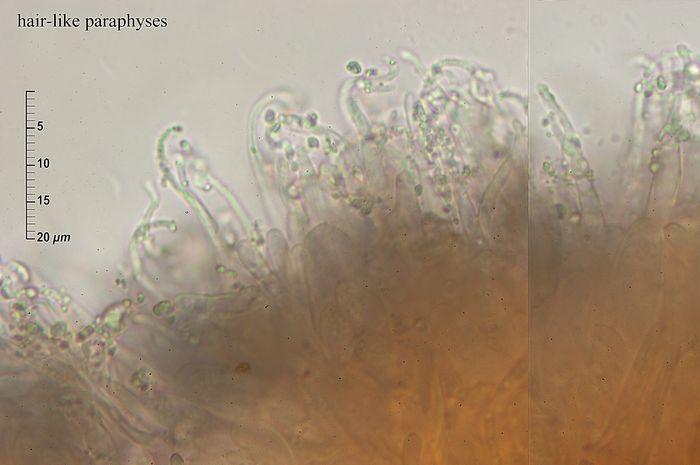
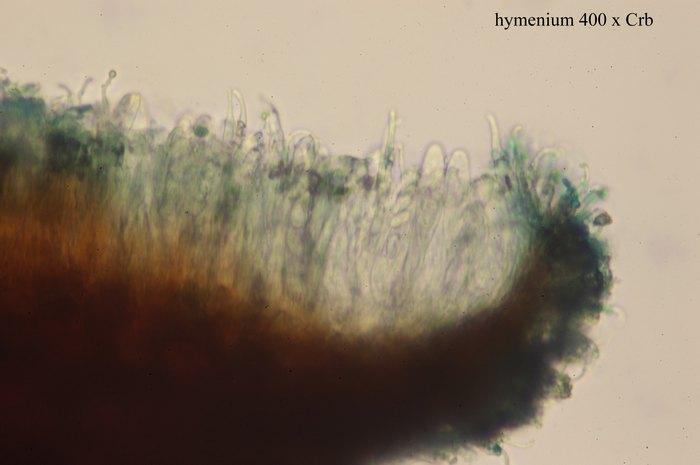
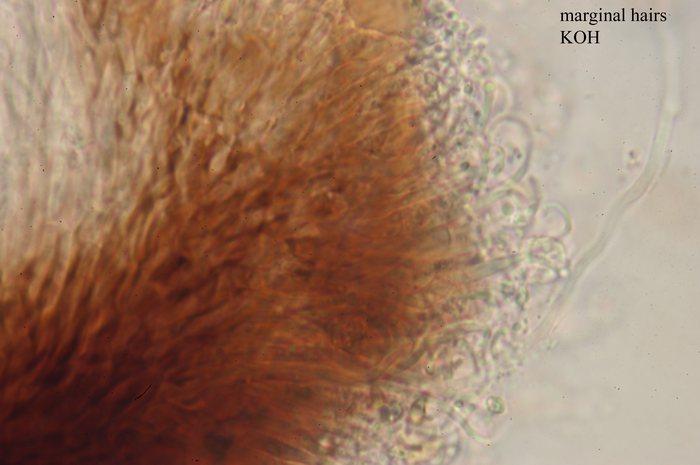
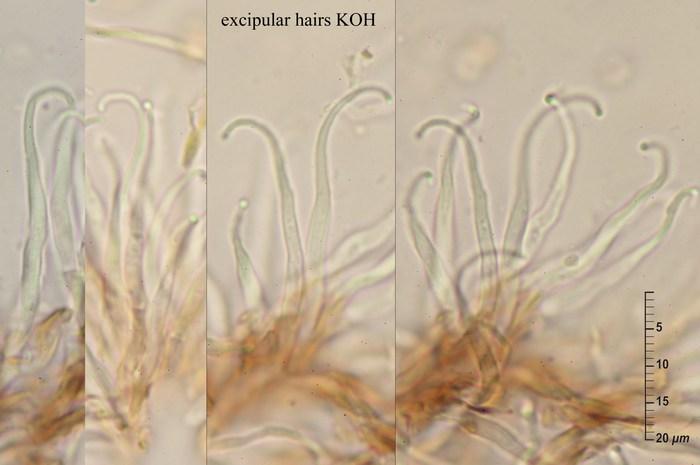
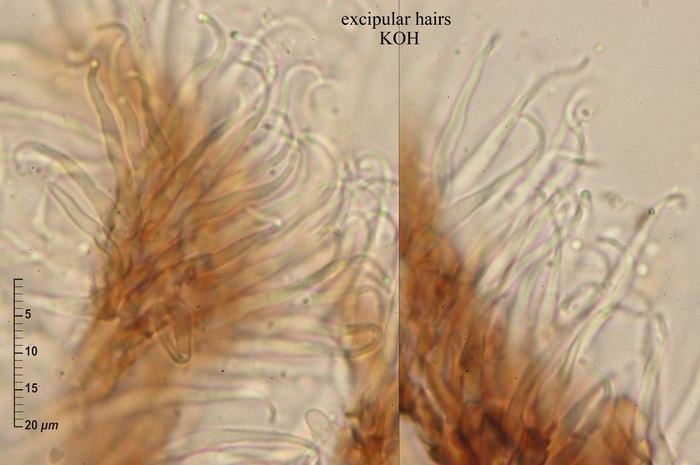
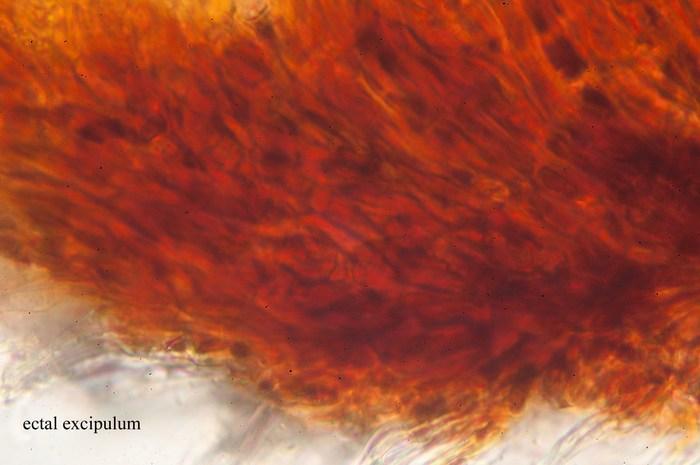
The ascomata, turbinate and attached by a narrow point, are vinaceous brown and the hymenial surface (and the excipulum too) is very pruinose by the existence oh hooked granulate hair-like paraphyses. The excipular and marginal hairs are hyaline or subhyaline with hooked and granulate neck, whith any refringence at their walls and they arise from the
gelified and reddish brown cells of the excipulum.
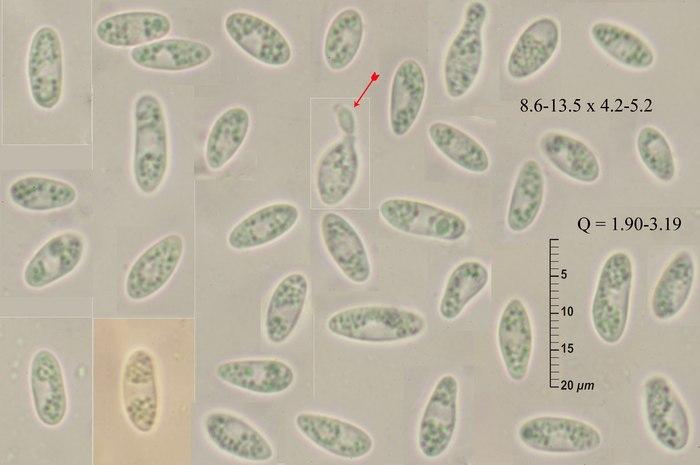
The asci are 8-spored, IKI negative, croziers positive. Some ascospores seem to make
ellipsoid microconidia.
I don't know an Unguiculariopsis species with these characters. ZHUANG (1988) describes
U. parasitica and U. dimorpha as parasitic of pyrenomycetes, but their ascospores are different.
Can you help me
Thanks again

you once had such a species: Unguiculariopsis, ERD-5523:
Arbeyales (Asturias), 14-IV-2012, as Unguiculariopsis. On Rosa sp. stems (on cankers) at 1000 m of altitude. The paraphyses are partially hooked as the excipular/marginal hairs.
I never saw such large-spored Unguiculariopsis myself. The hooked paraphyses are unknown in the genus, but occur in Unguiculella. Species of that genus are more hyaline....
You can send me your pics, that would make it easier and in better resolution.
Zotto
I was searching the photos of the collection on Rosa but I don't find them.
I think these collections are the same thing and they are closely related with Eutypa.
A good name for the fungus. Maybe you will collect it when you arrive to Somiedo!