
03-05-2026 10:57
 Castillo Joseba
Me mandan el material seco de Galicia (España) re
02-05-2026 12:42
Alain BRISSARDBonjour à tousJeuidi 30 avril dernier on m'a remi
02-05-2026 13:06
Pauline. PennaBonjour Please can someone help me with this id
01-05-2026 22:45
 Thierry Blondelle
Bonjour à tous, Une récolte sur bouse séchée d
28-04-2026 20:07
 Lothar Krieglsteiner
... on twig in the air at standing Ceratonia siliq
14-04-2026 05:32
Ethan CrensonHi all, A few weeks back a friend pointed out som
28-04-2026 20:33
Vitus SchäfftleinHello, I found Trochila ilicina on Ilex aquifoliu
30-04-2026 10:28
Rot BojanHello, by appearance I would say that I am dealing
Peziza species on soil (burnt ground and dung also present)
Pollard Adam,
18-12-2013 18:02
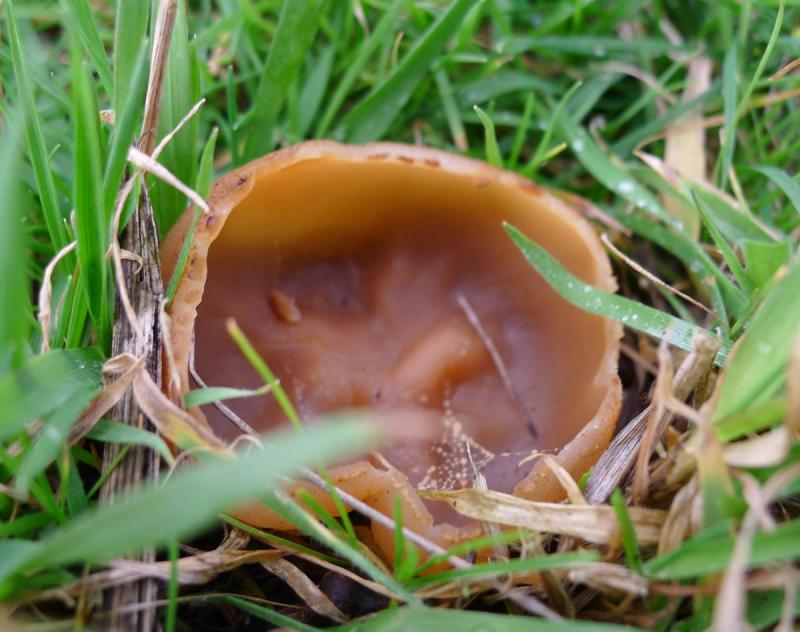
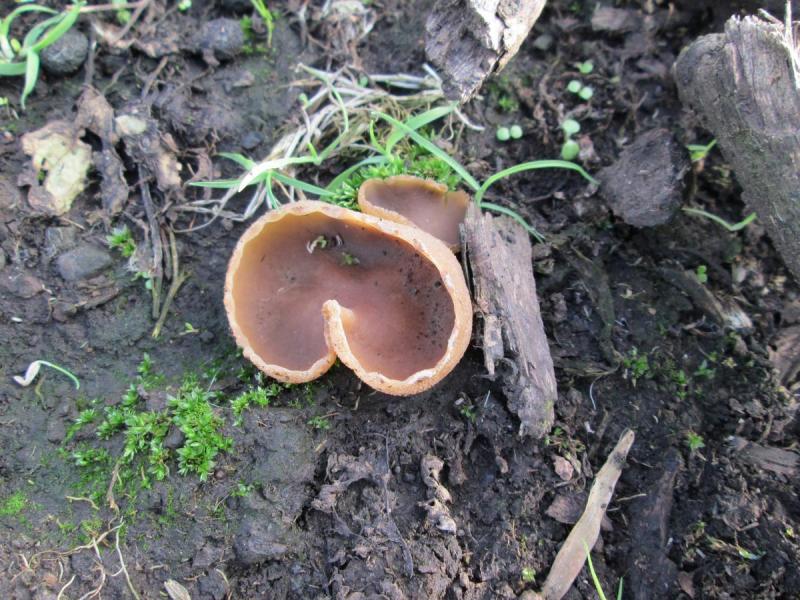
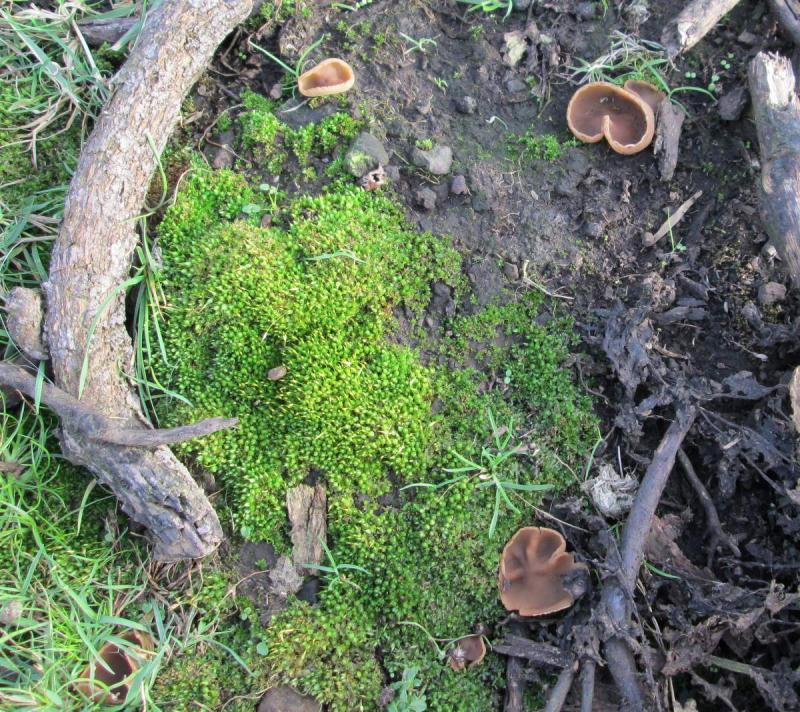
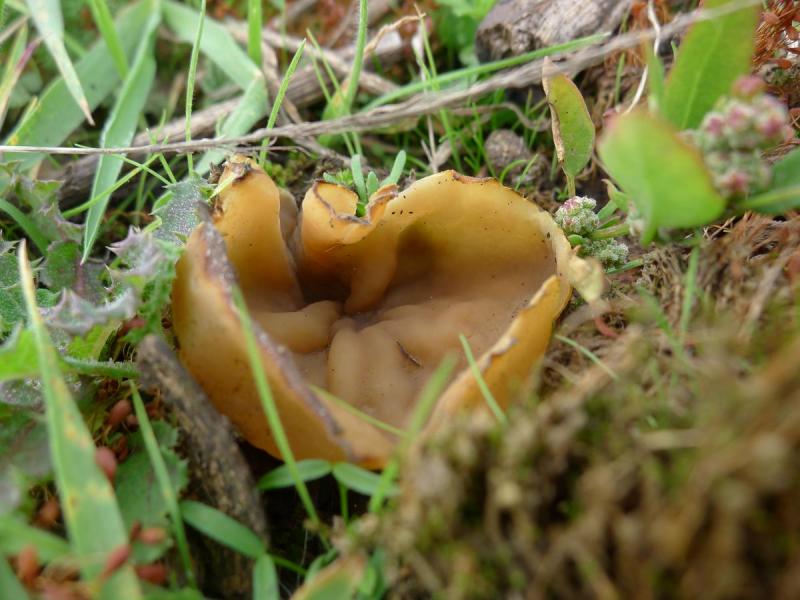
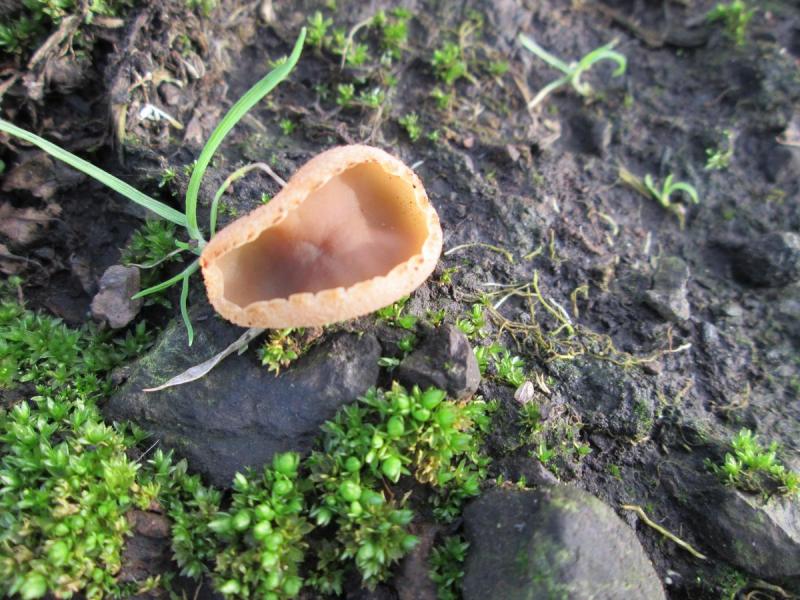
It grows all year on a site of burnt gorse. However, there is also cow dung. It grows on the soil (or perhaps buried wood)
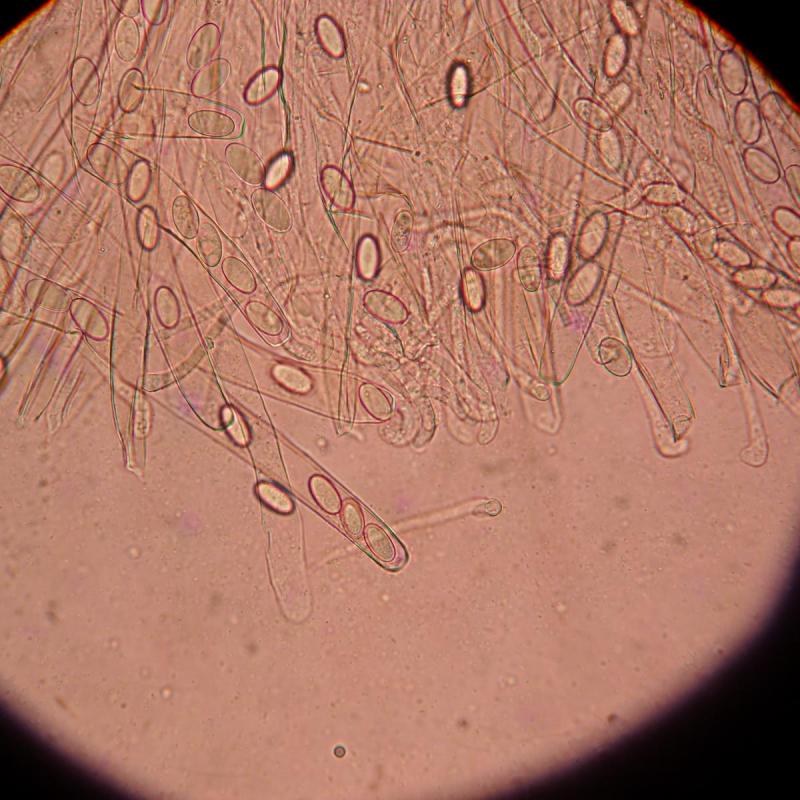
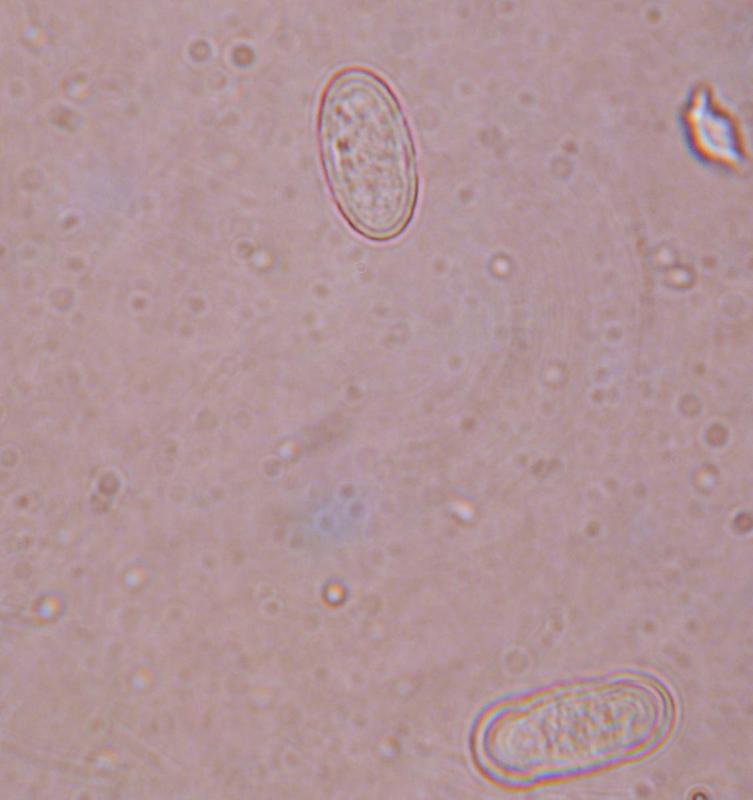
They are up to 5cm diamete. The spores are 9-11 x 20-23 micrometres. I have been using the Brian Spooner key and am getting P.vesiculosa or P.granulosa. The paraphyses are curved like hockey sticks. Am I in the right area?
The microscopy is of the first photo, in case its a different species.
Peter Thompson,
18-12-2013 23:52
Re : Peziza species on soil (burnt ground and dung also present)
Hello Adam,
I think that you certainly have more than one species. The 2nd, 4th and 6th images I believe to be Peziza echinospora, which grows on burnt ground.
If you still have the fruit bodies, check for spores in the range 14 - 18 x 7 - 9.5um. Their surface should be covered with small warts (verruculose).
I am not sure about the others, without more microscopic data.
Literature references:
Fungi of Switzerland Vol. 1 Species 41 (with a very poor photograph)
Microfungi on Miscellaneous Substrates Page 54, Species 147
Ascomycetes in Colour found and Photographed in Mainland Britain Species 24.
Best Wishes,
Peter
I think that you certainly have more than one species. The 2nd, 4th and 6th images I believe to be Peziza echinospora, which grows on burnt ground.
If you still have the fruit bodies, check for spores in the range 14 - 18 x 7 - 9.5um. Their surface should be covered with small warts (verruculose).
I am not sure about the others, without more microscopic data.
Literature references:
Fungi of Switzerland Vol. 1 Species 41 (with a very poor photograph)
Microfungi on Miscellaneous Substrates Page 54, Species 147
Ascomycetes in Colour found and Photographed in Mainland Britain Species 24.
Best Wishes,
Peter
Pollard Adam,
19-12-2013 00:54
Re : Peziza species on soil (burnt ground and dung also present)
Thanks Peter. It is quite an exciting site for fungi in a very small area. The microscopy images I provided are for the the first fruiting body shown. I still have the specimen. What more information (microscopic or macroscopic) can I provide for it while it is still reasonably fresh?
Peter Thompson,
19-12-2013 11:47
Re : Peziza species on soil (burnt ground and dung also present)
Hello Adam,
You have already covered some of this, but I suggest the following:
Spore dimensions, ornamentation, presence or absence of guttules.
For the paraphyses, any swollen and/or curved tips or inflated cells lower down.
Colour and external texture of fresh fruit bodies.
Layering of broken or cut flesh to see if there are different 'zones' running through it.
Some species exude a juice from damaged flesh, when fresh.
Substrate (more difficult here as both burnt ground and dung apply).
I think that P. granulosa is a dubious name. In Index Fungorum, Cheilymenia granulata (previously Coprobia granulata) is given, but this is an orange fungus commonly found on cow dung and can be ruled out here.
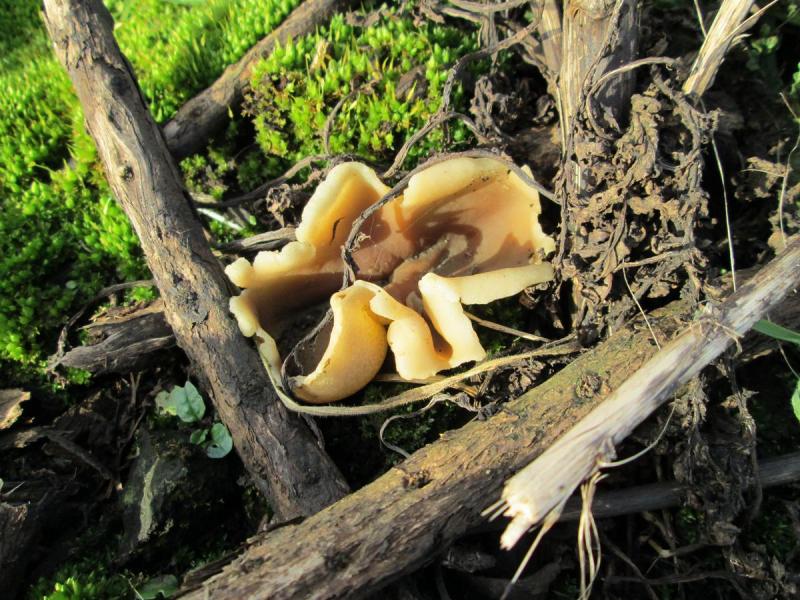
You may well have P. vesiculosa (3rd image), but this usually grows on rotting straw and manure. The yellowish brown fruit body with the very jagged margins, which tend to split, is typical of this species, but its environment looks wrong. You could perhaps check the microscopy for this one. If necessary rehydrate a small piece of it.
Best Wishes,
Peter.
You have already covered some of this, but I suggest the following:
Spore dimensions, ornamentation, presence or absence of guttules.
For the paraphyses, any swollen and/or curved tips or inflated cells lower down.
Colour and external texture of fresh fruit bodies.
Layering of broken or cut flesh to see if there are different 'zones' running through it.
Some species exude a juice from damaged flesh, when fresh.
Substrate (more difficult here as both burnt ground and dung apply).
I think that P. granulosa is a dubious name. In Index Fungorum, Cheilymenia granulata (previously Coprobia granulata) is given, but this is an orange fungus commonly found on cow dung and can be ruled out here.
You may well have P. vesiculosa (3rd image), but this usually grows on rotting straw and manure. The yellowish brown fruit body with the very jagged margins, which tend to split, is typical of this species, but its environment looks wrong. You could perhaps check the microscopy for this one. If necessary rehydrate a small piece of it.
Best Wishes,
Peter.