
20-05-2026 20:08
 Andreas Millinger
Good evening,another quite distinctive find from M
20-05-2026 21:49
Margot en Geert VullingsWe found this Lachnum on Juncus stems mown last ye
20-05-2026 17:47
Margot en Geert VullingsWe found this Mollisia on dead Juncus stems mown l
20-05-2026 12:57
 Ingo Ibelshäuser
Hello everybody, on decayed hardwood e.g. Quercus
22-04-2026 20:54
 Enrique Rubio
Hi to everybody.This Pyrenopeziza grew in moist le

19-05-2026 12:55
 Hardware Tony
After checking Gminder and Otto's library I cannot
19-05-2026 10:27
Patrice TANCHAUDBonjour, récolte récente sur terre retournée i
The first was collected earlier in hollow on dead and alive Sphagnum balticum branches.
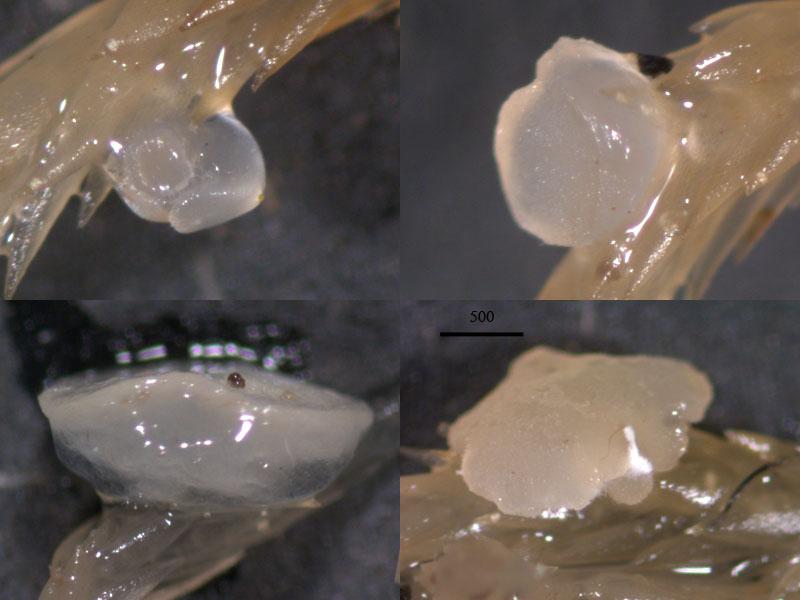
Apothecia at first turbinate, then cupulate, and later with concave hymenium, sessile, basal part translucent, gelatinous, edge and hymenium white to slightly yellowish, 1–2 mm in diameter, 0.4–0.8 mm thick.
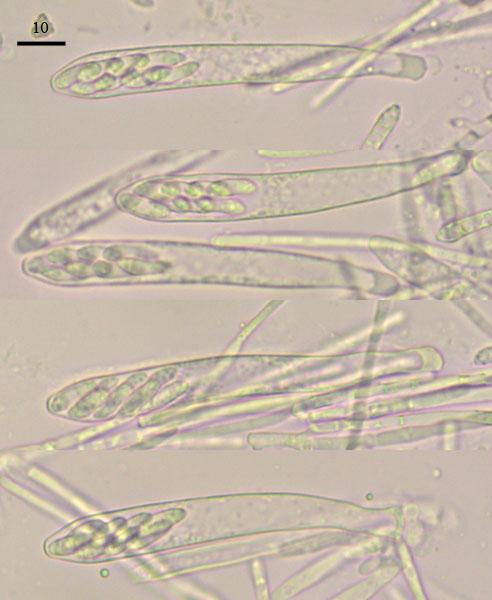
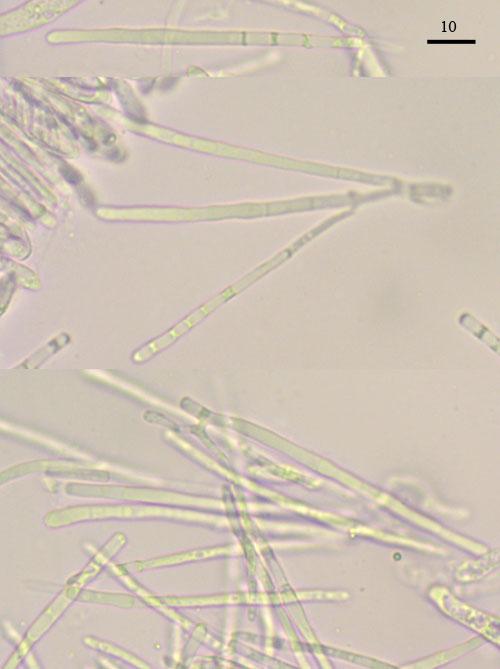
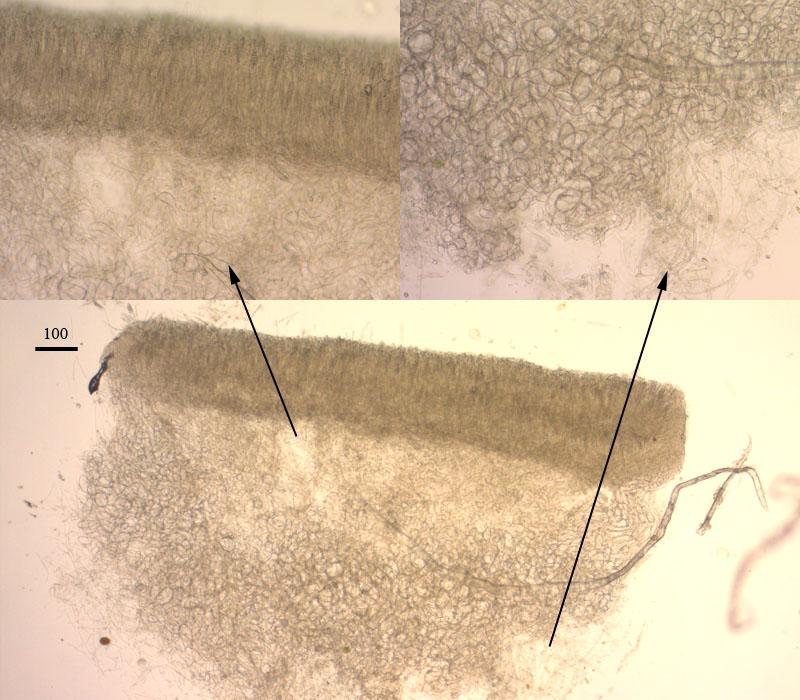
Excipulum at base from prismatic cells, becoming more cylindrical to the edge, end cells cylindrical, about 25 x 4 mk; hyphae of outer gelatinous layer 3.5–4 mk broad; medulla from sosage-shaped to ellipsoid cells, near 50 mk long, 10–15 mk broad; asci clavate, with crozier, euamyloid ring, 70–83 x 9–10.7 mk; paraphyses cylindrical, about 73 x 3 mk; spore ellipsoid, some slightly curved, slightly heteropolar, with many small oils, 12.6 (11.3–13.7) x 4 (3.8–4.2) mk (n=13).
Date of collection: 15.07.2013, Coordinate: N60,891581° E68,683899°.

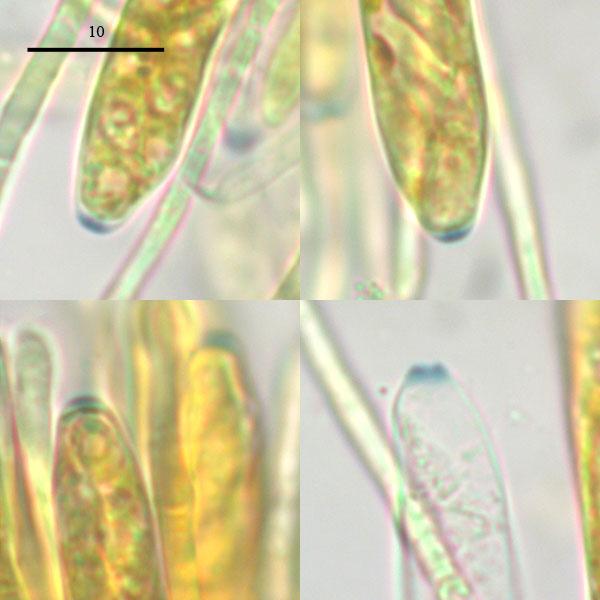
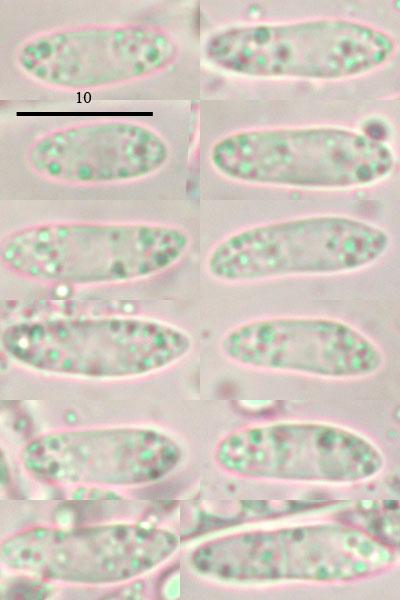

Zotto
and actually these two samples (above described and "Discinella shimperi" published earlier http://www.ascofrance.com/search_forum/21673) were collected 10 m nearby.
But "Discinella" was growing on living branches among green leaves (Sphagnum papillosum), and apothecia were smaller and lacking gel tissie. On the contrary, "Pezoloma" was collected from dead branches (Sphagnum balticum), apothecia larger and have distinct gel at the base. Vacuoles in spores here less pronounced, right.
At first sight, all three specimens remind each other. The "hairs" at the edge of apothecia of second "Pezoloma" (you said Hyaloscypha-like) are more likely outgrowths of excipular hyphae. But spores in this specimen are much smaller. I will look again in the same spot, if there could be changes with age.
Nina.