07-06-2026 12:43
Steve ClementsBojour. This was a strange find on a stick on my
07-06-2026 12:09
 François Freléchoux
Bonjour, Voici une brève description de ce qui m
12-07-2015 00:05
 Nedim Jukic
This one from the same locality as the previous on
06-06-2026 17:44
Steve ClementsBonjour, This disco was on planed wood 3 x 1.5 cm
14-08-2016 23:15
 Alex Akulov
Dear friendsCan you help me to find the descriptio

05-06-2026 11:02
Thomas Læssøehttps://svampe.databasen.org/observations/10596691
04-06-2026 11:36
Gernot FriebesHi,found on Vaccinium myrtillus.Asci: IKI –, 8-s
05-06-2026 12:10
François Freléchoux
Capitotricha sp. sur Lonicea caerulea Caractères
I found this bitunicate ascomycete growing on dead leaves of Eriophorum angustifolium.
Pseudothecia are immersed, ca 100-150 µm diam
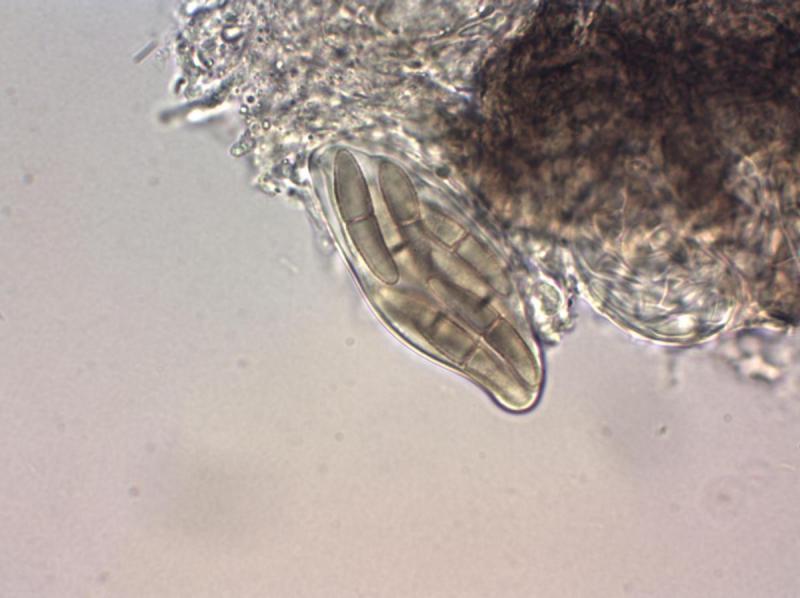
Asci are bitunicate, ovoid, 8-spored, 38-57 x 22-29 µm (only 2 asci measured). Sometimes immature and post-mature asci are present in the same pseudothecium.
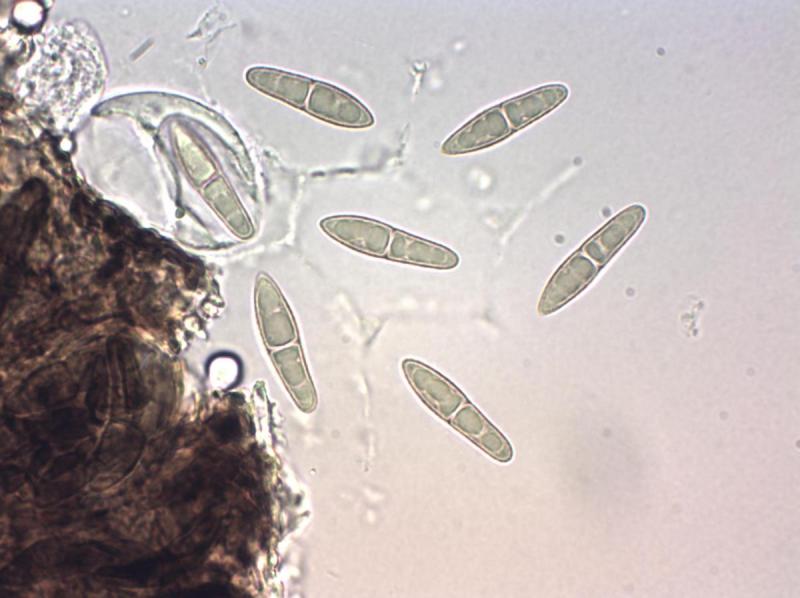
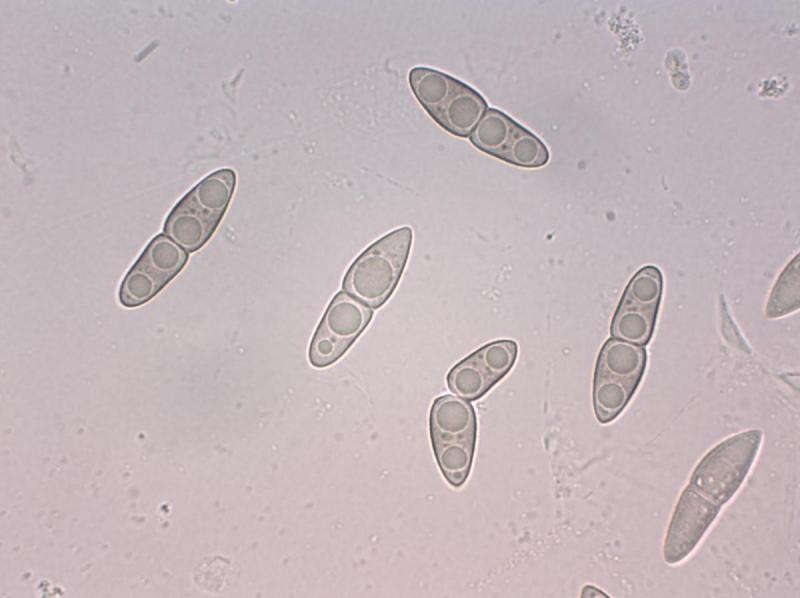
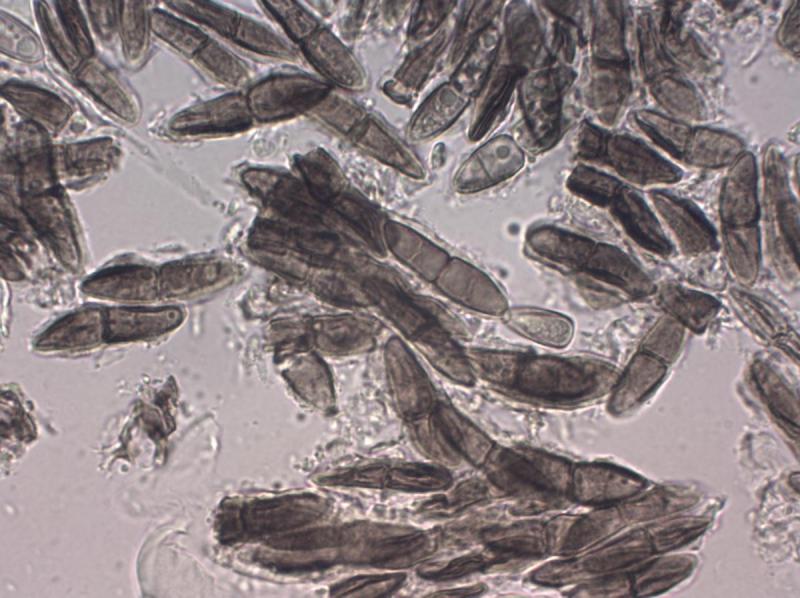
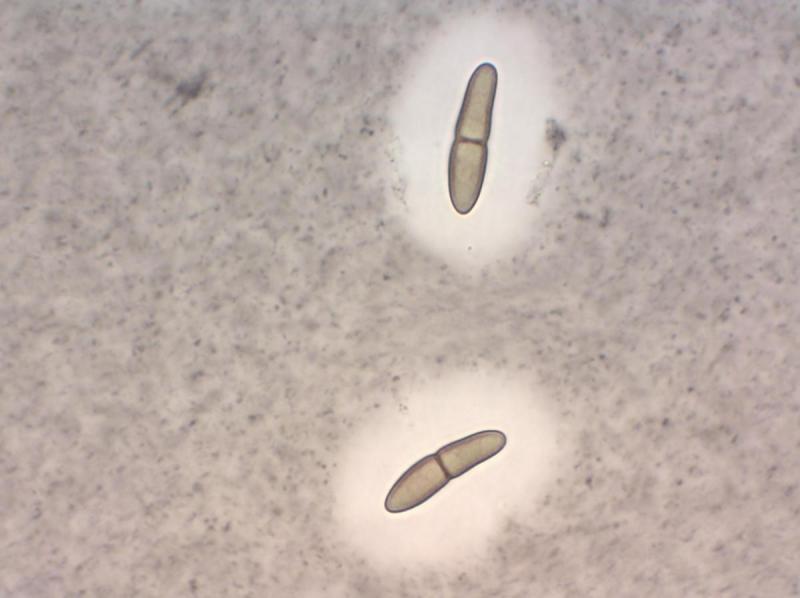
Spores are mostly 22-25 x 5-6(-7) µm, in one sample rather larger (<31 µm long). They are 1-septate, slightly constricted at septum, and sometimes splitting at the septum into 2 parts. Spores are hyaline, becoming dark brown when old, with 2 large oil bodies/cell when fresh, and with a thick gelatinous sheath. The spore wall appears to be minutely verruculose in old spores.
I think it belongs in the Pseudosphaeriaceae. I had wondered about Monascostroma innumerosum but the thick gelatinous spore sheath seems to rule out this species and suggests Wettsteinina. The closest fit in Shoemaker & Babcock's 1987 paper on Wettsteinina is probably W. junci, but the description doesn't fit in all respects, e.g. spore dimensions are given as 26-31 x 9-11 µm (i.e. rather larger than in my specimen). Another possibility is W. waltraudae, described by Scheuer and not included in Shoemaker & Babcock.
I'd be grateful for any suggestions.
Thanks
Marcus