
05-05-2026 22:40
Gernot FriebesHi,I believe this is a Plagiostoma growing on a Sa
04-05-2026 18:13
 Stephen Martin Mifsud
ID request for what seems to be a true aquatic fun
04-05-2026 16:39
Stephen Martin Mifsud
ID request: This specimen was collected in Malta o
28-07-2011 18:31
 Alex Akulov
Dear FriendsToday I made the pdf file of Velenovsk
28-04-2026 20:07
 Lothar Krieglsteiner
... on twig in the air at standing Ceratonia siliq
04-05-2026 09:50
 Castillo Joseba
Me mandan el material seco de Galicia,(España) re
02-05-2026 12:42
Alain BRISSARDBonjour à tousJeuidi 30 avril dernier on m'a remi
02-05-2026 13:06
Pauline. PennaBonjour Please can someone help me with this id
01-05-2026 22:45
 Thierry Blondelle
Bonjour à tous, Une récolte sur bouse séchée d

Found on cow dung.
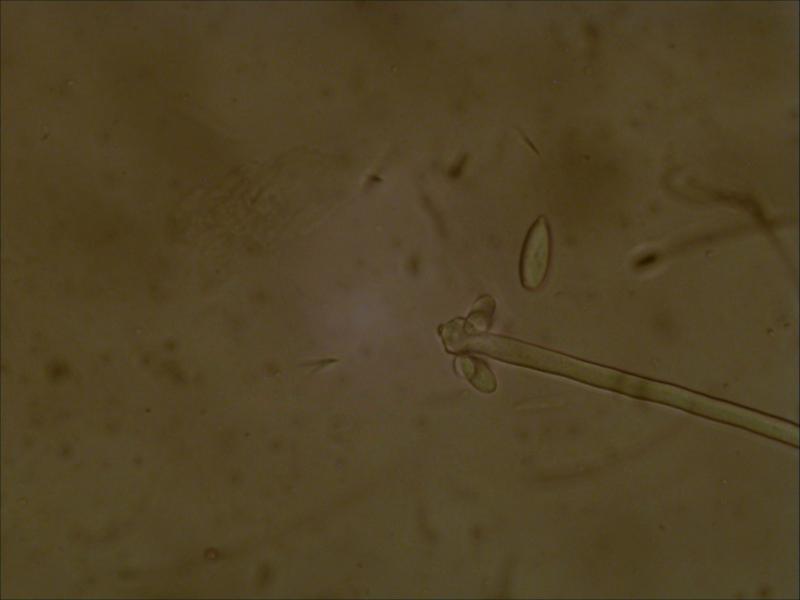
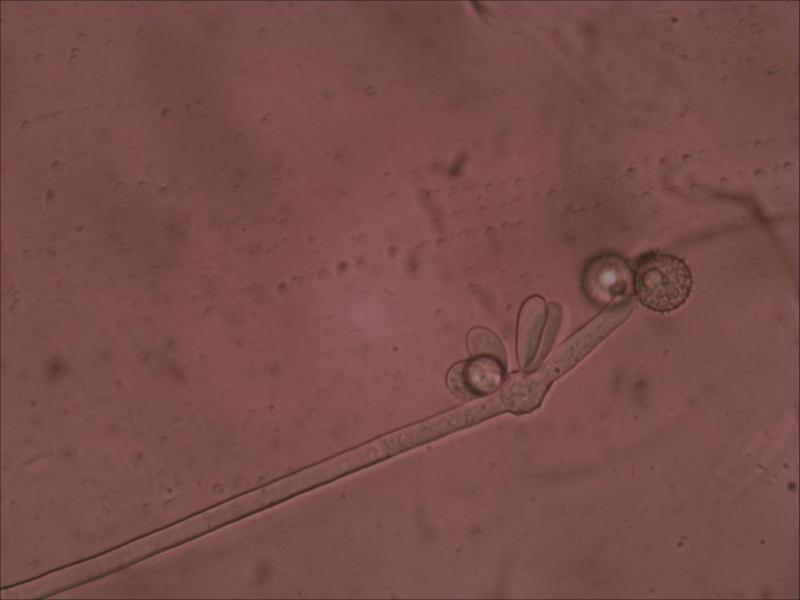
It looks as if it developes two kinds op conidia's circular and ovel shaped on two places of the stem.
Circular conidia's are covered with wrats and the oval conidia's are not.
Stem: hyaline; 420-450x3-3.5um; septated, with two conidia origins; distance between origins 13-14 um; stem can be branched.
Oval conidia's: 7-8x2.5-3.5 um
Circular conidia's: 6-7 um in diameter.
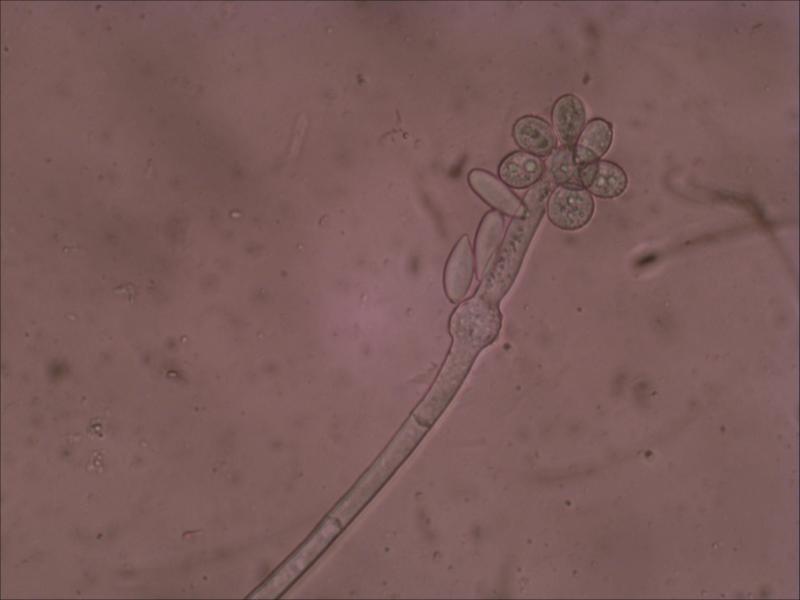
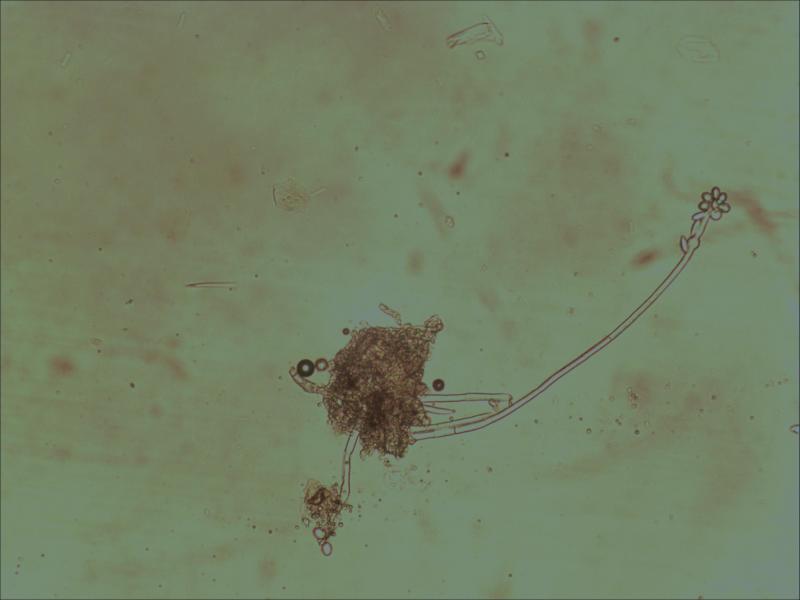
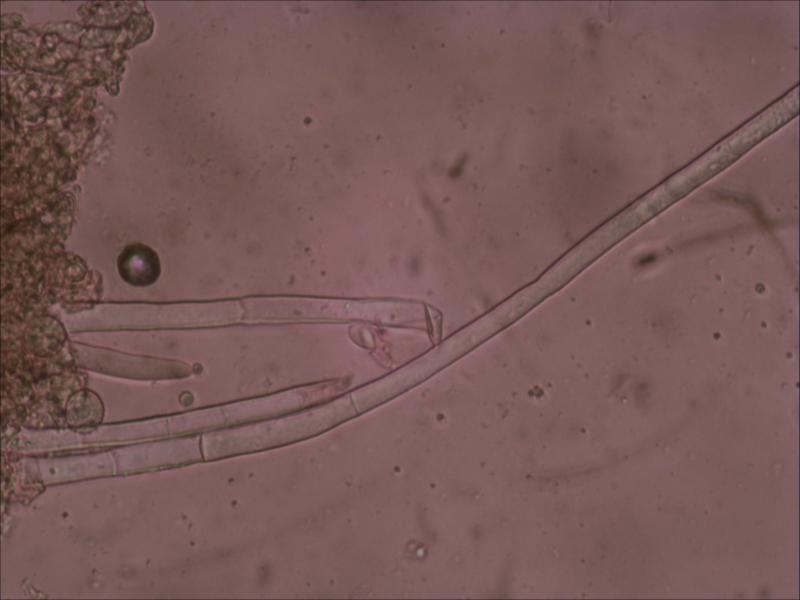
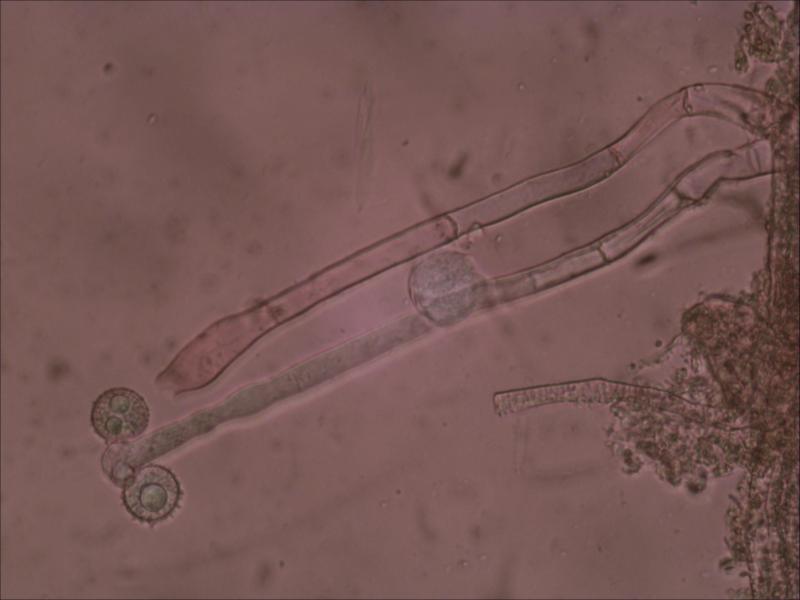
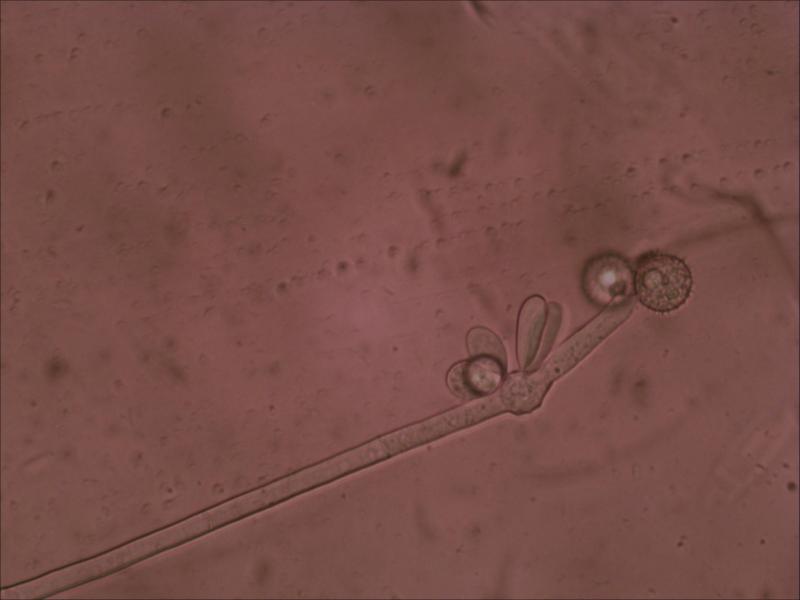
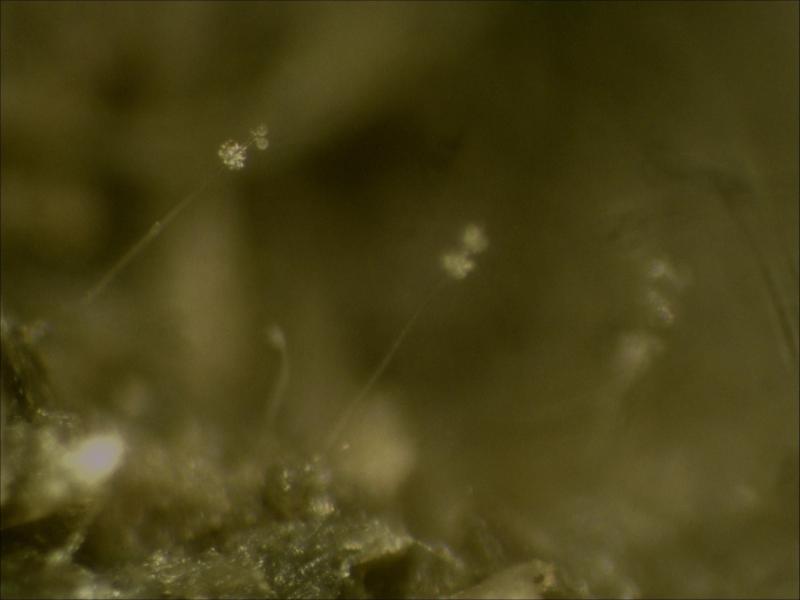

the 'hyphomycete' with the elongate conidia looks very like Gonatobotrys simplex (anamorphic Melanospora damnosa (Sacc.) Lindau), a species which is often found associated with other fungi. Your photo's show these conidia both on the apical and the intercalary swellings.
The globose conidia I don't know about - are you absolutely sure only one fungus species is involved here? Might these globose conidia be "strays".
cordialement
Chris
Hello Chris,
You probably may be right that we do have two different species, one with elongated codidia's and one with globose conidia's.
The stem with elongated conidia's does not have an intercalary swelling underneath the apical one, and the is branched.
The stem with globose conidia's is not branched, but the photo's also show elongated originating from the intercalary swelling.
On the other hand the last photo gives the impression that the elongated conidia's are attached to the bulbous thickening of the stem.
The photo of the species on dung, although not good in focus, clearly shows globose conidia's on top of the stem and a bunch of conidia's beneath the top not positively identified as being elongated or globose.
I will have a look for more species hopefully solving the identification problem.
Joop
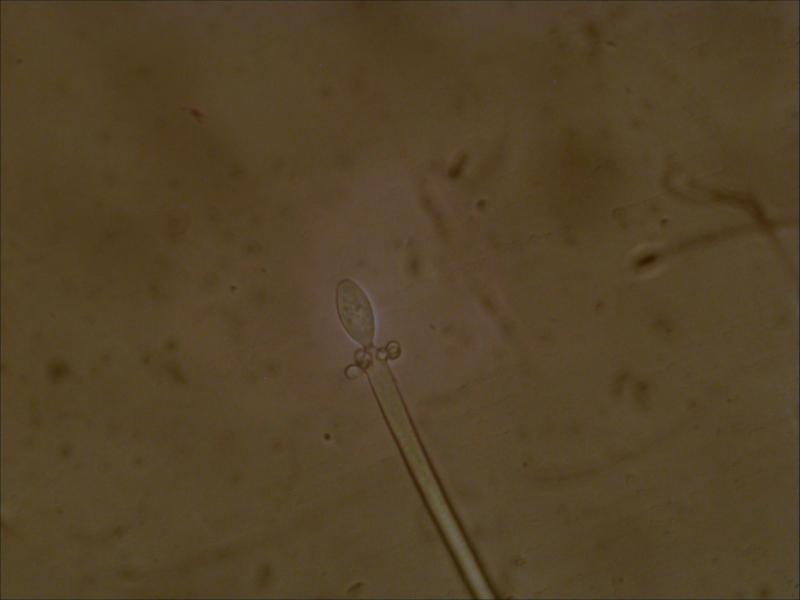
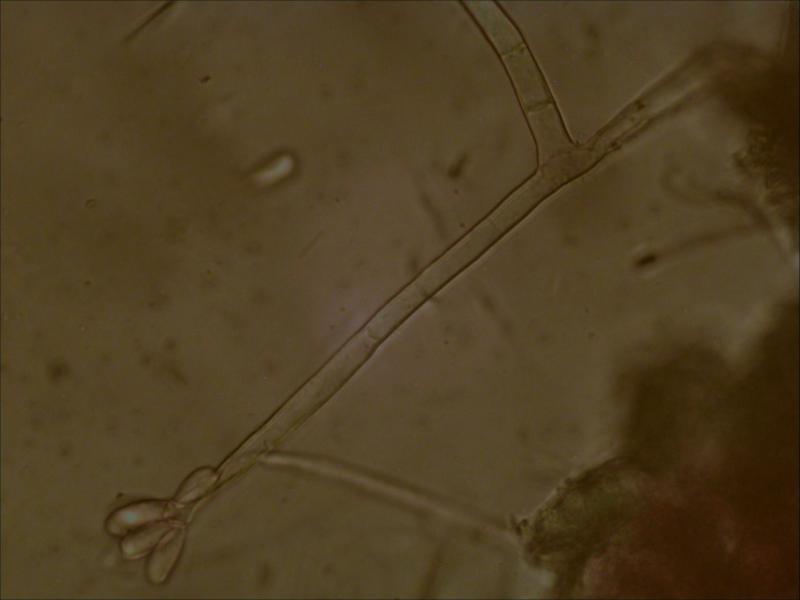
Chris