
02-06-2026 14:33
 Nicolas VAN VOOREN
Hello.I'm searching for a PDF copy of the followin
18-10-2022 00:12
Valencia Lopez Francisco JavierHola amigos/asRecientemente encontré esta colecci
02-06-2026 17:58
Louis DENYBonjour forum, Sur feuille de Populus tremula, en

28-07-2011 18:31
 Alex Akulov
Dear FriendsToday I made the pdf file of Velenovsk
11-09-2025 16:57
 Jason Karakehian
Our revision of Marthamycetales (Leotiomycetes) is
12-11-2019 10:32
 Miguel Ángel Ribes
Hi againExactly at the same place than my previous
25-12-2019 17:54
Valencia Lopez Francisco JavierHola a todos/asEstas supuestas pezizas estaban en
12-07-2015 00:05
 Nedim Jukic
This one from the same locality as the previous on
Calycellina aff chlorinella 101114 21
Miguel Ángel Ribes,
06-02-2015 00:08
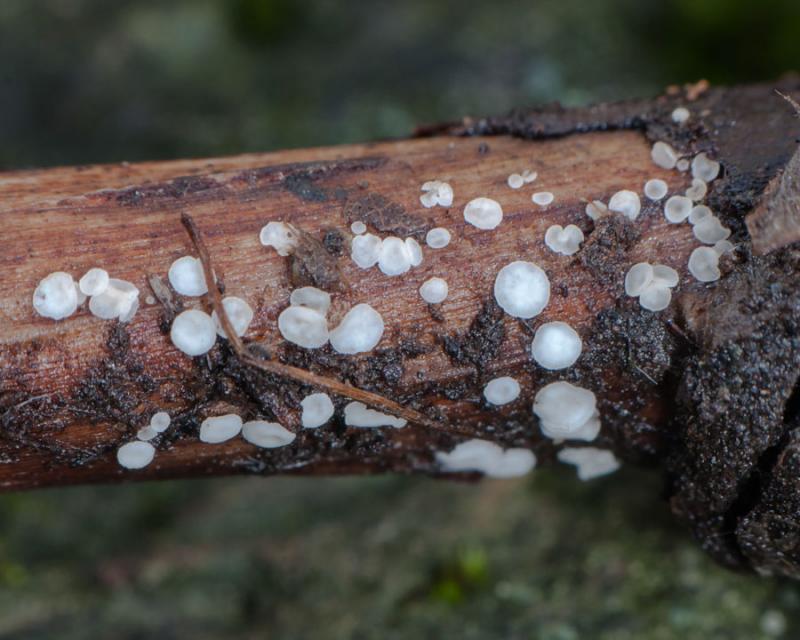
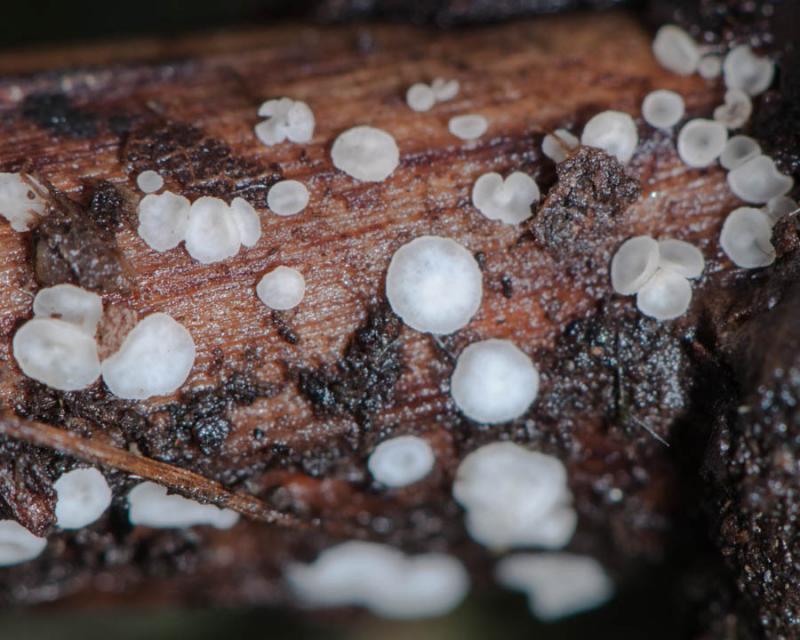
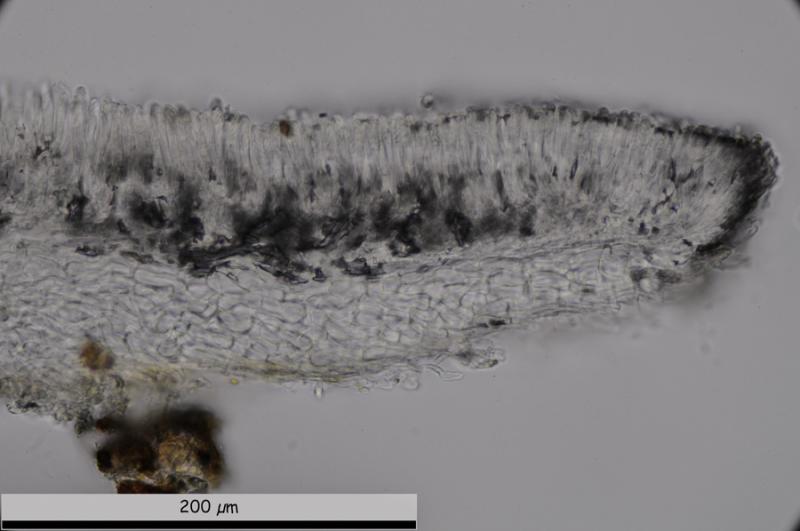
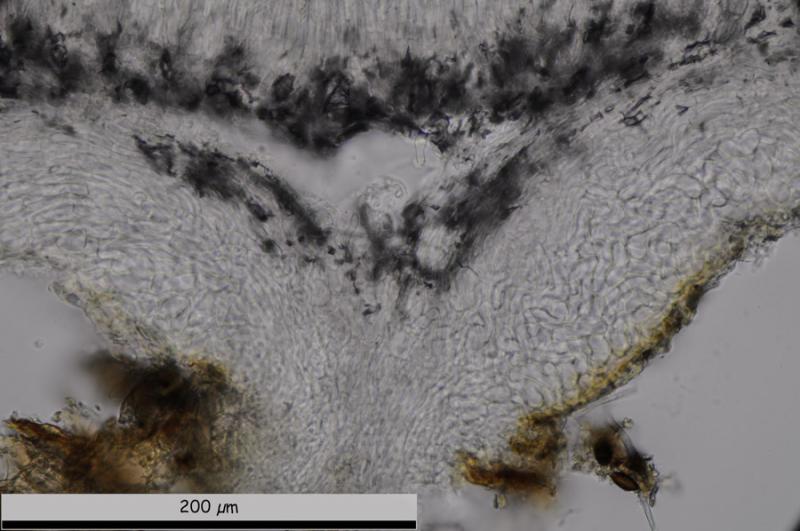
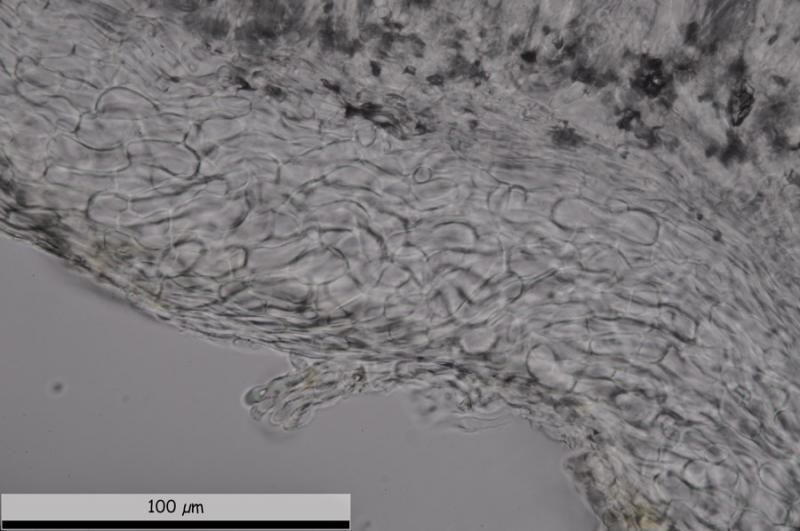
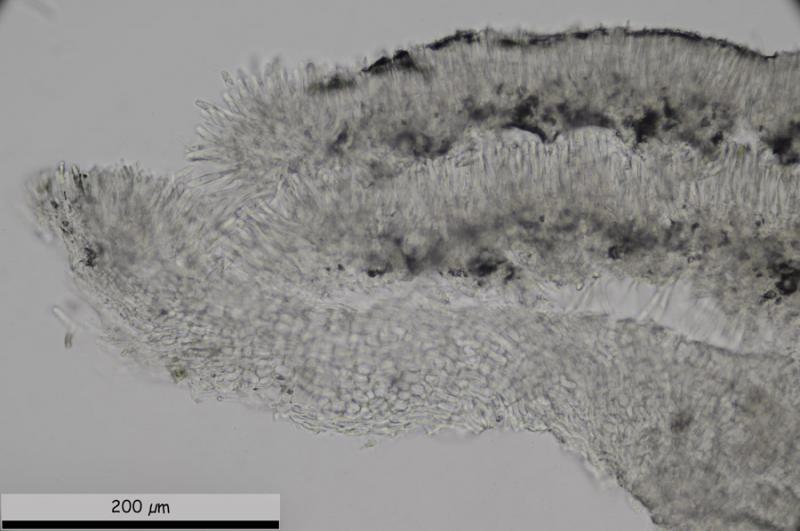
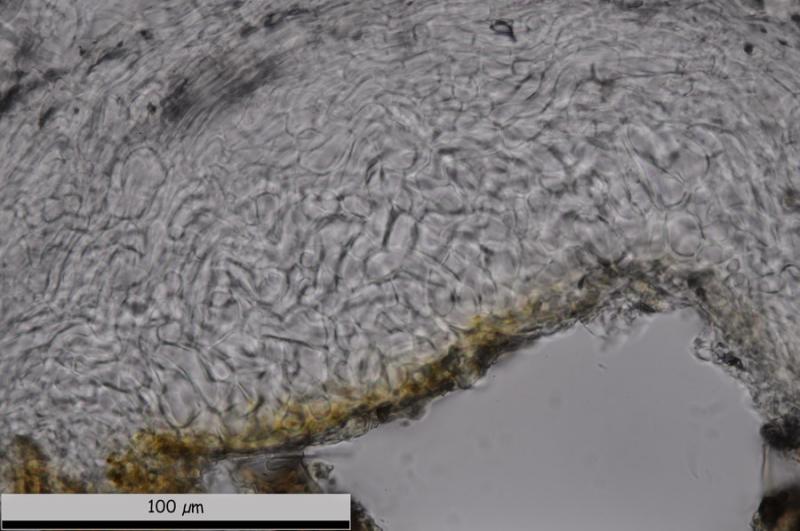
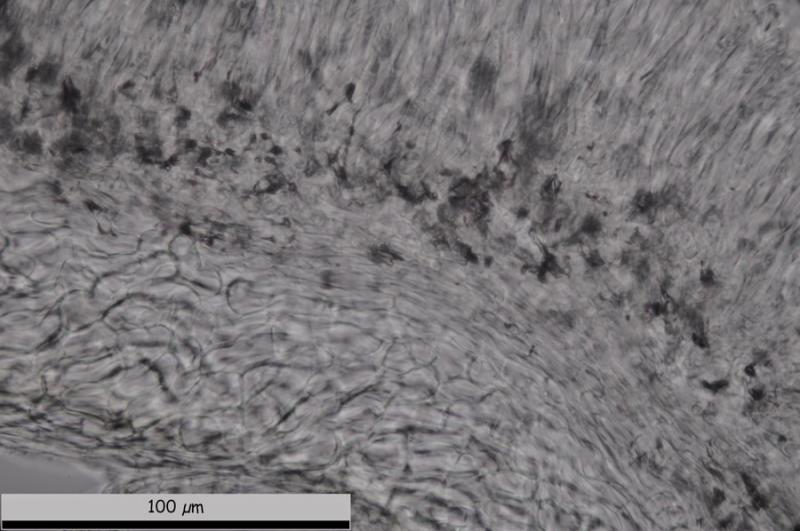
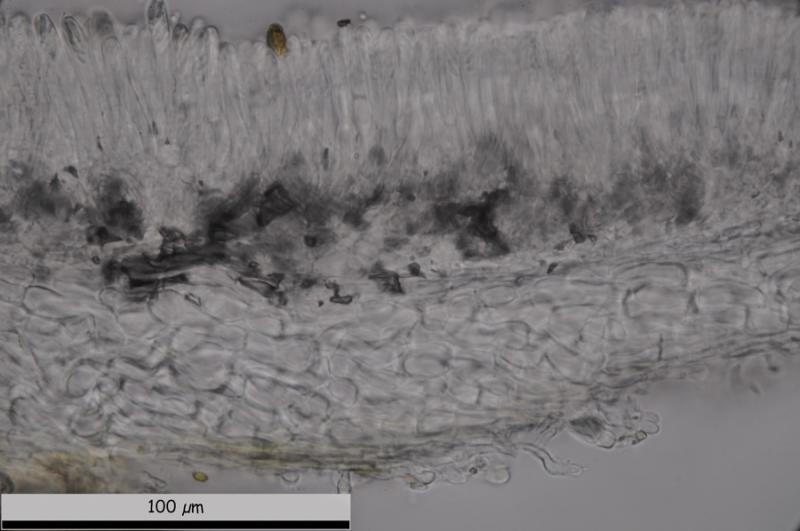
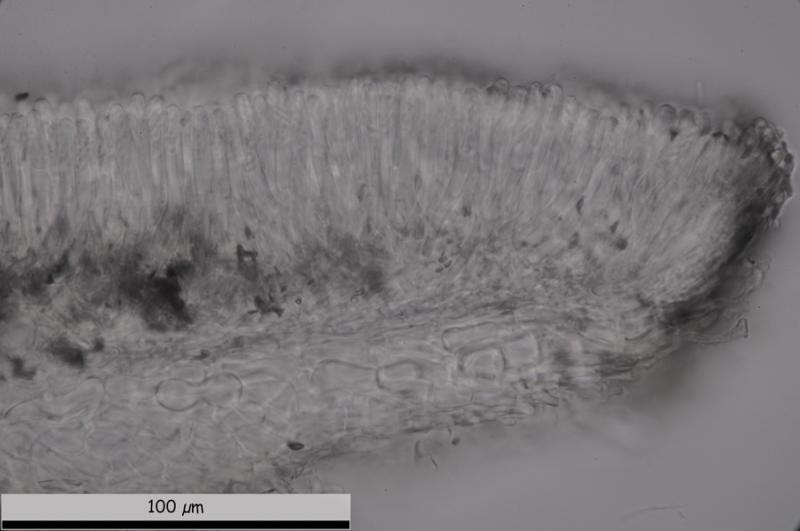
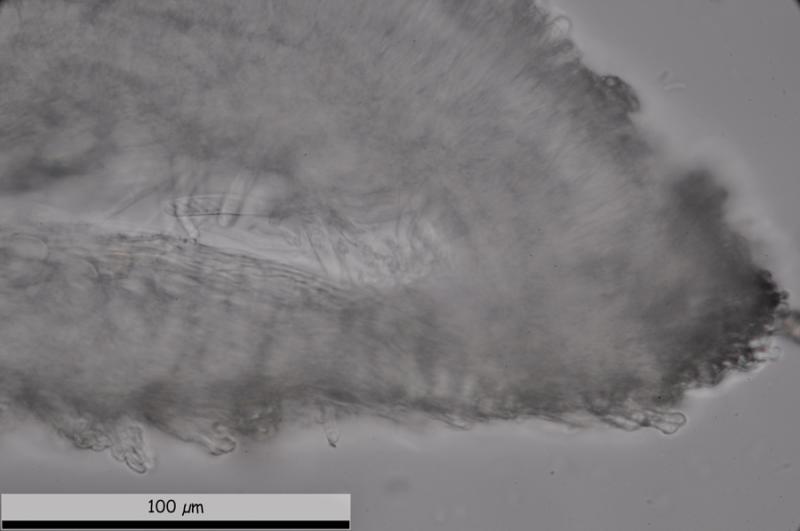
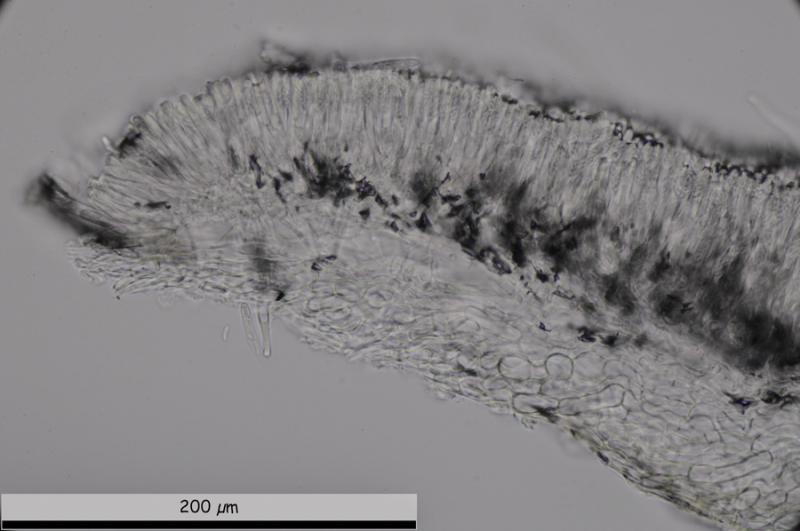
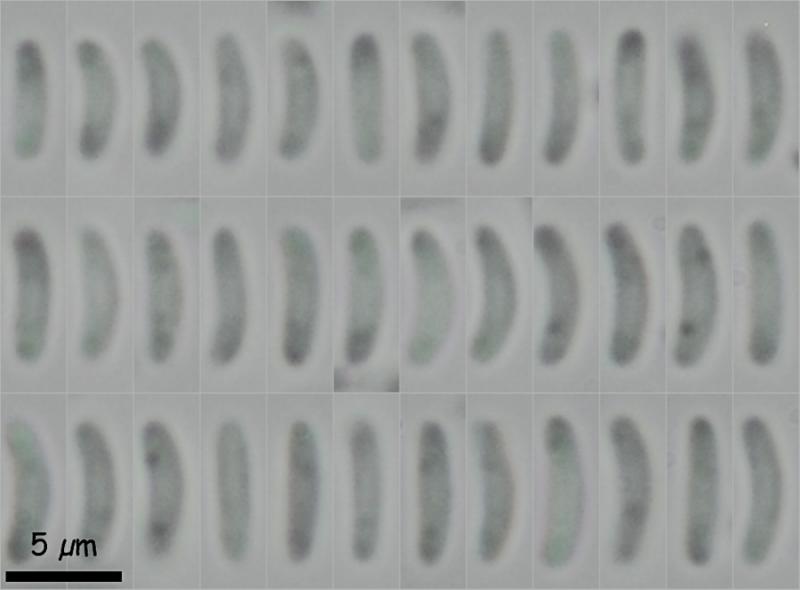
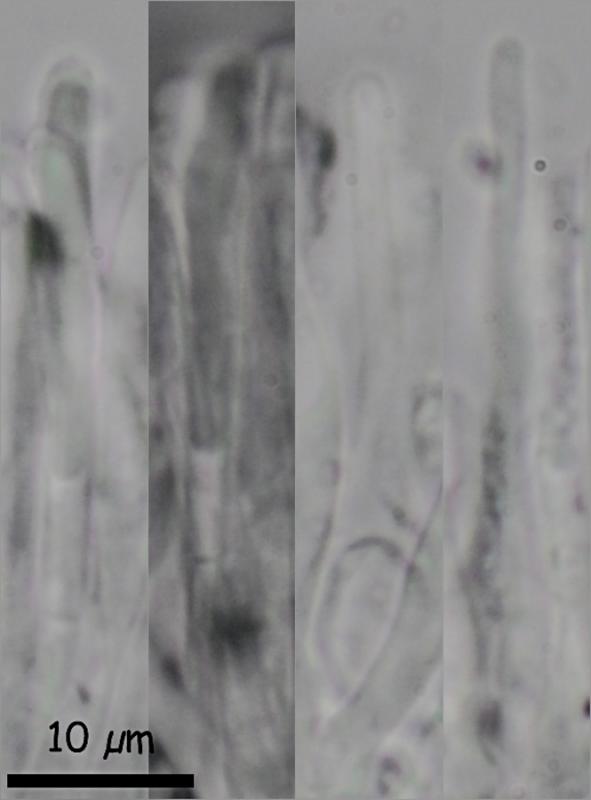
Good night friendsOn Fagus sylvatica too we found this small < 1mm white with a short stipe Calycellina. The nearest species I found is C. chlorinella.
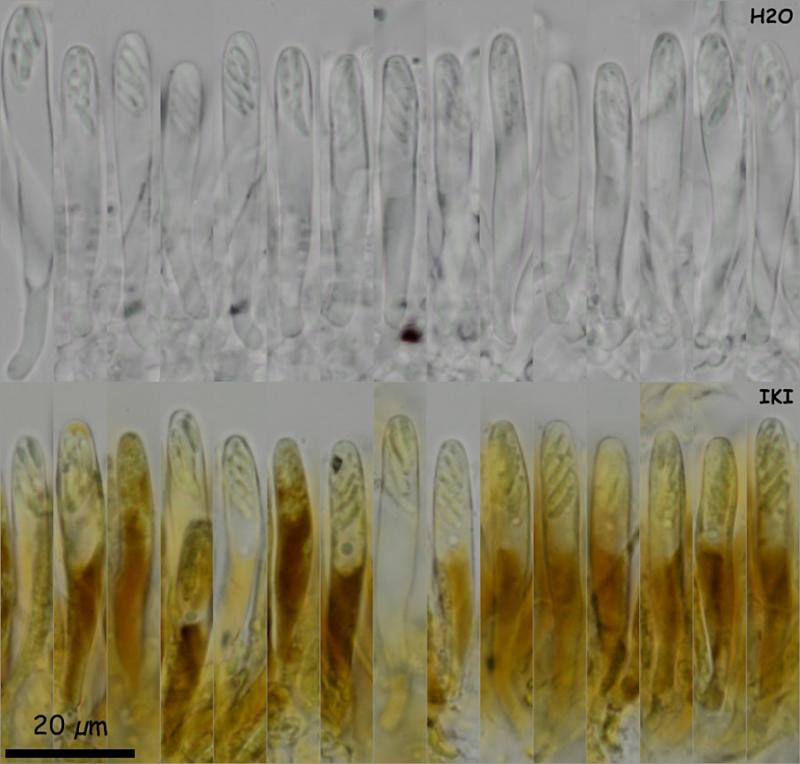
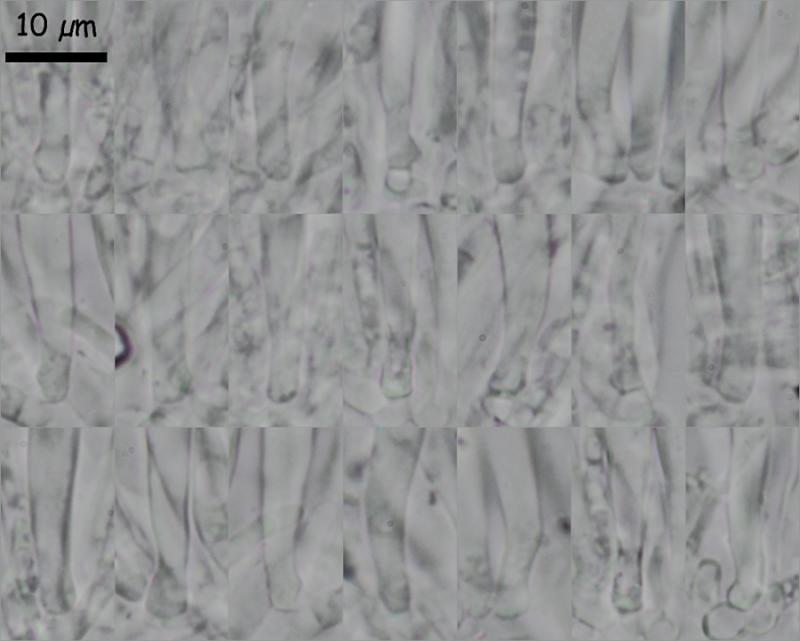
Asci 8-spores with croziers and inamyloid, (34.1) 40.2 - 49.2 (58.0) x (4.8) 5.1 - 6.2 (7.1) µm;
N = 51; Me = 44.8 x 5.6 µm.
Spores more or less cylindrical and slightly curved, (5.1) 5.7 - 6.7 (7.4) x (1.3) 1.4 - 1.7 (1.8) µm; Q = (3.4) 3.6 - 4.5 (4.8); N = 53; Me = 6.2 x 1.5 µm ; Qe = 4.0.
Paraphysis cylindrical, straight, with a big VB.
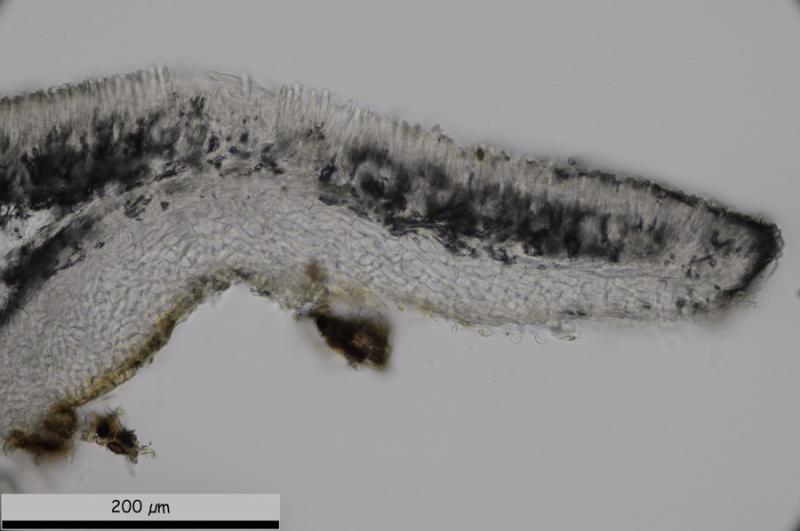
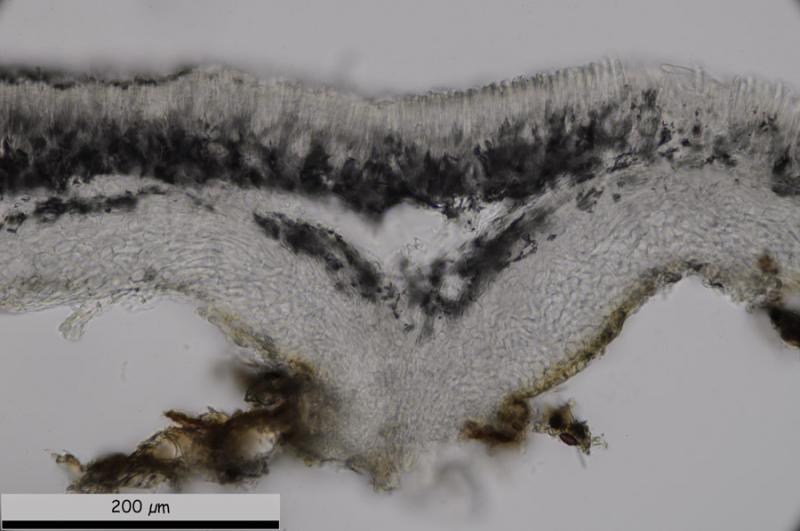
Ectal excipulum difficult: angular at base, more and more cylindrical towards the margin.
Medullar excipulum with textura cylindrical.
Hairs short, hialine and smooth, at margen and less abundant at base.
Thank you in advance.
Hans-Otto Baral,
07-02-2015 16:54

Re : Calycellina aff chlorinella 101114 21
Yes Miguel, C. chlorinella is very close. I suggest to place your fungus in my folder chlorinella-luteola which contains the type of Calloria luteola = Orbilia luteola, characterized by inamyloid asci. The apothecia there are either white or yellowish, and occur on bark and wood, or herbaceous stems. Possibly the same fungus is represented by the type of Orbilia veratri (folder chlorinella-veratri), though there the ascus apex is much more thickened in the dead state than in C. luteola..
Zotto
Zotto
Miguel Ángel Ribes,
08-02-2015 21:24
Re : Calycellina aff chlorinella 101114 21
Of course Zotto, but I don't know how to do it. I don't see the option to upload files.
So, I mustn't assign my collection definitely to C. chlorinella?
Thank you.
So, I mustn't assign my collection definitely to C. chlorinella?
Thank you.
Hans-Otto Baral,
08-02-2015 21:44
Re : Calycellina aff chlorinella 101114 21
This was not what I meant :-) Of course I will do, only the upload is presently impossible due to lack of space.
In such cases of little differences (here only iodine reaction), molecular methods would surely help. But no sequence of C. chlorinella is knonw to me, so several samples of each morphotype shpoud be sequenced to see the variation and whether they are different. Only then we could combine luteola into Calycellina (if they prove to be distinct).
In such cases of little differences (here only iodine reaction), molecular methods would surely help. But no sequence of C. chlorinella is knonw to me, so several samples of each morphotype shpoud be sequenced to see the variation and whether they are different. Only then we could combine luteola into Calycellina (if they prove to be distinct).
Hans-Otto Baral,
08-02-2015 21:44
Re : Calycellina aff chlorinella 101114 21
This was not what I meant :-) Of course I will do, only the upload is presently impossible due to lack of space.
In such cases of little differences (here only iodine reaction), molecular methods would surely help. But no sequence of C. chlorinella is knonw to me, so several samples of each morphotype shpoud be sequenced to see the variation and whether they are different. Only then we could combine luteola into Calycellina (if they prove to be distinct).
In such cases of little differences (here only iodine reaction), molecular methods would surely help. But no sequence of C. chlorinella is knonw to me, so several samples of each morphotype shpoud be sequenced to see the variation and whether they are different. Only then we could combine luteola into Calycellina (if they prove to be distinct).
Miguel Ángel Ribes,
09-02-2015 13:27
Re : Calycellina aff chlorinella 101114 21
Sorry, I didn't understand you about Cubby.
I think I have another collection, from National Park of Ordesa (Huesca), with a doubtful reaction of the asci. I am going to prepare pictures and description to sent it, perhaps this night or tomorrow.
Thank you.
I think I have another collection, from National Park of Ordesa (Huesca), with a doubtful reaction of the asci. I am going to prepare pictures and description to sent it, perhaps this night or tomorrow.
Thank you.
Miguel Ángel Ribes,
09-02-2015 20:07
Re : Calycellina aff chlorinella 101114 21
Hi again
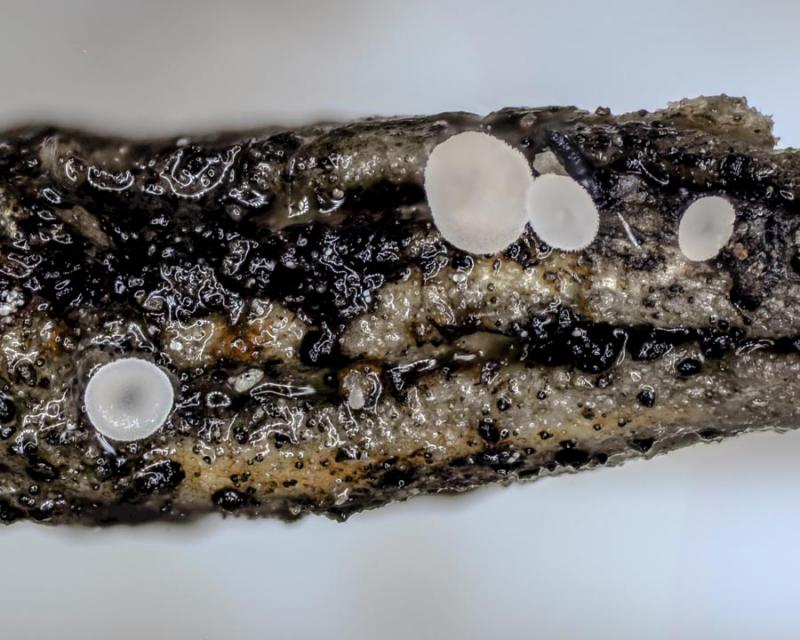
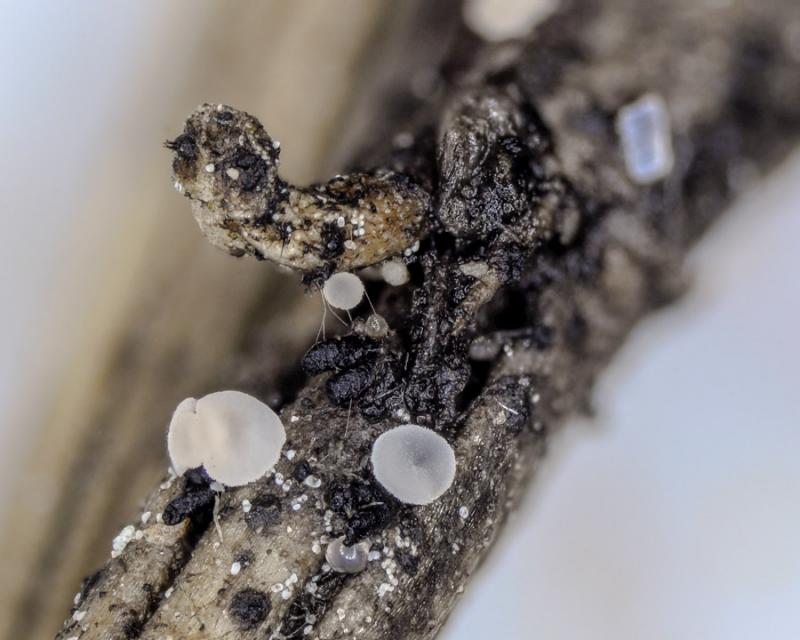
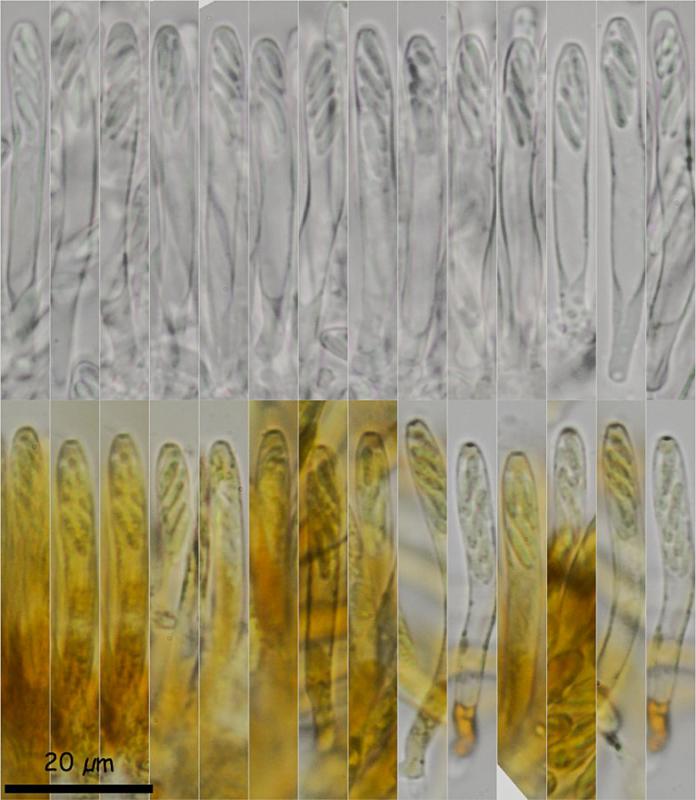
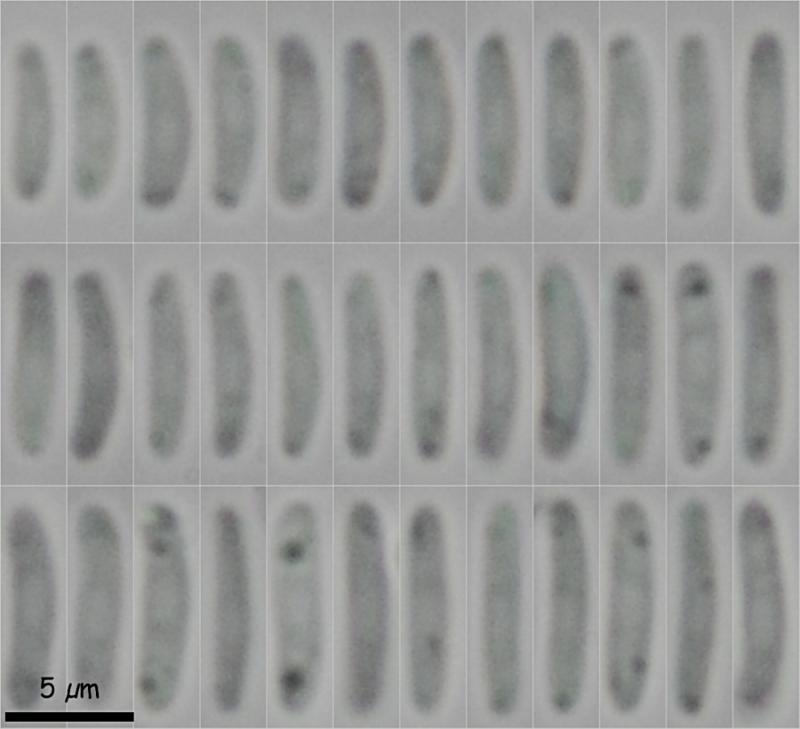
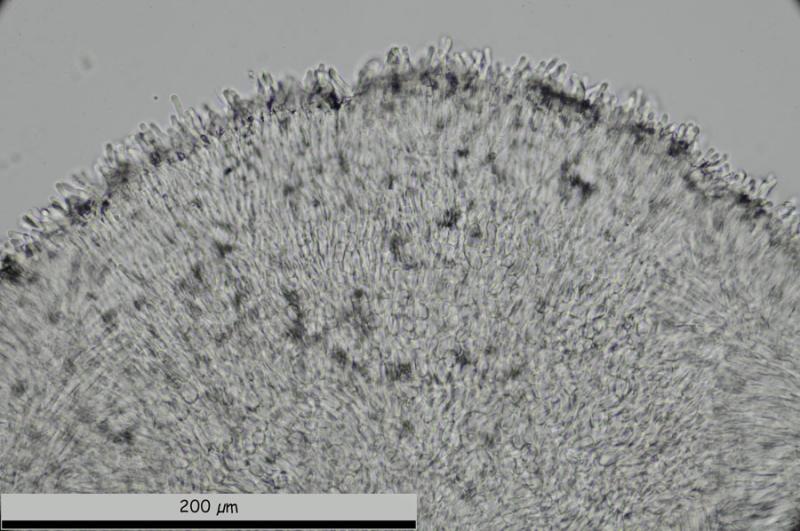
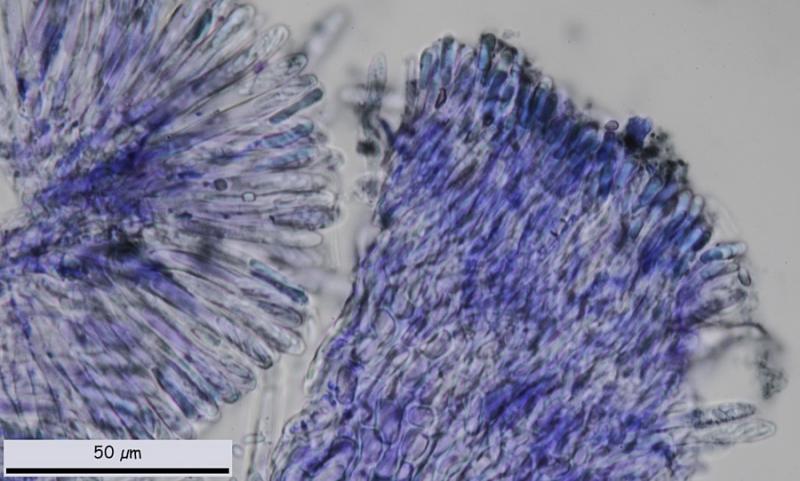
This is the other collection of Calycellina aff chlorinella 031014 01, on Echinospartum horridum, at Huesca, with a difficult interpretation of asci with IKI.
Asci 8-spores with croziers and ¿euamyloid?, (39.9) 42.9 - 50.0 (52.7) x (4.2) 4.5 - 5.3 (5.5) µm; N = 23; Me = 46.2 x 4.9 µm.
Spores more or less cylindrical, slightly curved and sometimes with 2 small guttules at ends, (6.1) 6.8 - 8.5 (8.9) x (1.3) 1.5 - 1.8 (2.0) µm; Q = (3.6) 3.9 - 5.3 (5.9); N = 48; Me = 7.6 x 1.7 µm; Qe = 4.6
Hairs short, hialine and smooth, similar to paraphysis, with a big ¿VBs? at apice cell.
Thank you
This is the other collection of Calycellina aff chlorinella 031014 01, on Echinospartum horridum, at Huesca, with a difficult interpretation of asci with IKI.
Asci 8-spores with croziers and ¿euamyloid?, (39.9) 42.9 - 50.0 (52.7) x (4.2) 4.5 - 5.3 (5.5) µm; N = 23; Me = 46.2 x 4.9 µm.
Spores more or less cylindrical, slightly curved and sometimes with 2 small guttules at ends, (6.1) 6.8 - 8.5 (8.9) x (1.3) 1.5 - 1.8 (2.0) µm; Q = (3.6) 3.9 - 5.3 (5.9); N = 48; Me = 7.6 x 1.7 µm; Qe = 4.6
Hairs short, hialine and smooth, similar to paraphysis, with a big ¿VBs? at apice cell.
Thank you
Hans-Otto Baral,
19-02-2015 08:56
Re : Calycellina aff chlorinella 101114 21
Sorry for overlooking this posting. Yes, I think this is typical C. chlorinella. It looks like euamyloid or slightly hemi. And yes, VBs are distinct, I see them on the last pic.
Zotto
Zotto
Miguel Ángel Ribes,
19-02-2015 10:26
Re : Calycellina aff chlorinella 101114 21
Thanks a lot again.
Yes, some apical asci looks like more red-brown than blue.
Cheers.
Yes, some apical asci looks like more red-brown than blue.
Cheers.