
23-05-2026 18:57
Sylvie Le GoffBonjour à tousRécolté sur une branchette de Sal
23-05-2026 11:44
 Charles Grapinet
Hello, I am having trouble identifying this copro
22-05-2026 14:44
 Lothar Krieglsteiner
in unripe condition citrine yellow, then soon fadi
22-05-2026 21:35
Steve ClementsBonjour, I expected this find on old wood on our
22-05-2026 18:12
Lothar Krieglsteiner
... in moist chamber from Portugal.As the fungus s
22-05-2026 20:08
Ethan CrensonHello all, Yesterday in NYC I was visiting an e
11-01-2022 16:36
 Jason Karakehian
Hi does anyone have a digital copy of Raitviir A (
20-05-2026 17:47
Margot en Geert VullingsWe found this Mollisia on dead Juncus stems mown l
22-05-2026 14:47
Gernot FriebesHi,superficial ascomata collected on bark of a liv
 Bonsoir à tous
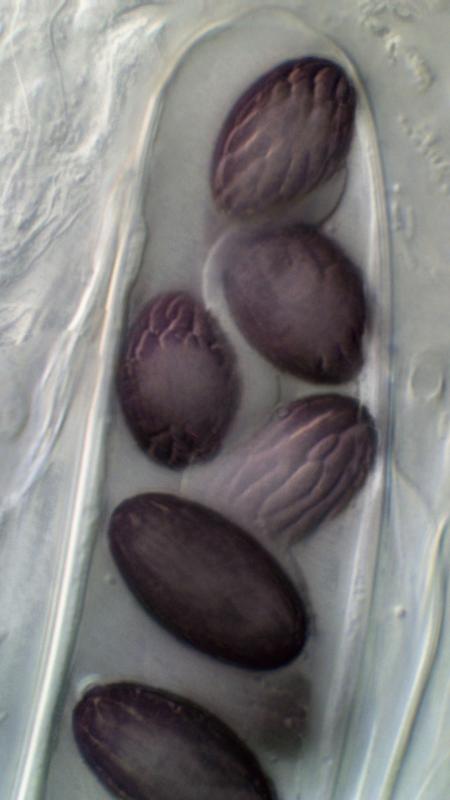
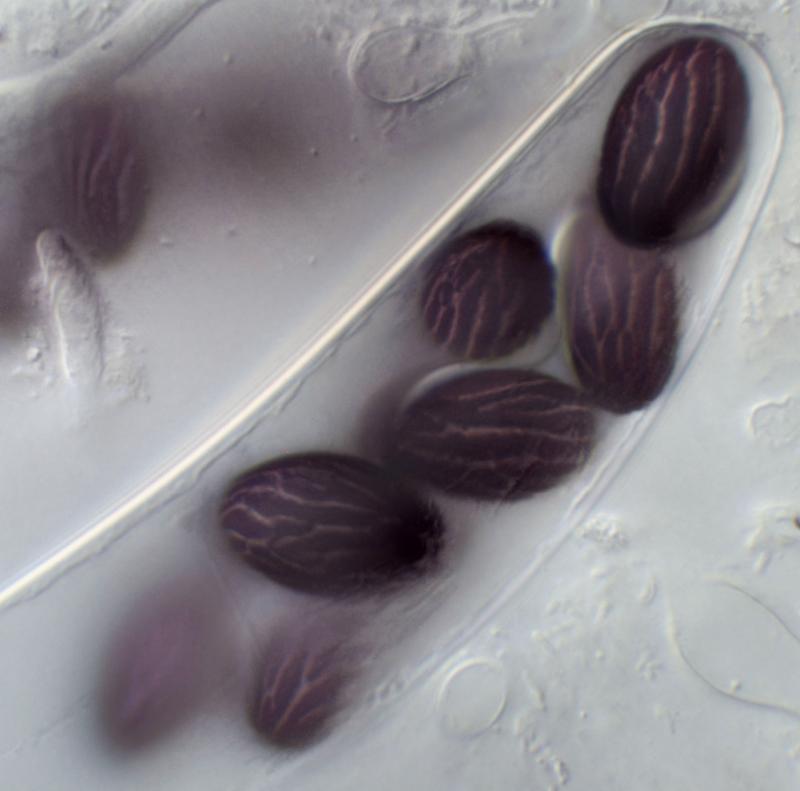
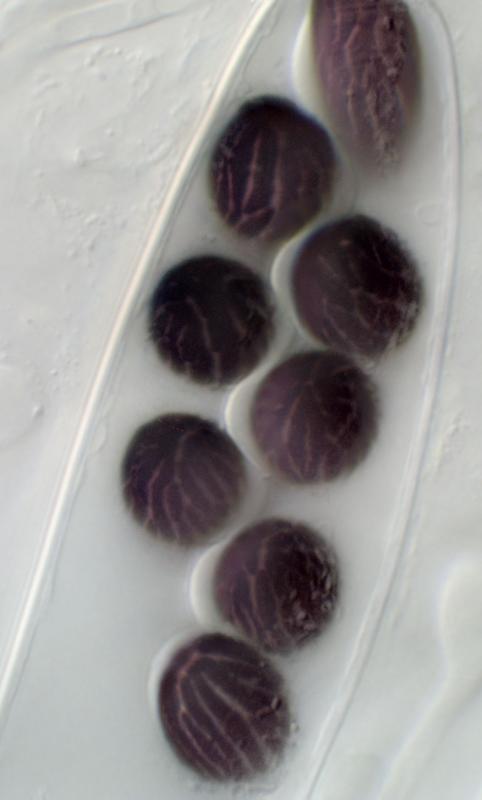
while studying ascospore ornamention in a collection of Ascobolus furfuraceus I noticed something which was happening in a considerable number of asci. The ascospores were arranging themselves such that their respective gelatinous sheaths were aligned to form a continuous sinuous connection along their lengths; the accompanying images show what I mean.
I wonder whether others have noticed this phenomenon in this or in other Ascobolus species?
Cordialement
Chris

Van Brummelen says:
"ARRANGEMENT OF ASCOSPORES. — In Ascobolus the spores are mutually free.
At first they are usually arranged in a single row . But when the ascus stretches there
often becomes space available for a double row of longitudinally disposed spores or
a single row of obliquely disposed ones. Sometimes the very thick, mucilaginous
substance adhering to the spores prevents the formation of a double row . . . .
. . . . . The spores are never regularly arranged, according to a fixed pattern,
in Ascobolus." [my underlining].
To be fair I think he intends to stress the difference in which the spore-balls of Saccobolus follow a very strict pattern (or rather patterns), consistent within a species, as they are formed.
I agree that this is a secondary character and that the true function of the gel is as Zotto suggests.
regards
Chris
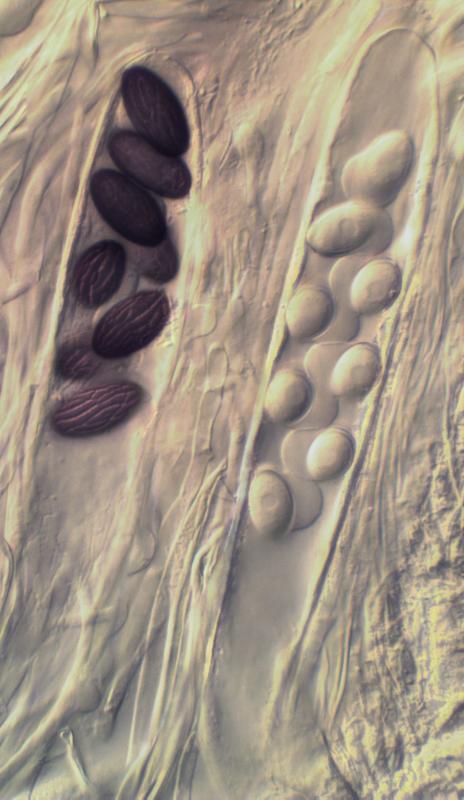

I also found this trait on other species such as Ascobolus Ascobolus saccariferus. As against this character is not always present because often the spores are not ordered in the asci and are also not mature. This character is also I think in some asci ephemeral and persistent in others.
Regards.
Michel.
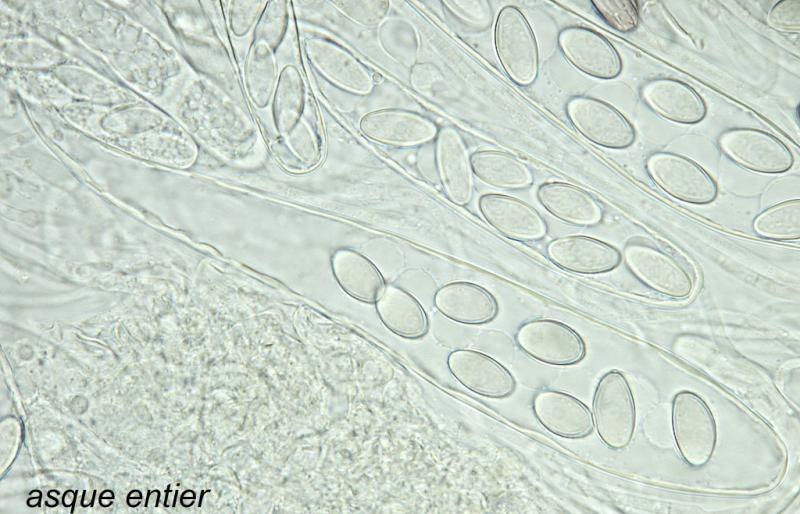
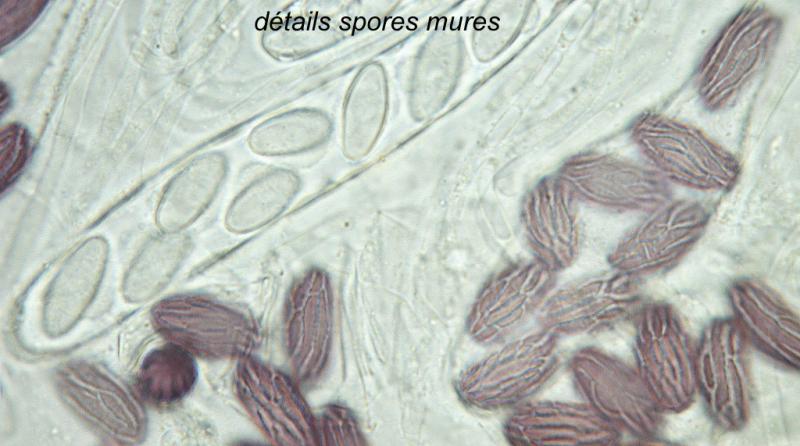
the arrangement in the living immature asci on your two pics i would estimate as rather regular. The middle of the three immature asci on pic 1 is turgorless, irreversibly as I think. The gel sheath usually inflates when the turor is released but it has a semipermeable membrane and could keep the shape for a while. Your asci with mature spores are all dead, therefore the arrangement is more variable.