

05-05-2026 22:40
Gernot FriebesHi,I believe this is a Plagiostoma growing on a Sa
06-05-2026 11:25
 Castillo Joseba
Me mandan el material seco de Galicia (España) re
06-05-2026 17:23
Thomas Læssøehttps://svampe.databasen.org/observations/10594257
28-04-2026 20:07
 Lothar Krieglsteiner
... on twig in the air at standing Ceratonia siliq
04-05-2026 18:13
 Stephen Martin Mifsud
ID request for what seems to be a true aquatic fun
04-05-2026 16:39
Stephen Martin Mifsud
ID request: This specimen was collected in Malta o
28-07-2011 18:31
 Alex Akulov
Dear FriendsToday I made the pdf file of Velenovsk
04-05-2026 09:50
Castillo Joseba
Me mandan el material seco de Galicia,(España) re
Acanthostigmella
Eduard Osieck,
23-04-2015 20:19
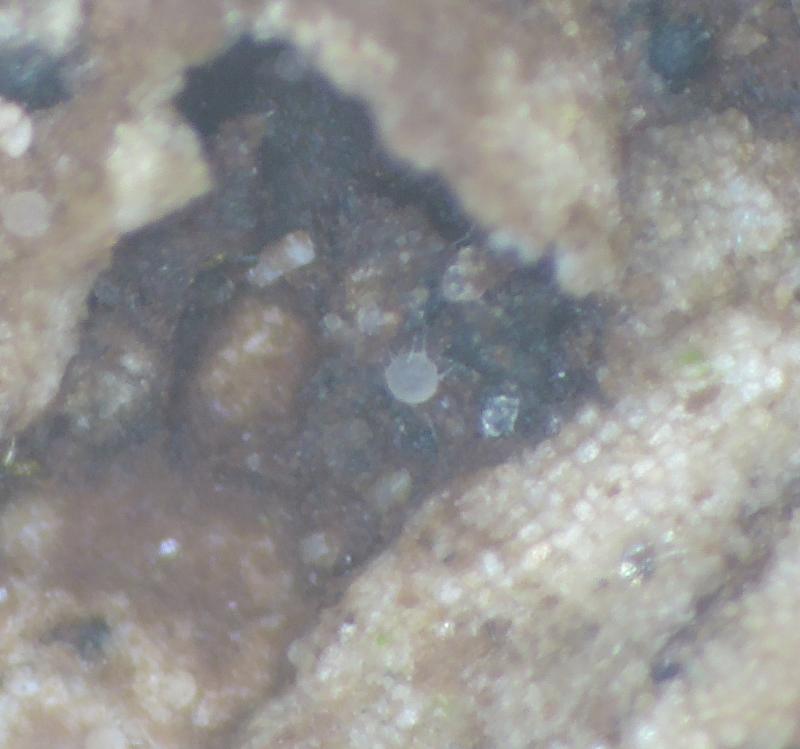
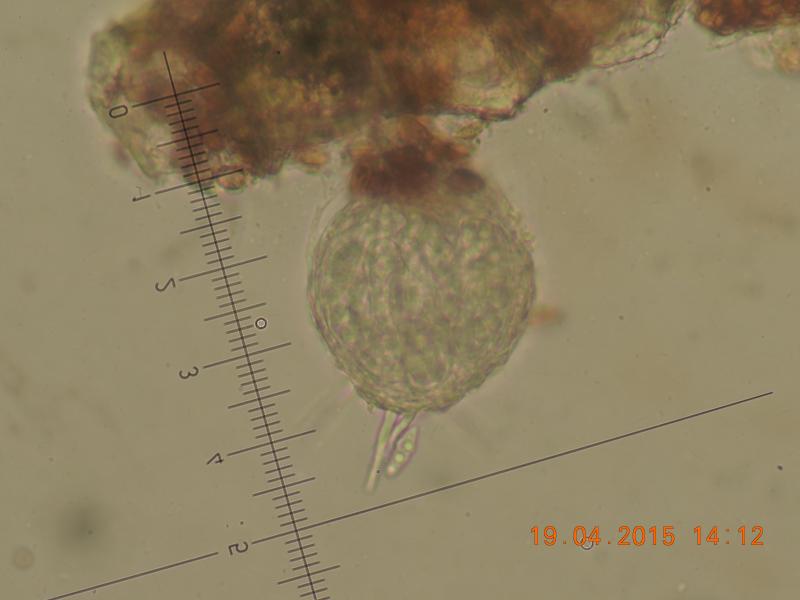
Minute hyaline perithecia (0.05-0.06 mm) with hyaline setae (20-23 um).
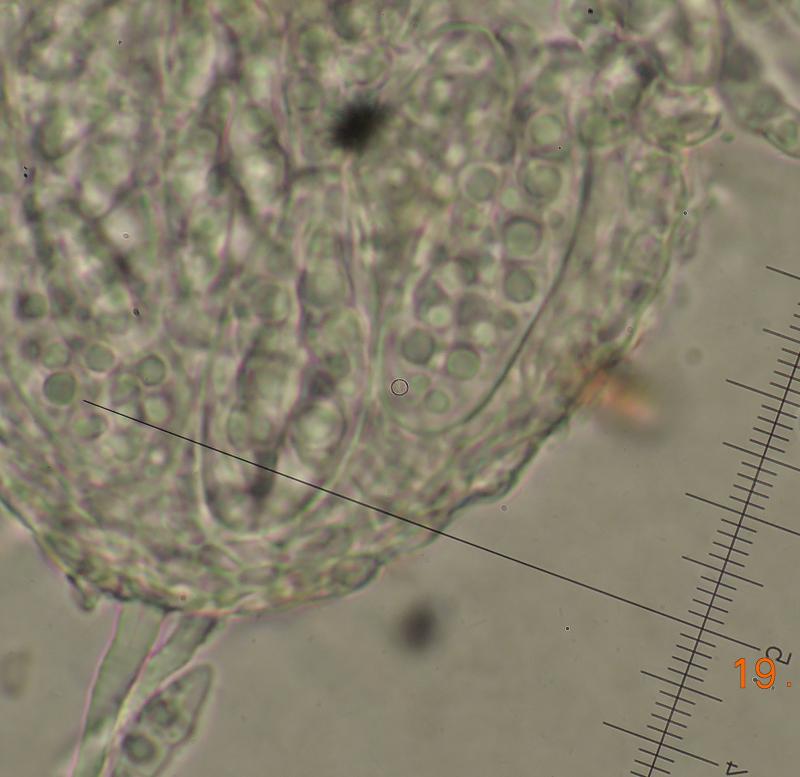
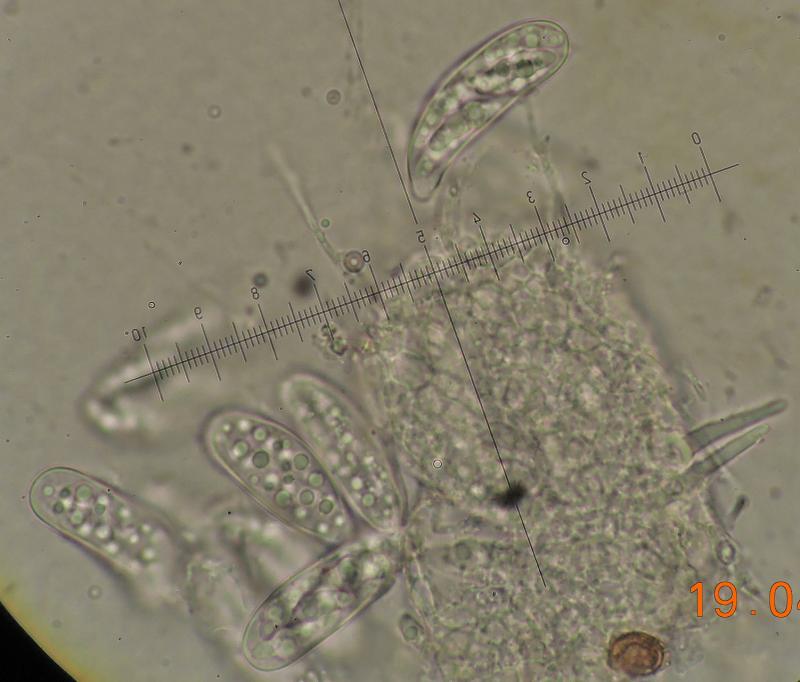
Bitunicate asci (30-40 x 10 mu) with 3-septate hyaline spores with big guttules: 13-16 x 4-5 um. One median cell larger than the other.
Substrate: Lophiotrema cf. neohysterioides (= curreyi) and on bark of Hedera.
I assume this belongs to the genus Acanthostigmella.
With the key included in the paper of Barr 1977 it easily keys out as A. pallida but this species has much smaller spores (7-10 X 2.5-3.5 um) and smaller ascii (20-25 x 10-11 um).
Six years later (Barr & Rogerson 1983) described A. brevispina (also known as Tubeufia brevispina) as a new species with spores which are more in agreement with my find: 14-18 x 4-5 um. However this species has larger ascii (50-60 mu) and also much larger perithecia (diameter 0.13-0.18 mm).
Belongs this find to Acanthostigmella? And what about the species?
I hope somebody has some knowledge about this species although the Ascofrance database does not contain any finds.
Eduard
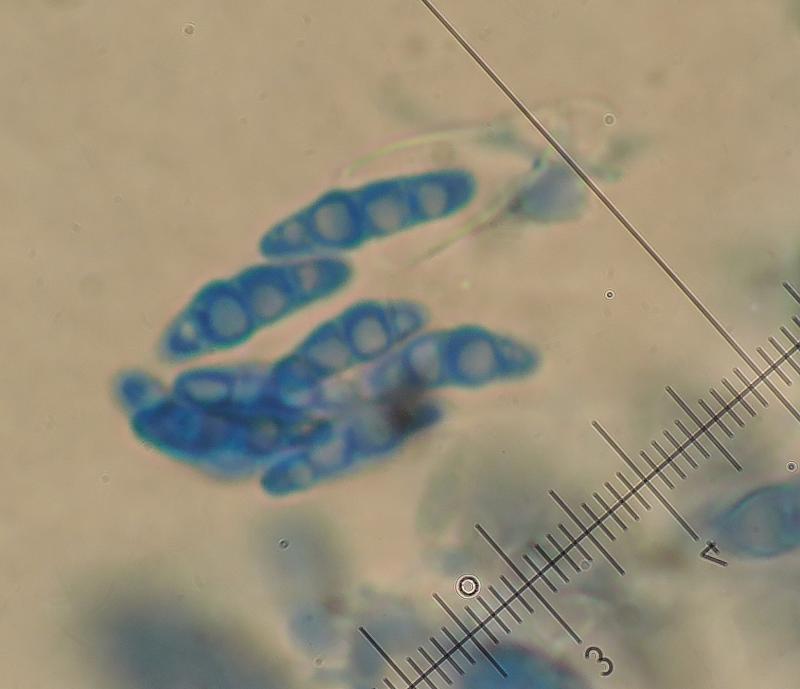
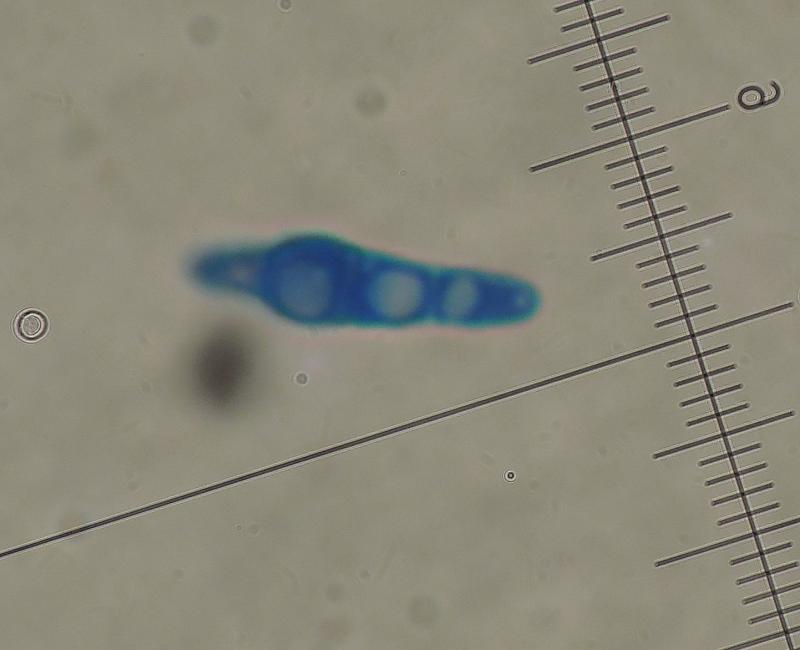
Björn Wergen,
01-05-2015 00:01

Re : Acanthostigmella
Hi Eduard,
do you still have a piece of this collection for studying?
regards,
björn
do you still have a piece of this collection for studying?
regards,
björn
Eduard Osieck,
01-05-2015 15:23
Re: Acanthostigmella
Hi Björn,
Yes the material is still in good condition, the perithecia have even multiplied over a larger area of the (not dead) Hedera twig. Apparently the ascomata become pale brownish after some time. Some ascomata are larger than indicated, up to 0,10 mm, but still smaller than in Barr's description of A. brevispina. However, I have found also much longer ascii, up to 64-75 um. They seem to stretch outside the perithecia. So it might very well be this species or a yet undescribed European counterpart. Particularly striking is the enlarged median cell ("2e loge sporale nettement renflee", quoted from Holm 1957).
I will send you the material today, than we get at least splendid photos :)
EDuard
Yes the material is still in good condition, the perithecia have even multiplied over a larger area of the (not dead) Hedera twig. Apparently the ascomata become pale brownish after some time. Some ascomata are larger than indicated, up to 0,10 mm, but still smaller than in Barr's description of A. brevispina. However, I have found also much longer ascii, up to 64-75 um. They seem to stretch outside the perithecia. So it might very well be this species or a yet undescribed European counterpart. Particularly striking is the enlarged median cell ("2e loge sporale nettement renflee", quoted from Holm 1957).
I will send you the material today, than we get at least splendid photos :)
EDuard