11-05-2016 20:37
 Zuzana Sochorová (Egertová)
Hi,this very little ascomycete grew on soil in a m
08-05-2026 11:55
Gernot FriebesHi,found on a decorticated Picea abies branch stil

05-05-2026 22:40
Gernot FriebesHi,I believe this is a Plagiostoma growing on a Sa
06-05-2026 11:25
 Castillo Joseba
Me mandan el material seco de Galicia (España) re
06-05-2026 17:23
Thomas Læssøehttps://svampe.databasen.org/observations/10594257
28-04-2026 20:07
 Lothar Krieglsteiner
... on twig in the air at standing Ceratonia siliq
04-05-2026 18:13
 Stephen Martin Mifsud
ID request for what seems to be a true aquatic fun
04-05-2026 16:39
Stephen Martin Mifsud
ID request: This specimen was collected in Malta o
28-07-2011 18:31
 Alex Akulov
Dear FriendsToday I made the pdf file of Velenovsk
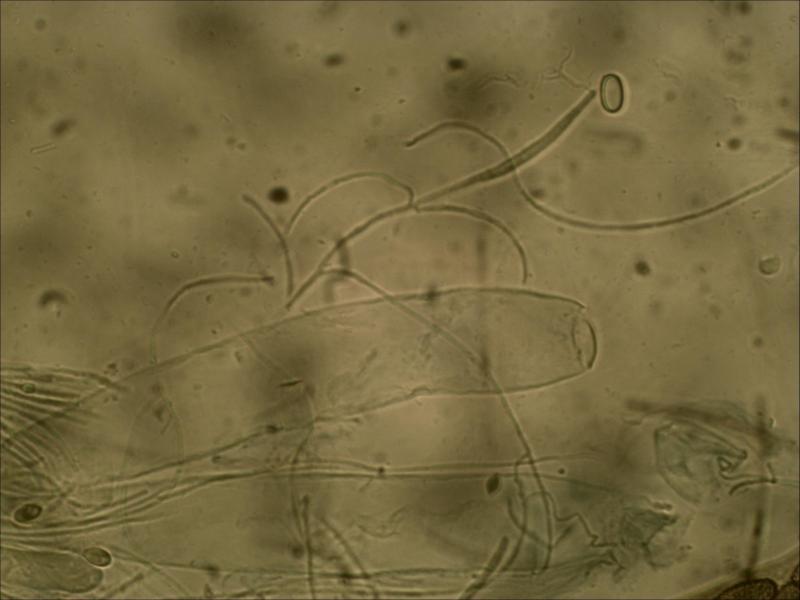
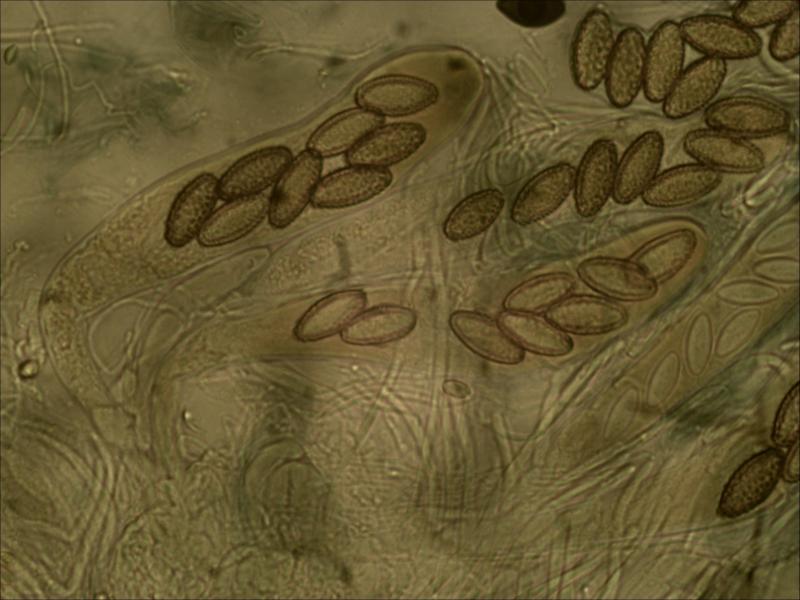
 Found on deer dung.
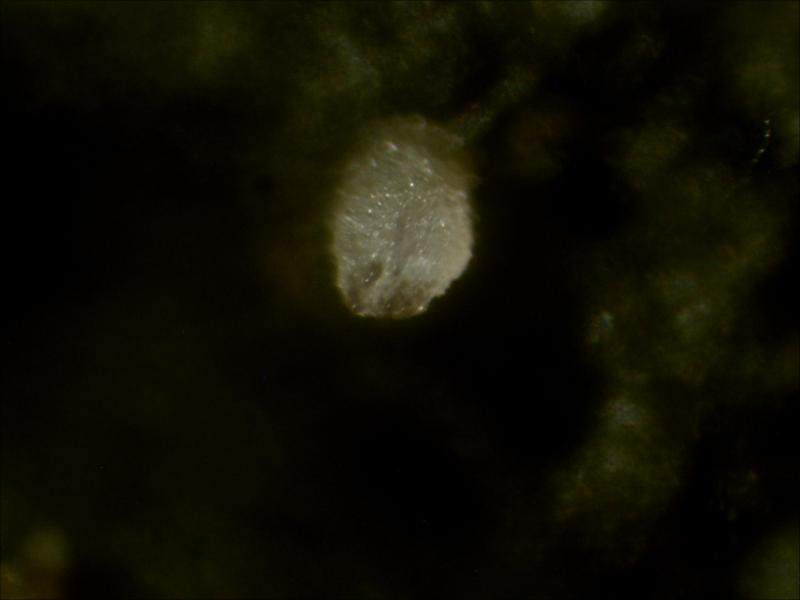
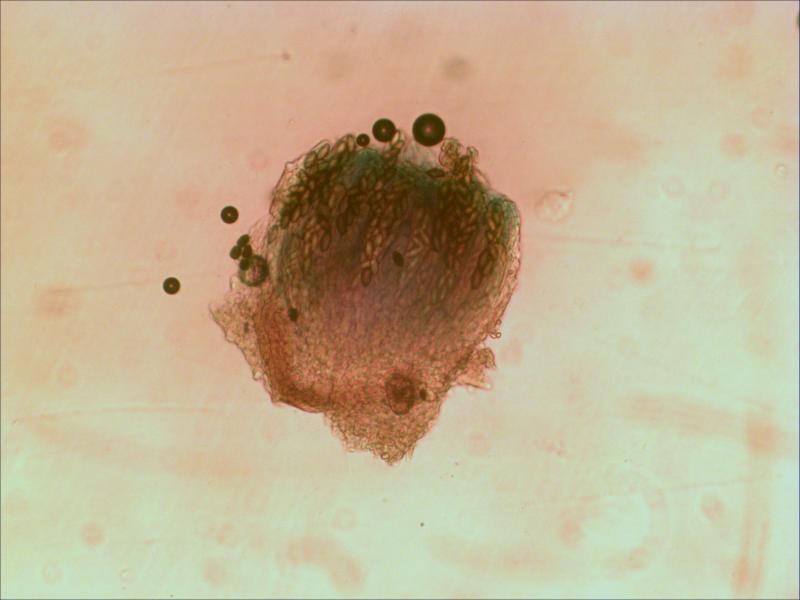
Fruitbody: Hyaline white; mature spores have a pink color.
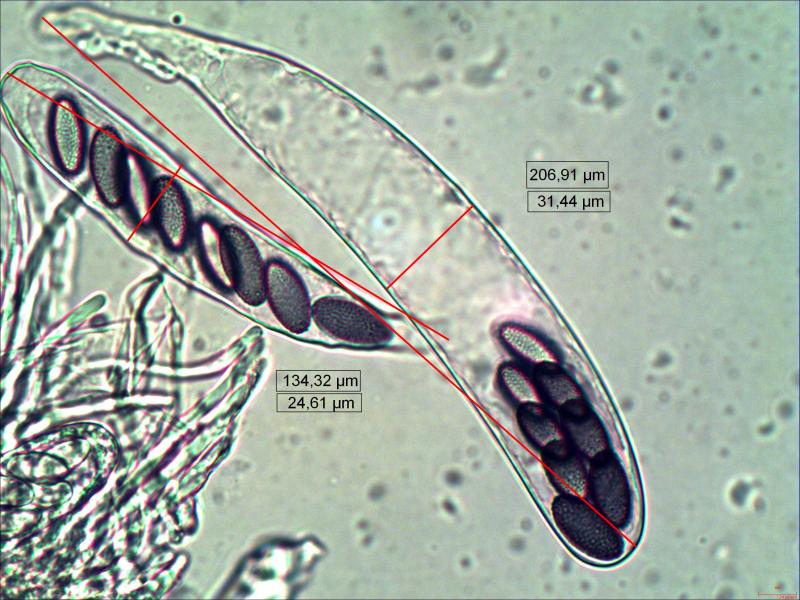
Asci: 8-spored; 184-213x25,5-28.5 um, thick walled.
Parafyses: branched; at the top 3.19-3.62 um.
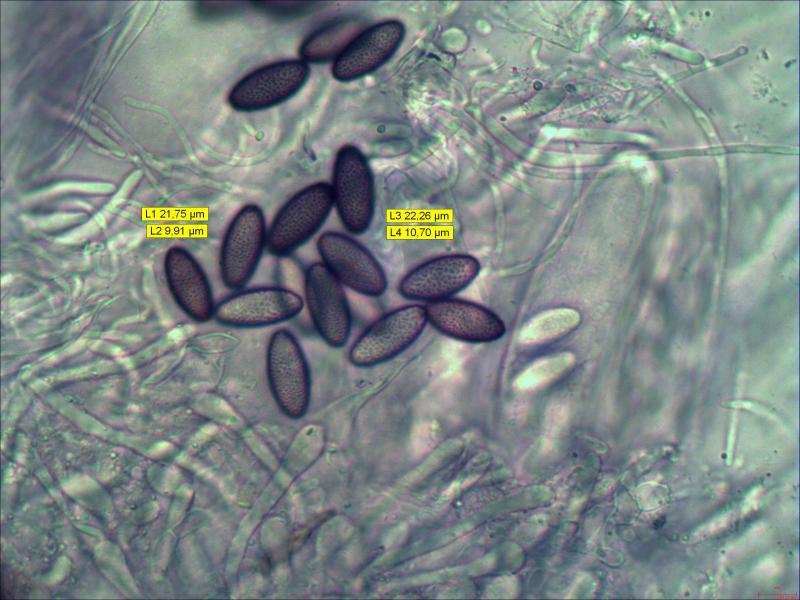
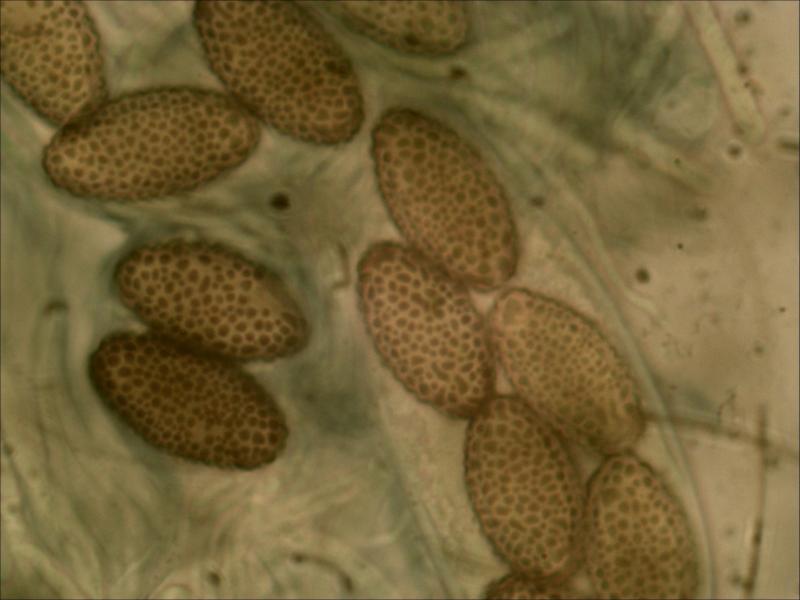
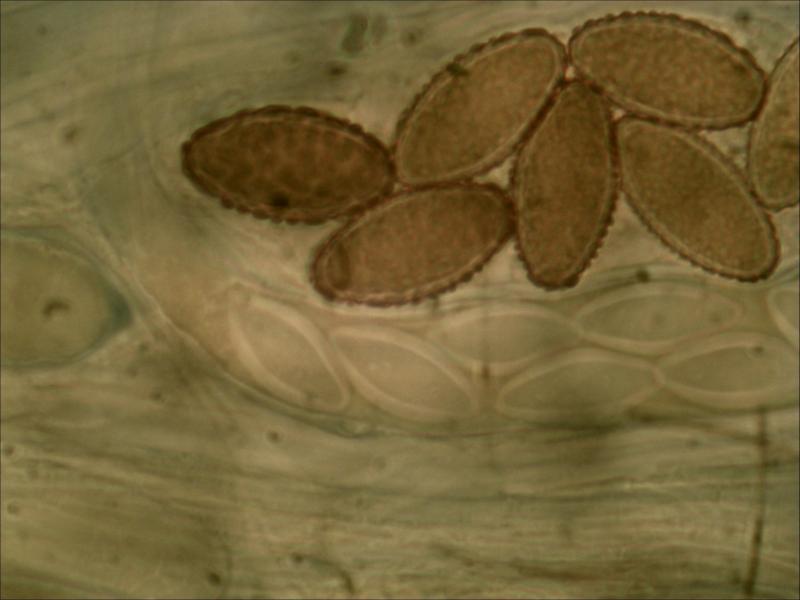
Spores: uniseriate; 22.1-24.4x11.3-12.7 um; thickwalled; covered with coarse wrats 0.98-1.05 um high; spores also have a gelatinous sheath.
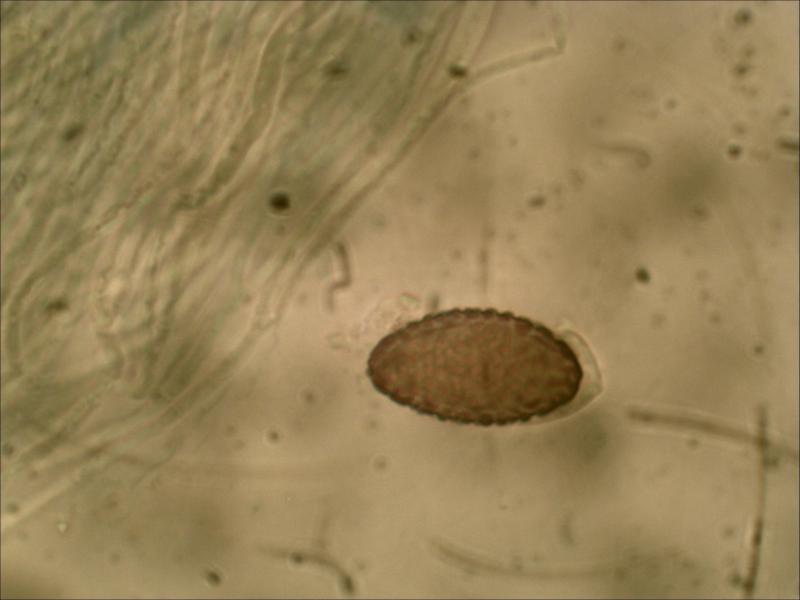
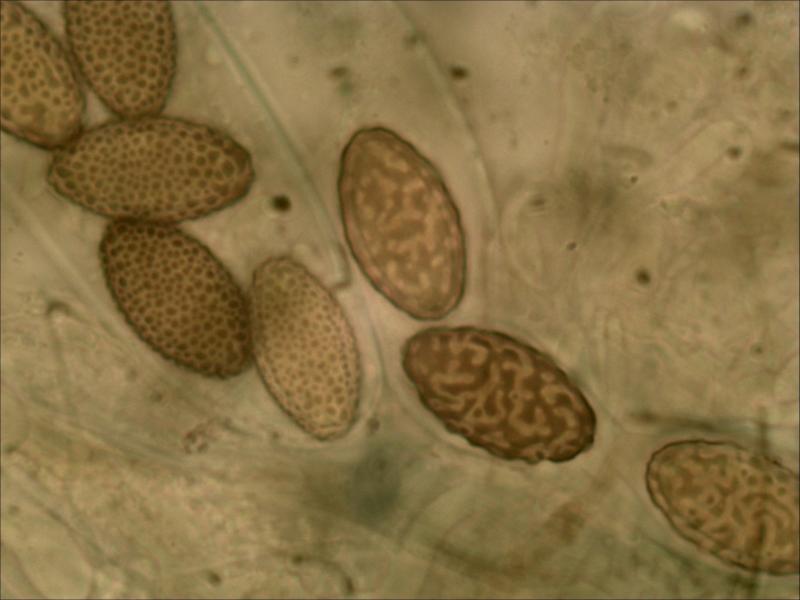

Tu peux voir la fiche de Chris dans la base de données.
Michel.
Merci Michel.
But this one differs from the one I already found on 291112 but that was on cow dung.
Spore size 24.2-25.5x10.1-11.5 um with very fine wrats.
Joop
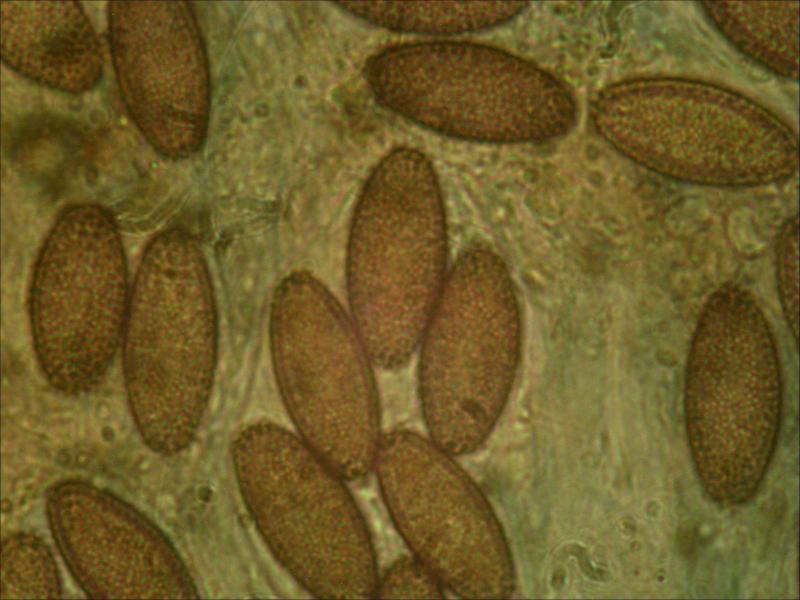

we discussed this species here.
http://www.pilzforum.eu/board/thema-ascobolus-auf-angus-rind
It looks exactly like your finding.
ik denk dat je determinatie klopt.
Je pense également à Ascobolus hawaiensis. Actuellement je découvre cette espèce sur crotte de lapin et de brebis dans les dunes fixées de la côte Belge.
Jacky
Hallo Jacky,
In the description of the species by van Brummelen spore size is 18.5-21x10-11.5 um. The species I found clearly have a larger size in length.
Also the number of herbivores changed instead of sheep, nowadays it is also found on cow, rabbit and deer.
I do not know if these other herbivores in my case have an influence on showing a pattern of very fine wrats (on cow dung) or isolated punctae (with deer dung)
en attache les fotos que j'ai faites le 21 janvier de ma dernière trouvaille pour que tu puisse comparer.