
27-04-2026 20:52
 Lothar Krieglsteiner
Found on hanging tiwg of Olea europaea in dried-ou
27-04-2026 18:48
Tony MoverleyCollected 23rd April 2026, Norfolk, EnglandSwarms
27-04-2026 17:41
Lothar Krieglsteiner
.. Algarve, same leaf than the last post. The con
27-04-2026 18:05
Lothar Krieglsteiner
... still attached at standing tree. The green con
27-04-2026 17:16
Lothar Krieglsteiner
.. Algarve, moist lying.The conidiomata look like
27-04-2026 12:54
Steve ClementsBonjour. Ce petit champignon blanc résupiné et
27-04-2026 09:59
Pauline. PennaBonjour Can anyone advise me on these pycnidia fo

22-04-2026 20:54
 Enrique Rubio
Hi to everybody.This Pyrenopeziza grew in moist le
Iodophanus
Zuzana Sochorová (Egertová),
05-05-2016 22:36
 Hello,
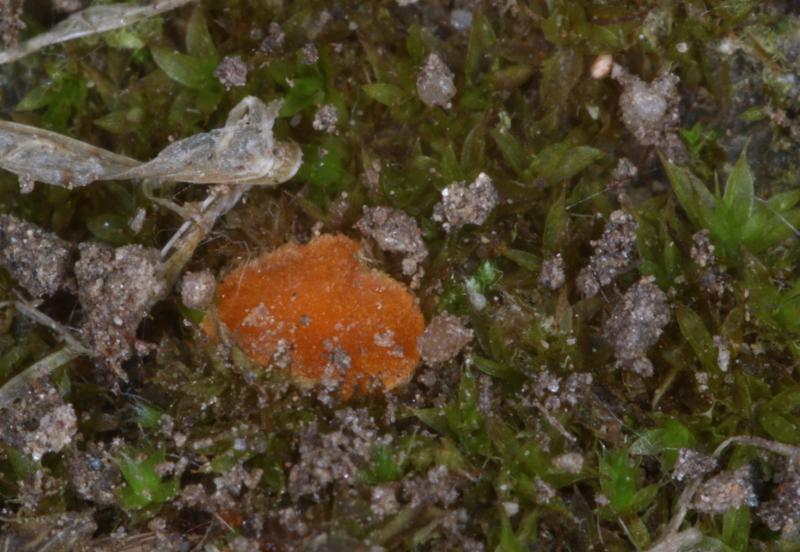
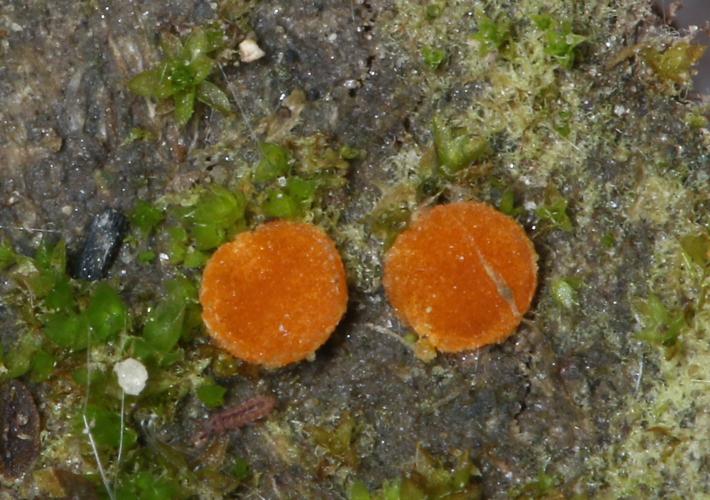
this ascomycete grew in a city in Czechia, on soil, 215 m asl.
Apothecia orange, up to 1.5 mm in diameter, smooth, sessile, rounded or slightly irregular.
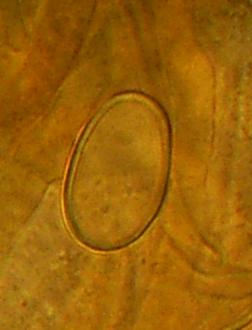
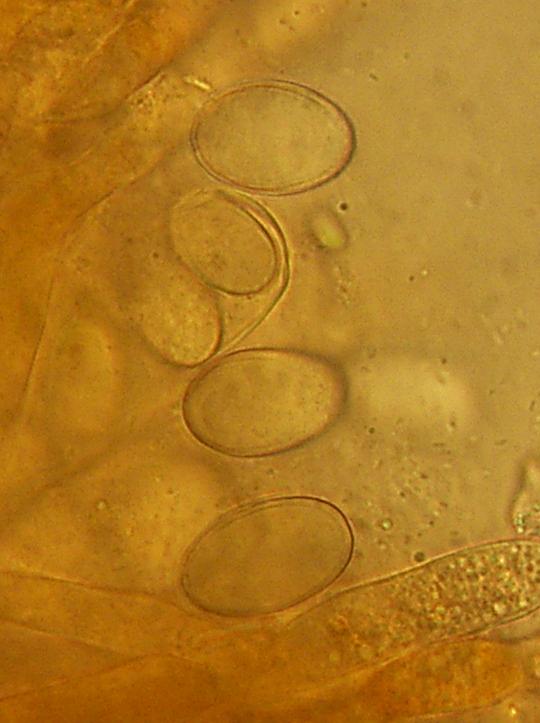
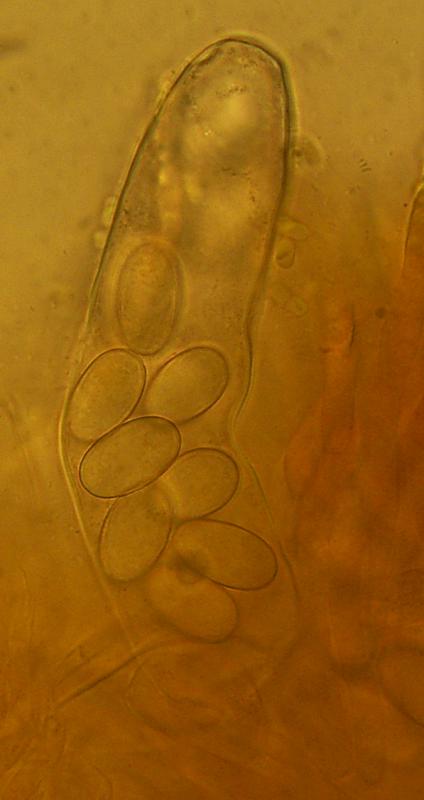
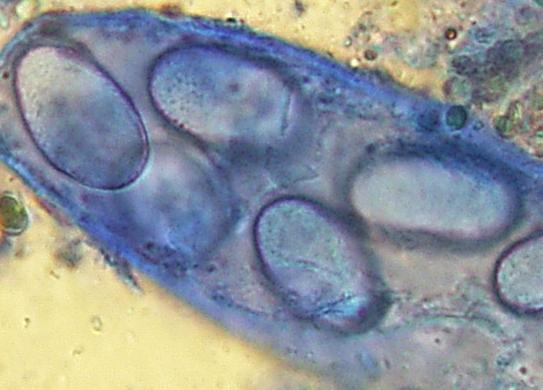
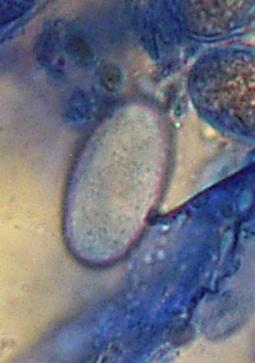
Spores 19.5-22.5 x 12-13.5 micrometers, ellipsoid, thick-walled, hyaline, ornamented with very fine warts, without guttules.
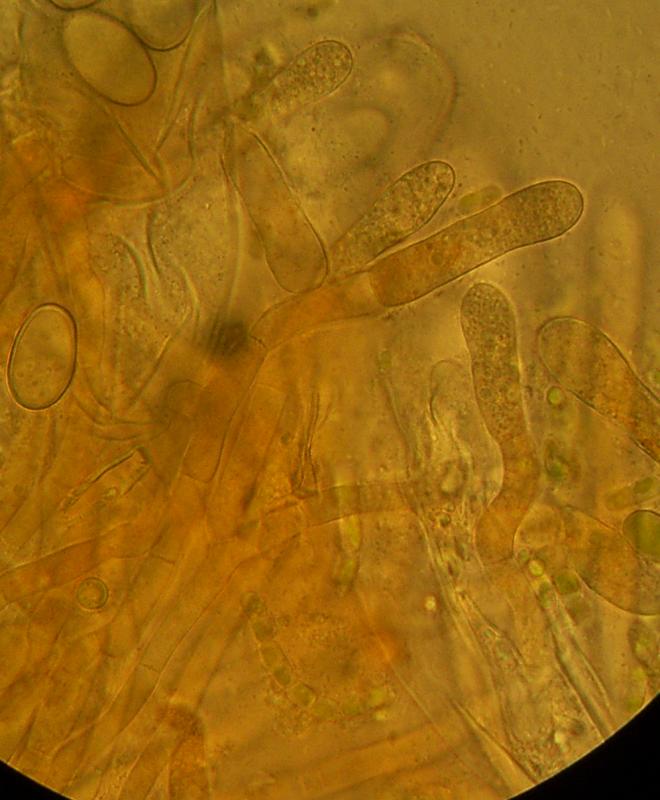
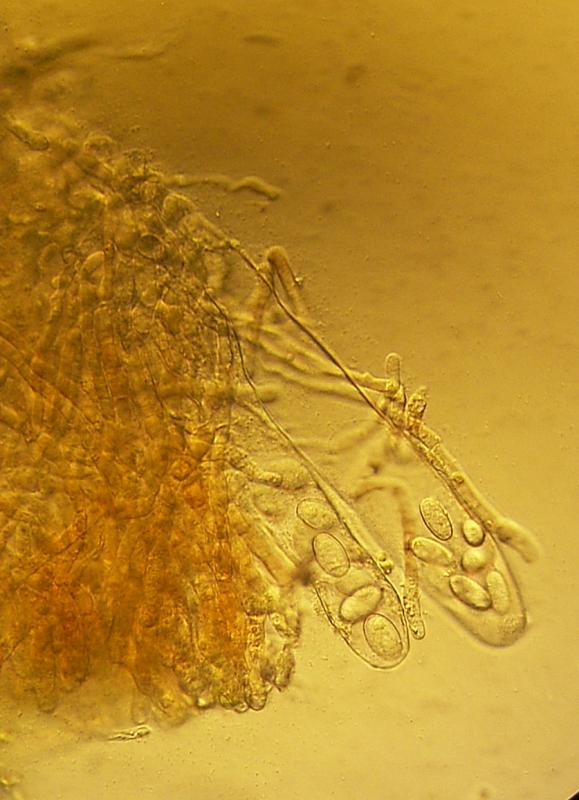
Asci 235-260 x 32-35 micrometers, biseriate, longly clavate, in Lugol entirely blue.
Paraphyses containing orange pigment, straight, quite densely septate, sometimes branched or with short lateral projections, 4-6 micrometers broad in the middle, 6.5-11.5 at the apex, terminal cell 23-43 micrometers long.
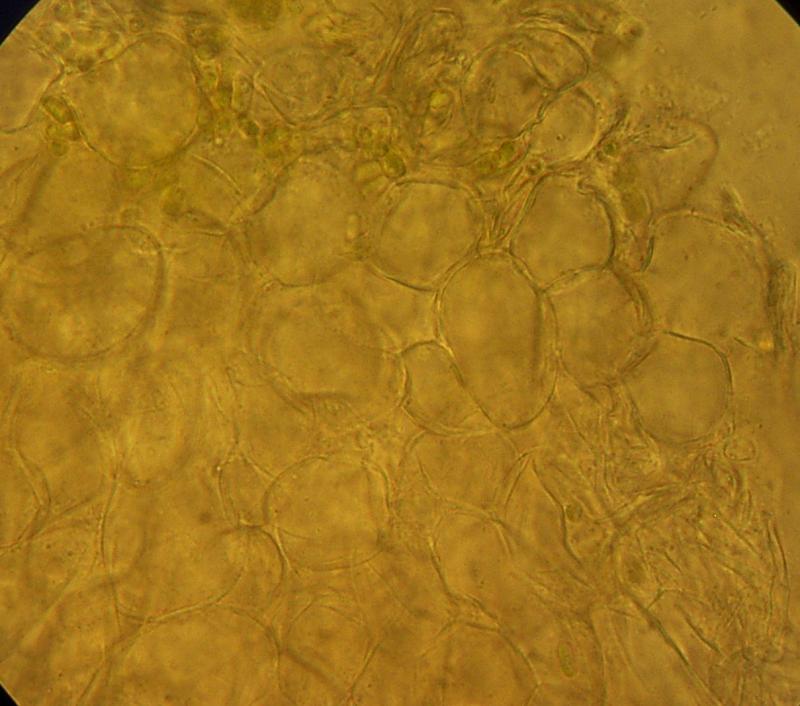
Excipulum t. globoso-angularis, with cells measuring 17-46 micrometers in the longer dimension.
I looked to literature at Kotlabaea, Cheilymenia, Boubovia and many others, but something was always wrong.
I will be glad for your opinions.
Thanks,
Zuzana
Nicolas VAN VOOREN,
05-05-2016 22:48

Re : Pyronemataceae
Hi Zuzana.
No hairs or hyphoid hairs on the outer surface?
Is it possible to see the spores in Cotton Blue?
No hairs or hyphoid hairs on the outer surface?
Is it possible to see the spores in Cotton Blue?
Zuzana Sochorová (Egertová),
05-05-2016 22:51
Re : Pyronemataceae
I saw no hairs neither under stereomicroscope nor under normal microscope.
I will try to make photos in cotton blue on Monday (too tired now and away for the whole weekend). The warts are very little, visible only with 1000x magnification.
I will try to make photos in cotton blue on Monday (too tired now and away for the whole weekend). The warts are very little, visible only with 1000x magnification.
Enrique Rubio,
06-05-2016 00:12
Re : Pyronemataceae
Hi Zuzana
Have you considered the genus Iodophanus?
Zuzana Sochorová (Egertová),
06-05-2016 06:05
Re : Iodophanus
Yes, that will be Iodophanus, thanks a lot!
I even already found the genus once, but now, growing on soil, it didn´t come to my mind.
It seems to fit well I. testaceus.
Here are photos of spores in cotton blue - ugly, but unfortunately I cannot do better.
Sorry for confusing topic name, already changed it.
Thank you, Zuzana
I even already found the genus once, but now, growing on soil, it didn´t come to my mind.
It seems to fit well I. testaceus.
Here are photos of spores in cotton blue - ugly, but unfortunately I cannot do better.
Sorry for confusing topic name, already changed it.
Thank you, Zuzana
Michel Delpont,
07-05-2016 21:12

Re : Iodophanus
Good evening Zuzana
Actually think like Enrique ornamentation of the spores might suggest Iodophanus; by against the difference between I.carneus and I.testaceus is rather difficult, I am enclosing a paper that will be help you.
Michel.
Actually think like Enrique ornamentation of the spores might suggest Iodophanus; by against the difference between I.carneus and I.testaceus is rather difficult, I am enclosing a paper that will be help you.
Michel.
 Iodophanus-carneus-and-I-testaceus-independent-taxonomic-identity-or-synonymy-Cinto-2007-0002.pdf
Zuzana Sochorová (Egertová),
09-05-2016 08:17
Re : Iodophanus
Thank you, Michel.
Macroscopically this fungus growing on soil seems very different from Iodophanus I found on dung last year.
The non-coprophilous growth is OK for I. testaceus, but some other characters (size and colour of apothecia, size of spores), better fit I. carneus (at least according to the paper you provided).
Hopefully molecular methods will show whether these two species (?) are identical.
Best regards,
Zuzana
Macroscopically this fungus growing on soil seems very different from Iodophanus I found on dung last year.
The non-coprophilous growth is OK for I. testaceus, but some other characters (size and colour of apothecia, size of spores), better fit I. carneus (at least according to the paper you provided).
Hopefully molecular methods will show whether these two species (?) are identical.
Best regards,
Zuzana