
26-05-2026 22:44
Ethan CrensonHi all, I think I have Incrucipulum capitatum her
22-05-2026 14:44
 Lothar Krieglsteiner
in unripe condition citrine yellow, then soon fadi
26-05-2026 21:25
Dirk GerstnerHello everyone, I'm completely stumped by this li
25-05-2026 16:44
François BartholomeeusenHi forum members,During an excursion organised by
23-05-2026 11:44
 Charles Grapinet
Hello, I am having trouble identifying this copro
25-05-2026 16:35
 Bernard CLESSE
Bonjour à toutes et tous,J'ai trouvé récemment,
22-05-2026 13:29
Gernot FriebesHi,I am curious to hear your opinion on this mater
23-05-2026 18:57
Sylvie Le GoffBonjour à tousRécolté sur une branchette de Sal
22-05-2026 21:35
Steve ClementsBonjour, I expected this find on old wood on our

Hi to all
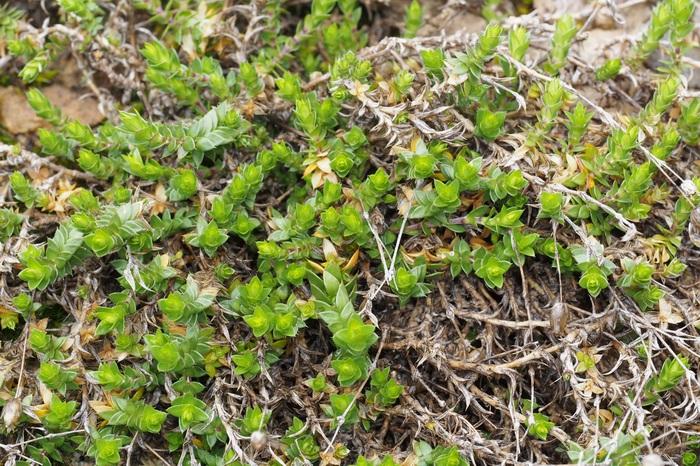
These minute (up to 0.35 mm) urceolate apothecia were growing on the underside, on dead parts of Arenaria grandiflora L. subsp. incrassata, a postrate small plant living on calcareous rocks. This collection was made at Saliencia, Somiedo, at 1400 m of altitude.
The 8-spored asci, 39-58 x 5-8, arising from croziers, IKI b. Ascospores cylindric or cylindric-clavate, (9-)12(-17) x 1.5-2.7, with some polar small guttules. Hairs apex 2-5 microns broad, with a spiny ornamentation. The prismatic cells of the ectal excipulum with granules of ochraceous pigment.
Maybe this fungus is close to the more caulicolous 'Cistella grevillei complex', with shorter, different ascospores and larger apothecia, but I'd like to know your opinion
Many thanks in advance
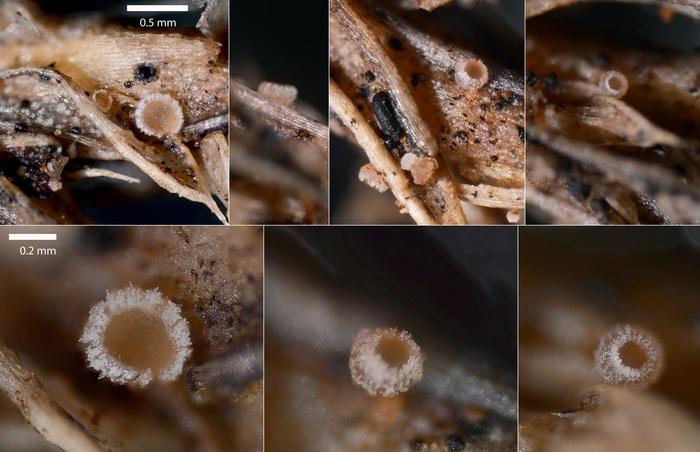
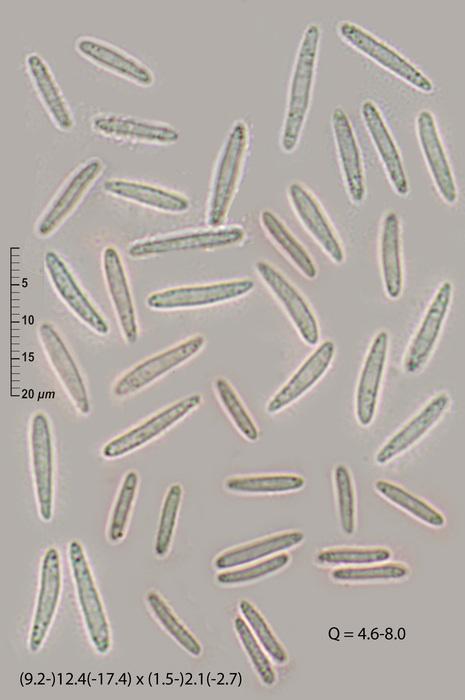
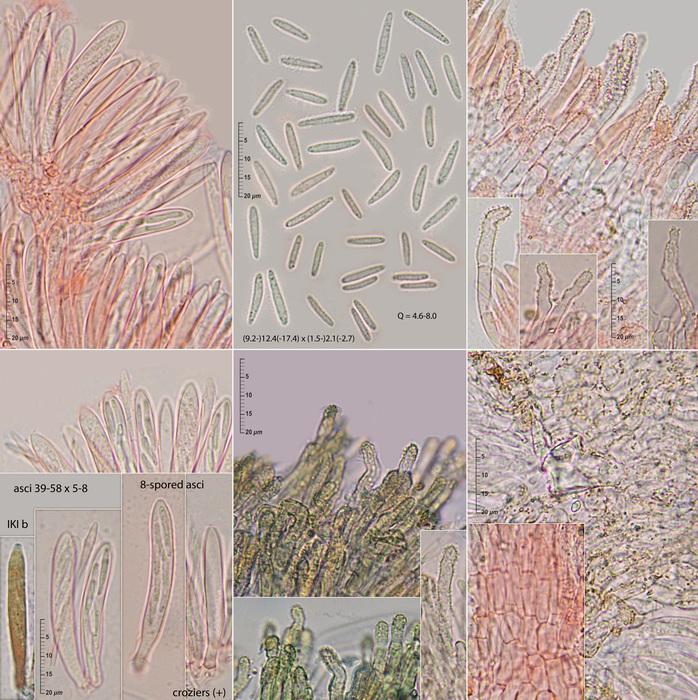

not a easy one, the hairs tend to look more like aconitii, sporesize could fit too in the lower range but the content is missing, this could be a undescribed taxon in the grevillei group. Did you see any aborted spores in asci that explains the sizedifference in spores or spore dimorphism as in Dasyscyphella where lower spores are smaller as th ones in the top?
Stip
Hi Stip
I not noticed any abnormality inside the asci and I couldn't see 4-spored asci that explain us the hihghly differences in the spore size
Thank you very much for ypur opinion