
06-05-2026 11:25
 Castillo Joseba
Me mandan el material seco de Galicia (España) re
28-04-2026 20:07
 Lothar Krieglsteiner
... on twig in the air at standing Ceratonia siliq
05-05-2026 22:40
Gernot FriebesHi,I believe this is a Plagiostoma growing on a Sa
04-05-2026 18:13
 Stephen Martin Mifsud
ID request for what seems to be a true aquatic fun
04-05-2026 16:39
Stephen Martin Mifsud
ID request: This specimen was collected in Malta o
28-07-2011 18:31
 Alex Akulov
Dear FriendsToday I made the pdf file of Velenovsk
04-05-2026 09:50
Castillo Joseba
Me mandan el material seco de Galicia,(España) re
02-05-2026 12:42
Alain BRISSARDBonjour à tousJeuidi 30 avril dernier on m'a remi
02-05-2026 13:06
Pauline. PennaBonjour Please can someone help me with this id
 Bonsoir à tous,
Pourriez-vous me donner votre avis sur cet Hyaloscypha trouvé sous l'écorce et sur le bois pourri d'une souche d'épicéa ?
a) asques IKI+
b) spores étroitement elliptiques-subfusiformes, souvent arquées, avec quelques microguttules vers les pôles : 6-9x2-2,5
c) paraphyses filiformes
d) cheilos lagéniformes subulées
Bernard
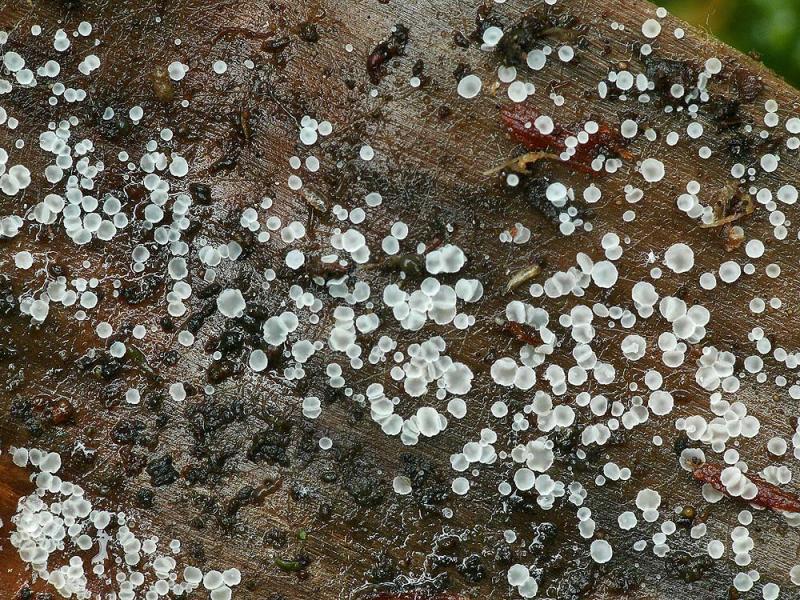
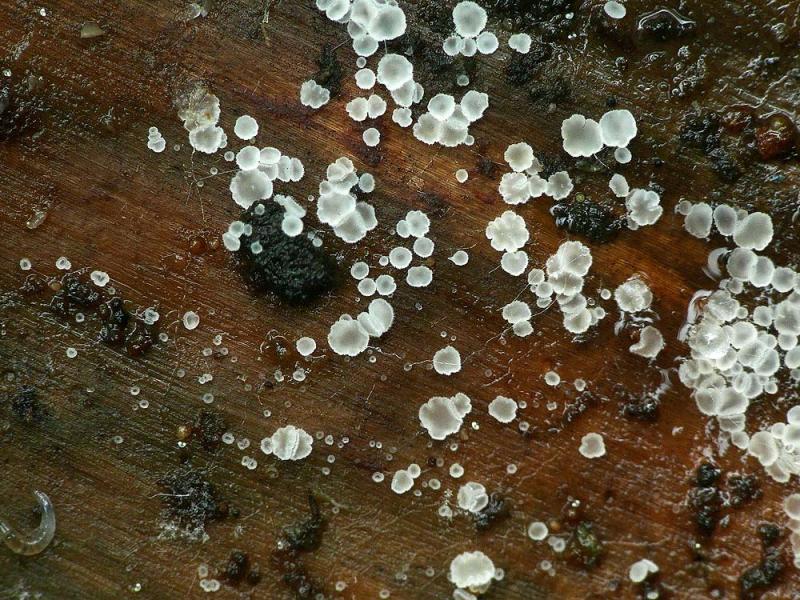
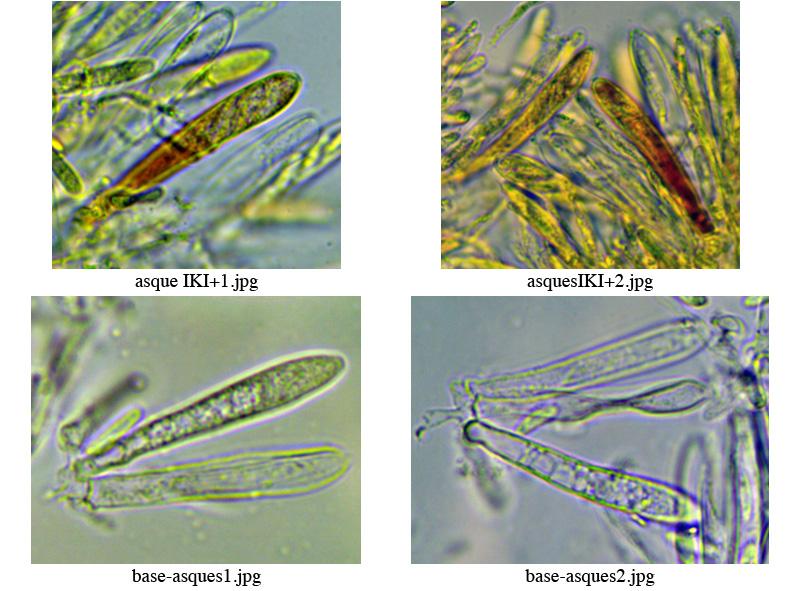
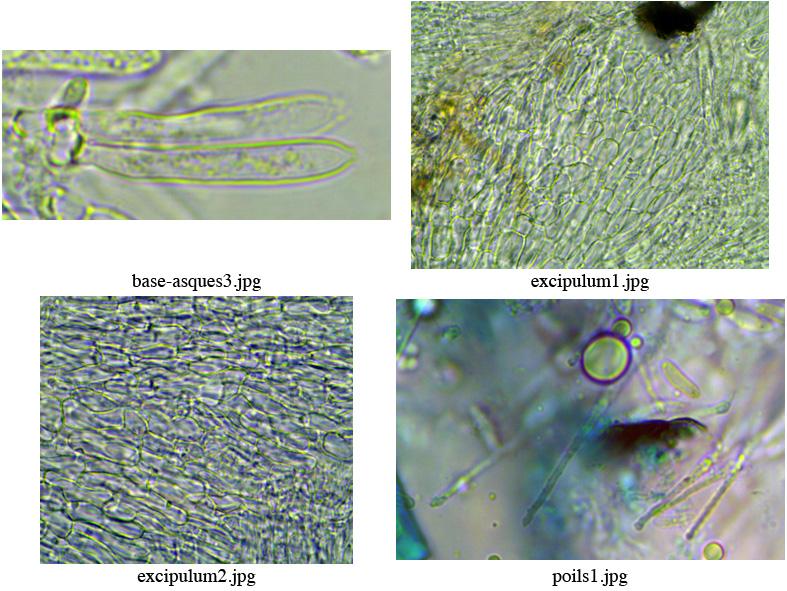
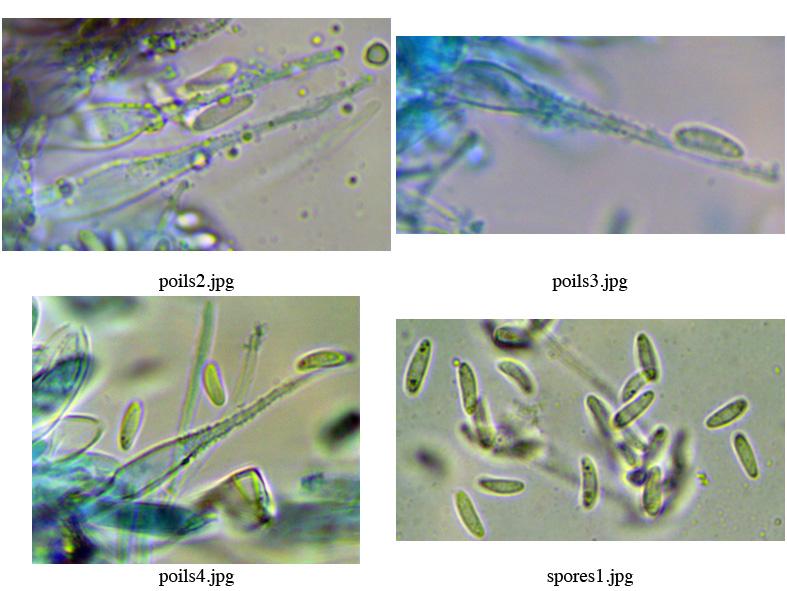
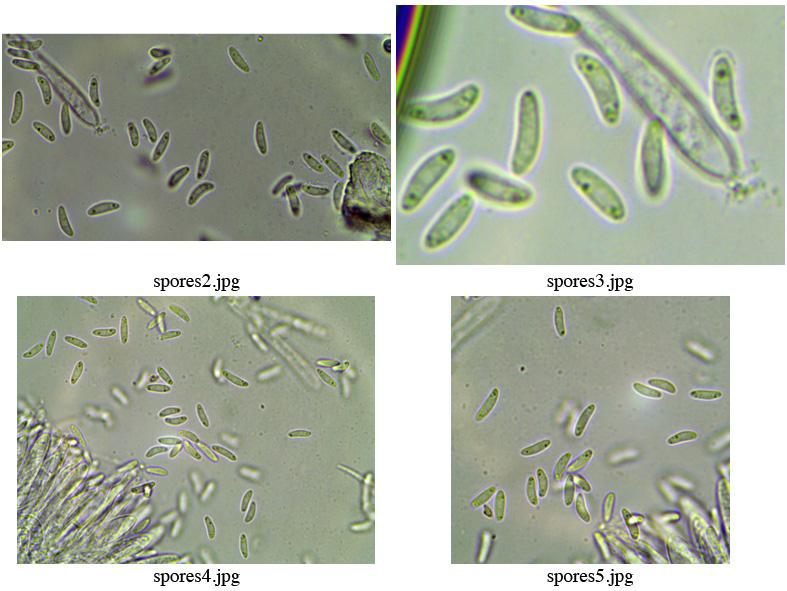

First, the apothecia is typically undulating when mature and it grows on softwood trunk. Spore size (6-10 um) fits well, also the shape. Aureliella typically has these two smallish glubules on both ends. Croziers present. Hairs size and shape +- ok, although the hair base is here maybe more bulbous than usually, granules present (check them in MLZ).
Often there are MLZ+ nodules in the excipulum. Rather small and inconspicious, but still clear if you look for them. A good aid, and to my knowledge, "rules out" other options.
--or then, work out the key by Huhtinen (Karstenia vol 29). There are some pirate pdf:s also around...
Timo
A big thank you for your help and information Timo!
I will try Melzer as you suggest and will refer a picture tonight.
Best regards,
Bernard

My guess is H. fuckelii, which I sometimes had on conifers too.
Zotto
Timo
Here are more pictures of the hairs in the water. I see very small crystals but no yellowish resin. The hair is very narrowed to the top.
I also checked the excipulum in Melzer: nothing to report
Bernard
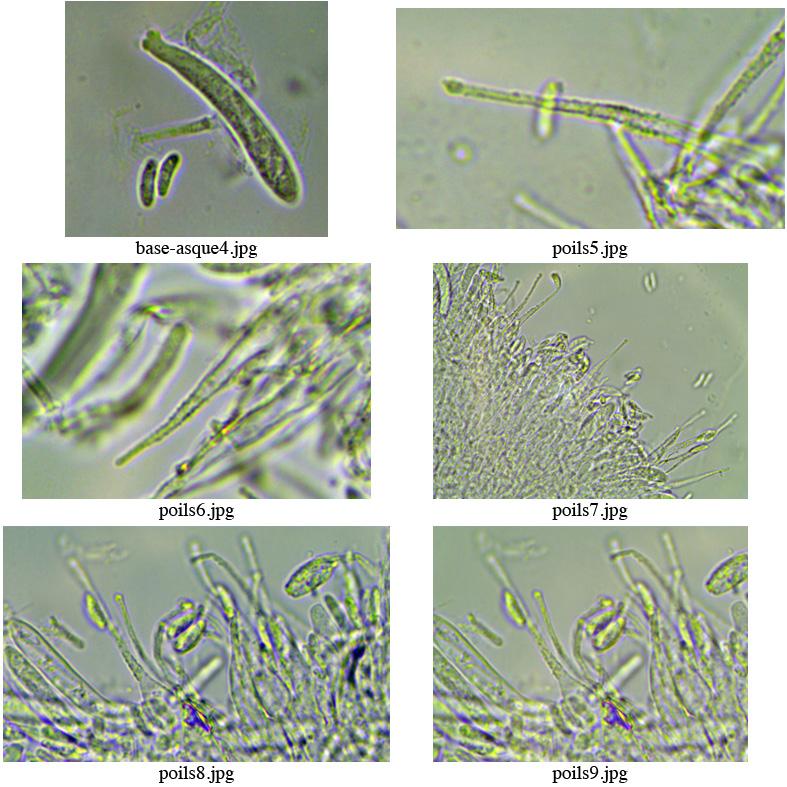
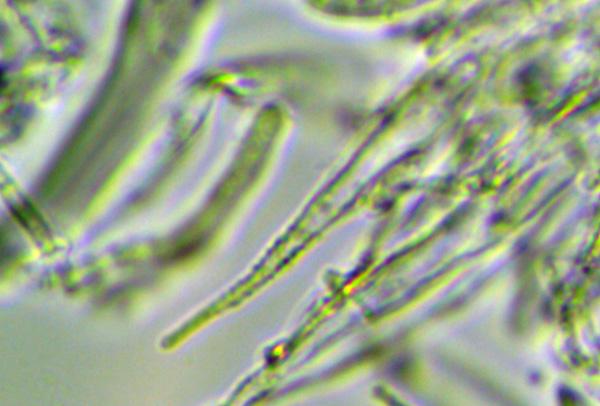
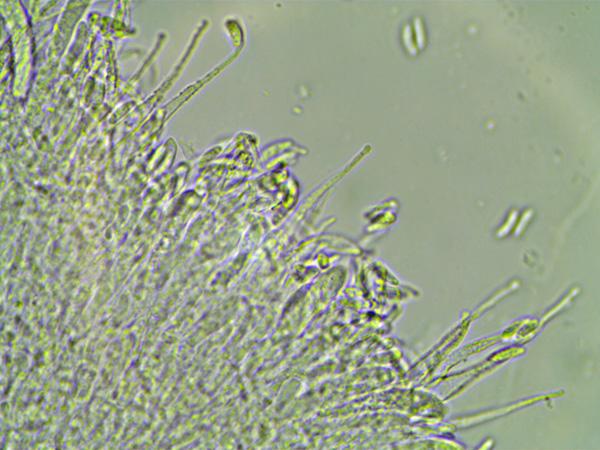
Bernard
Aureliella is ruled out. No resins in the hairs / no amyloid nodules in excipulum and also these multiple small warts along the hairs don't fit aureliella.
According to Huhtinen's monograph H. fuckelii hairs are smooth in MLZ (and other solvents) - very rarely there are some apical warts after MLZ/CB. Was this the case? I am not sure if your pictures include hairs in solvents... Need to go to lab, I'll get back to this in the afternoon.
Timo
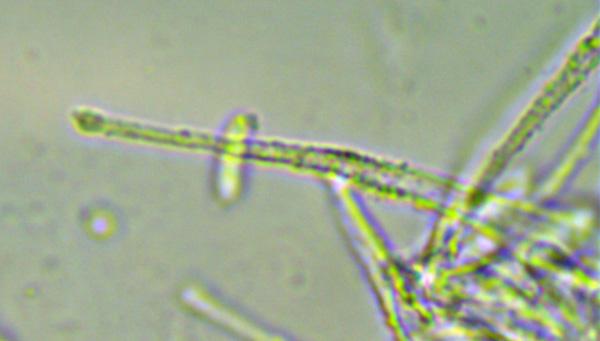
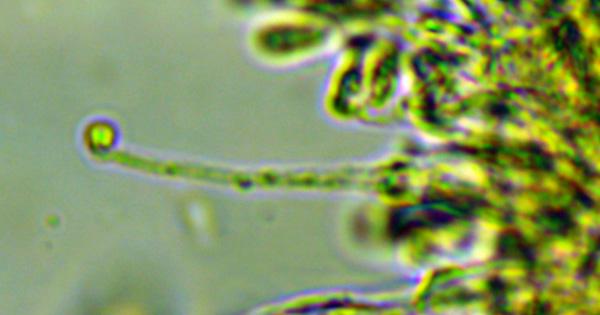
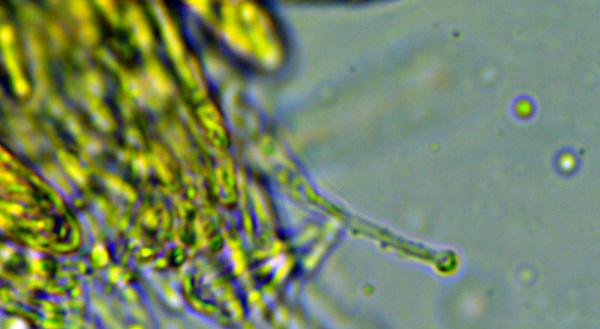
I had observed the hairs in Melzer mount but I could not find satisfactory my photos, I have not kept them. But I remember seeing a small ball at the top of the hair with Melzer. Tonight, I will take of photos hairs in Melzer.
Bernard
Here are 4 pictures of hairs in Melzer. The hairs don't seem quite smooth and the end shows a small ball.
Bernard
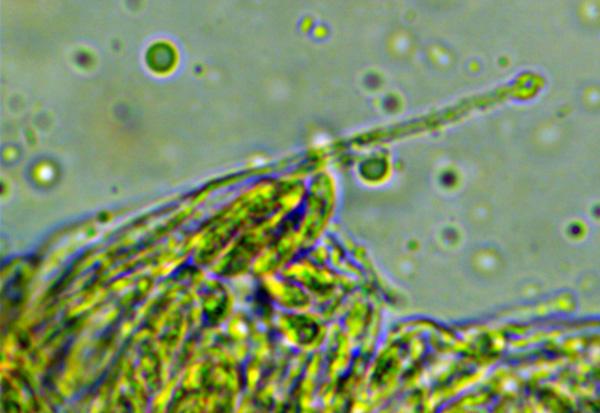
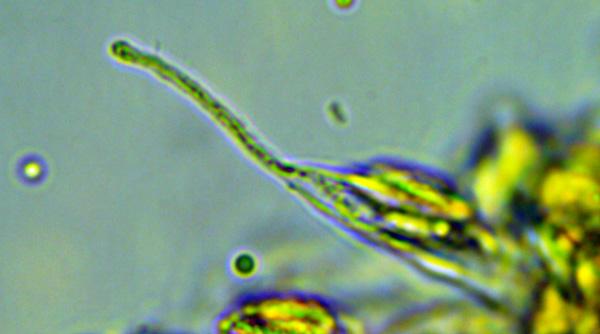
If you don't mind sending live material I'd be happy to make a culture out of it. We are working on Hyaloscyphaceae systematics and I have so far only one fuckelii-collection and that is from Scandinavia as are most of the others. Some French(?) colour to our project wouldn't do any harm!
Timo
No other idea than fuckelii. Yes, it would be great to make a culture and sequence.
I also wonder about whether H. aureliella and its var. britannica are genetically different.
Timo
Timo, can I have your mailing address to send the live material ?
Thank you in advance !
Bernard
Timo
Bernard