
06-05-2026 11:25
 Castillo Joseba
Me mandan el material seco de Galicia (España) re
28-04-2026 20:07
 Lothar Krieglsteiner
... on twig in the air at standing Ceratonia siliq
05-05-2026 22:40
Gernot FriebesHi,I believe this is a Plagiostoma growing on a Sa
04-05-2026 18:13
 Stephen Martin Mifsud
ID request for what seems to be a true aquatic fun
04-05-2026 16:39
Stephen Martin Mifsud
ID request: This specimen was collected in Malta o
28-07-2011 18:31
 Alex Akulov
Dear FriendsToday I made the pdf file of Velenovsk
04-05-2026 09:50
Castillo Joseba
Me mandan el material seco de Galicia,(España) re
02-05-2026 12:42
Alain BRISSARDBonjour à tousJeuidi 30 avril dernier on m'a remi
02-05-2026 13:06
Pauline. PennaBonjour Please can someone help me with this id
Urceolella
Elisabeth Stöckli,
08-06-2016 22:51
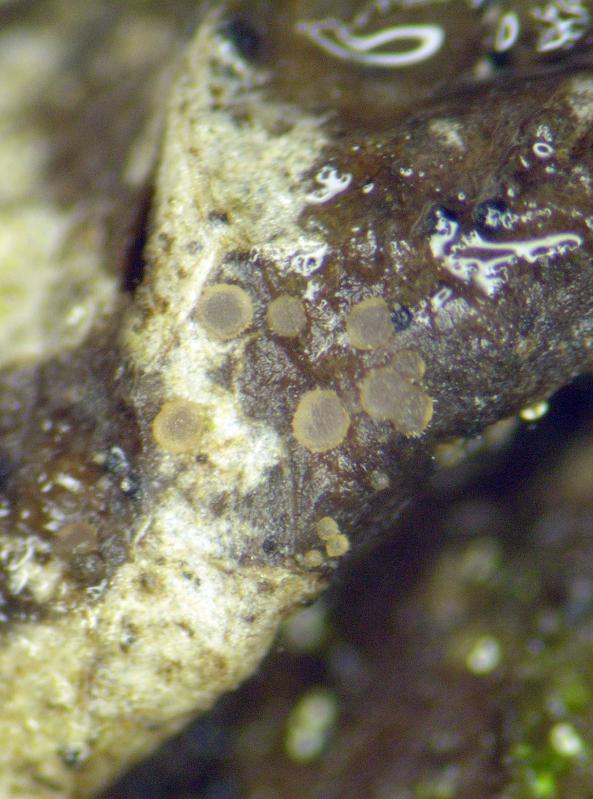
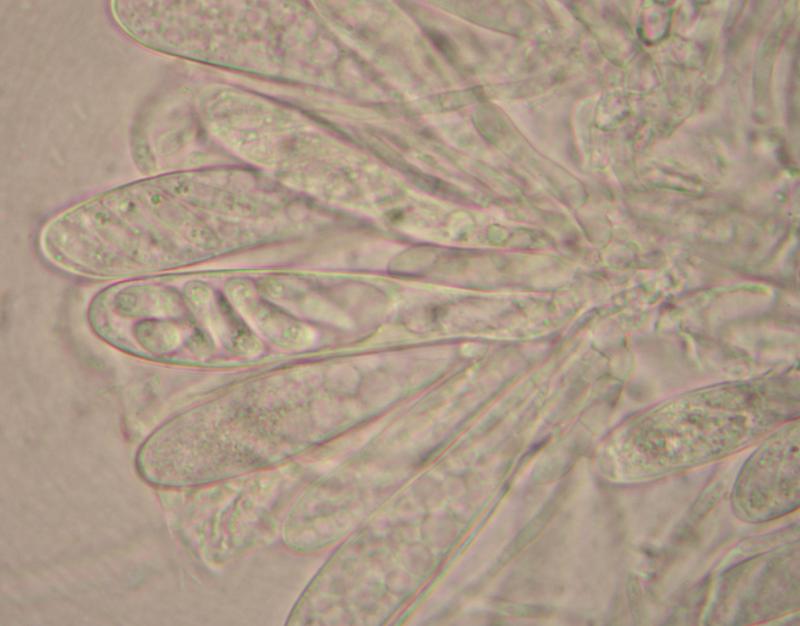
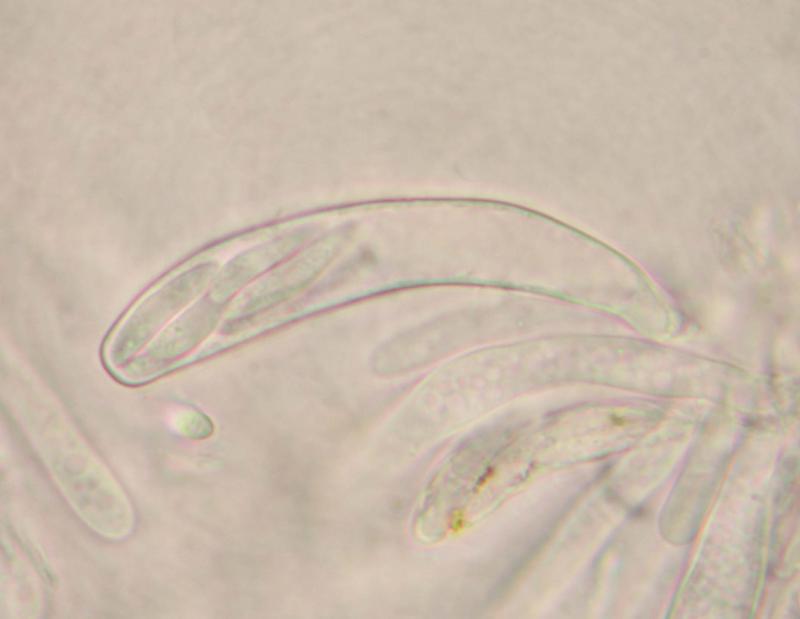
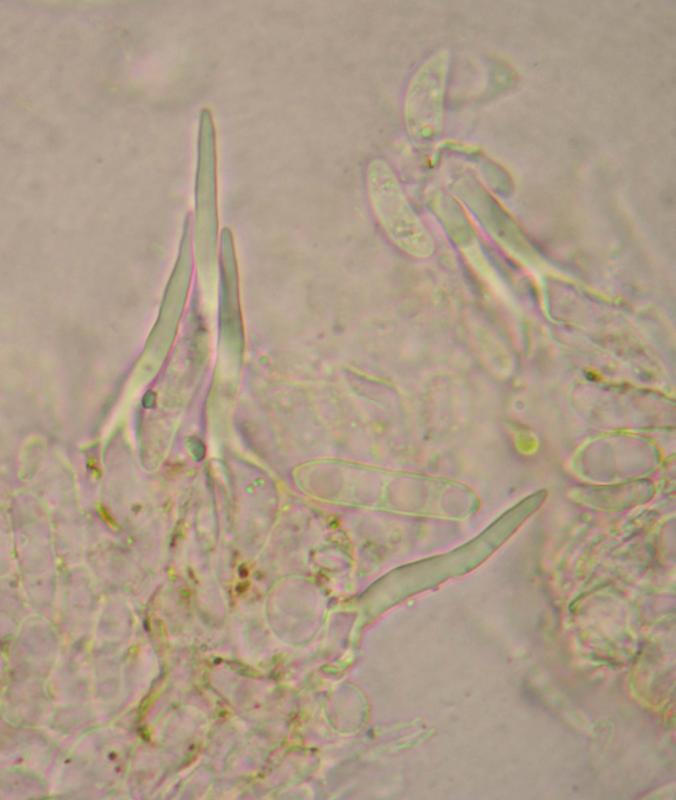
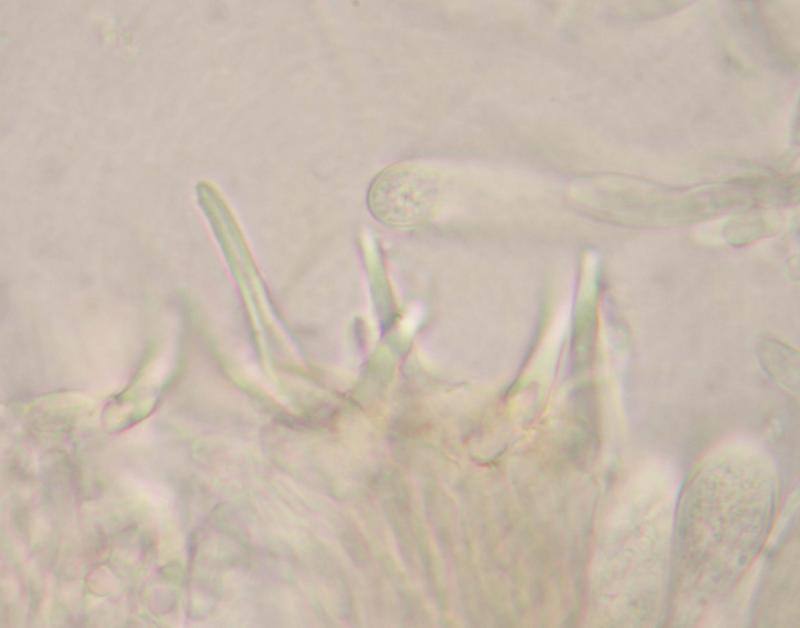
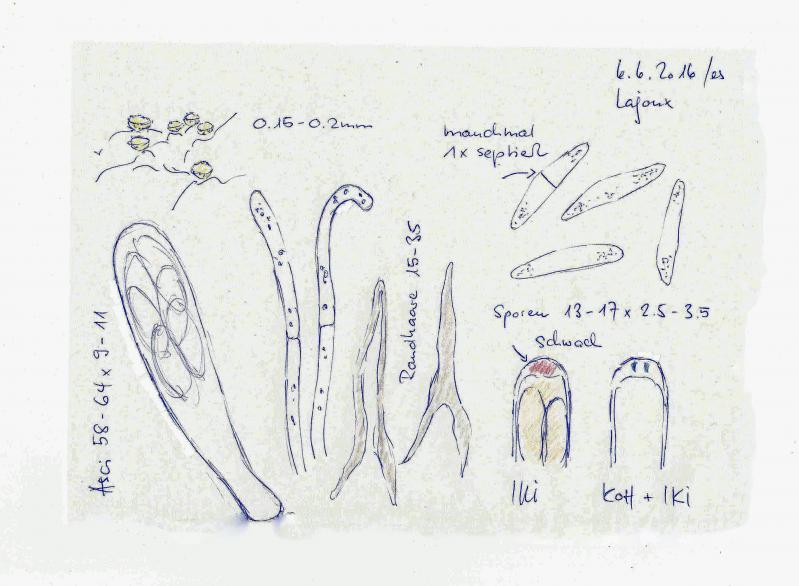
Trouvé au sol, sur feuilles de plante inconnue, apothécies sessiles, 0.15-0.2mm, surface externe couverte de poils, asques 55-62 9-11µm, octosporés, IKI-, spores 13-16x2.6-3µm, paraphyses simples 2-2.5µm, poils réfringents.
Merci d'avance pour votre aide.
Elisabeth
Hans-Otto Baral,
09-06-2016 09:07

Re : Urceolella
Very interesting! This would need some further tests:
-Does the glassy substance of the hars disappear in 5-10% KOH? I assume so, at least when shortly heated over a flame.
-Is the ascus apex thick-walled in the dead state?
-No free spores seen and measured?
I am sure you used Lugol, because there are two similar species, Naevia diaphana and Hyalopeziza raripila, which both have a hemiamyloid (pure red) apical ring, though sometimes almost negative.
Zotto
-Does the glassy substance of the hars disappear in 5-10% KOH? I assume so, at least when shortly heated over a flame.
-Is the ascus apex thick-walled in the dead state?
-No free spores seen and measured?
I am sure you used Lugol, because there are two similar species, Naevia diaphana and Hyalopeziza raripila, which both have a hemiamyloid (pure red) apical ring, though sometimes almost negative.
Zotto
Elisabeth Stöckli,
11-06-2016 13:44
Re : Urceolella
Merci Zotto,
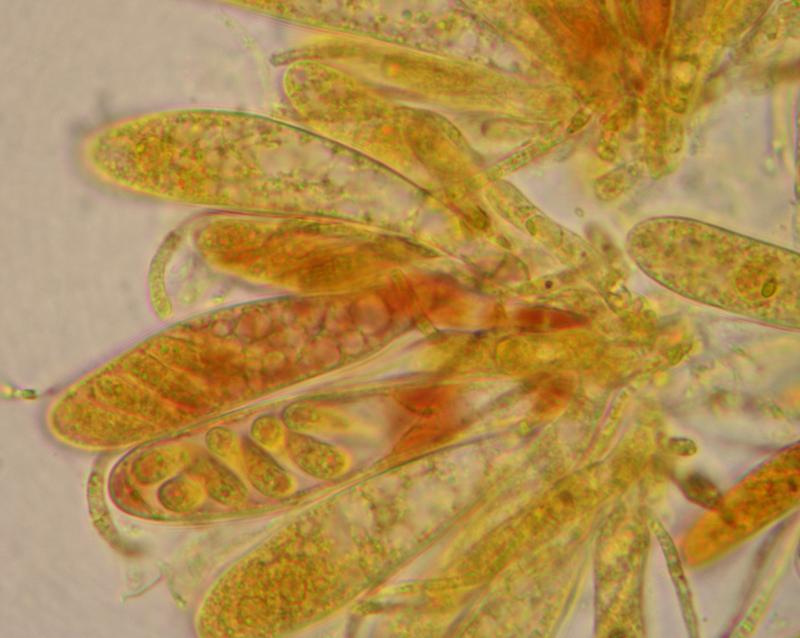
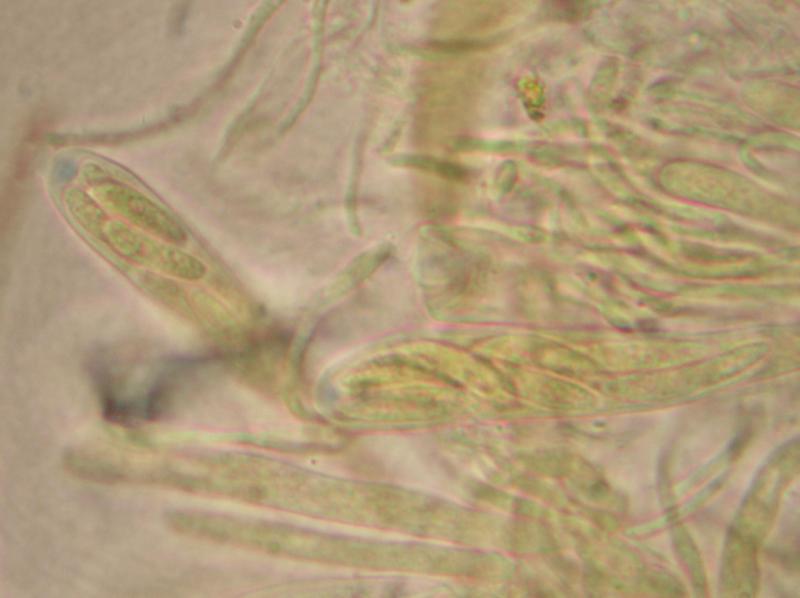
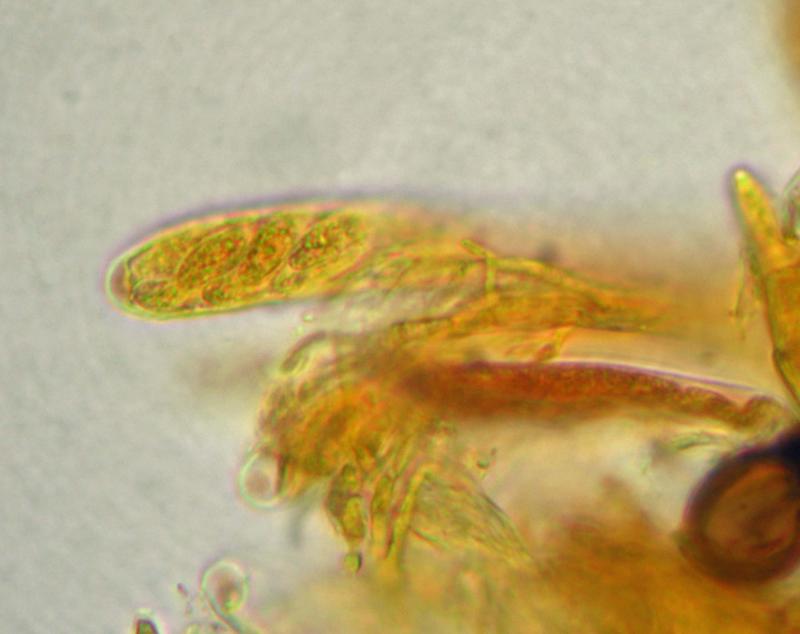
Ascusspitze mit IkI rot (schwach und nicht alle), mit KOH+IKI blau, Haare KOH 3% keine Reaktion, also H. raripila.
Elisabeth
Hans-Otto Baral,
11-06-2016 16:54
Re : Urceolella
Prima, dann ist der Fund doch noch gerettet :-)
Diese Art und die diaphana stehen auf meiner Wunschliste ganz oben, was Sequenzierung anbelangt. Es ist nämlich nicht klar, ob die zu den Hyaloscyphaceen oder den Naevioideen gehören, oder sonstwo hin.
Vermutlich hast du den Pilz getrocknet. Ich vermute sehr, dass Timo Kosonen großes Interesse hätte. Glashaarpilze sind ja das Steckenpferd von Seppo Huhtinen. Ich kann ja mal fragen, ob sie so eine Art schon hatten.
Viele Grüße
Zotto
Diese Art und die diaphana stehen auf meiner Wunschliste ganz oben, was Sequenzierung anbelangt. Es ist nämlich nicht klar, ob die zu den Hyaloscyphaceen oder den Naevioideen gehören, oder sonstwo hin.
Vermutlich hast du den Pilz getrocknet. Ich vermute sehr, dass Timo Kosonen großes Interesse hätte. Glashaarpilze sind ja das Steckenpferd von Seppo Huhtinen. Ich kann ja mal fragen, ob sie so eine Art schon hatten.
Viele Grüße
Zotto