
28-07-2011 18:31
 Alex Akulov
Dear FriendsToday I made the pdf file of Velenovsk
25-12-2019 17:54
Valencia Lopez Francisco JavierHola a todos/asEstas supuestas pezizas estaban en
12-07-2015 00:05
 Nedim Jukic
This one from the same locality as the previous on
12-11-2019 10:32
 Miguel Ángel Ribes
Hi againExactly at the same place than my previous


30-05-2026 21:12
Philippe PELLICIERSur branche de mélèze (Larix) près de la neige,
31-05-2026 10:35
Hulda Caroline HolteHello,I collected this species growing on a rather
25-05-2026 16:35
 Bernard CLESSE
Bonjour à toutes et tous,J'ai trouvé récemment,
29-05-2026 15:35
daniel FERREBonjour à tous,Je voudrais votre aide pour cette
Cudoniella clavus or Hymenoscyphus?
Steve Clements,
15-08-2016 21:00
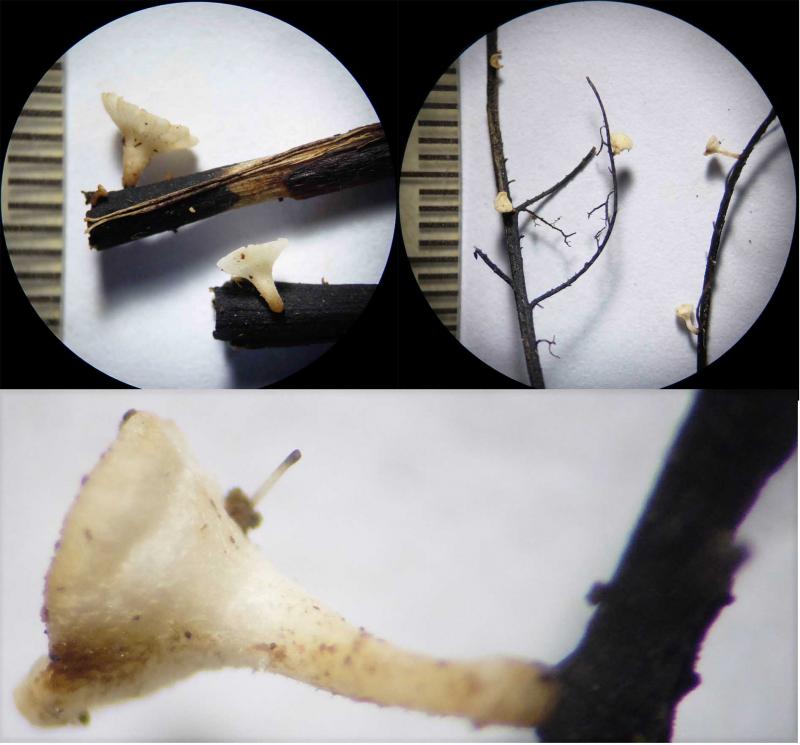
Cet asco était sur des rameaux dans une zone humide. Il ressemble à un petit Cudoniella clavus, mais les spores ne sont pas tout à fait correct. Hymenoscyphus peut-être?
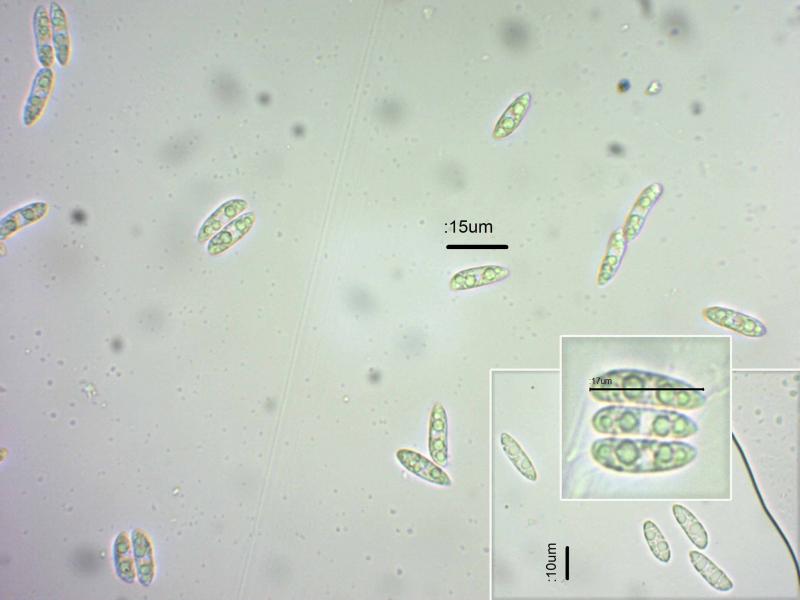
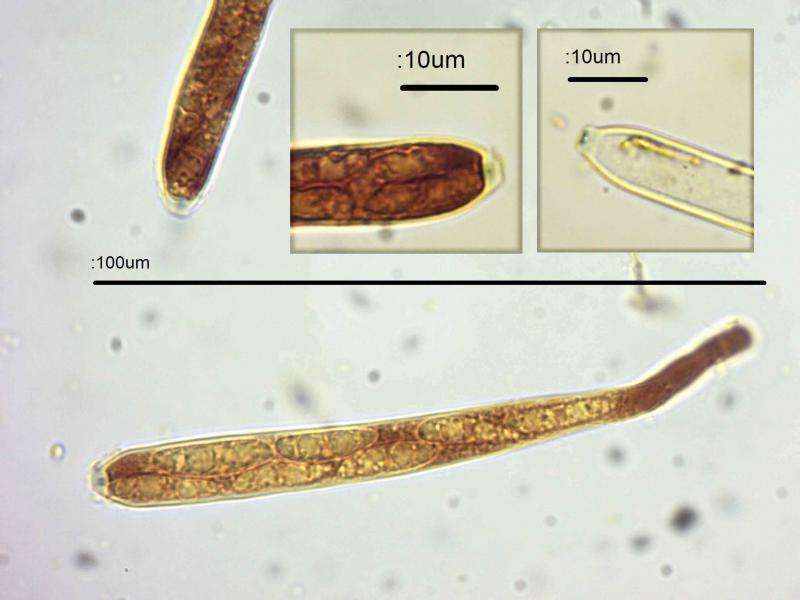
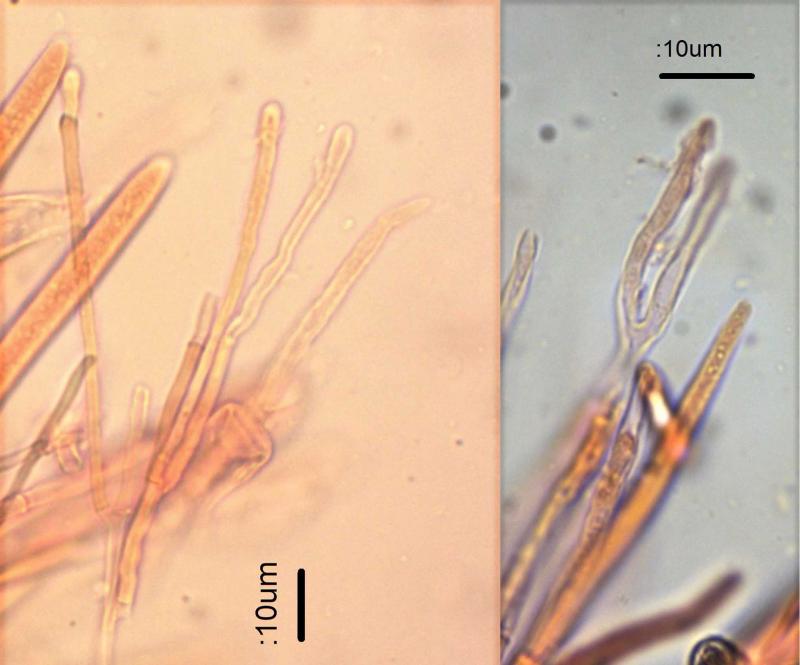
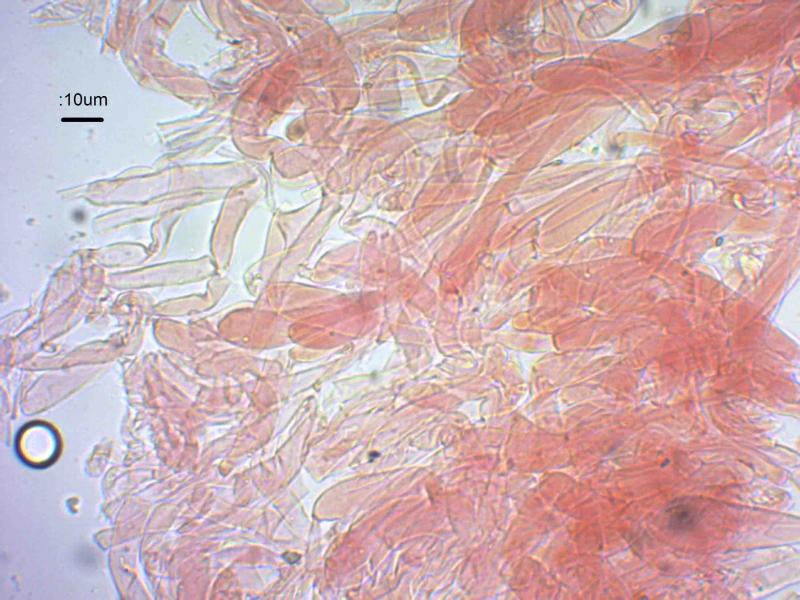
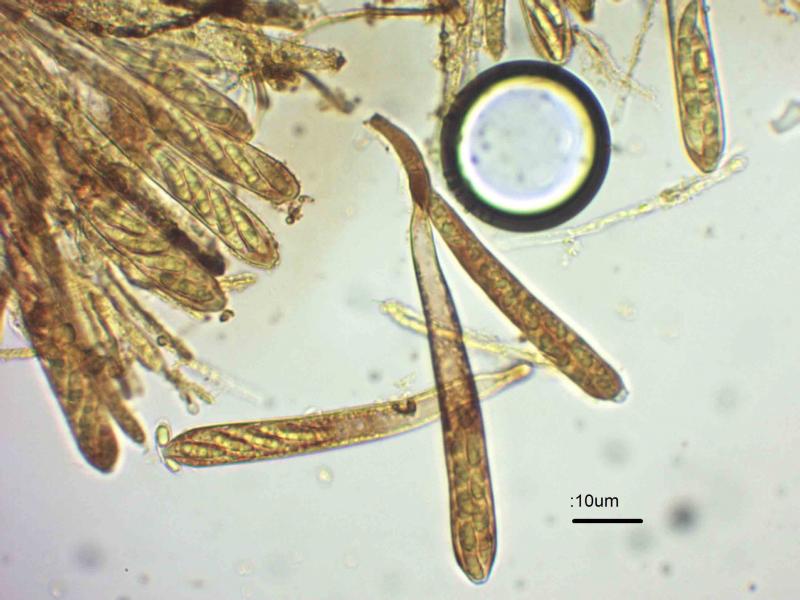
We found this stalked asco in some numbers on woody twigs in a wet area of mixed woodland. The apothecia were 1-2.5 mm in diameter, and the stalks 1-1.25 mm in length. The stem base was a little darker, but not blackened. Asci were dextinoid in Lugol, biseriate, approx 100 x10 um, without croziers, inoperculate and not blueing distinctly at the tips. It was hard to tell if the blueing was simply an artefact of the LED lighting of the microscope. Spores were dropped on a slide overnight, and were 14-17.5 x 5-5.5 in water, and 15-17 x 4-4.5 in Lugol. Mostly they contained 4 oil drops. Paraphyses were filiform, about 3 wide, septate, and with some branching. Subiculum from the outside edge of the cups was of long cells, varying from 2 to 10 um wide.
Cudoniella clavus is described in Fungi of Switzerland as having spores without drops, 9.5-15 long. Perhaps this is a Hymenoscyphus?
Cordialement,
Steve
Hans-Otto Baral,
15-08-2016 21:07

Re : Cudoniella clavus or Hymenoscyphus?
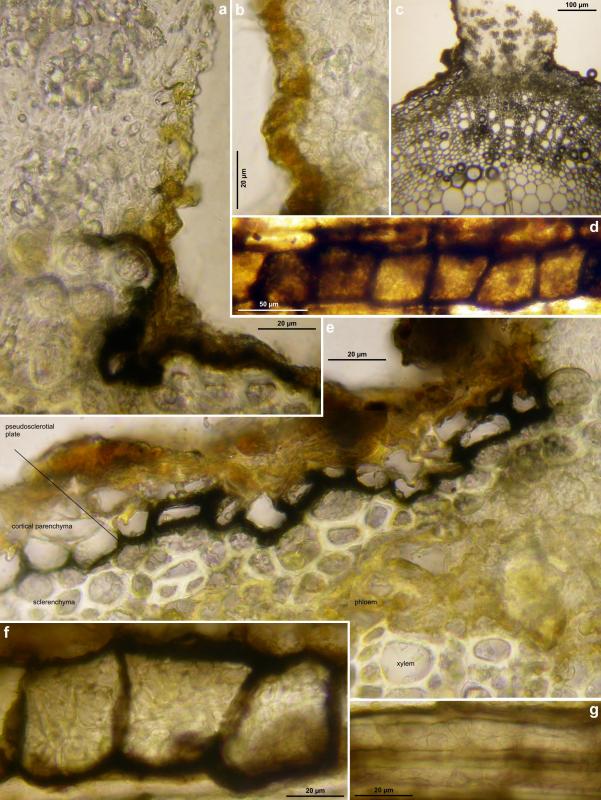
The substrate is veins from a leaf, and the fungus probably Hymenoscyphus fraxineus or albidus. Would be interesting to know whether the asci arise from croziers. typical is the blackened base.
Is there Fraxinus around? Which country is it from?
Is there Fraxinus around? Which country is it from?
Steve Clements,
15-08-2016 21:54
Re : Cudoniella clavus or Hymenoscyphus?
Hi Zotto,
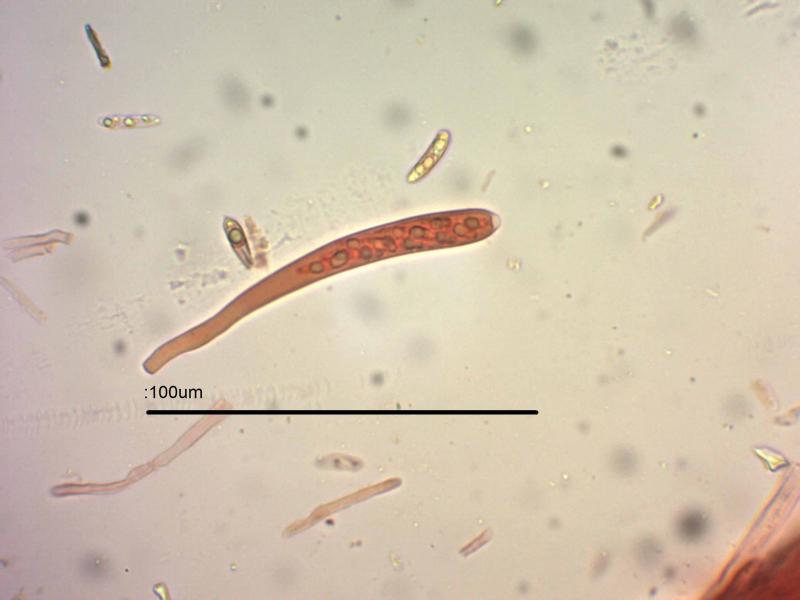
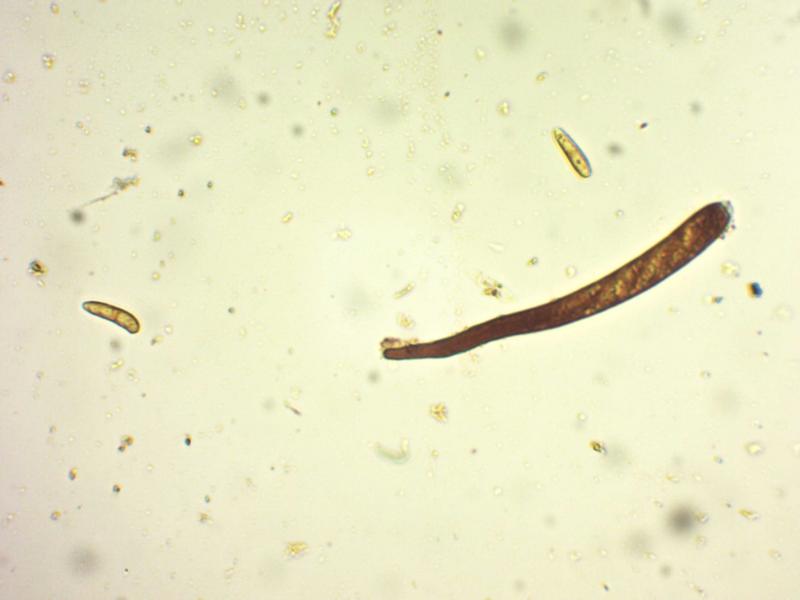
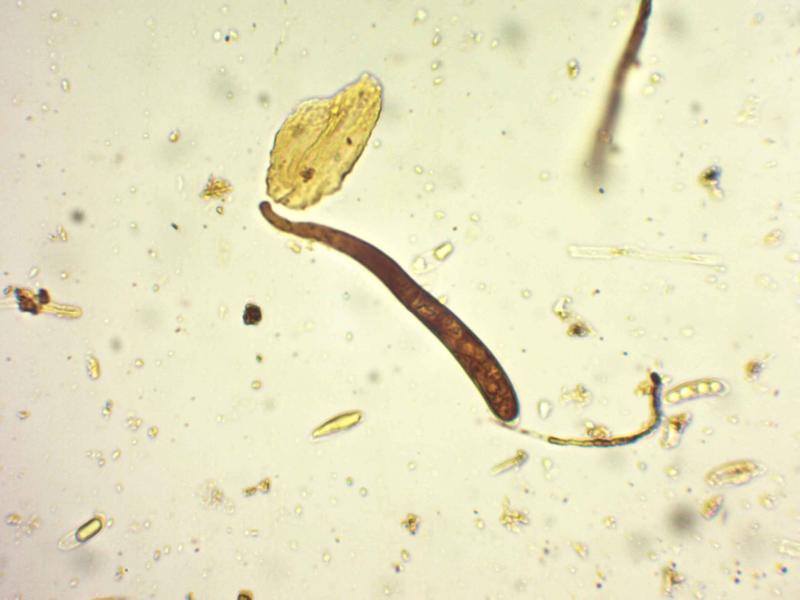
The asci don't seem to have croziers to me - here are some more images.
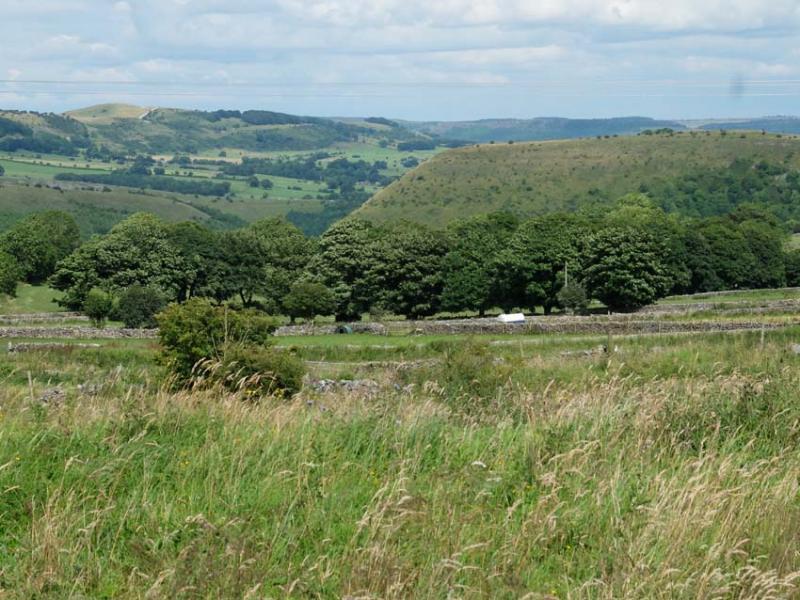
The location is Longshaw Estate, Peak District, Derbyshire, N. England.
Plenty of ash around.
Regards,
Steve
The asci don't seem to have croziers to me - here are some more images.
The location is Longshaw Estate, Peak District, Derbyshire, N. England.
Plenty of ash around.
Regards,
Steve
Hans-Otto Baral,
15-08-2016 22:02
Re : Cudoniella clavus or Hymenoscyphus?
yes, looks like without. I was thinking that the ash disease extended to whole England, making detection of H. albidus very difficult. Your sample was not rich?
Steve Clements,
15-08-2016 22:14
Re : Cudoniella clavus or Hymenoscyphus?
I have a couple of ascocarps remaining in the incubator. Is there anything else which I can look for microscopically?
Ash Dieback has not been found in our area yet. It would be a tragedy if it kills the ash trees which are very important as the Peak District National Park is very beautiful. Many of the trees in this picture are ash.
Steve
Ash Dieback has not been found in our area yet. It would be a tragedy if it kills the ash trees which are very important as the Peak District National Park is very beautiful. Many of the trees in this picture are ash.
Steve
Hans-Otto Baral,
15-08-2016 22:40
Re : Cudoniella clavus or Hymenoscyphus?
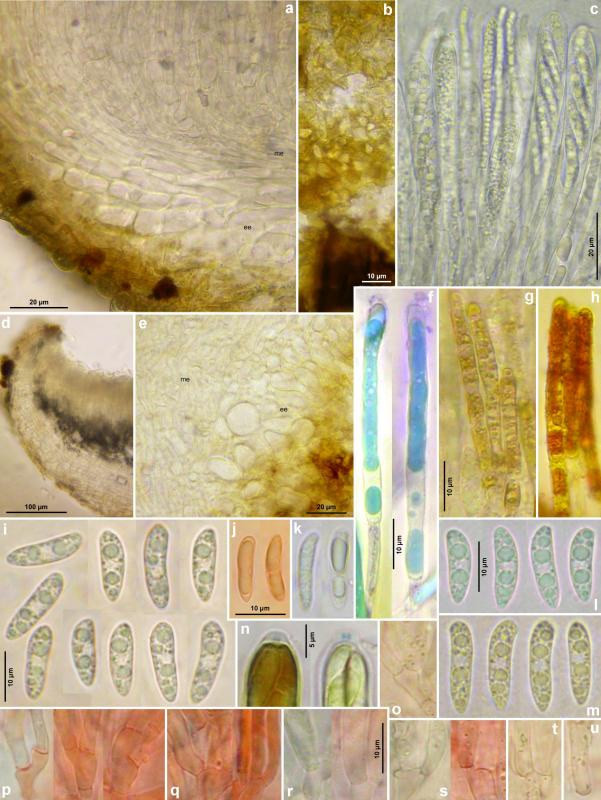
well, you can look for the paraphysis contents (VBs) in living cells, but mist soecies of te genus have them.
If you succeed with a section of the stipe base it should contain crystrals in the medulla.
see attachments from my article.
If you succeed with a section of the stipe base it should contain crystrals in the medulla.
see attachments from my article.
Steve Clements,
15-08-2016 23:27
Re : Cudoniella clavus or Hymenoscyphus?
Many thanks indeed,
Steve
Steve