

10-06-2026 12:54
Steve ClementsBonjour encore, Pouvez-vous m'aider, s'il vous pl
09-06-2026 18:32
Camille MertensSur morceau de roseau immergé 0,5 - 0,7 mm de dia
10-06-2026 21:16
 François Freléchoux
Bonsoir,Le dernier du jour, en attendant votre avi
10-06-2026 21:07
François Freléchoux
Toutes les tiges de gentianes jaunes de l'an passÃ
10-06-2026 13:41
François Freléchoux
Bonjour à nouveau, Voici une trouvaille d'hier.
10-06-2026 11:53
Steve ClementsBonjour, This disco is abundant on dead stems of
10-06-2026 10:45
François Freléchoux
Bonjour à nouveau, Encore une détermination qui
08-06-2026 10:16
 Spooren Marco
I don`t have a clou about this fungus,it is not in
10-06-2026 09:24
François Freléchoux
Bonjour, J'imagine que cette détermination ne do

Hola a todos.
Subo unas fotos de un asco que encontramos el sábado sobre Sphagnum en una turbera a unos 1300 metros de altitud.
Miden hasta 15 mm de diámetro y tienen forma de embudo.
Esporas elipsoidales a fusiformes, de 14,5-17,3 x 7,3-8,3 micras, con muchas pequeñas gútulas en su interior y con tendencia a situarse hacia los polos, con verrugas muy finas.
Ascas amiloides, pleurorrincas.
Paráfisis curvadas y con contenido interno de color rojizo.
Excípulo ectal formado por células globosas donde se forman estructuras con forma de pelo.
Pensé en alguna especie de Pachyella, ¿Pueden ayudarme?
Gracias
Rubén
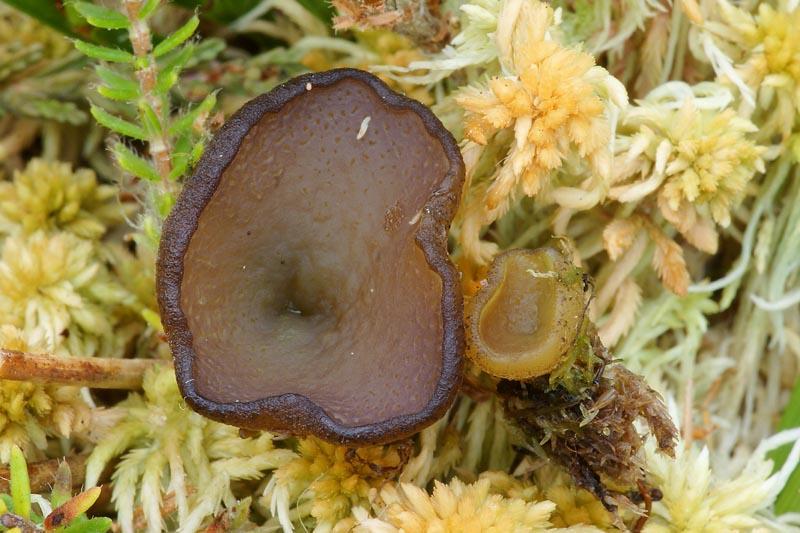
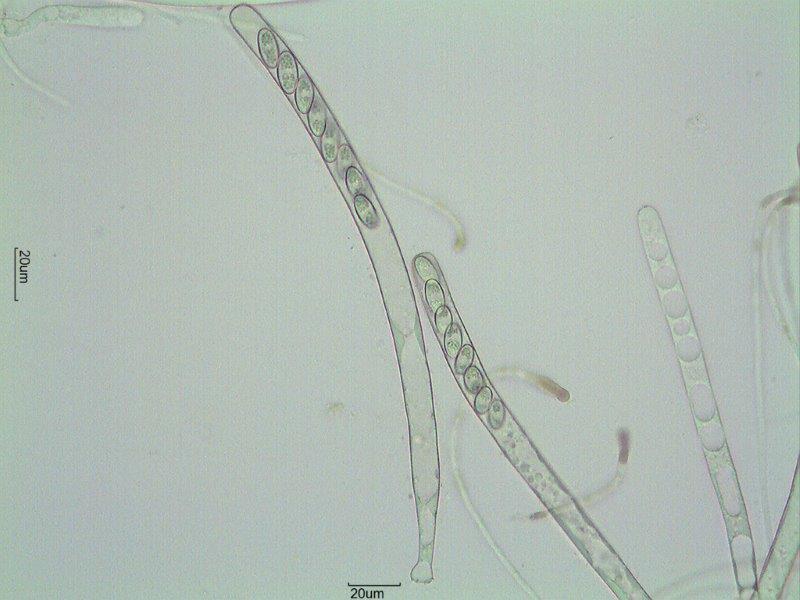
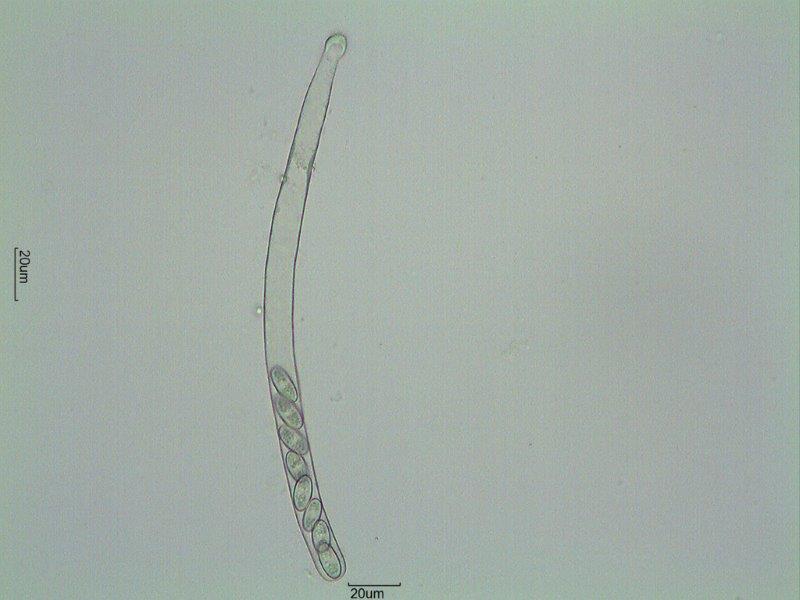
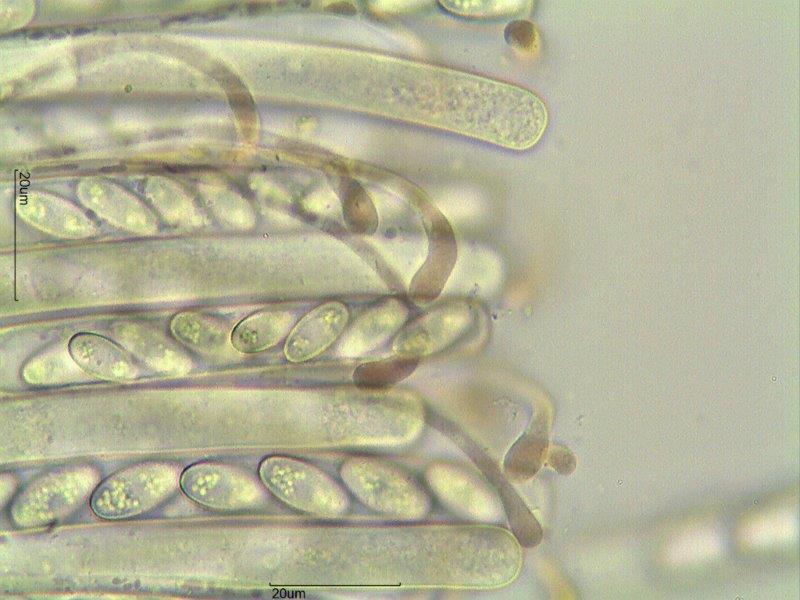
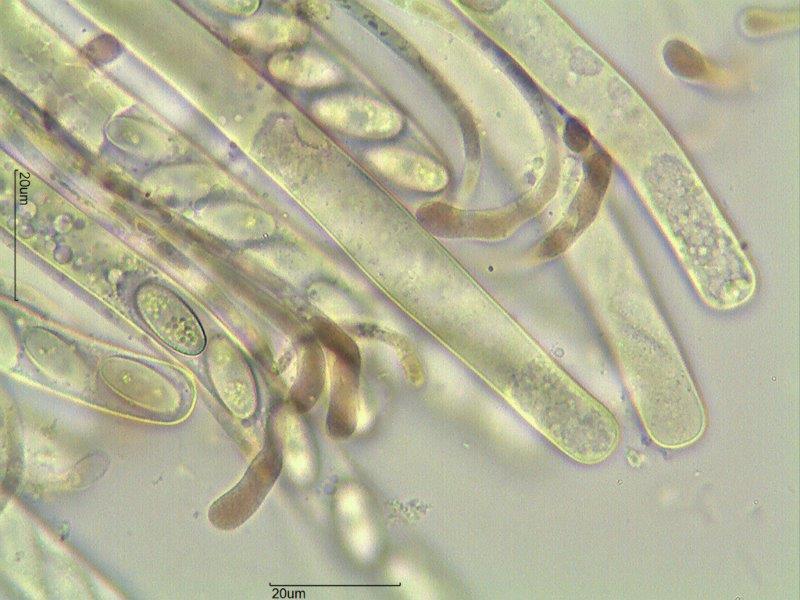
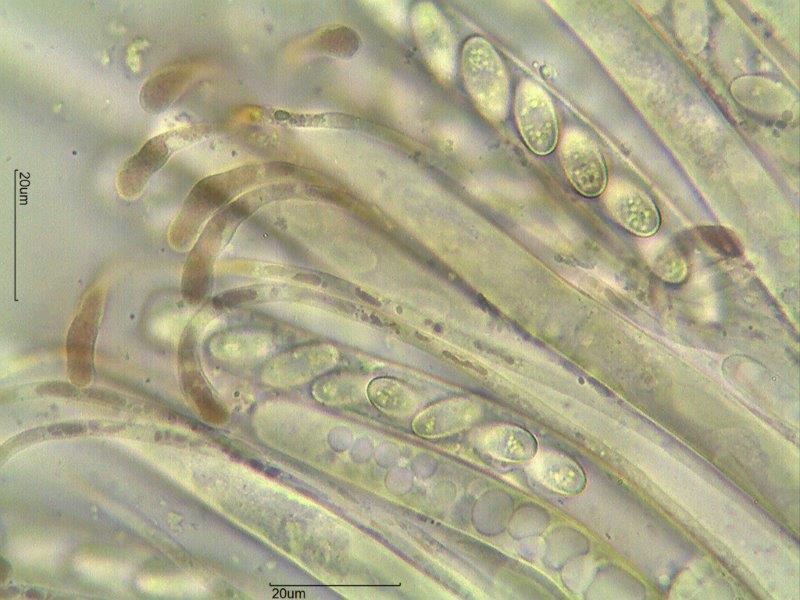
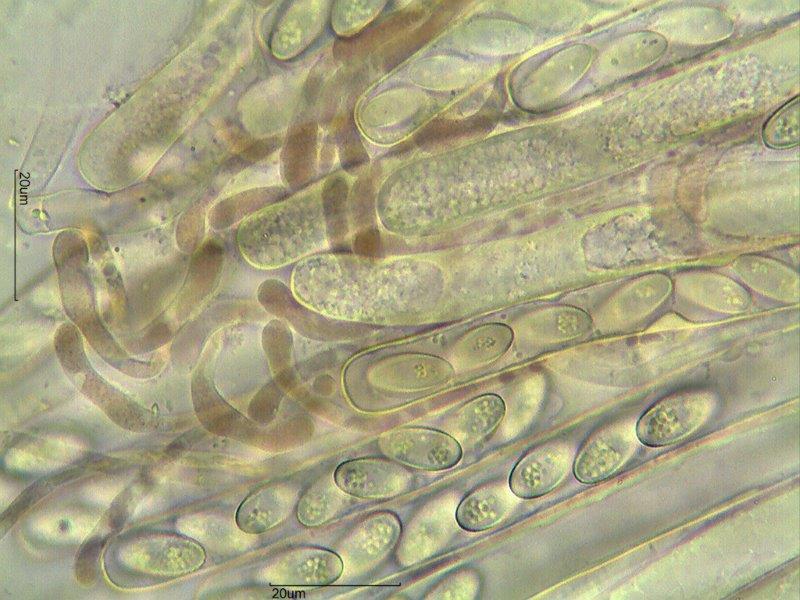
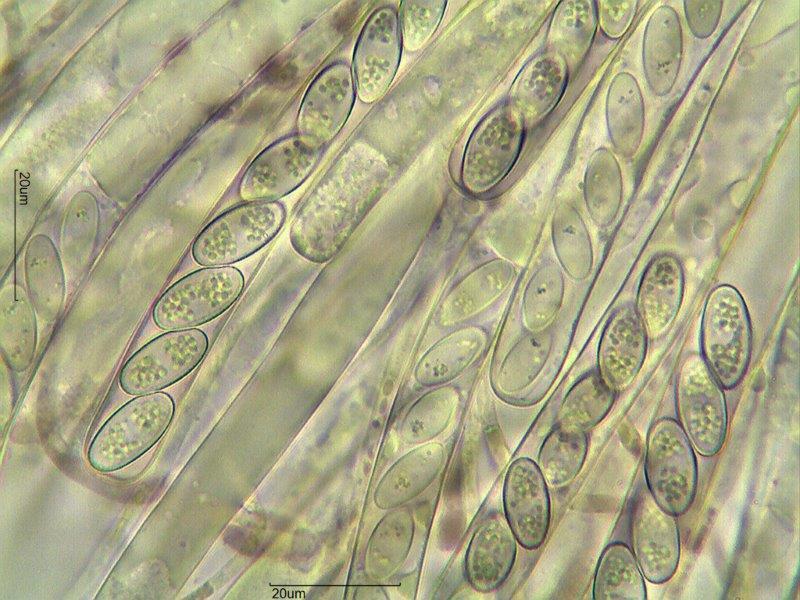
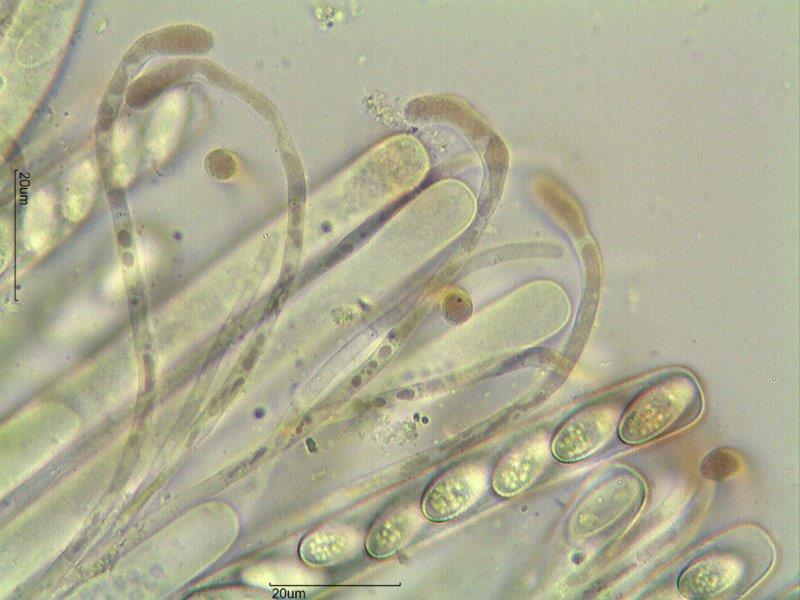
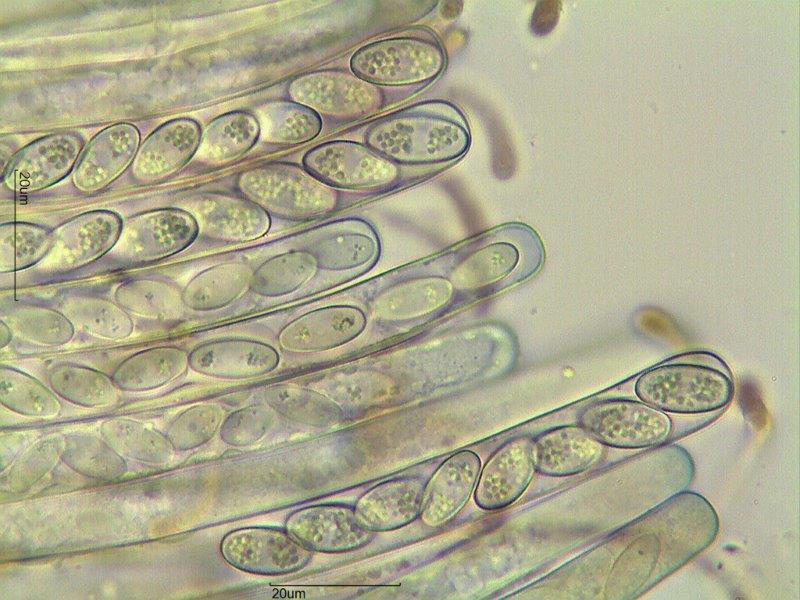
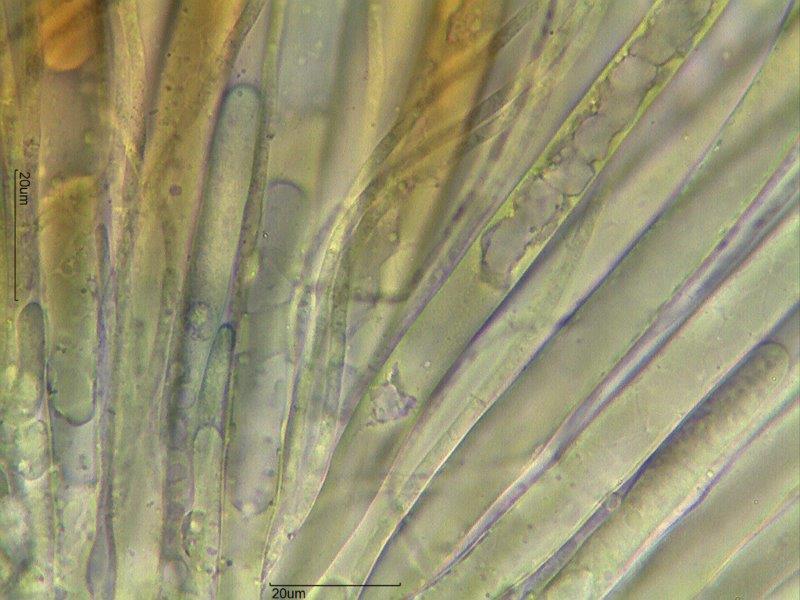
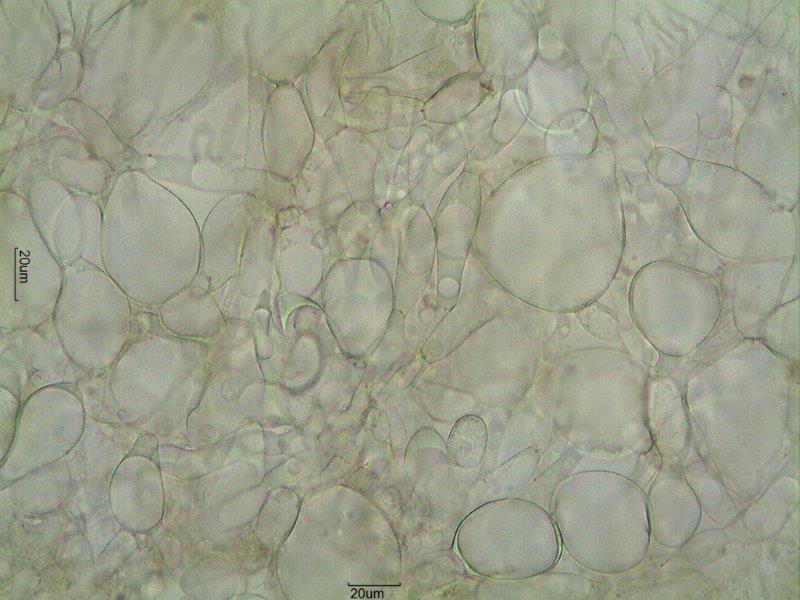
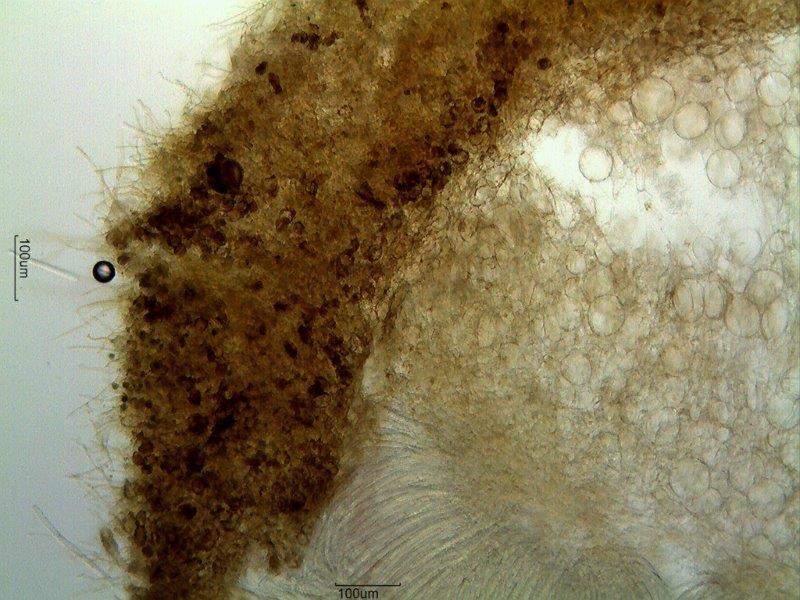
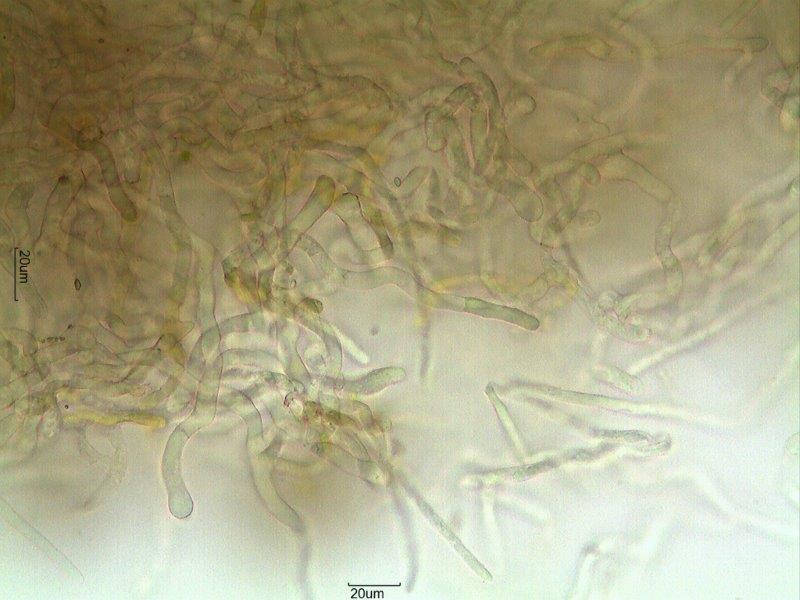
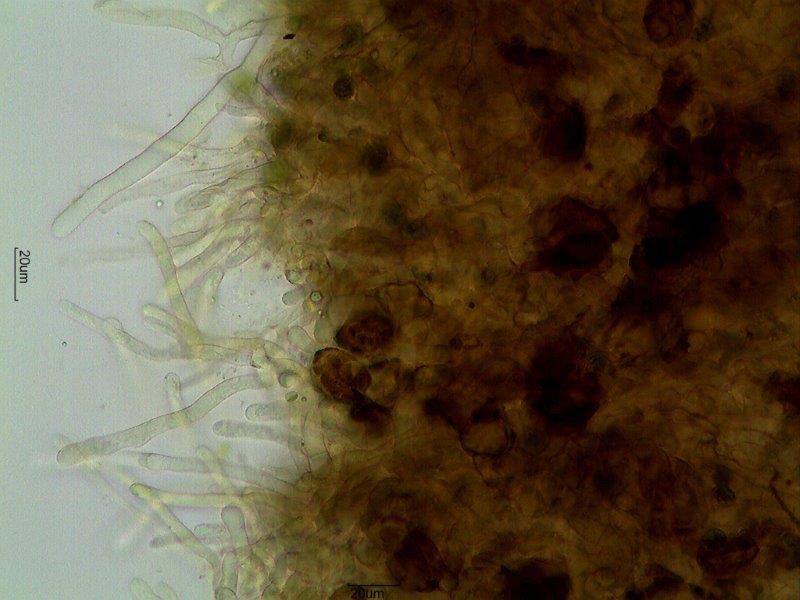
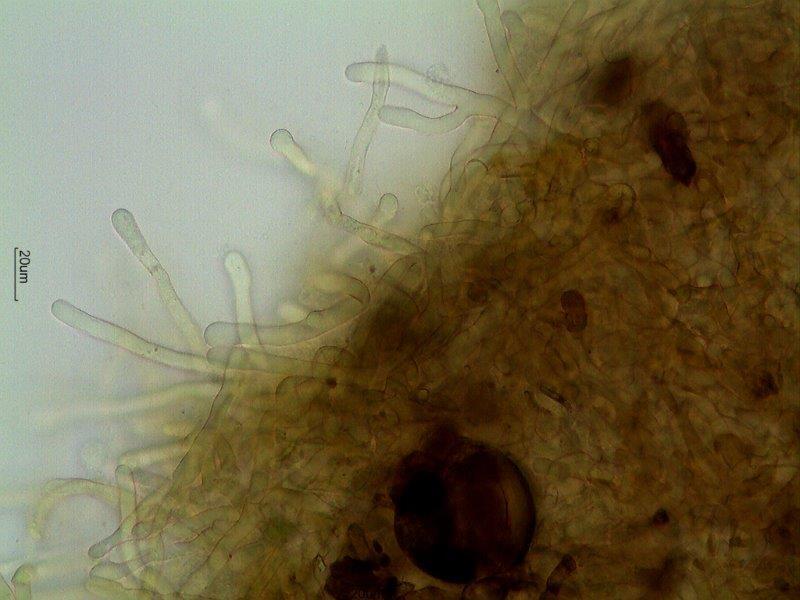
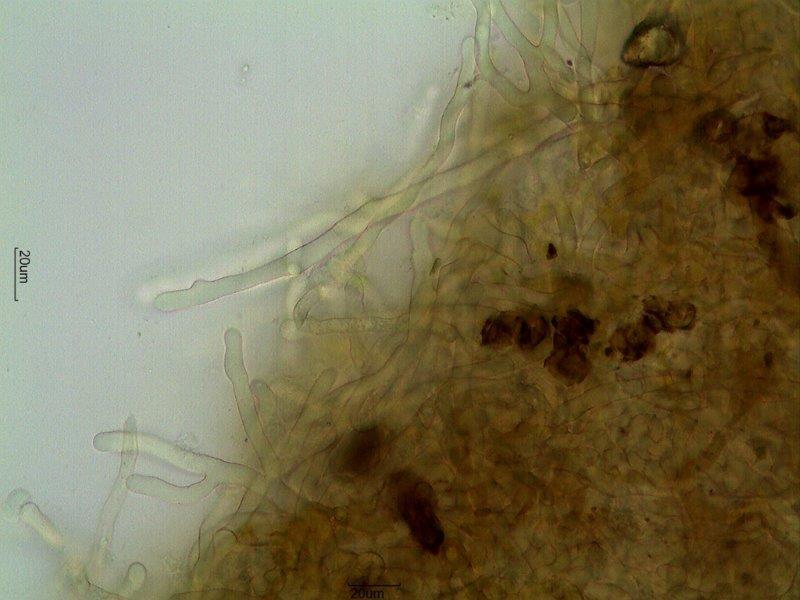
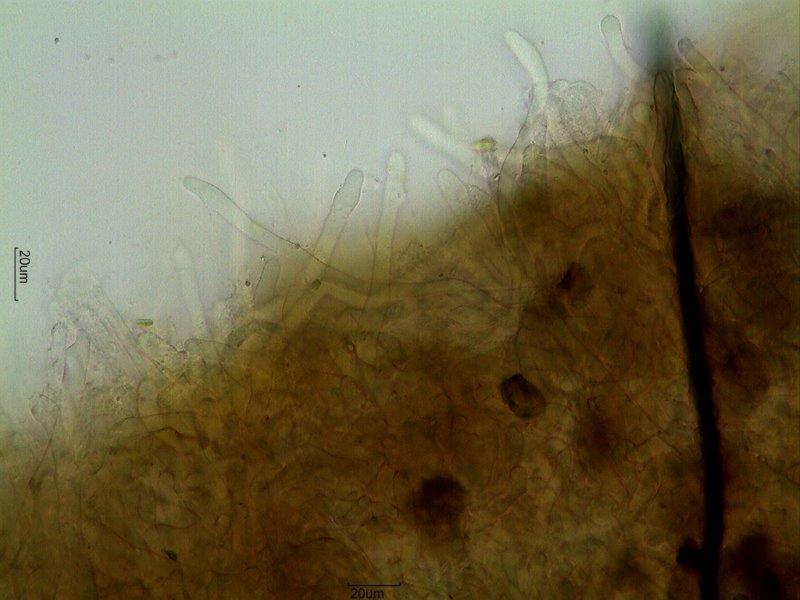
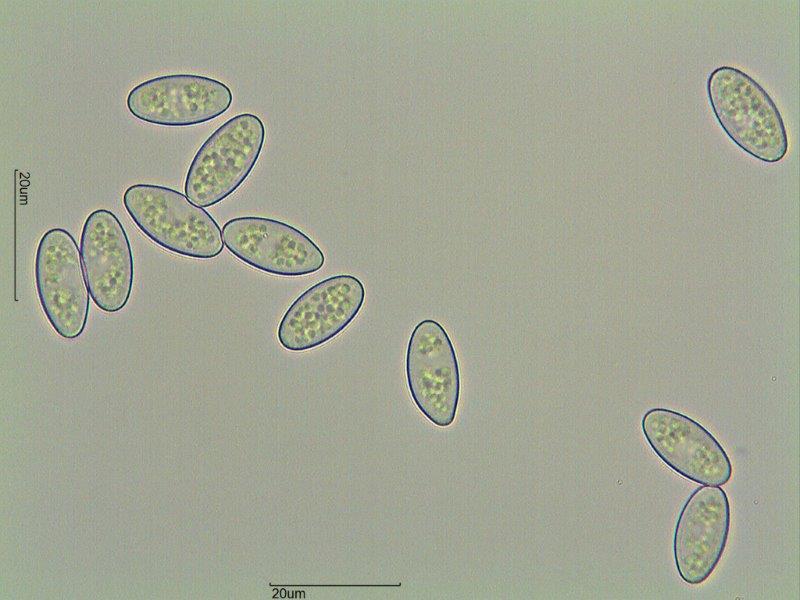
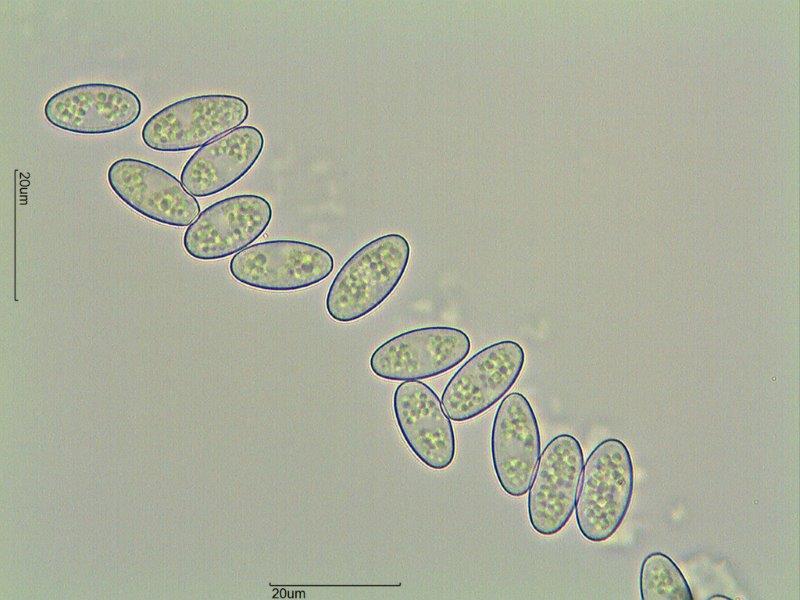
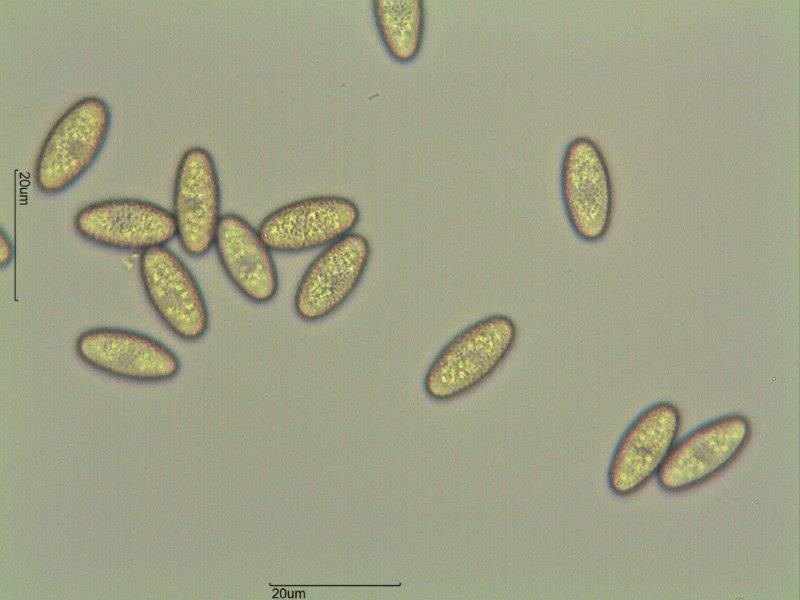
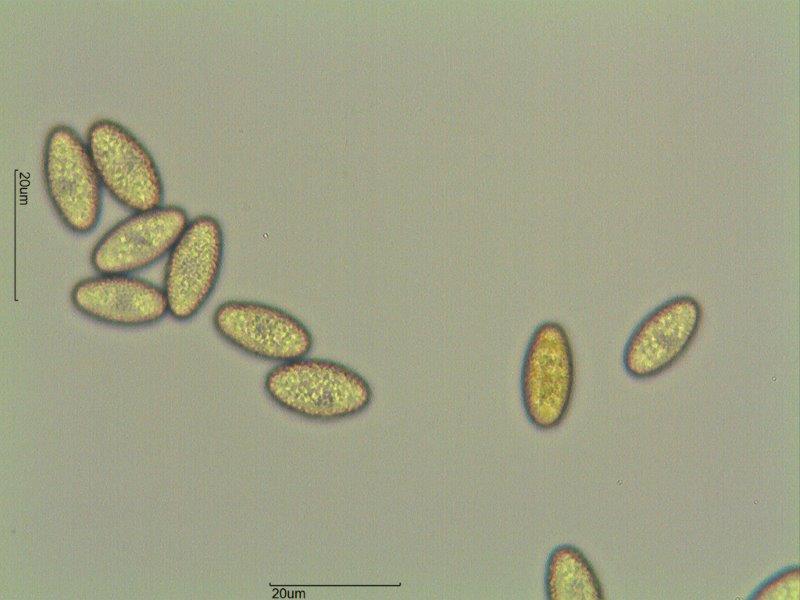

The ecology and ascospores characters (size, shape and guttulation) are very similar to Lepidotia hispida (syn. Peziza quelepidotia). But this species is theoretically stipitate and I did not note such a hyphal structure on the outer part of the excipulum when I studied this fungus (see my paper in Ascomycete.org, vol. 7, fasc. 6). The pigment in the paraphyses is not brown as here. At last, asci of L. hispida do not have crozier.
So other no idea!