
08-05-2026 11:55
Gernot FriebesHi,found on a decorticated Picea abies branch stil
09-05-2026 07:37
 Zuzana Sochorová (Egertová)
Hello,please, could anyone share this paper?Ferná
11-05-2016 20:37
Zuzana Sochorová (Egertová)
Hi,this very little ascomycete grew on soil in a m

05-05-2026 22:40
Gernot FriebesHi,I believe this is a Plagiostoma growing on a Sa
06-05-2026 11:25
 Castillo Joseba
Me mandan el material seco de Galicia (España) re
06-05-2026 17:23
Thomas Læssøehttps://svampe.databasen.org/observations/10594257
28-04-2026 20:07
 Lothar Krieglsteiner
... on twig in the air at standing Ceratonia siliq
04-05-2026 18:13
 Stephen Martin Mifsud
ID request for what seems to be a true aquatic fun
04-05-2026 16:39
Stephen Martin Mifsud
ID request: This specimen was collected in Malta o
Yellow Hymenoscyphus?
Yatsiuk Iryna,
30-09-2016 17:46
 Hello dear all,
Recently I've found this yellow one on petioles of Fraxinus. I had many other collections this time and didn't explored it in fresh condition:( Nevertheless, maybe you will have ideas about it?
I think it is Hymenoscyphus but not sure. Maybe Phaeohelotium?
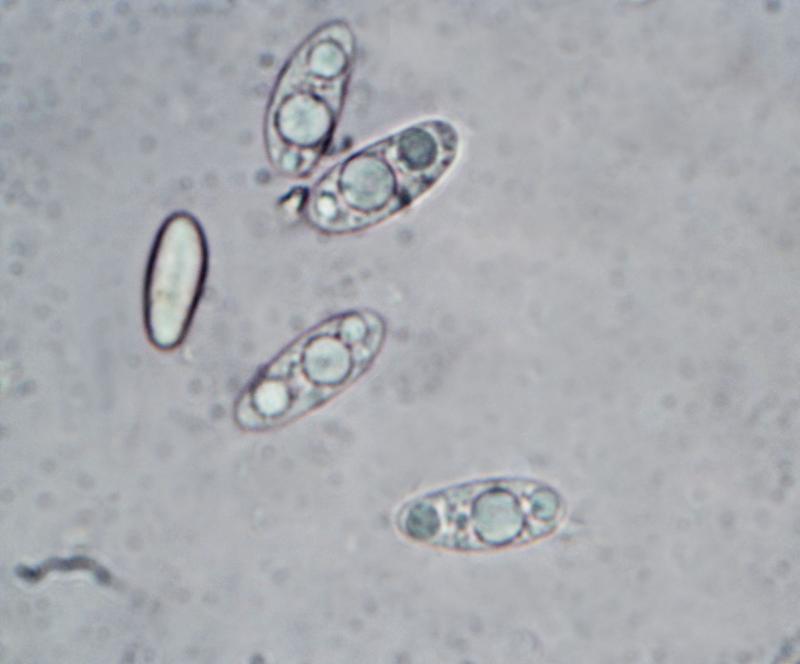
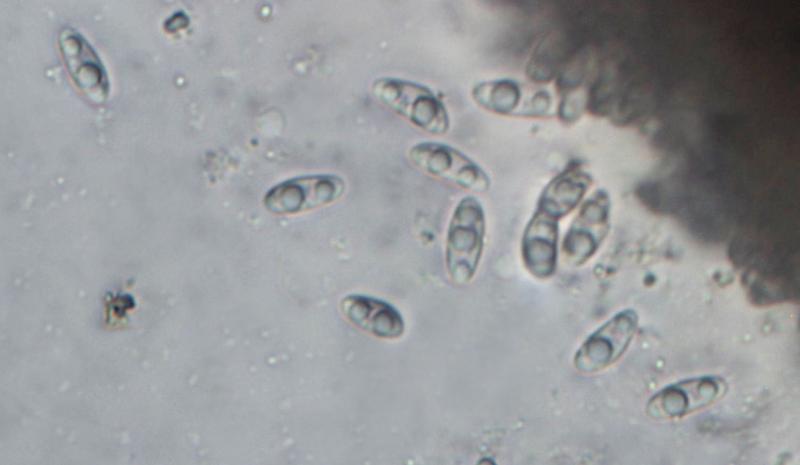
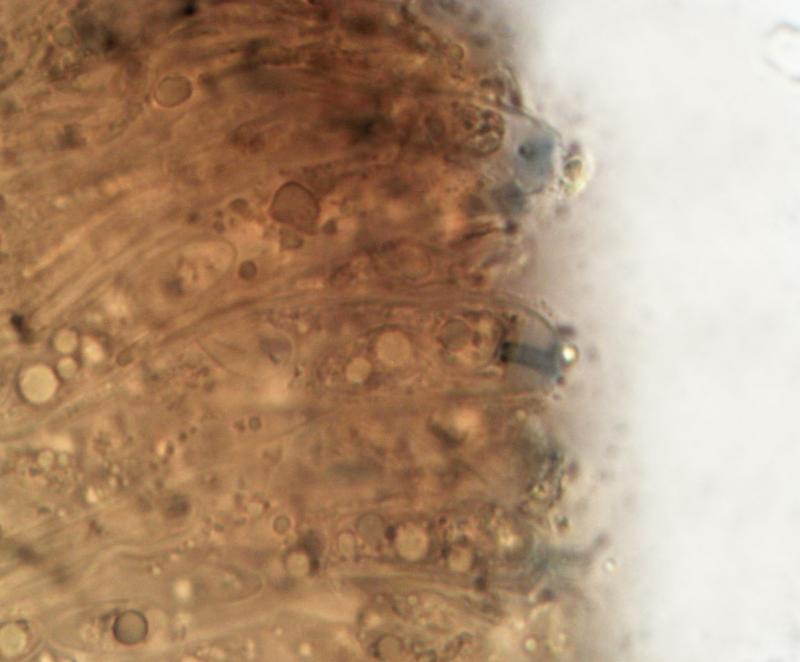
Spores in average (30 spores) 12,9 x 5,5 um, Q=2,35
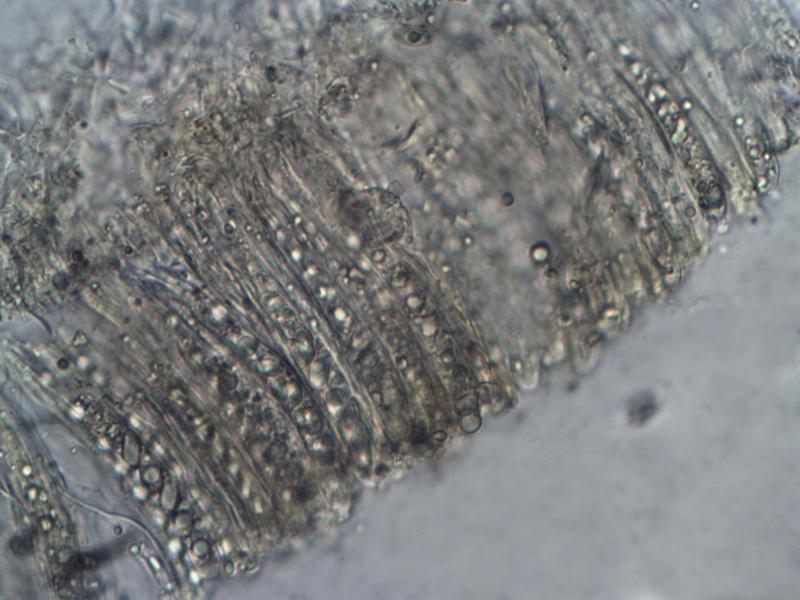
Asci dead, approx. 90 x 12 um, apex of Hymenoscyphus-type (??), blueing in IKI
Croziers bad visible, but almost surely present. Paraphyses almost not visible.
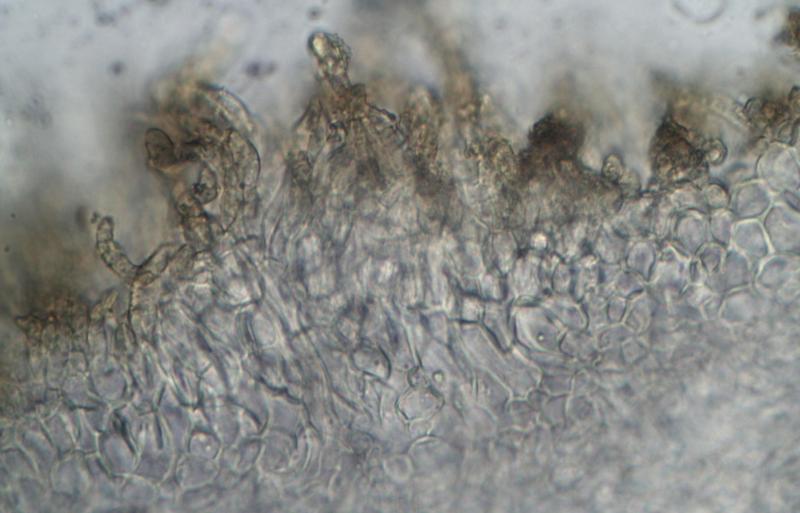
There are also hairs up to 100 um long, 5-6 um wide, that are a bit confusing (see photo).
Thank you in advance,
Iryna
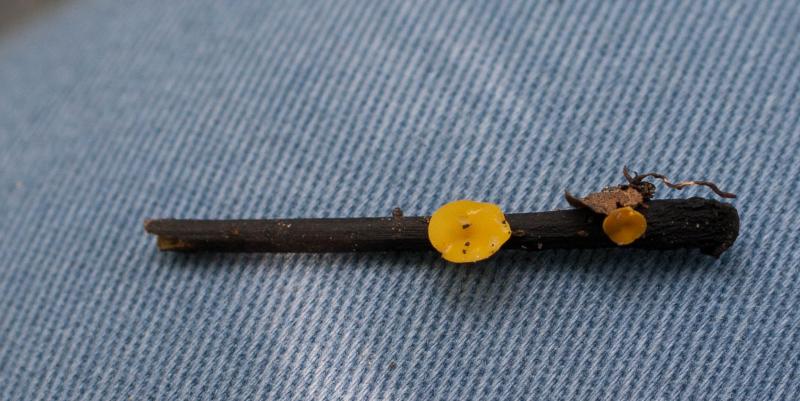
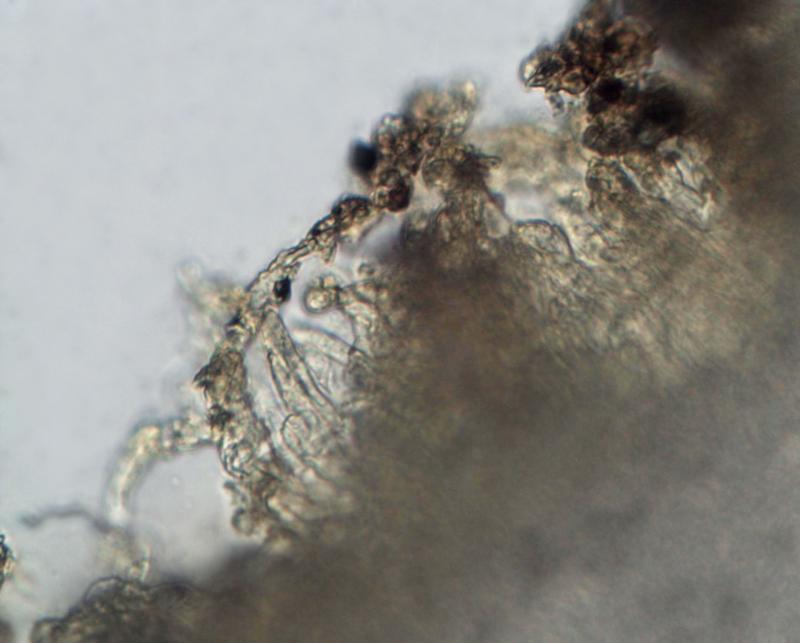
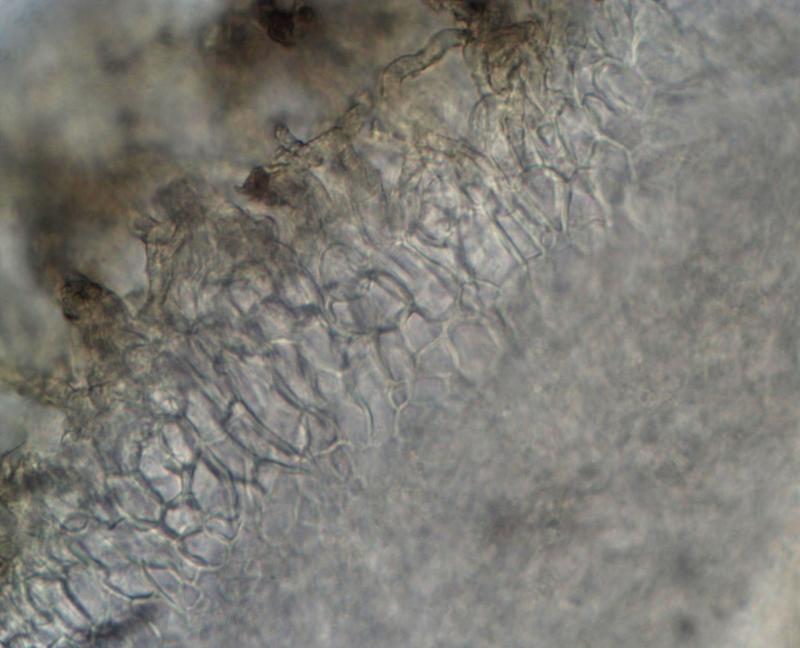
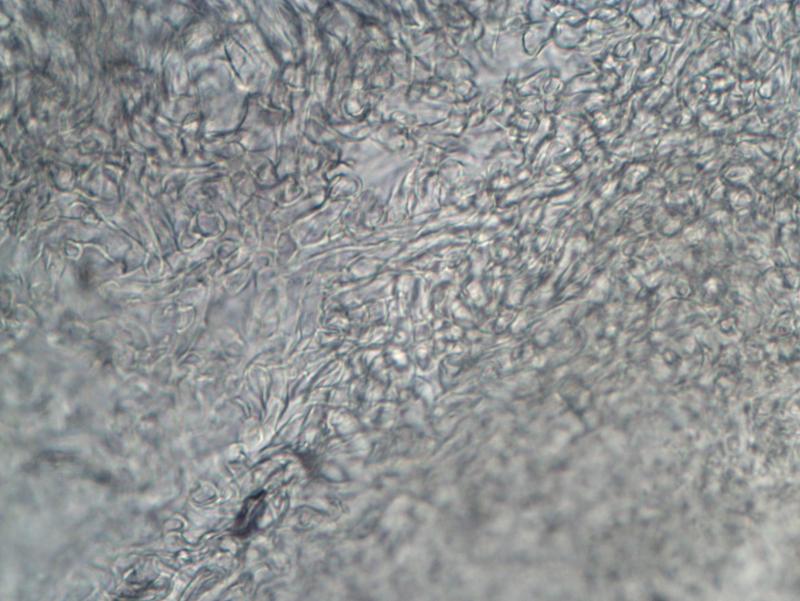
Yatsiuk Iryna,
30-09-2016 17:48
Re : Yellow Hymenoscyphus?
Spores, asci, apical apparatus in IKI
Hans-Otto Baral,
30-09-2016 18:13

Re : Yellow Hymenoscyphus?
Hi Irina
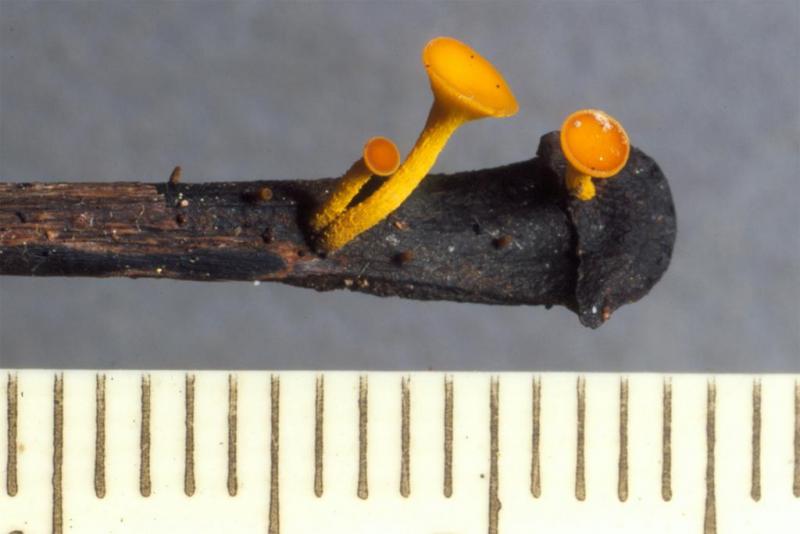
the apical ring is of the Sclerotiniaceae-type. The sample reminds me of Rutstroemia luteovirescens, but that is on Acer. There is an American species on Fraxinus petioles which was rarely also recorded in Europe: R. longipes. We discuss it in the H. fraxineus paper. I think there are real similarities with your sample. I attach a macro from the web:
K.E. LoefflerPhotographerLanzia longipes8/17/1999Lindsay-Parsons Biodiversity Preserve, West Danby, N.Y.leaf petioleCornell University. Plant Pathology Herbarium (CUP)CUP-LP-254
If you have the opportunity to collect this again please do vital studies, the living asci and paraphyses have never been figured.
Zotto
the apical ring is of the Sclerotiniaceae-type. The sample reminds me of Rutstroemia luteovirescens, but that is on Acer. There is an American species on Fraxinus petioles which was rarely also recorded in Europe: R. longipes. We discuss it in the H. fraxineus paper. I think there are real similarities with your sample. I attach a macro from the web:
K.E. LoefflerPhotographerLanzia longipes8/17/1999Lindsay-Parsons Biodiversity Preserve, West Danby, N.Y.leaf petioleCornell University. Plant Pathology Herbarium (CUP)CUP-LP-254
If you have the opportunity to collect this again please do vital studies, the living asci and paraphyses have never been figured.
Zotto
Yatsiuk Iryna,
01-10-2016 23:28
Re : Yellow Hymenoscyphus?
Dear Zotto,
Thank you very much!
I'm afraid I will not be able to recollect it now, becaue actually a collection was made on 2 September and now I feel that there will be only Lanzia luteovirescens, but I'll keep it in mind.
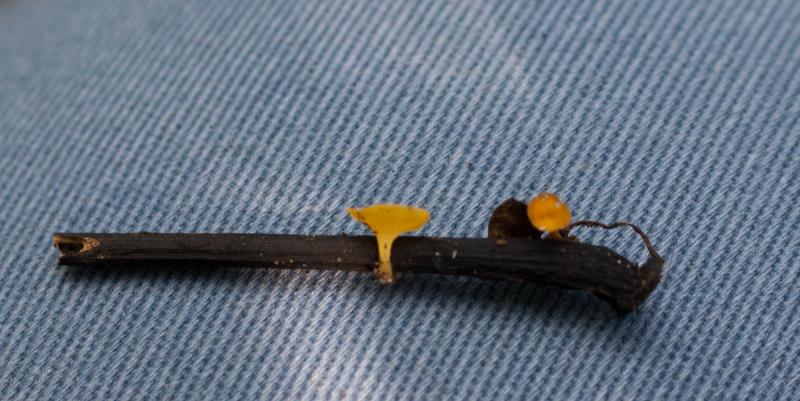
This specimen was macroscopically different from L.luteovirescens in yellow color (without green tint) and short stalk. I know that the stalk is variable, but there were 5-6 fruibodies and all short-stalked.
I'll subscribe it as Rutstroemia cf. longipes for now and try to recollect it, than I'll send you information about living structures if you are interested.
Best regards,
Iryna
Thank you very much!
I'm afraid I will not be able to recollect it now, becaue actually a collection was made on 2 September and now I feel that there will be only Lanzia luteovirescens, but I'll keep it in mind.
This specimen was macroscopically different from L.luteovirescens in yellow color (without green tint) and short stalk. I know that the stalk is variable, but there were 5-6 fruibodies and all short-stalked.
I'll subscribe it as Rutstroemia cf. longipes for now and try to recollect it, than I'll send you information about living structures if you are interested.
Best regards,
Iryna
Hans-Otto Baral,
02-10-2016 09:00
Re : Yellow Hymenoscyphus?
I also think that we must not take stalk length as a character, except for species that are unable to form long stalks (many Phaeohelotium).
I see on the photos that I have of this species that short-stalked apos actually occur (CUP_015905a), also in White 1941 p. 210.
I see on the photos that I have of this species that short-stalked apos actually occur (CUP_015905a), also in White 1941 p. 210.