
08-05-2026 11:55
Gernot FriebesHi,found on a decorticated Picea abies branch stil
09-05-2026 07:37
 Zuzana Sochorová (Egertová)
Hello,please, could anyone share this paper?Ferná
11-05-2016 20:37
Zuzana Sochorová (Egertová)
Hi,this very little ascomycete grew on soil in a m

05-05-2026 22:40
Gernot FriebesHi,I believe this is a Plagiostoma growing on a Sa
06-05-2026 11:25
 Castillo Joseba
Me mandan el material seco de Galicia (España) re
06-05-2026 17:23
Thomas Læssøehttps://svampe.databasen.org/observations/10594257
28-04-2026 20:07
 Lothar Krieglsteiner
... on twig in the air at standing Ceratonia siliq
04-05-2026 18:13
 Stephen Martin Mifsud
ID request for what seems to be a true aquatic fun
04-05-2026 16:39
Stephen Martin Mifsud
ID request: This specimen was collected in Malta o
 Growing on rotten twigs of Alnus laying in mud.
Stalk up to 12mm.
Apothesium rather plane than convex.
I think in the direction of C. clavus.
Correct?
Thx for all feedback, William
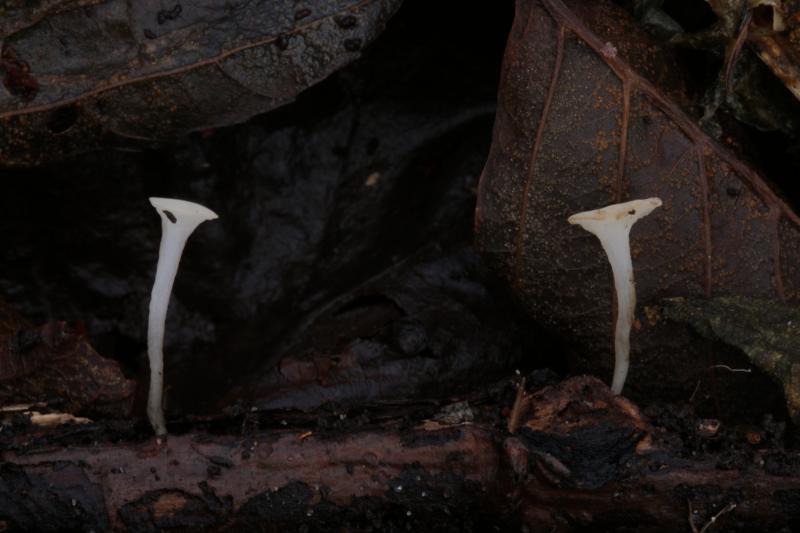
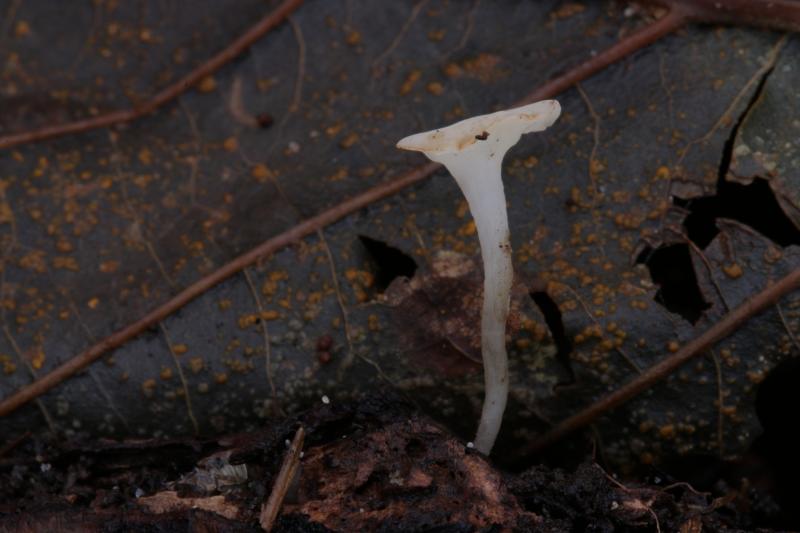
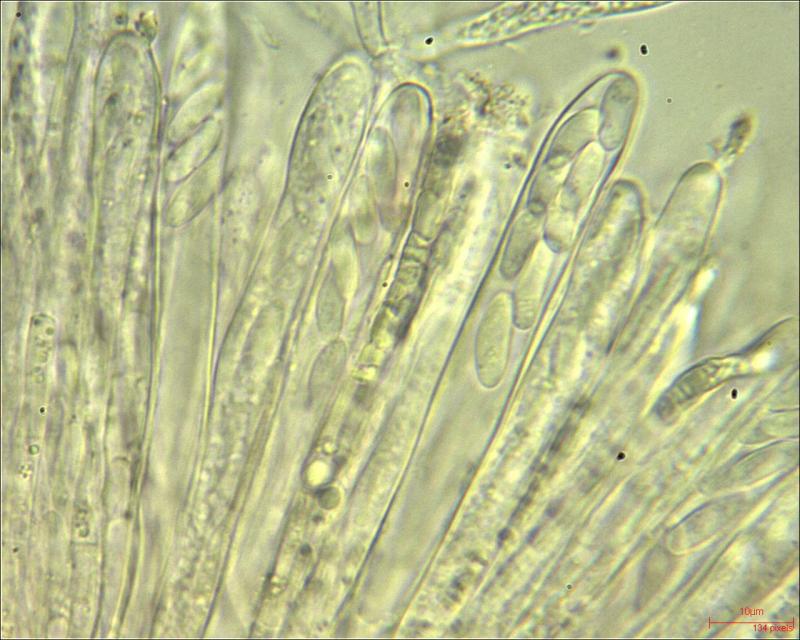
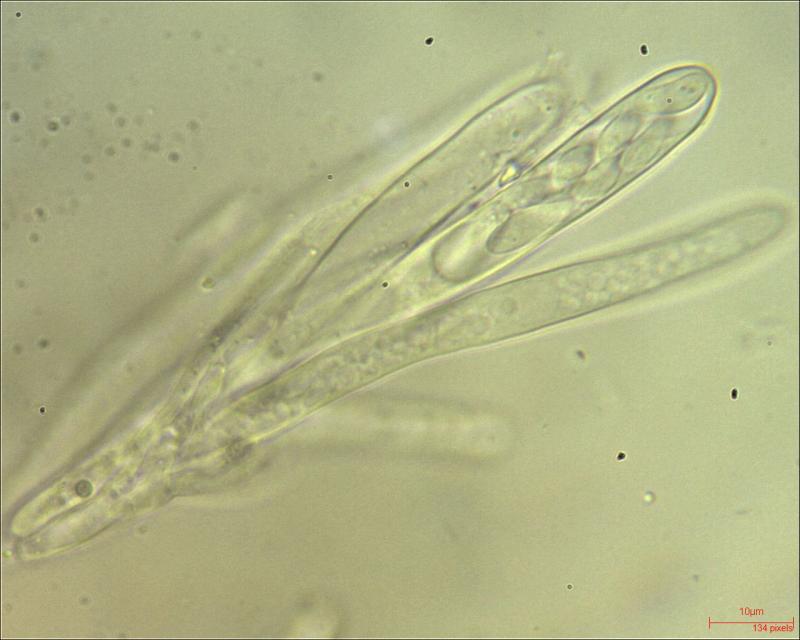
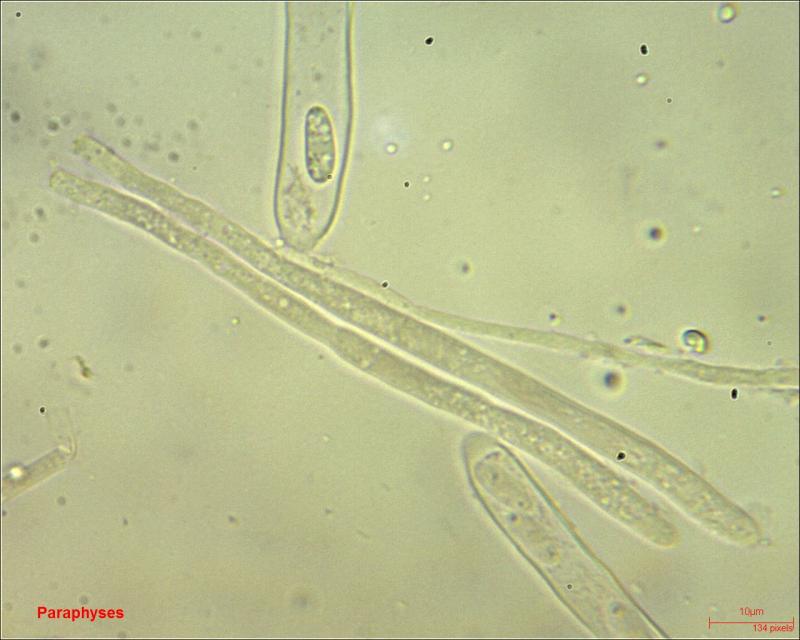
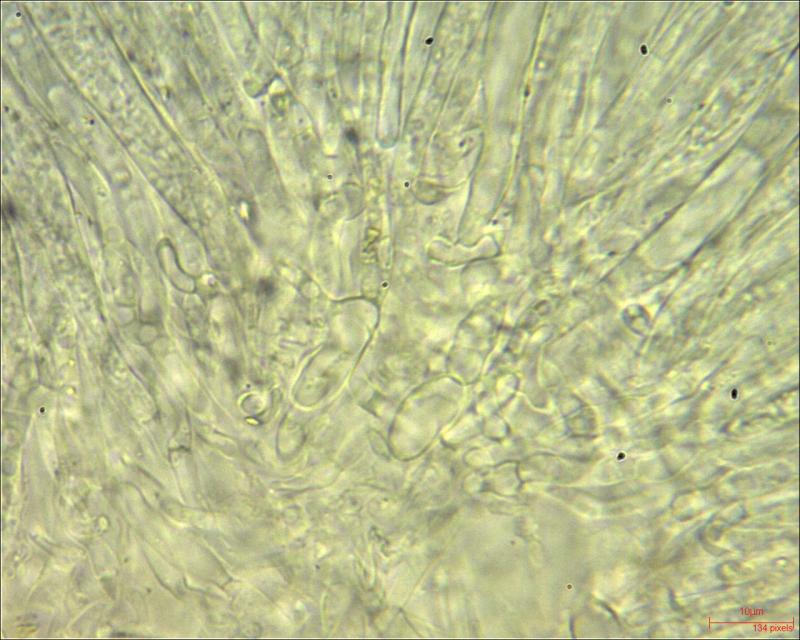
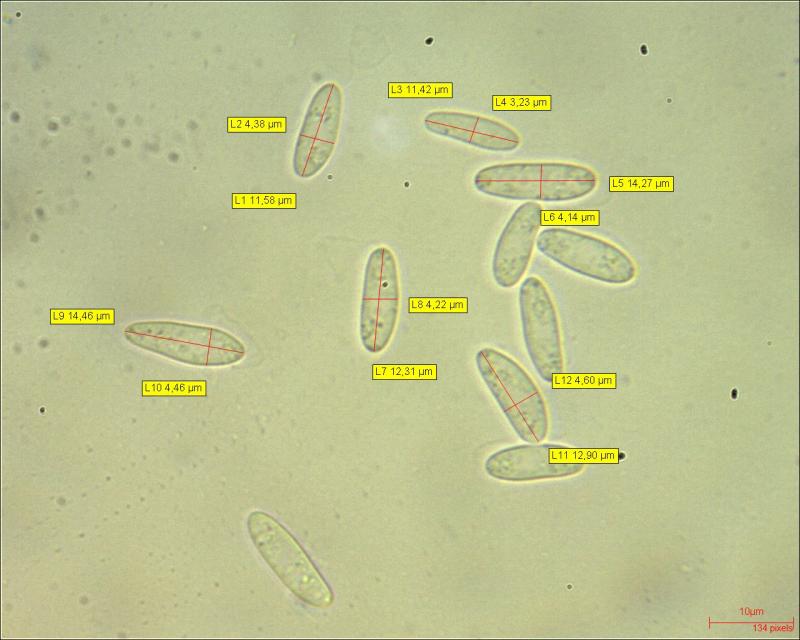

Hello,
I think this is rather Hymenoscyphus vernus.
I can't see with certainty wether the ascus bases are withour croziers - they should be in H. vernus, but WITH croziers in Cudoniella
Ecology is typical for H. vernus wheres C. clavus usually is in floating water and not in mud.
H. vernus changes to cream, than yellowish or even reddish-yellowish, wheres C. clavus stays white until drying and then becomes brownish.
There are also difference in the intensity of the porus reaction between the two, and the spore sizes are somewhat different too.
best regards
Andreas
I, as a beginner, still find it difficult to localize / recognize those crosiers. Perhaps it's because of the fact that I always examine my specimens in water.
Best regards,
William
Is vernus not a species that occurs rather in early spring?
b r, William

another significant difference is outer excipulum: textura angularis in h. vernum and t. intricata in c. clavus!
best
dirk

this latter I would noit believe, it is true for C. tenuispora which has t5. intricata. H. vernus occurs from February till November, according to my many notes. I earlier thought it is restricted to Alnus but I saw that it occurs also on Fagus and Betula wood and bark.
It is not a Hymenoscyphus and also Phaeohelotium is perhaps not the correct genus. In fact, it is very closely related to C. clavus, morphologically as well as genetically. At present ideas arose whether the anamorph genus Anguillospora should be adopted for this group, but I would prefer Cudoniella for both.
Croziers are well visible in water, it depends on the preparation method. Simple squashing requites strong separation of the elements which do not survive such pressure. Better is to try a section with a razor blade, which is not easy with such stalked discos.
Just looked at your photos and I see several clear cases of simple septate ascus bases, partly very yung asci.
Zotto
Hello Zotto,
I found H. vernus once at the border of a calcareous mire on a Prunus spinosa twig ....
best regards,
Andreas
So I understand that Cudoniella must have croziers.
I, however, can't find any of them.
I try to make another coupe of the extal exipulum.
I did not mention the thickness of the stem: 1.8mm below the disk en aprox 1 mm at the base.
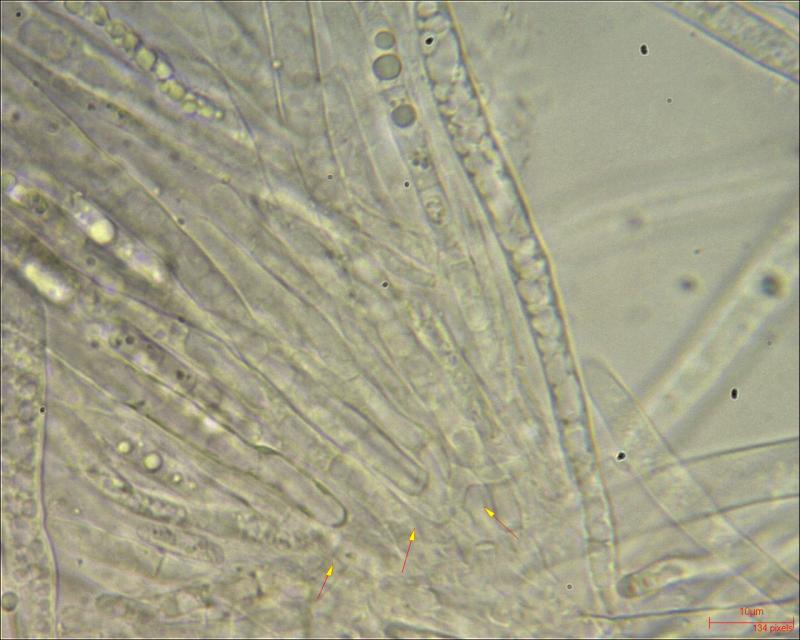
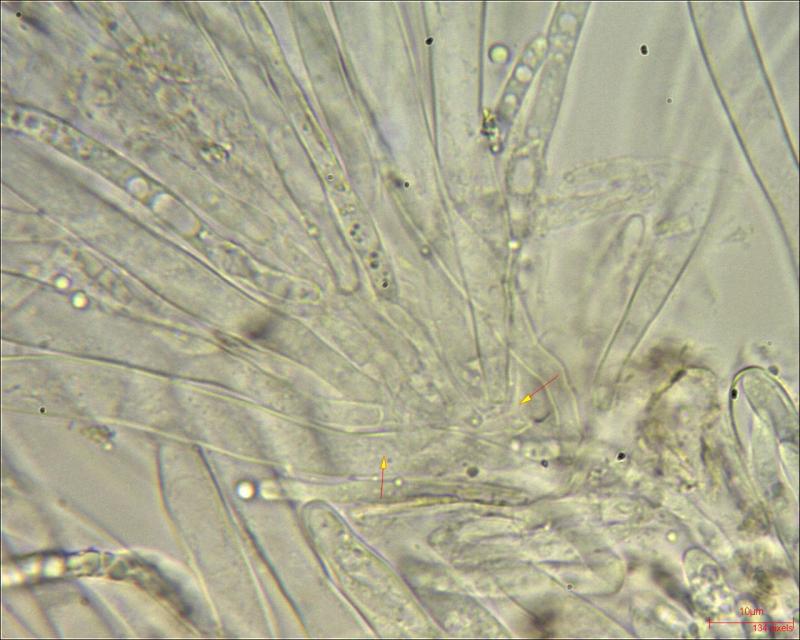
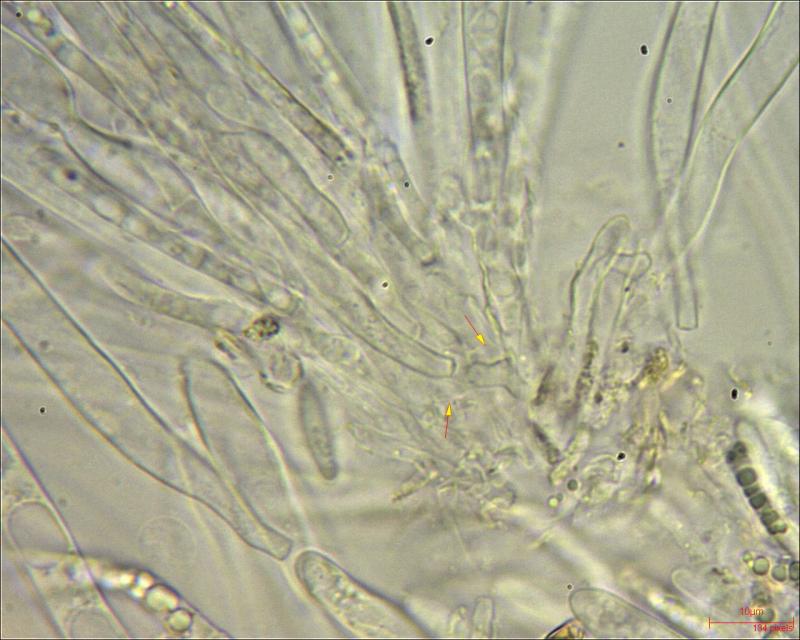
H. vernus is confirmed.
Just one last question if you don't mind: is H.vernus a synonym of Phaeohelotium vernum?