
11-05-2016 20:37
 Zuzana Sochorová (Egertová)
Hi,this very little ascomycete grew on soil in a m
08-05-2026 11:55
Gernot FriebesHi,found on a decorticated Picea abies branch stil
09-05-2026 07:37
Zuzana Sochorová (Egertová)
Hello,please, could anyone share this paper?Ferná

05-05-2026 22:40
Gernot FriebesHi,I believe this is a Plagiostoma growing on a Sa
06-05-2026 11:25
 Castillo Joseba
Me mandan el material seco de Galicia (España) re
06-05-2026 17:23
Thomas Læssøehttps://svampe.databasen.org/observations/10594257
28-04-2026 20:07
 Lothar Krieglsteiner
... on twig in the air at standing Ceratonia siliq
04-05-2026 18:13
 Stephen Martin Mifsud
ID request for what seems to be a true aquatic fun
04-05-2026 16:39
Stephen Martin Mifsud
ID request: This specimen was collected in Malta o
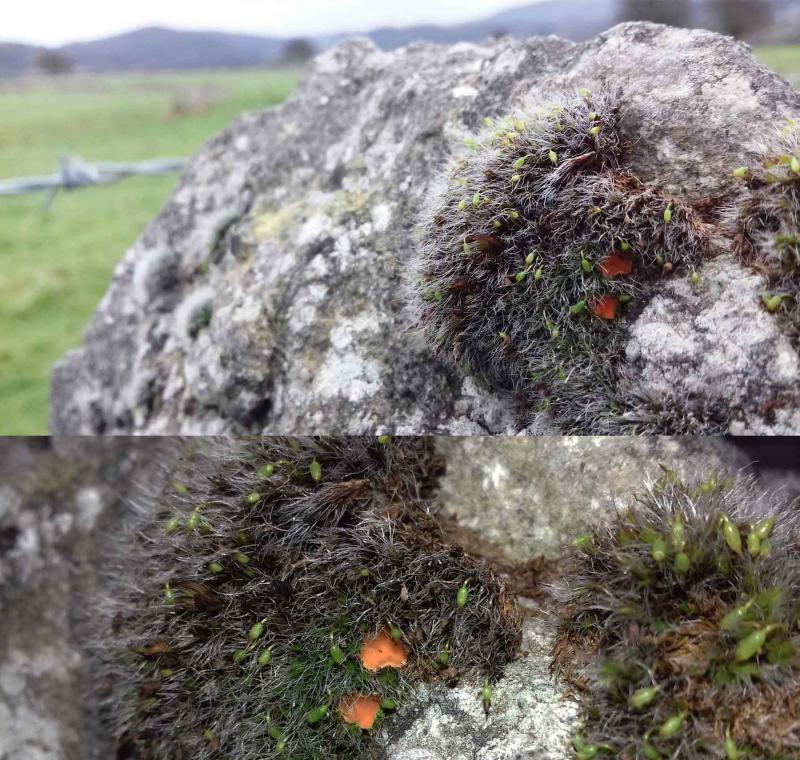
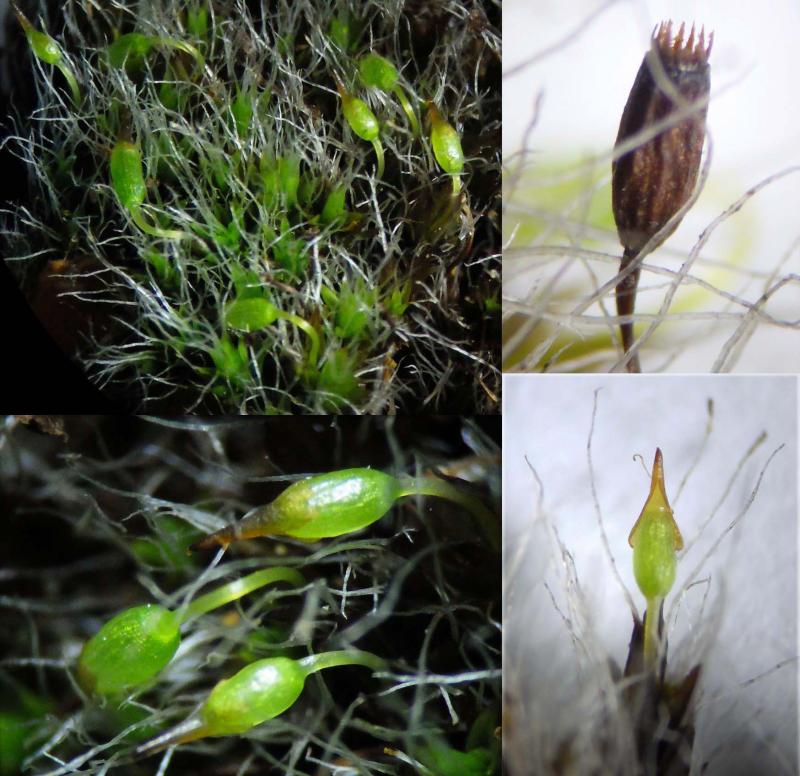
On a trouvé ce petit asco orange avec Grimmia pulvinata sur un mur calcaire dans le nord de l'Angleterre. C'est Octospora musci-muralis?
On Grimmia pulvinata, limestone wall, Peak District, N. England, 31/12/2016.
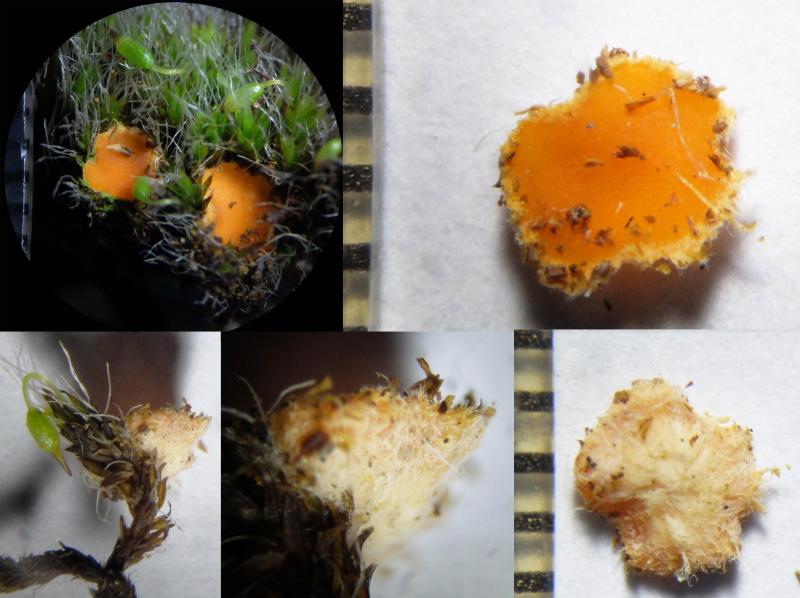
Ascocarp 3 mm diameter. Rather tough, with paler scurfy margin to bright orange disc. Firmly attached to the moss.
Underside sessile, whitish, roughened but without "rhizoids".
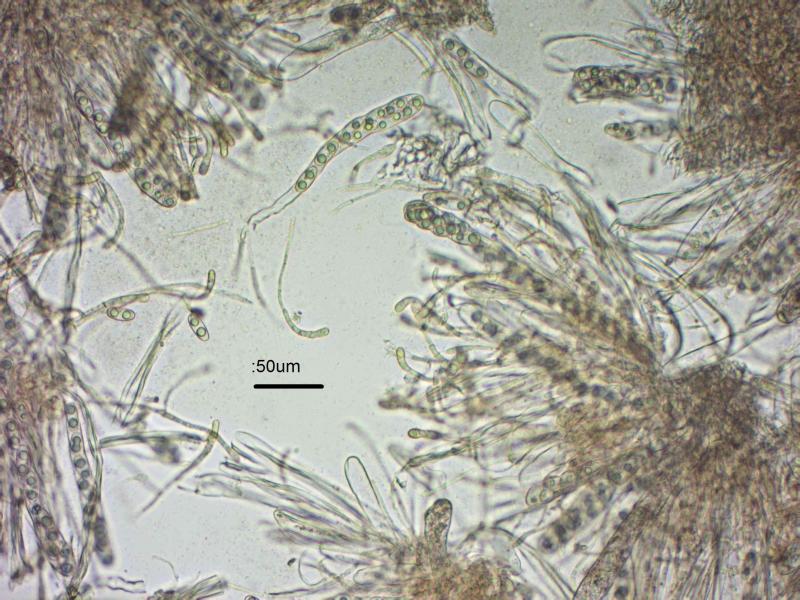
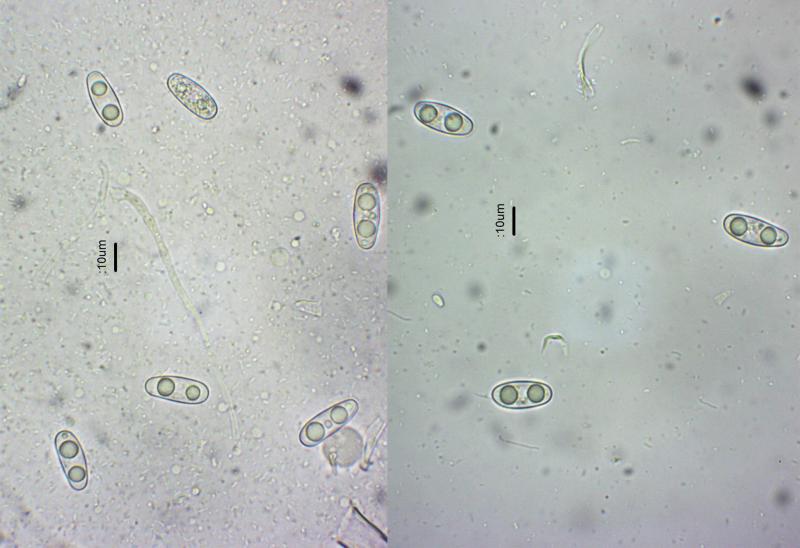
Spores: 25-30 x 9-10 (9 spores) expelled on squashing asci. Two oil droplets.
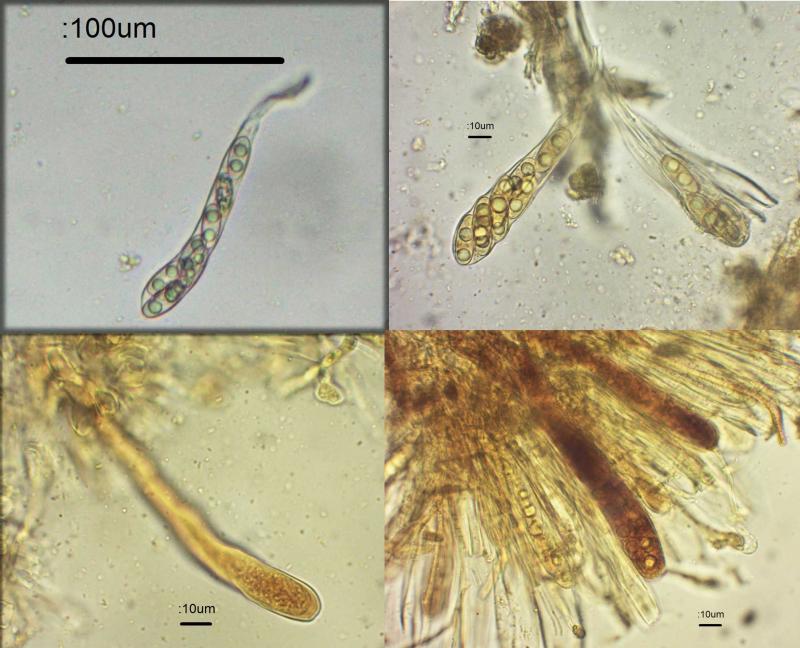
Asci: 150-170 x 18-20. Easily broken on squash preparation. No blueing with Lugol, but dextrinoid reaction in developing asci.
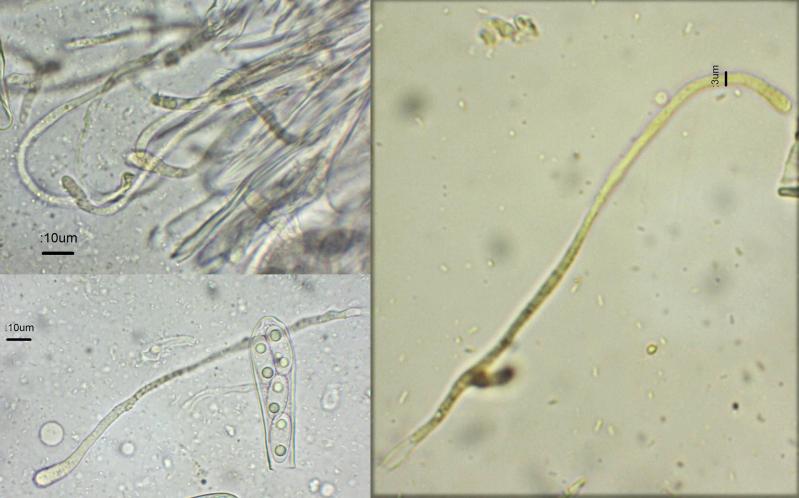
Paraphyses: approx 150-170 x 3. Swelling to 7 at tips, which are bent.
Using the reference below (Trans. Br. mycol. Soc. 58(1): 147 (1972) I suspect this is Octospora musci-muralis, but in my specimen all spores had 2 oil drops, whereas they are described on the website as having 1 or 2 oil drops.
http://www.octospora.de/Omuscimuralis.htm
Hi Steve,
although the spores are a little bit large, there can be few doubt about O. musci-muralis. My microfotos look quite identical :-)
Best regards from Lothar
Steve
Oui, O. musci-muralis sans problème. Spores facilement reconnaissables et autre caractère intéressant : les paraphyses sont souvent courbées en crosse au sommet.
Gilbert
Je vous remercie beaucoup pour votre aide,
Steve