Accès membres

Mot de passe perdu? S'inscrire

29-06-2016 15:18

Per Vetlesen

HiIt was found on the bark of a dead branch of Jun

07-01-2018 22:47

Per Vetlesen

Grown in moist chamber on bark/resin of fallen Pin

06-04-2026 15:04

David Chapados David Chapados

Hi! Could someone help me identifying this specim

06-04-2026 21:36

Viktorie Halasu Viktorie Halasu

Hello, could anyone please send me the article wi

06-04-2026 19:40

David Gibbs David Gibbs

Help with this one much appreciated, on rotting Fa

06-04-2026 11:07

Louis DENY

Bonjour forum, Trouvé sur bois de feuillu très d

06-04-2026 16:24

Juuso Äikäs

Last Tuesday I found some tiny white Helotiales gr

05-04-2026 13:33

Sylvie Le Goff

Bonjour à tousPuis avoir votre avis sur ce champi

05-04-2026 20:40

Robin Isaksson Robin Isaksson

Hi!Found i Japan on bark of Abies sp. Spores 35-4

06-04-2026 08:15

Lothar Krieglsteiner Lothar Krieglsteiner

some days ago, on the lower surface of leaf of Que

« < 1 2 3 4 5 > »
Nectrioid fungus on Cornus
Eduard Osieck, 18-12-2019 19:35
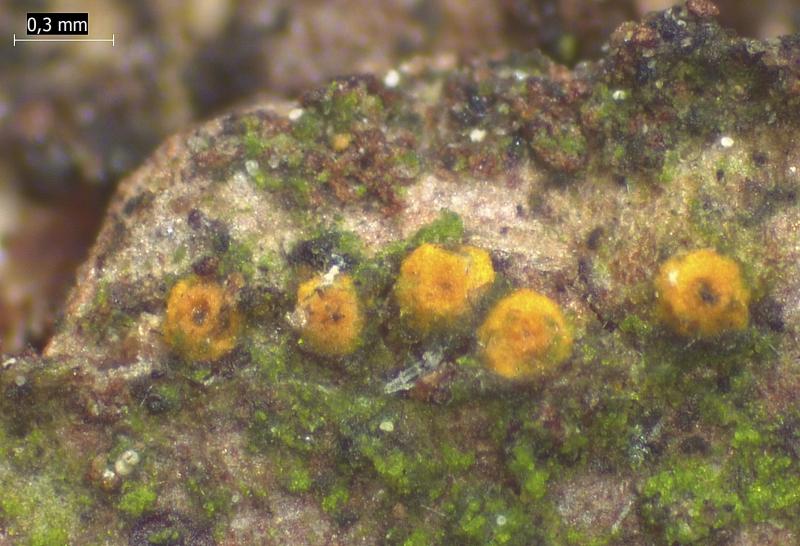
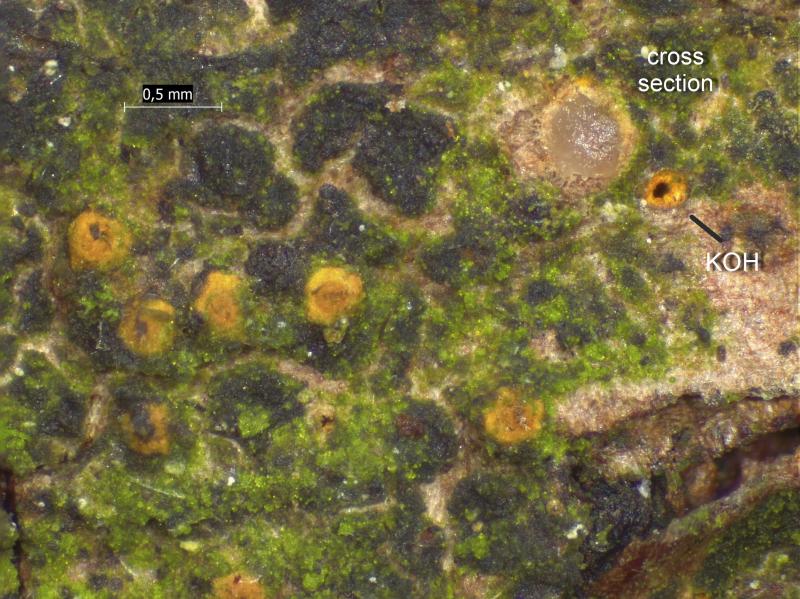
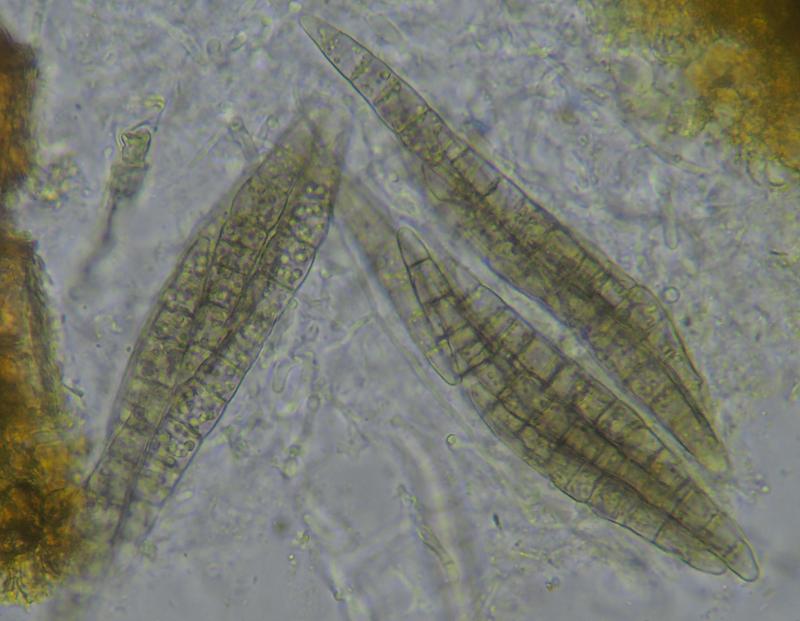
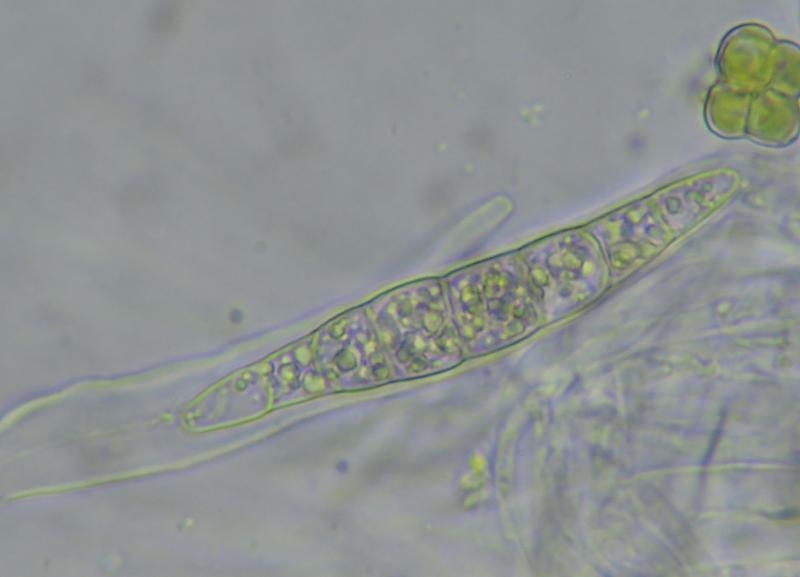
This nectrioid fungus was found on a dead Viburnum branch still attached to a fallen shrub. The dark yellow perithecia (KOH+, 0,5 mm only 0,25-0,3 mm visible) were largely embedded in the substratum. The 7-septate brownish spores were rather large: 68-72 x 11-13 um. Intact asci not seen.

All suggestions are welcome!

Eduard


Note: Substrate corrected 24/02/2022
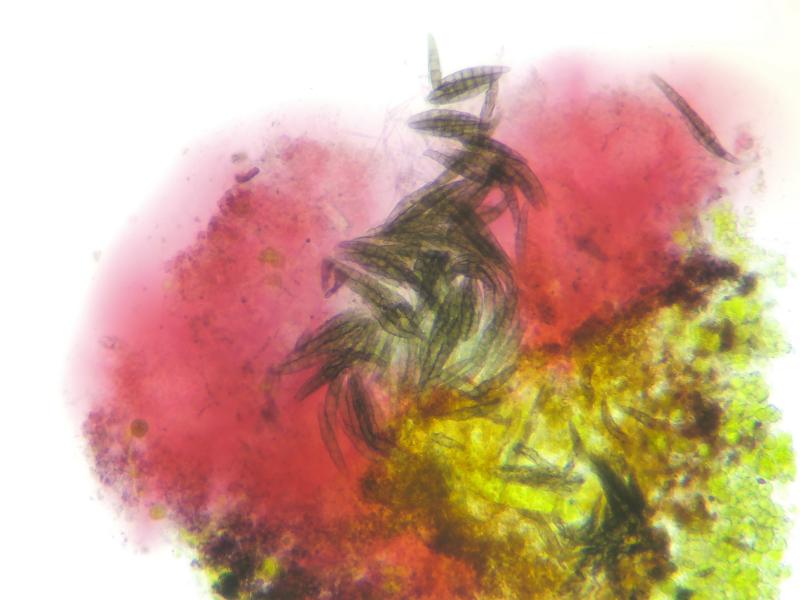
  • message #60518
  • message #60518
  • message #60518
  • message #60518
  • message #60518
Martin Bemmann, 18-12-2019 19:59
Martin Bemmann
Re : Nectrioid fungus on Cornus
Hi Eduard,

this is Pseudotrichia viburnicula. Would be nice to have your collection details (date an location). This fungus is plurivorous, I think Cornus is a new host.


best regards

Martin

PS: if it is from the NL, there ia a collection from Steenbergen on Crataegus by Aafke Buijs in 2015.
Eduard Osieck, 18-12-2019 21:14
Re : Nectrioid fungus on Cornus
Hi Martin,

Thank you very much for the prompt identification as Trichonectria viburnicola! Clearly, I was misled by the yellow (top of the) perithecium and the positive KOH-reaction.


Little information about this species in the literature but the more on this site including your document of the Heidelberg collection and your message in 2013. Yes my collection was done in the Netherlands, so this is the second collection after the one in Steenbergen on Crataegus.


Cheers, Eduard