
08-04-2026 10:39
FRANCIS FOUCHIERBonjour , je recherche en pdf cet article: KORF R

06-04-2026 21:36
 Viktorie Halasu
Hello, could anyone please send me the article wi
06-04-2026 19:40
 David Gibbs
Help with this one much appreciated, on rotting Fa
06-04-2026 11:07
Louis DENYBonjour forum, Trouvé sur bois de feuillu très d
06-04-2026 16:24
Juuso ÄikäsLast Tuesday I found some tiny white Helotiales gr
05-04-2026 20:40
 Robin Isaksson
Hi!Found i Japan on bark of Abies sp. Spores 35-4
White and dark cup from Oregon, USA on spruce wood
Leah Leah_mycelia,
09-02-2020 06:26
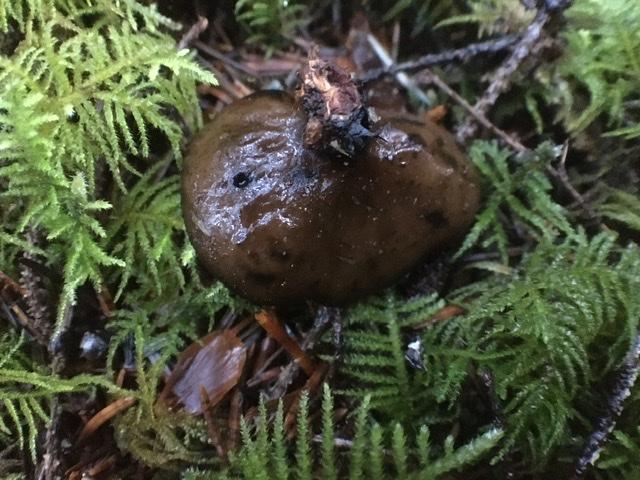
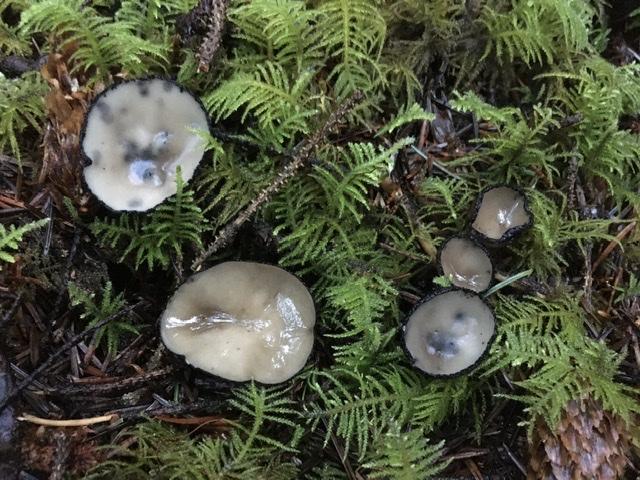
 Hello, I need some help with this ID.
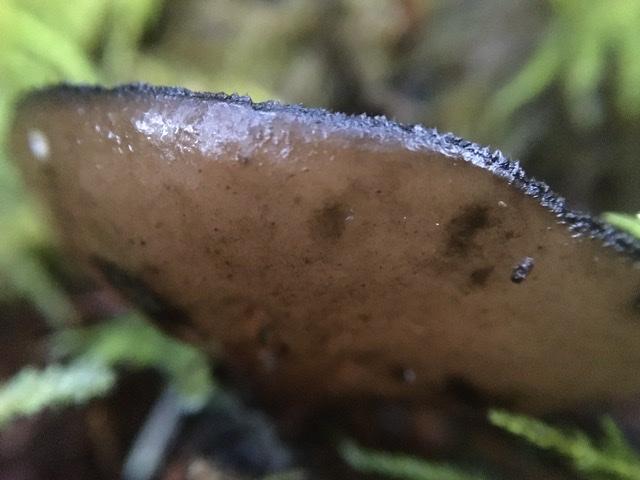
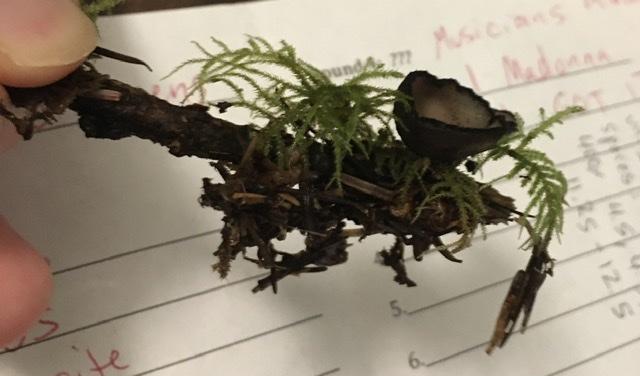
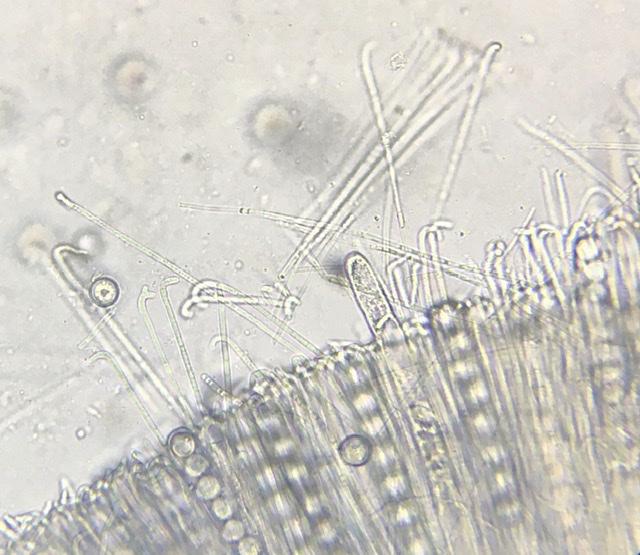
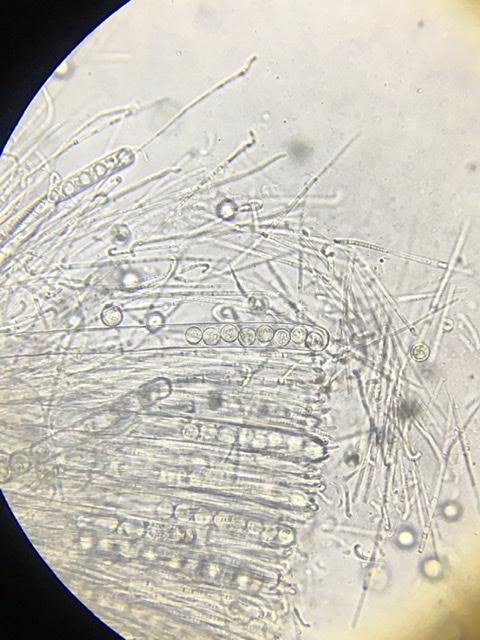
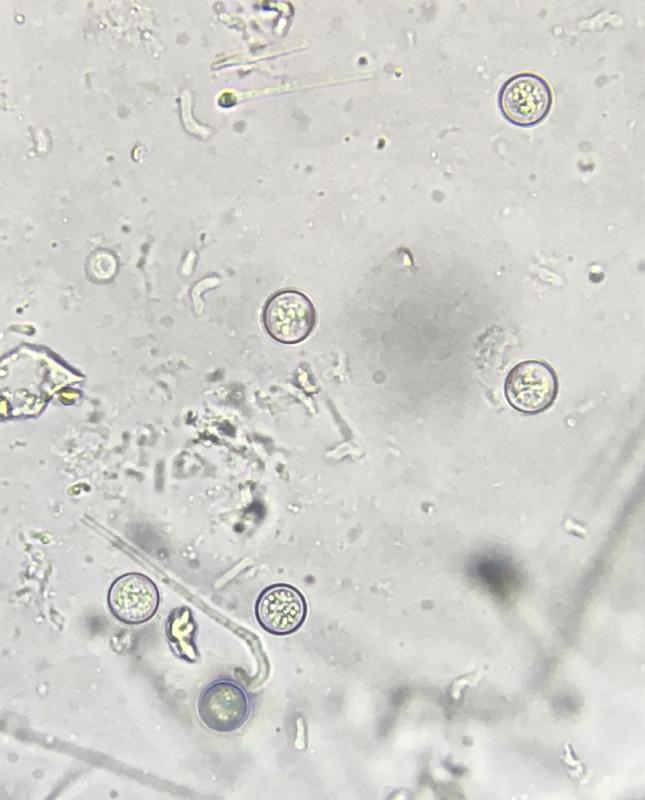
 Growing on wood, presumably Sitka spruce, in mature forest, Oregon coast. The things I can come up with that seem similar from the book Ascomycete Fungi of North America are Humaria hemisphaerica and Trichophaea and Chaetothiersia, however, none of the micro features match for any of those. Hooked paraphyses, round spores filled with granular content measuring 11.25-12.5 microns. Thank you in advance for any suggestions.
Michael Beug,
09-02-2020 07:35

Re : White and dark cup from Oregon, USA on spruce wood
The round, smooth spores, absence of a stipe and marginal hairs (check to see if they are coiled) lead me to conclude that you have a faded Pseudoplectania nigrella
I rejected P. melaena (=vogesiaca) due to absence of coiled paraphyses - the ones I could see in your images are merely hooked. Also, P. melaena should have a stipe (ocassionally quite long). Finally the samples of P. melaena I have seen are not deeply cupulate. The macro shape of your fungus is a close match to P. nigrella. P. nigrella should have a dense mat of coiled hairs on the excipulum while P. melaena should have sparse coiled hairs.
Do not rule out the possibility that you have found a new species that is distinct from both P. nigrella and P. melaena. Ascos in your area have not yet been well studied.
Leah Leah_mycelia,
09-02-2020 07:48
Re : White and dark cup from Oregon, USA on spruce wood
Thank you! I was actually considering if it might be a leucistic form of something. It did look similar to the Pseudoplectania microscopy I was doing earlier. However, the presence of hooked paraphyses should rule out P. nigrella according to your text. Perhaps P. vogesiaca?
As far as being faded, I doubt the color was a condition of age, but perhaps a white form? There were about 20 fruit bodies in the vicinity and all of them were white inside.
As far as being faded, I doubt the color was a condition of age, but perhaps a white form? There were about 20 fruit bodies in the vicinity and all of them were white inside.
Michel Hairaud,
09-02-2020 08:49

Re : White and dark cup from Oregon, USA on spruce wood
Hi Leah,
Welcome on this forum.
I am not particularly keen on Sarcosomataceae but you will find on Ascomycete.org a study on Plectania melaena (= P. vogesiaca)
see https://ascomycete.org/Portals/0/Archives/AscomyceteOrg%2005-01%2047-52.pdf
Amitiés. Michel
Viktorie Halasu,
09-02-2020 09:26
Re : White and dark cup from Oregon, USA on spruce wood
Interesting, it looks like it doesn't have spore sheaths, unlike many Pseudoplectanias. Would you have a photo of the excipulum + hairs too?
Viktorie
Viktorie