Accès membres

Mot de passe perdu? S'inscrire

09-04-2026 10:12

Thomas Læssøe

https://svampe.databasen.org/observations/10587061

08-04-2026 20:33

Vasileios Kaounas Vasileios Kaounas

Found 07-04-26, in Abies cephalonica. Diameter 1,

08-04-2026 10:39

FRANCIS FOUCHIER

Bonjour , je recherche en pdf cet article: KORF R

06-04-2026 15:04

David Chapados David Chapados

Hi! Could someone help me identifying this specim

29-06-2016 15:18

Per Vetlesen

HiIt was found on the bark of a dead branch of Jun

07-01-2018 22:47

Per Vetlesen

Grown in moist chamber on bark/resin of fallen Pin

06-04-2026 21:36

Viktorie Halasu Viktorie Halasu

Hello, could anyone please send me the article wi

06-04-2026 19:40

David Gibbs David Gibbs

Help with this one much appreciated, on rotting Fa

06-04-2026 11:07

Louis DENY

Bonjour forum, Trouvé sur bois de feuillu très d

06-04-2026 16:24

Juuso Äikäs

Last Tuesday I found some tiny white Helotiales gr

« < 1 2 3 4 5 > »
Red Stiptate Ascomycete
Charles Aron, 17-04-2020 16:12
Charles Aron

Hi All,


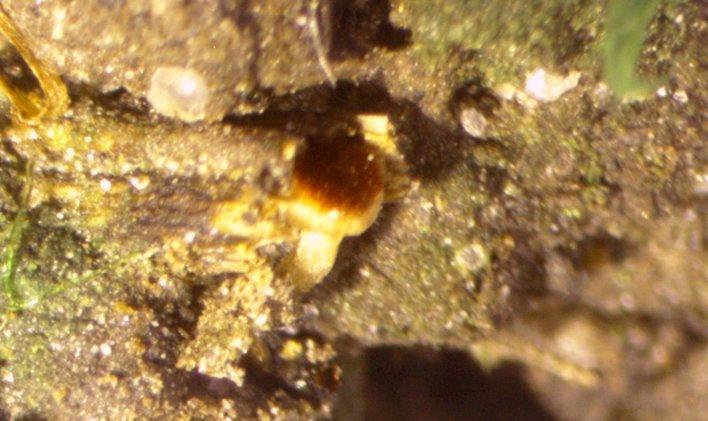
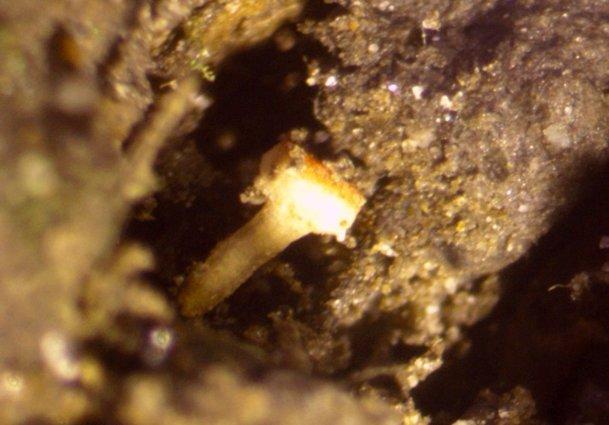
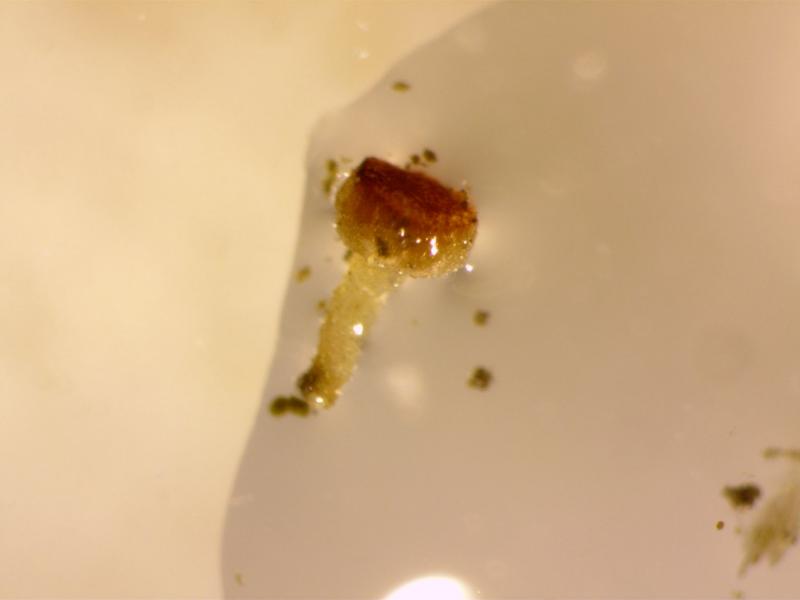
I have found a strange and distinctive Ascomycete growing on damp soil close to a brook. Only a single apothecium thus far.


Apothecium: c1x0.5mm. Hymenium convex, bright red, not clearly demarced from the excipulum.


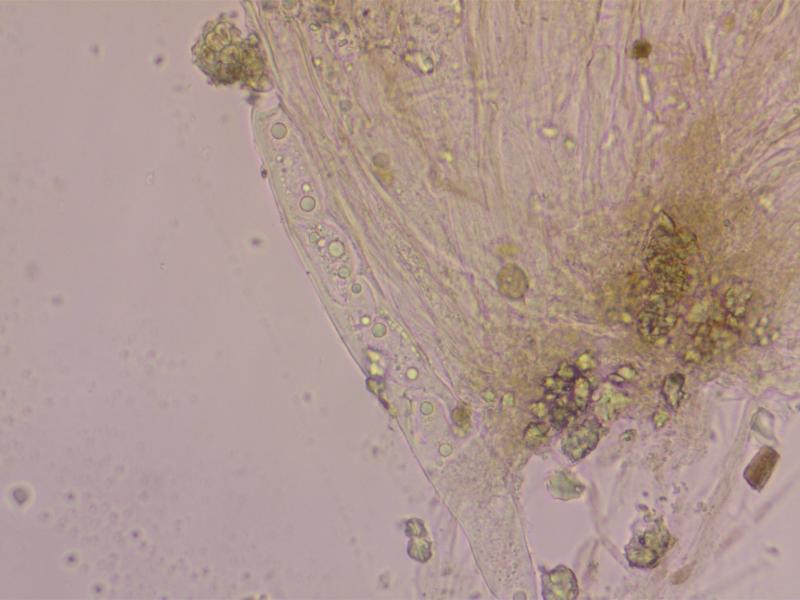
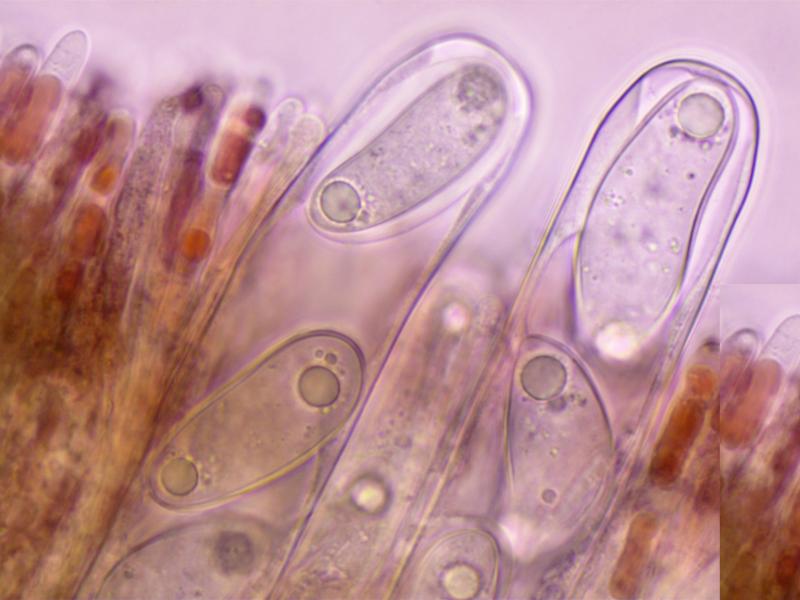
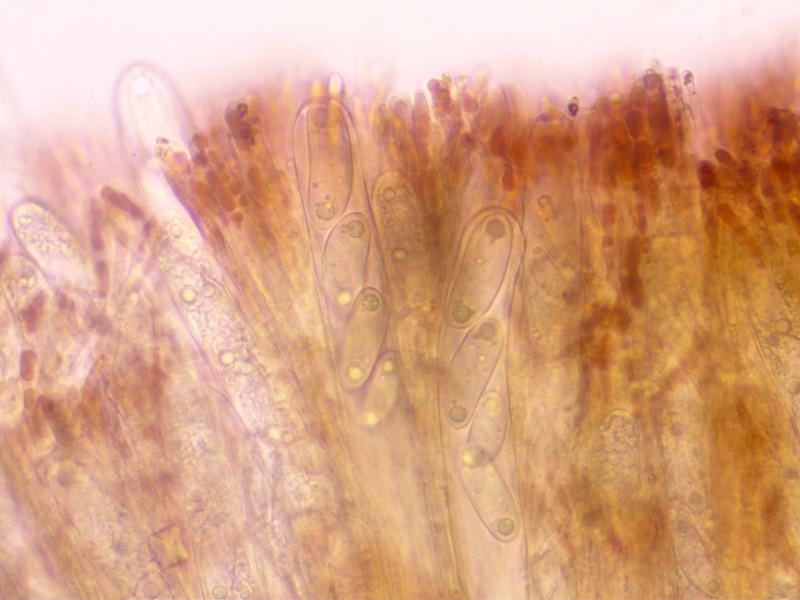
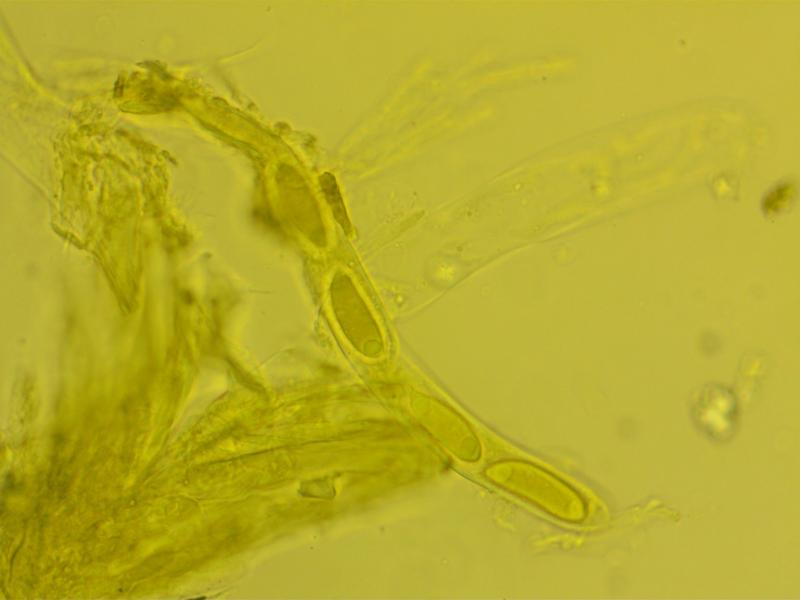
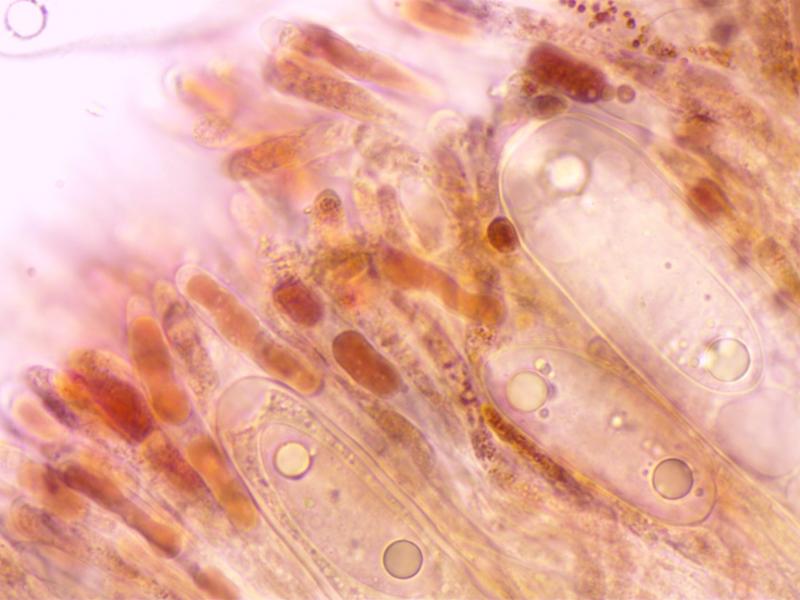
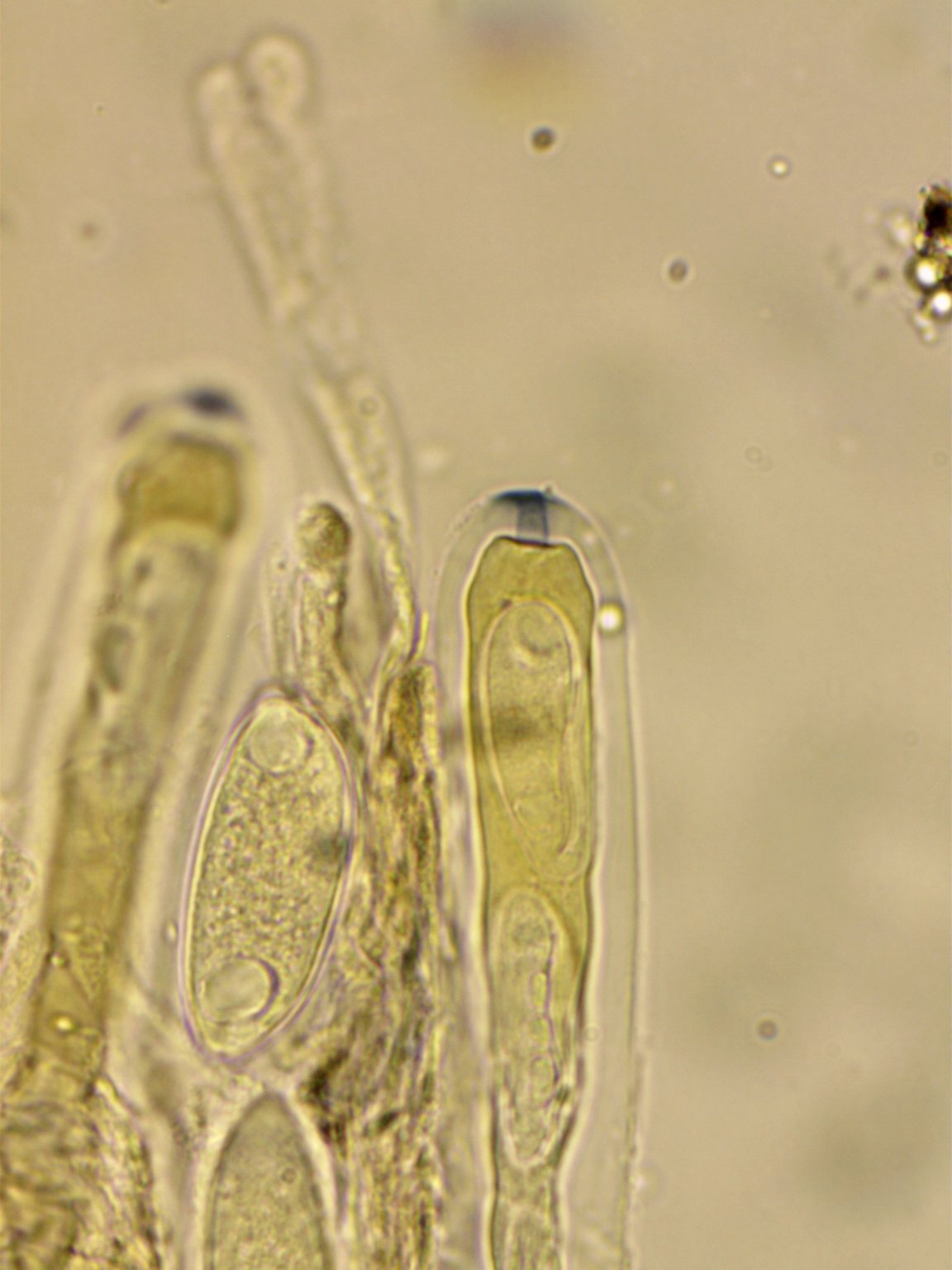
Asci: Cylindric, 250-325x18-25. 4-5 spored, uniseriate, with differetial maturation of the ascospores. Ascus pore blueing in Melzer' after treatment with KOH.


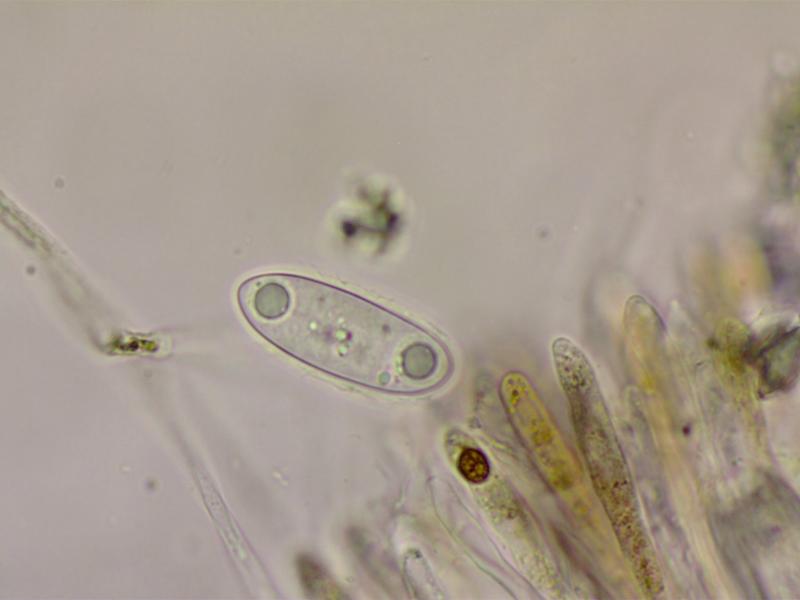
Ascospores:44-50x15-19. Ellipsoid-cylindric, some curved and some with strangely attenuated apices. With polar guttules. With a gelatinous coat.


Paraphyses with red pigment, swollen to 6-7.


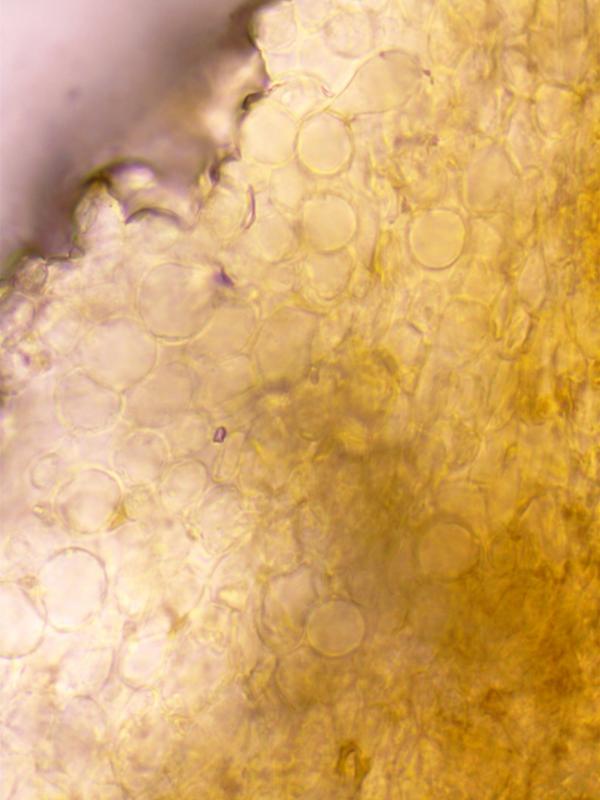
Excipulum: Textura Globosa.


I would be very interested in any thoughts on this. Thanks in advance.


Charles.
  • message #62718
  • message #62718
  • message #62718
  • message #62718
  • message #62718
  • message #62718
  • message #62718
  • message #62718
  • message #62718
  • message #62718
  • message #62718
Hans-Otto Baral, 17-04-2020 16:36
Hans-Otto Baral
Re : Red Stiptate Ascomycete
Hi Charles

looks interesting indeed. The red disc colour is not clearly seen on the macro, but the VBs in the paraphyses show the responsible red-brown colour.

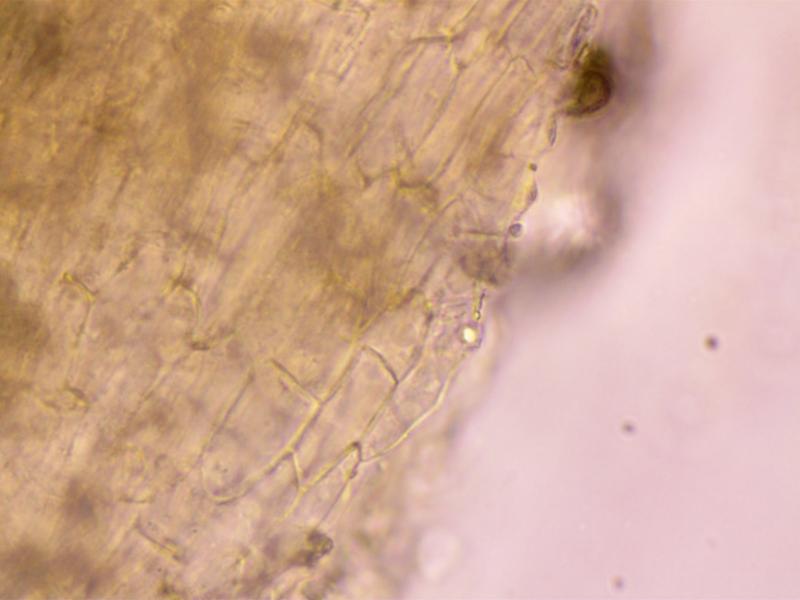
Your beforelast pic show sa t. prismatica, where is it from, the stipe?

I can hardly believe this thick apical wall to be inamyloid. Do you have Lugol to test, or did you keep the preparation for testing KOH-pretreated MLZ-reaction?

Zotto
Charles Aron, 17-04-2020 16:58
Charles Aron
Re : Red Stiptate Ascomycete

Hi Zotto,


Yes, the t. prismatica is from the stipe. Have not tested with Lugol and very little material remains (on a couple of slides)  Will definitely look out for more material-not far from where I live in Pentraeth, Anglesey.

Hans-Otto Baral, 17-04-2020 17:11
Hans-Otto Baral
Re : Red Stiptate Ascomycete
I see a leaf on the first pic, is the apo associated with it?

I am a bit reminded of Hymenoscyphus kermesinus, leaf-inhabiting with 2-spored asci, which is a sclerotiniaceous fungus tentatively placed by me in Moellerodiscus. But that has a t. prismatica.
FRANCIS FOUCHIER, 17-04-2020 17:37
Re : Red Stiptate Ascomycete
Torrendiella? Hymenotorrendiella?
Hans-Otto Baral, 17-04-2020 17:49
Hans-Otto Baral
Re : Red Stiptate Ascomycete
These two genera have long setae.

I just got aware of the huge size of the asci and spores. Is it true?

There must be an erroro in your spore width data, it is the same as ascus width.
Charles Aron, 18-04-2020 09:25
Charles Aron
Re : Red Stiptate Ascomycete

Hi Zotto,


Its the ascus width that I had got wrong-it should be 250-325x18-25, so really quite large. Being Sclerotiniaceous I imagine the fungus would have been associated with plant material perhaps with a sclerotium but, unfortunately it quickly became detached from the substrate. There was some Mnium hornum fairly close but I don't think the fungus was associated with it. The site was in broad leaved woodland with ash etc.


Hans-Otto Baral, 18-04-2020 10:24
Hans-Otto Baral
Re : Red Stiptate Ascomycete
o.k. If you have the chance I suggest anyhow to photograph a calibration slide in comparison, in order to have a scale. For the moment, I feel nothing with such big spores exists in the literature.