
09-04-2026 13:55
Thomas Læssøehttps://svampe.databasen.org/observations/10589176
09-04-2026 10:12
Thomas Læssøehttps://svampe.databasen.org/observations/10587061
08-04-2026 20:33
 Vasileios Kaounas
Found 07-04-26, in Abies cephalonica. Diameter 1,
08-04-2026 10:39
FRANCIS FOUCHIERBonjour , je recherche en pdf cet article: KORF R

06-04-2026 21:36
 Viktorie Halasu
Hello, could anyone please send me the article wi
06-04-2026 19:40
 David Gibbs
Help with this one much appreciated, on rotting Fa
06-04-2026 11:07
Louis DENYBonjour forum, Trouvé sur bois de feuillu très d
Pyrenopeziza
Guy Buddy,
29-04-2020 18:52
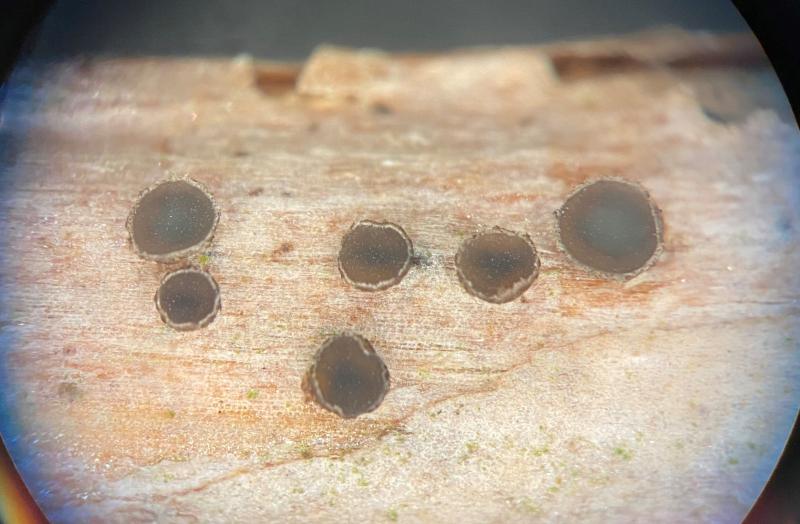
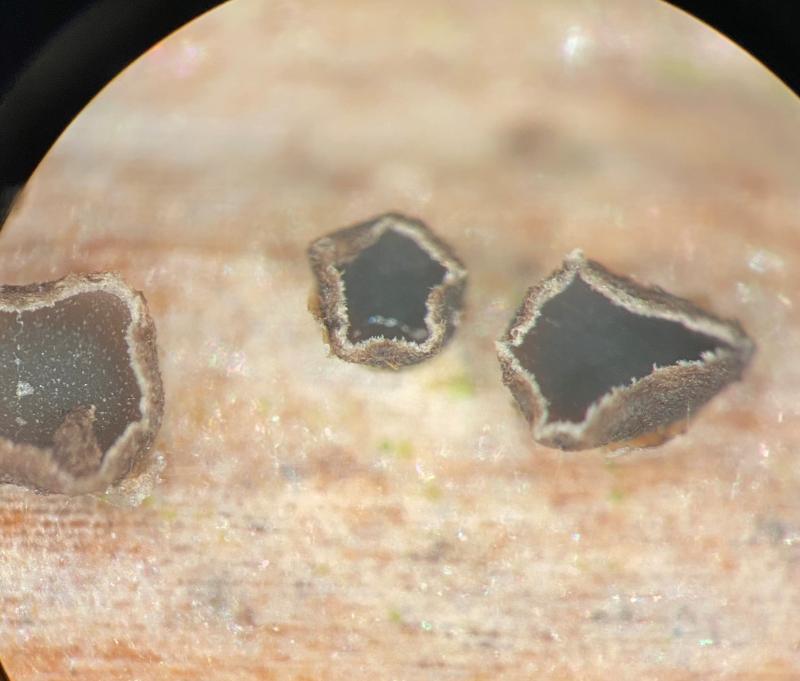
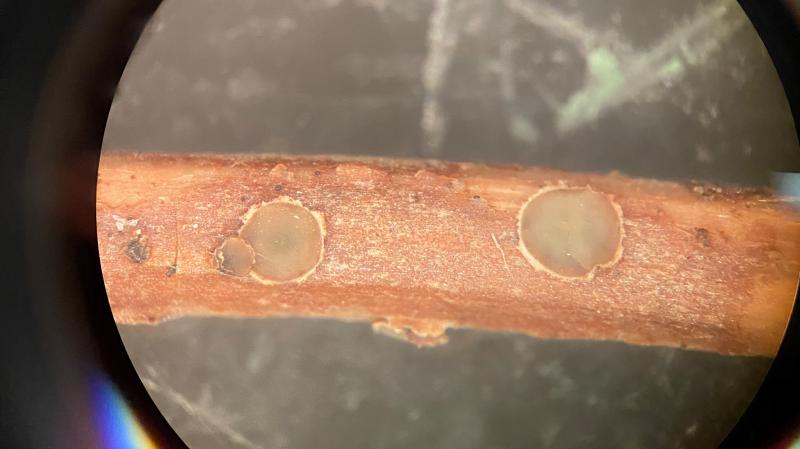
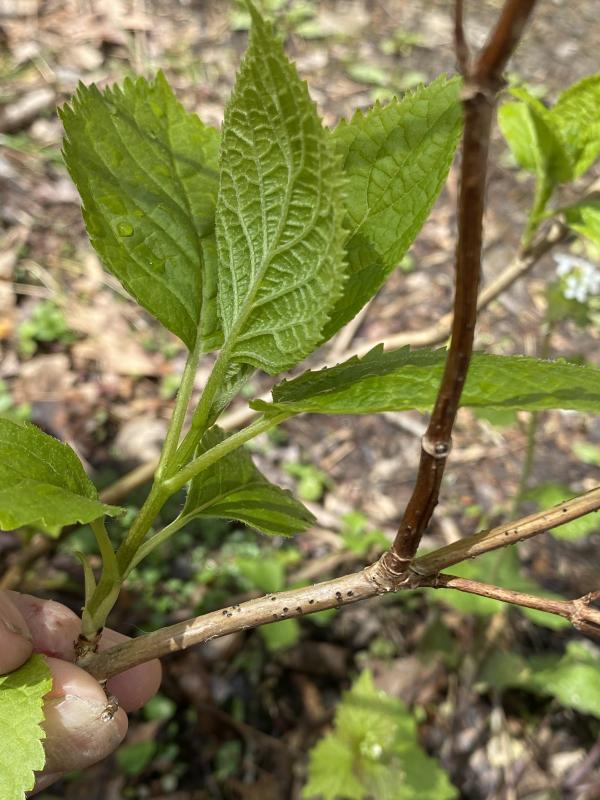
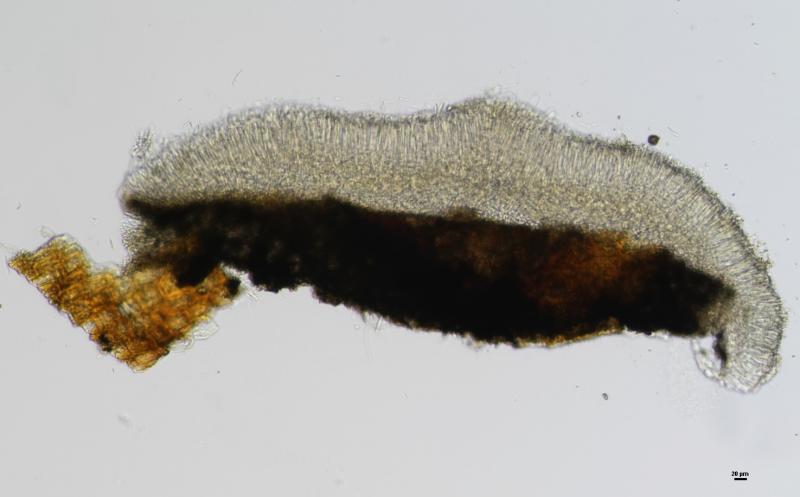
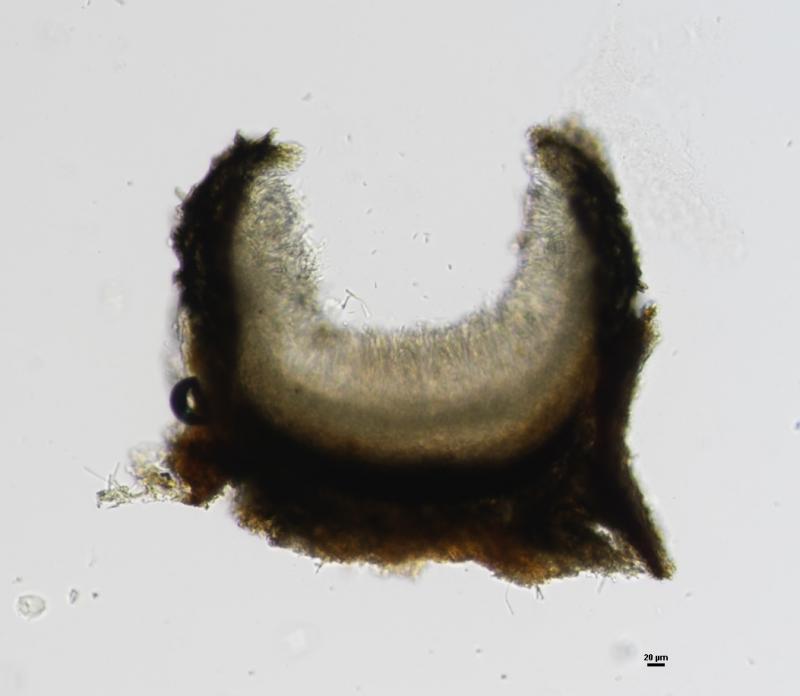
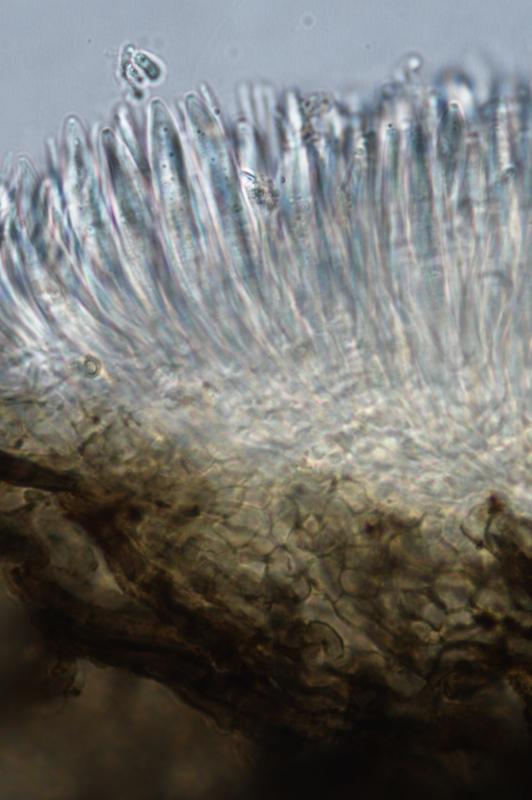
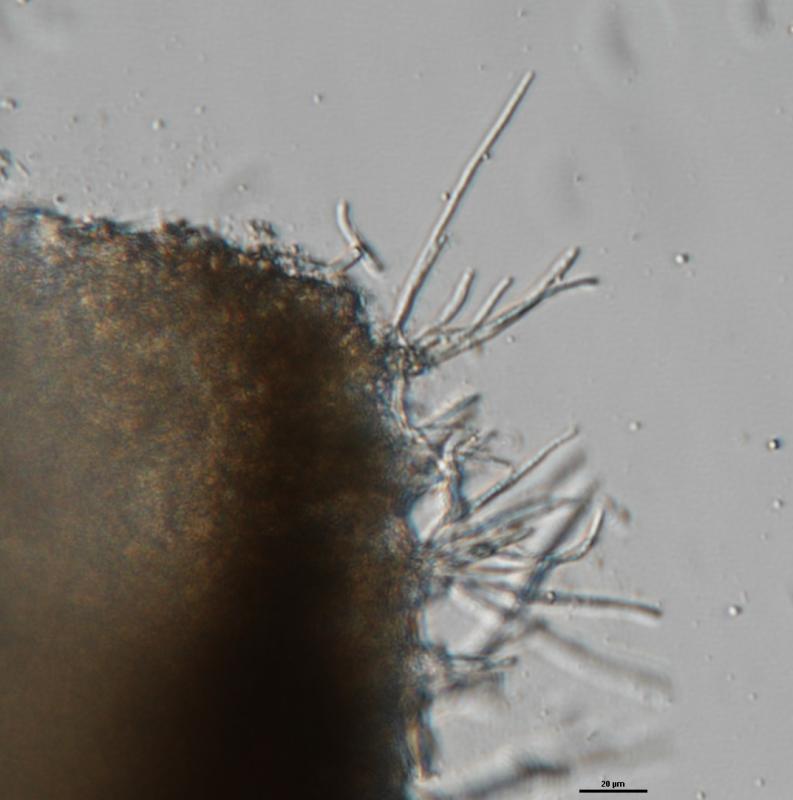
I found these fruits on dead stems of Hydrangea arborescens in Pennsylvania, USA. Apothecia when fully opened 1-2mm. Spores in H20 measure (8.7) 11.6 - 15.6 (16.2) × (2.1) 2.3 - 3.2 (3.5) µm, Q = (3.7) 3.8 - 5.7 (6.6) ; N = 15, Me = 13.4 × 2.7 µm ; Qe = 4.9. Spores obovoid, aseptate even in the ascus, smooth. Asci measure ~50-60 x 9-10 um. IKI + blue. Paraphyses filiform. Hairs on outside appear smooth.
I was thinking maybe P. fracta, which has been reported on Hydrangea before, spore size and shape match, but I am not sure.
Best,
Devin
Guy Buddy,
29-04-2020 18:57
Re : Pyrenopeziza
Micro
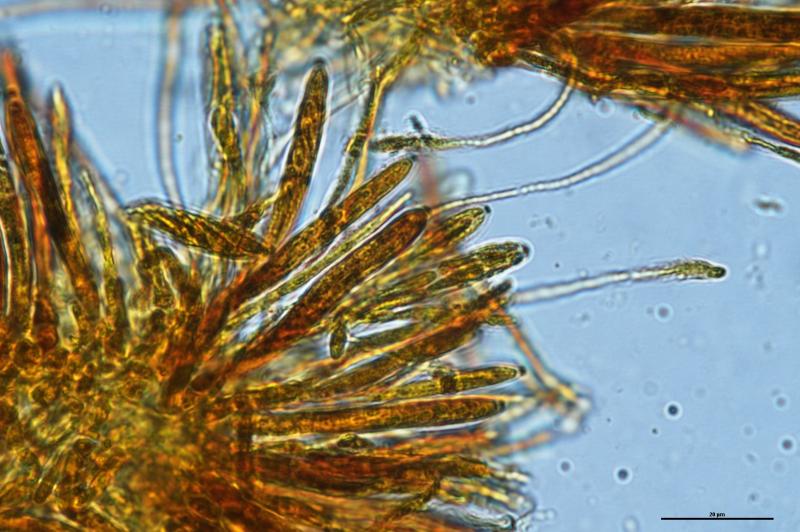
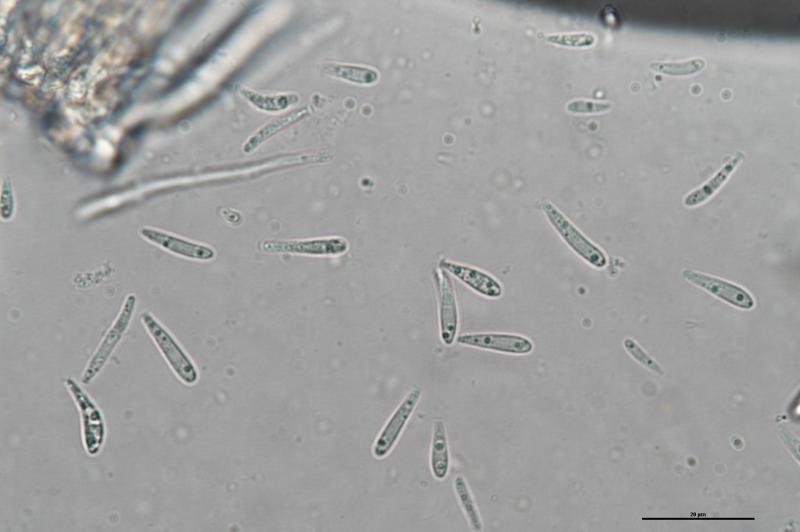
Hans-Otto Baral,
29-04-2020 20:36

Re : Pyrenopeziza
This sounds a reasonable ID. Do you have literature which gives a spore size? Perhaps Seaver? The old authors don't give but mention the oblong clavate spore shape. I dod not hear of this species so far.
Guy Buddy,
30-04-2020 00:38
Re : Pyrenopeziza
Hey Hans,
P. fracta was from Linnean Society of London, 1904 that I pulled from Google. I am not confident on that and the name might be outdated or not even valid. I dont have much literature on this genus except Gremmen 1958, which depending on if "the receptical is verrucose or hairy" keys me out to Section 1, subsection b or Section 7 Trichantina, which includes P. escharodes. E. Rubio's micrographs of escharodes compares to what I am seeing with my specimen, thats as far as I have gotten.
Devin
P. fracta was from Linnean Society of London, 1904 that I pulled from Google. I am not confident on that and the name might be outdated or not even valid. I dont have much literature on this genus except Gremmen 1958, which depending on if "the receptical is verrucose or hairy" keys me out to Section 1, subsection b or Section 7 Trichantina, which includes P. escharodes. E. Rubio's micrographs of escharodes compares to what I am seeing with my specimen, thats as far as I have gotten.
Devin
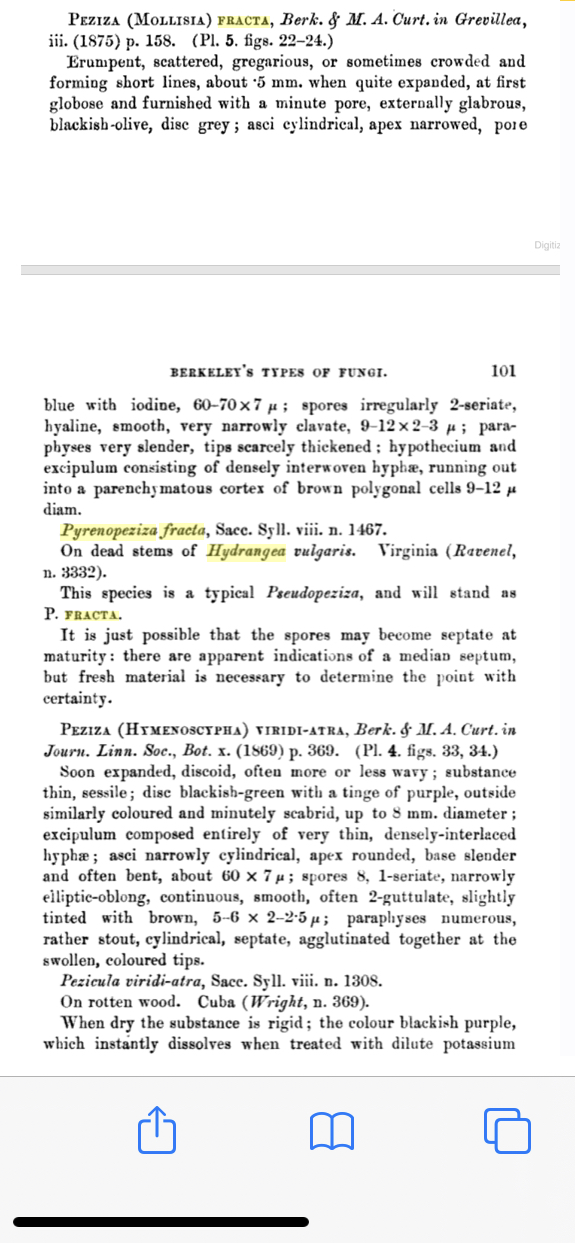 3C9DCC10-E86A-4EC5-A271-50B2F0010C53-0001.jpeg
Hans-Otto Baral,
30-04-2020 10:06
Re : Pyrenopeziza
Oh yes, I see. So you have larger spores, maybe because they are alive.
The spores are larger than in P. escharodes. I suppose when you repeatedly collect this species on Hydrangea and it has always such large spores, it would be a hint on a good species. Otherwise only DNA will help to clarify this taxon.
Zotto