
09-04-2026 15:25
Jac GelderblomOn bare soil between mosses Ifound an asco I deter
09-04-2026 13:55
Thomas Læssøehttps://svampe.databasen.org/observations/10589176
09-04-2026 10:12
Thomas Læssøehttps://svampe.databasen.org/observations/10587061
08-04-2026 20:33
 Vasileios Kaounas
Found 07-04-26, in Abies cephalonica. Diameter 1,
08-04-2026 10:39
FRANCIS FOUCHIERBonjour , je recherche en pdf cet article: KORF R

06-04-2026 21:36
 Viktorie Halasu
Hello, could anyone please send me the article wi
06-04-2026 19:40
 David Gibbs
Help with this one much appreciated, on rotting Fa
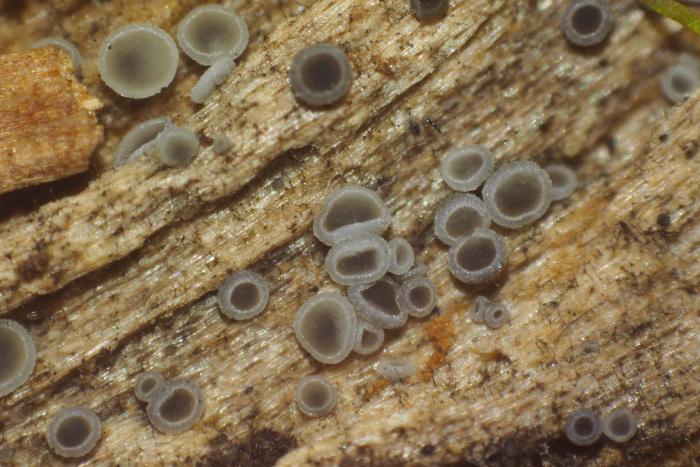
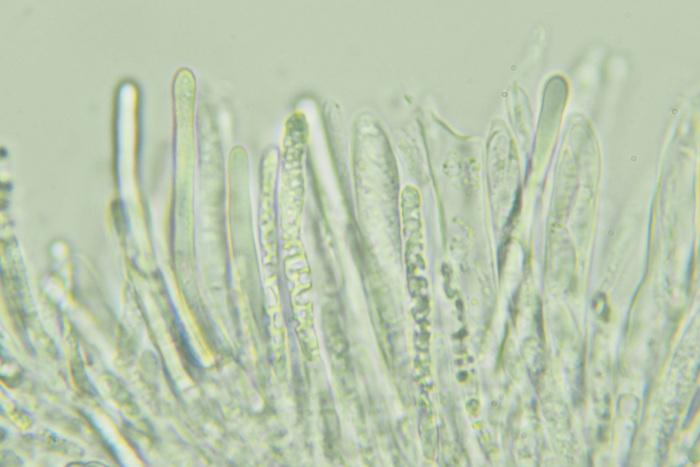
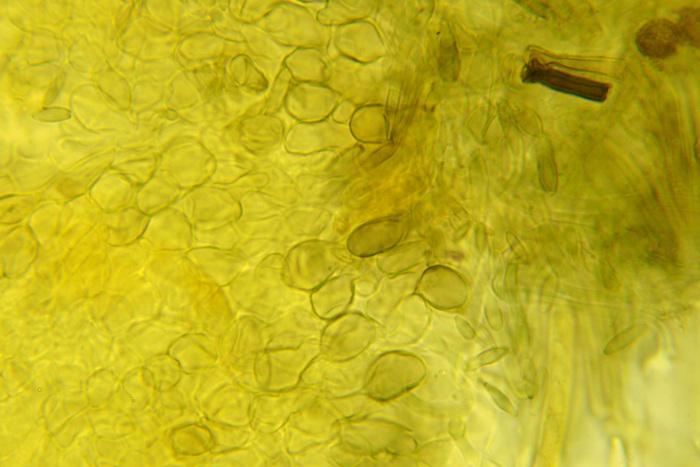
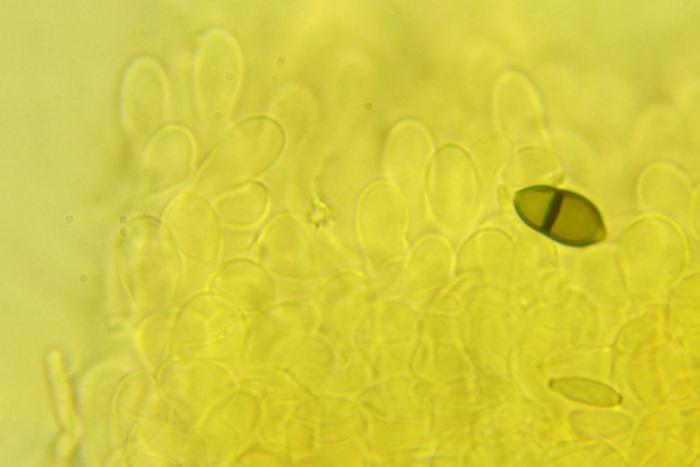
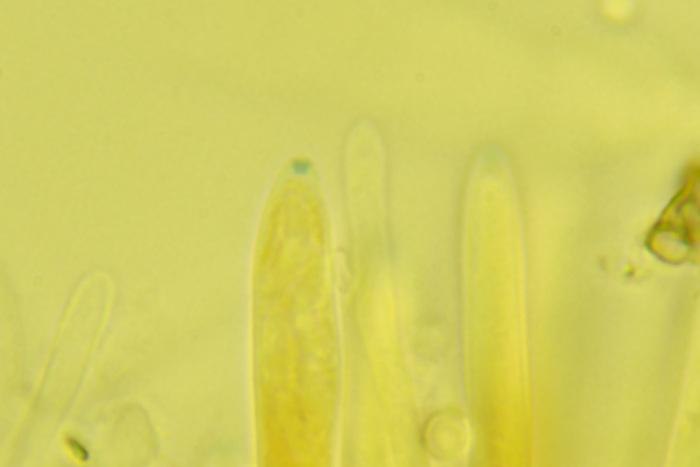
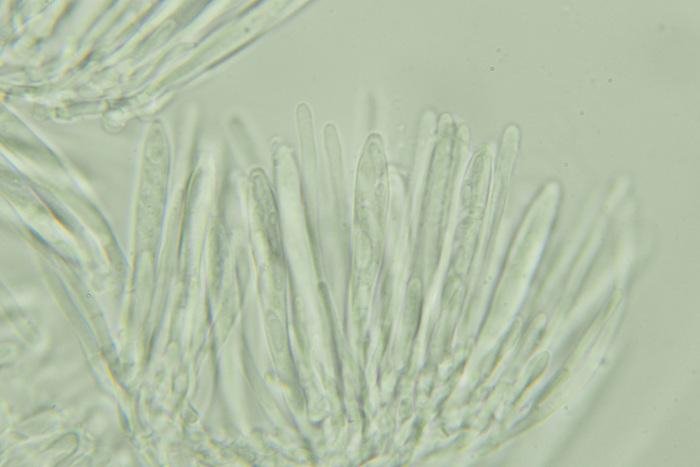
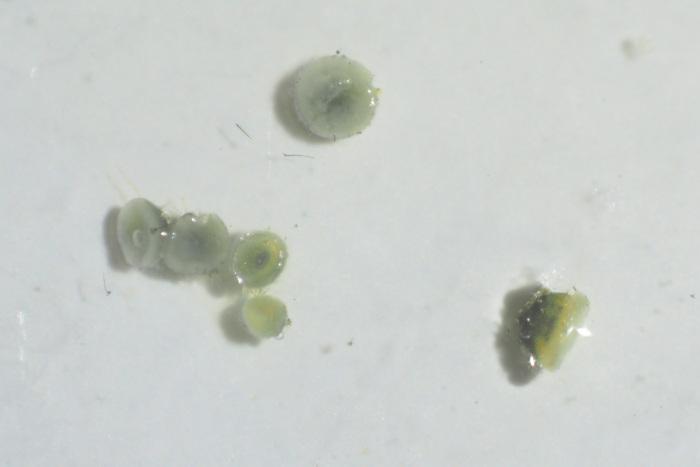
These grew on a fallen, decorticated hardwood branch. The size of the apos is much smaller than of the typical gray ones that I find often on moist wood. There was a faint yellow reaction with 40% KOH, but under the microscope in 3% KOH I didn't notice anything.
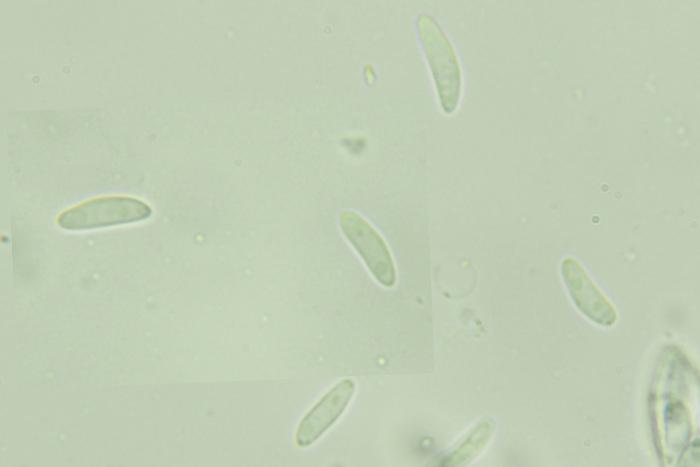
Spore measurements: (7.9) 8.9 - 10.7 (10.8) × (2.9) 2.93 - 3.1 (3.2) µm, N = 8.

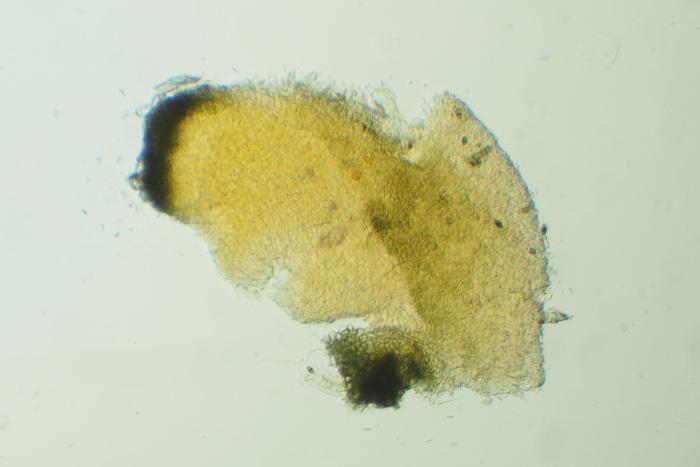
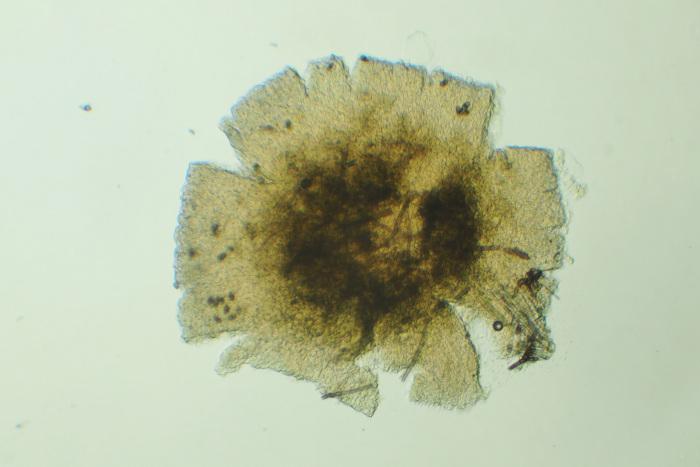
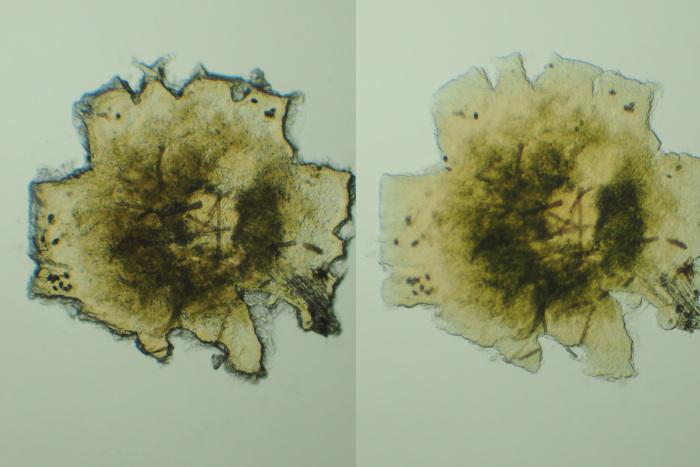
This is not a good idea.
Mollisia is difficult but among them you can find a lot of interesting species.
Do not cover the preparation with a slide when checking the reaction to KOH. Put a drop of KOH on the slide slide and then dip a piece of ascocarp in it. If the fruiting body reacts to KOH, you will see a yellowish coating around it in a few seconds.
The second way is to apply a drop of KOH to the fruiting body hymenium. If the reaction is positive, the hymenium will change to +/- yellow.
The reaction is visible to the naked eye or after applying a magnifier.
To be sure, it is worth using both methods at the same time
Good luck
Mirek