
10-04-2026 23:22
Gernot FriebesHi,ascospores are 1- to 3-septate, approximately
10-04-2026 15:51
 William Slosse
Hello everyone, On 08/04/26, I found a growth sit
09-04-2026 15:25
Jac GelderblomOn bare soil between mosses Ifound an asco I deter
09-04-2026 13:55
Thomas Læssøehttps://svampe.databasen.org/observations/10589176
09-04-2026 10:12
Thomas Læssøehttps://svampe.databasen.org/observations/10587061
08-04-2026 20:33
 Vasileios Kaounas
Found 07-04-26, in Abies cephalonica. Diameter 1,
08-04-2026 10:39
FRANCIS FOUCHIERBonjour , je recherche en pdf cet article: KORF R

A few very young fruiting bodies grew on a pine cone. I found only one fruiting body with mature spores already present. Microscopic structure and substrate similar to H. lutescens. But I don't like the content of the spores.
There are two regular drops in each. Besides, the paraphyses content in Lugol does not turn red as in H. lutescens.
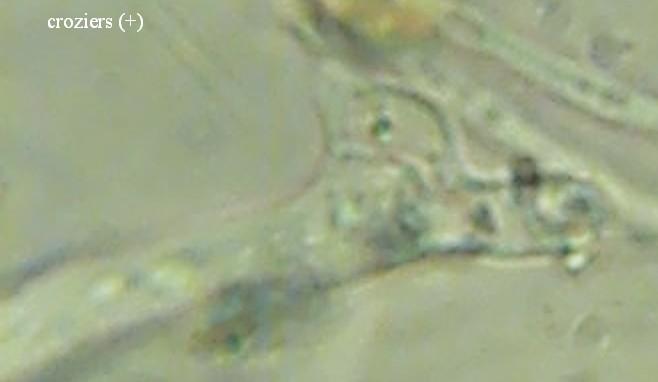
Porus reaction (+) bb
Spores: Me = 16 × 4.3 µm; Qe = 3.8
16.19 4.25
14.93 4.80
19.15 4.73
16.01 4.27
14.29 3.98
15.21 3.60
In spite of such a substrate and the appearance of spores, can this collection be classified as H. lutescens ??
Mirek
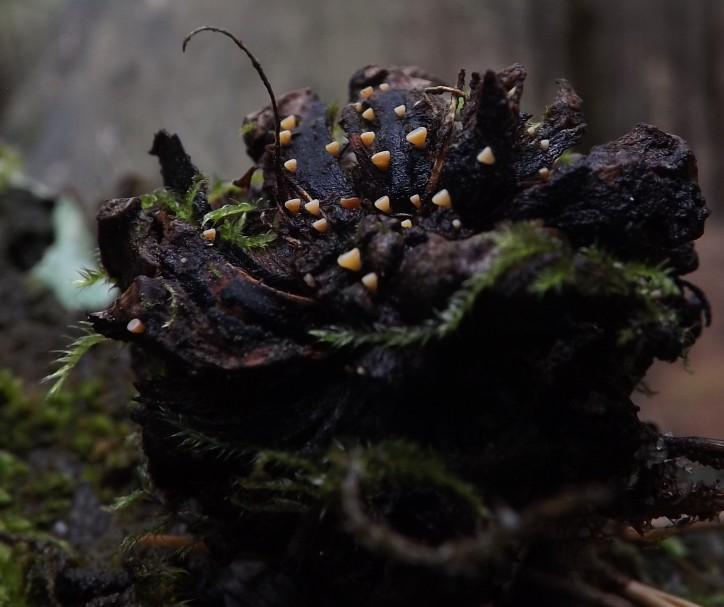
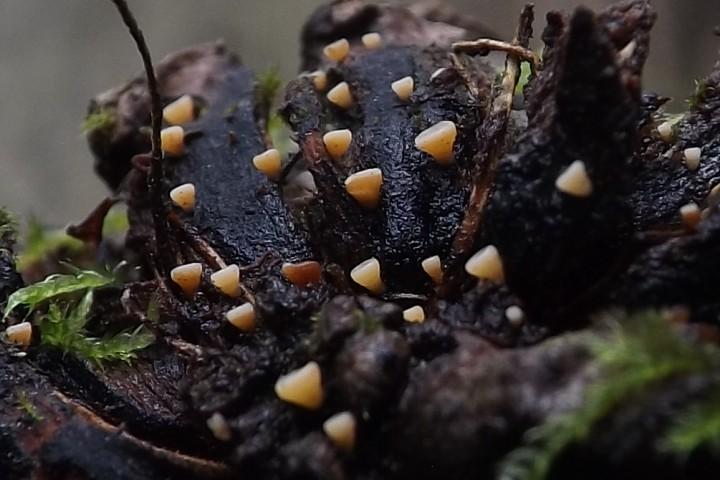
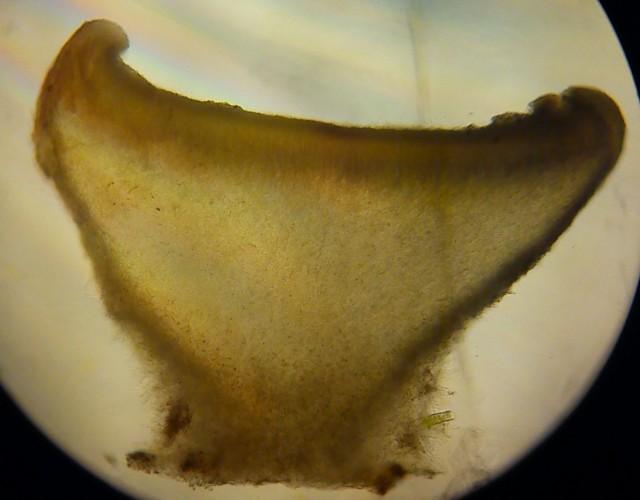
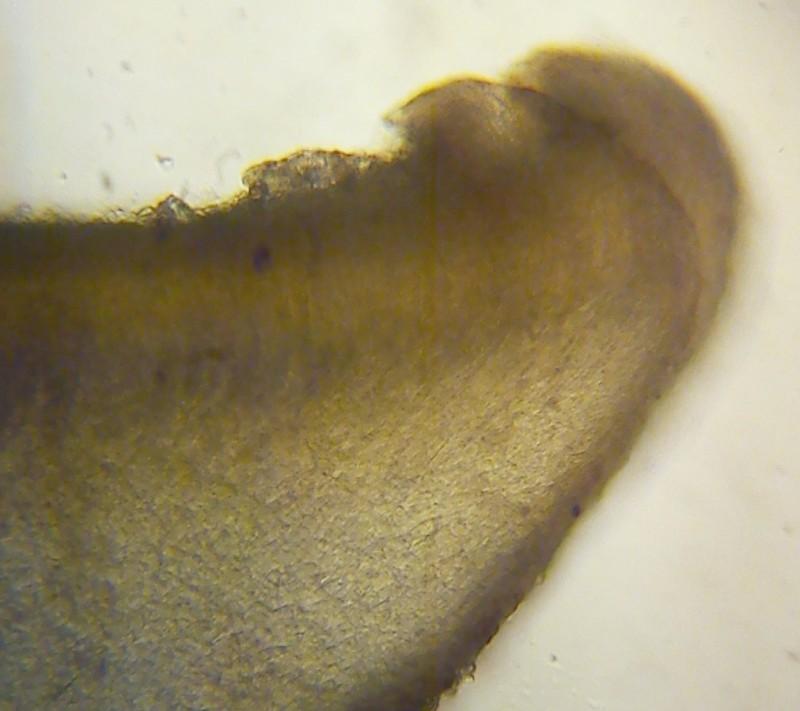
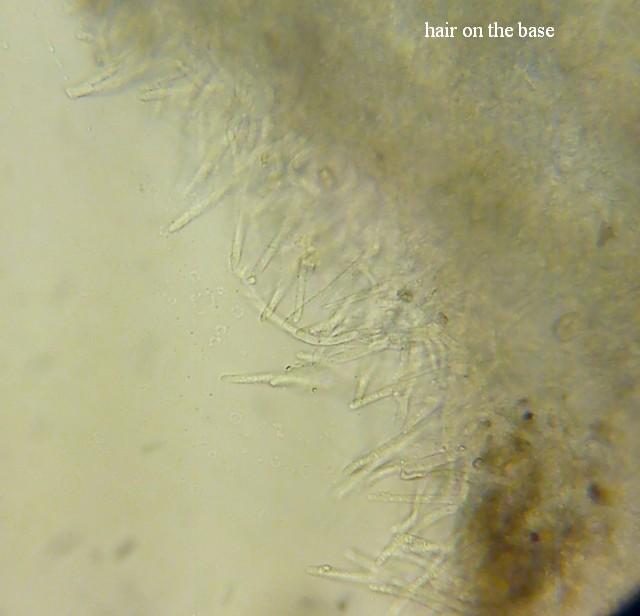
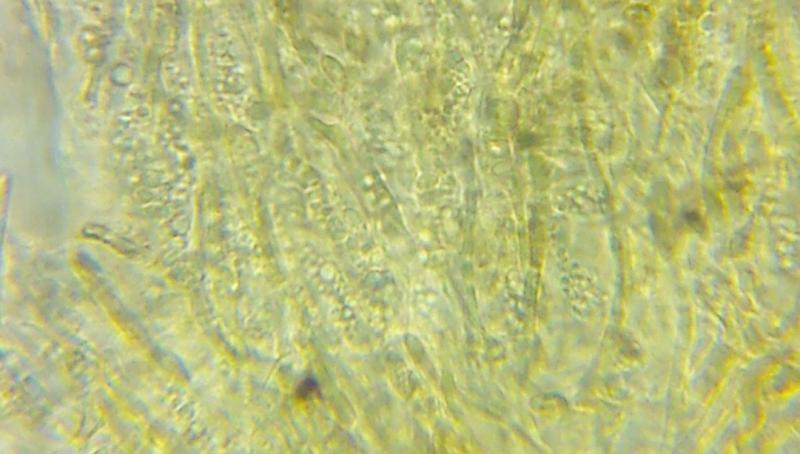
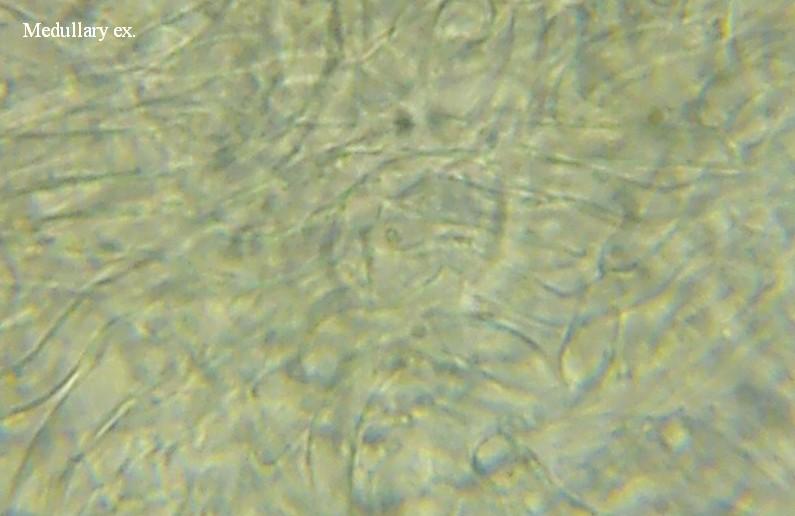
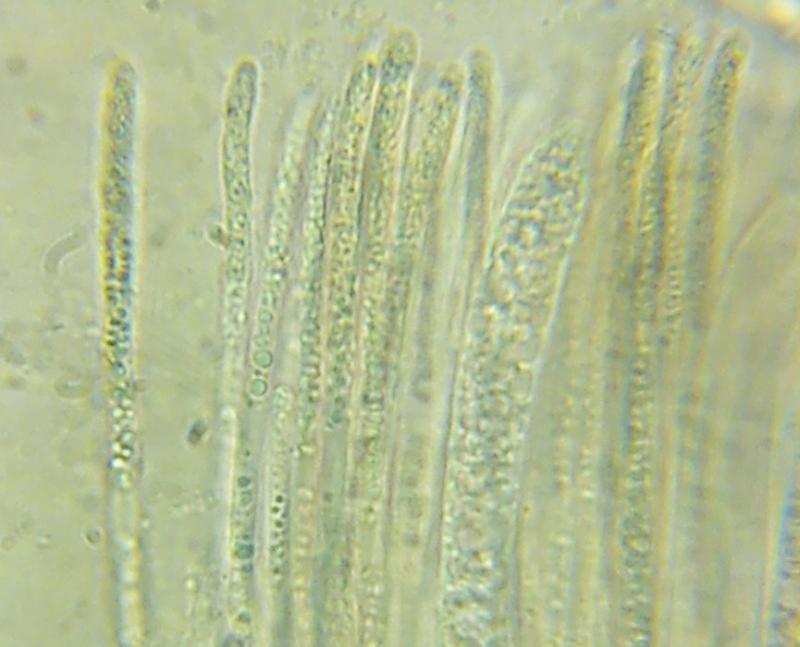
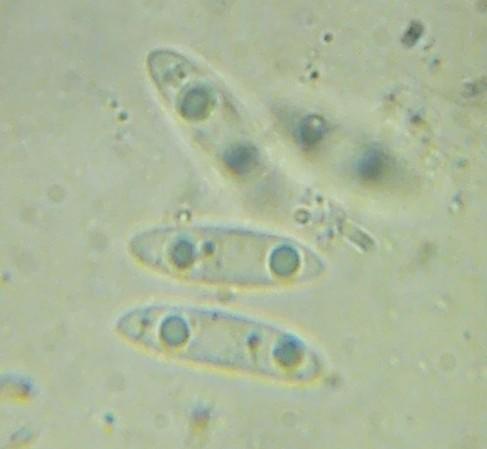
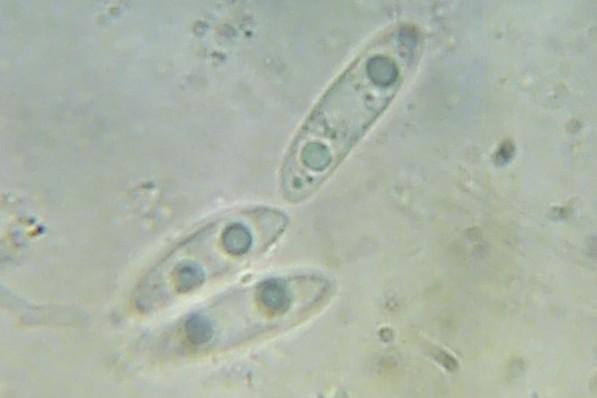

I recently found Hymenoscyphus epiphyllus on Alnus cones ... tomorrow I will try to insert photos.
Everything indicates that you are absolutely right.
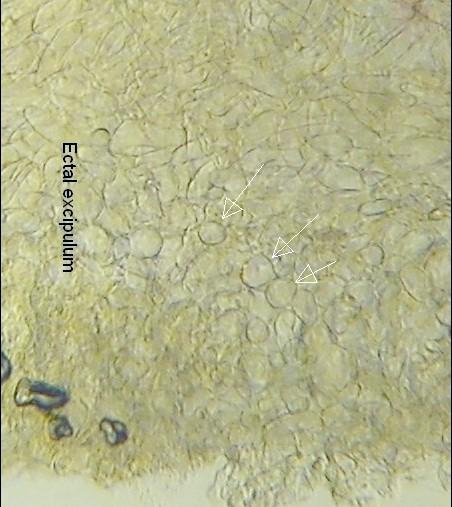
I will not post photos of the new collection but I will try to explain what aroused my uncertainty. Watching H. epiphylus always saw in ectal ex. a narrow strip of cells of an oval shape. While examining these fruiting bodies, I didn't notice such cells, but probably due to the very young age of the fruiting bodies? Also, the dimensions of the spores are quite small for this species, but as I mentioned: the fruiting bodies are very poorly mature!
Today I found another collection growing on needles and cones Picea abies.
best regards
Mirek
Thank you!
Mirek