
10-04-2026 23:22
Gernot FriebesHi,ascospores are 1- to 3-septate, approximately
10-04-2026 15:51
 William Slosse
Hello everyone, On 08/04/26, I found a growth sit
09-04-2026 15:25
Jac GelderblomOn bare soil between mosses Ifound an asco I deter
09-04-2026 13:55
Thomas Læssøehttps://svampe.databasen.org/observations/10589176
09-04-2026 10:12
Thomas Læssøehttps://svampe.databasen.org/observations/10587061
08-04-2026 20:33
 Vasileios Kaounas
Found 07-04-26, in Abies cephalonica. Diameter 1,
08-04-2026 10:39
FRANCIS FOUCHIERBonjour , je recherche en pdf cet article: KORF R

Hymenoscyphus fructigenus on Acer?
Juuso Äikäs,
08-09-2020 21:52
Spores:
(18.8) 19.6 - 23.3 (23.9) × (3.9) 4.1 - 4.5 (4.6) µm
Q = (4.3) 4.5 - 5.2 (5.3) ; N = 10
Me = 21.3 × 4.3 µm ; Qe = 4.9
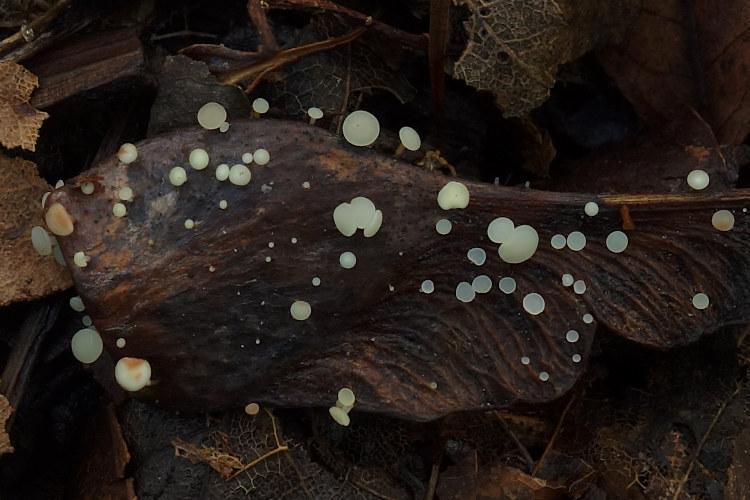
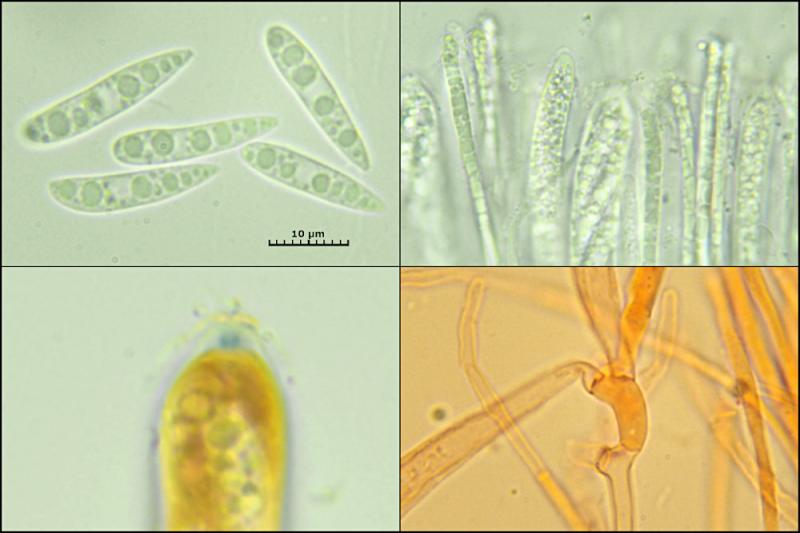
Hans-Otto Baral,
08-09-2020 21:55

Re : Hymenoscyphus fructigenus on Acer?
Yes of course it can. But nobody knows if it is genetically all the same. At least on Carpinus seeds occurs a different species.
Juuso Äikäs,
08-09-2020 21:59
Re : Hymenoscyphus fructigenus on Acer?
Ok then, good to know. It has a wider range of hosts than I previously thought.
Hans-Otto Baral,
09-09-2020 09:32
Re : Hymenoscyphus fructigenus on Acer?
I noticed I have a folder for Acer with some drawings. There are now also your pics.
The variation within Quercus is high, I have there a collection that is surely not conspecific with others on Quercus because of the broad spores with low lipid content.