
10-04-2026 23:22
Gernot FriebesHi,ascospores are 1- to 3-septate, approximately
10-04-2026 15:51
 William Slosse
Hello everyone, On 08/04/26, I found a growth sit
09-04-2026 15:25
Jac GelderblomOn bare soil between mosses Ifound an asco I deter
09-04-2026 13:55
Thomas Læssøehttps://svampe.databasen.org/observations/10589176
09-04-2026 10:12
Thomas Læssøehttps://svampe.databasen.org/observations/10587061
08-04-2026 20:33
 Vasileios Kaounas
Found 07-04-26, in Abies cephalonica. Diameter 1,
08-04-2026 10:39
FRANCIS FOUCHIERBonjour , je recherche en pdf cet article: KORF R

Orbilia ?dryadum
Chris Yeates,
20-09-2020 15:02

Bonjour tous
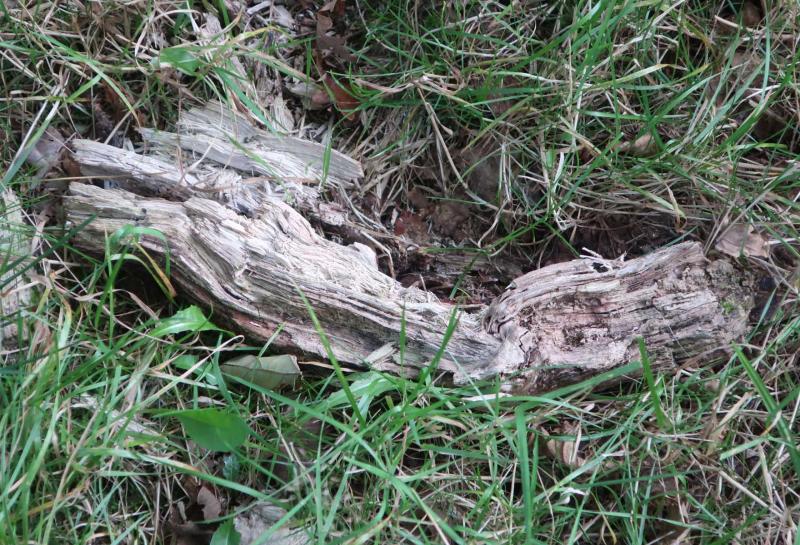
A few days ago I collected a piece of well rotted Quercus wood, which had several fungi on its damp underside. The portion retained was much smaller than shown in the first photo.
Species included were abundant growth of a Tomentella species with globose spinose spores, also Melanomma pulvis-pyrius, the anamorph of Chaetosphaeria pulviscula, and Orbilia leucostigma (as now understood).
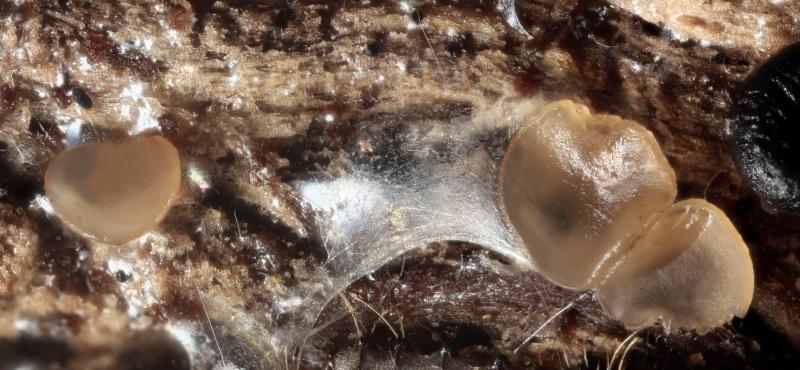
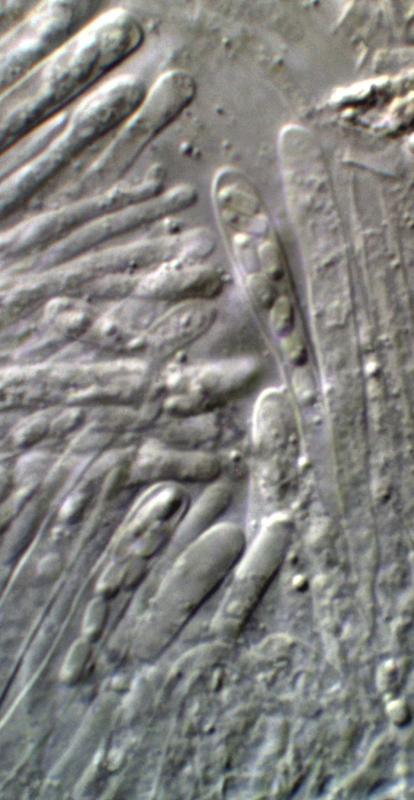
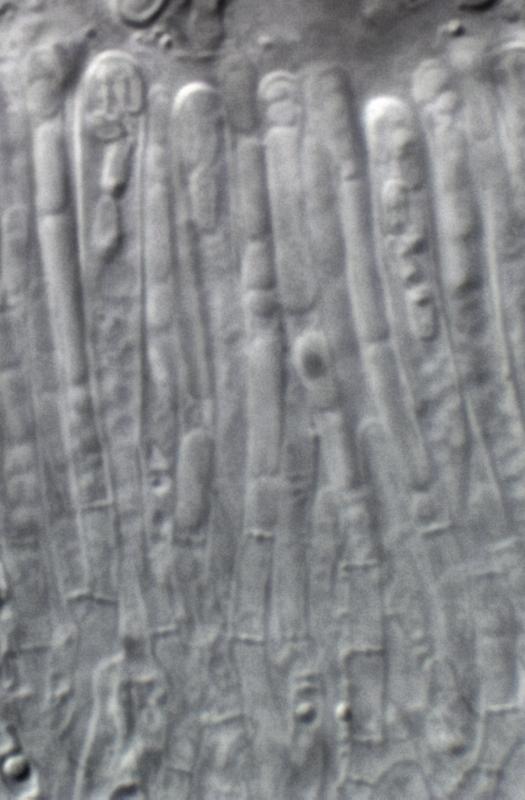
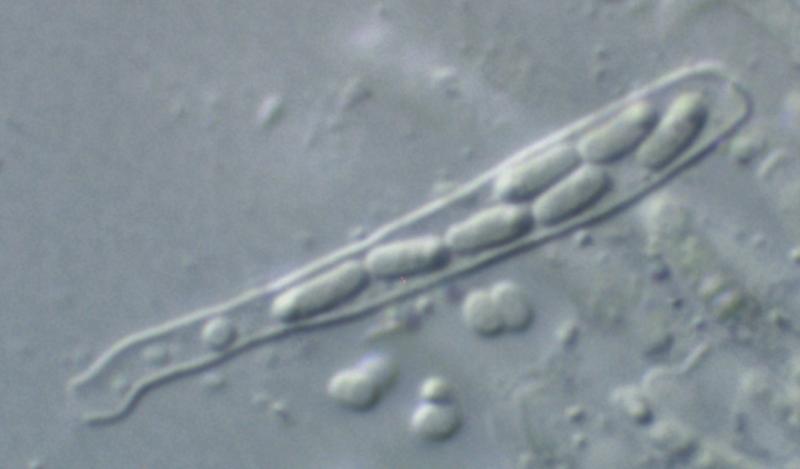
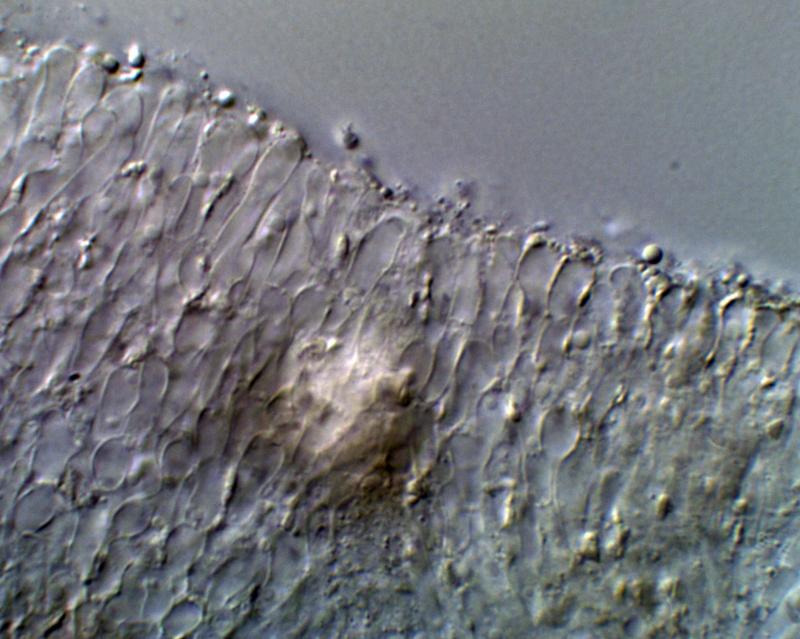
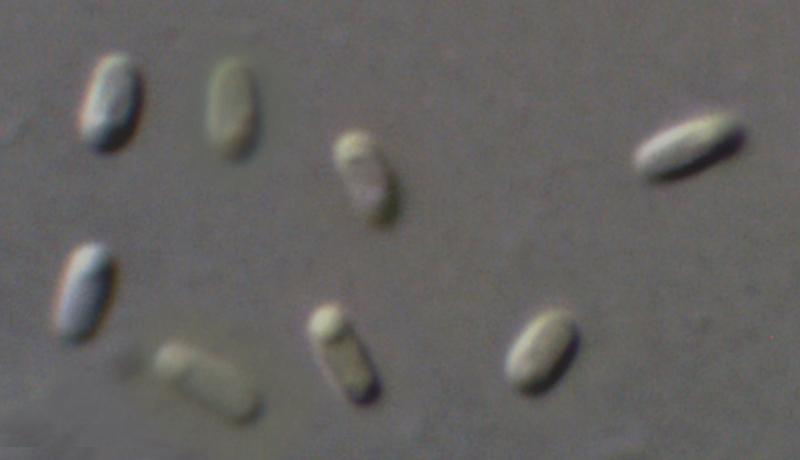
There was, in addition, a different Orbilia species, which had small cylindrical spores and I was sure I had never seen it before. Reference to the monograph led me to Orbilia dryadum, my one doubt was the colour of the apothecia. Two apothecia were checked and, based on the identical spores were clearly the same species, but one had clavate to sub-capitate paraphyses, while the other had (mostly) more typical capitate ones. The spores measured 3.1-3.6 x 1.1-1.4 (1.6)µm - Qe=2.9. Annoyingly, I did not photograph some fusoid/ellipsoid spores (probably conidia) which were present in the slide preparation as I thought they were a contaminant! I should have known better and will make an attempt to find more, though the material is sparse.
As I say all this has led me to Orbilia dryadum - I would welcome advice.
Amitiés, Chris
Hans-Otto Baral,
20-09-2020 16:47

Re : Orbilia ?dryadum
Yes, this must be O. dryadum. The conidia you saw were septate? The apo colour is good I think, usually paler, though.
Chris Yeates,
20-09-2020 17:29
Re : Orbilia ?dryadum
As ever "vielen Dank" Zotto. This appears to be the 2nd UK / 1st English record; and I was only collecting in that area because I had time to kill before catching a train ;-)
My first success with the superb Monograph.
Chris
PS - yes the conidia were hyaline and septate