
10-04-2026 23:22
Gernot FriebesHi,ascospores are 1- to 3-septate, approximately
10-04-2026 15:51
 William Slosse
Hello everyone, On 08/04/26, I found a growth sit
09-04-2026 15:25
Jac GelderblomOn bare soil between mosses Ifound an asco I deter
09-04-2026 13:55
Thomas Læssøehttps://svampe.databasen.org/observations/10589176
09-04-2026 10:12
Thomas Læssøehttps://svampe.databasen.org/observations/10587061
08-04-2026 20:33
 Vasileios Kaounas
Found 07-04-26, in Abies cephalonica. Diameter 1,
08-04-2026 10:39
FRANCIS FOUCHIERBonjour , je recherche en pdf cet article: KORF R

Botryosporium longibrachiatum
Stephen Martin Mifsud,
20-09-2020 22:01
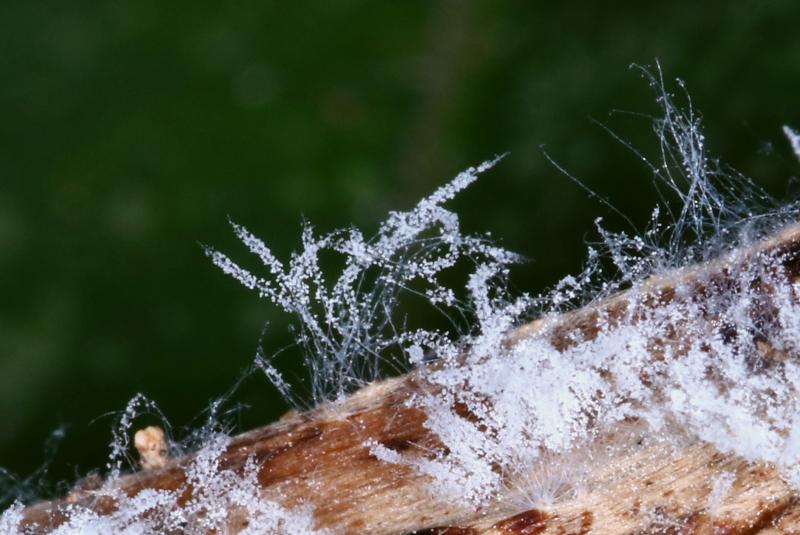
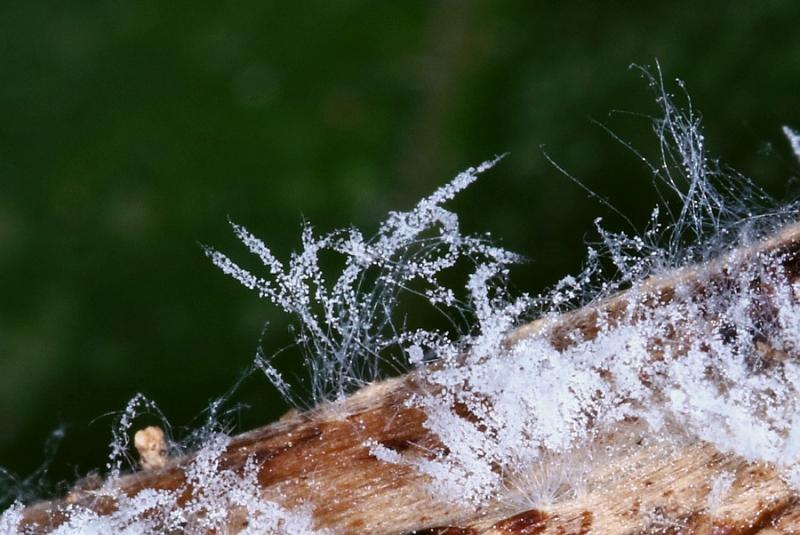
 I have found Botryosporium longibrachiatum on decaying leaves of Acanthus mollis in the wild here in Malta and maybe it is a new host for this fungus. Apparently it is recorded on different hosts. I had difficulty to distinguish from B. pulchrum but according to Zhang Tian-yu & B Kendrick (Mycosystema, 1990), pulchrum should have dichotomously branched conidiophores. I am not sure how much reliable is this charachteristic or otherwise most images on the net of pulchrum are longibrachiatum.
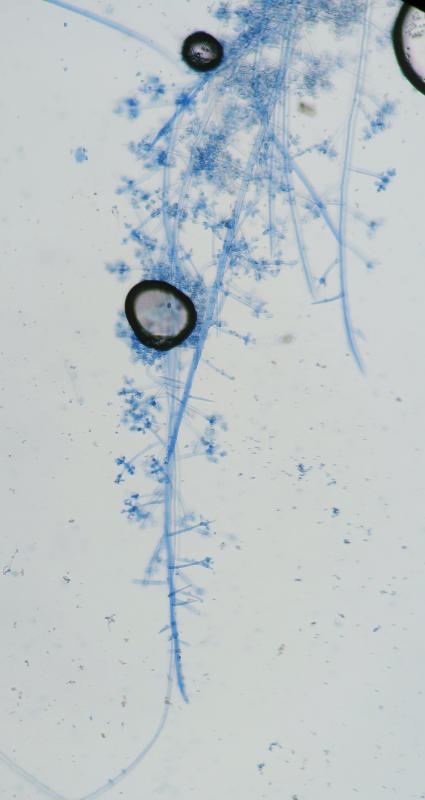
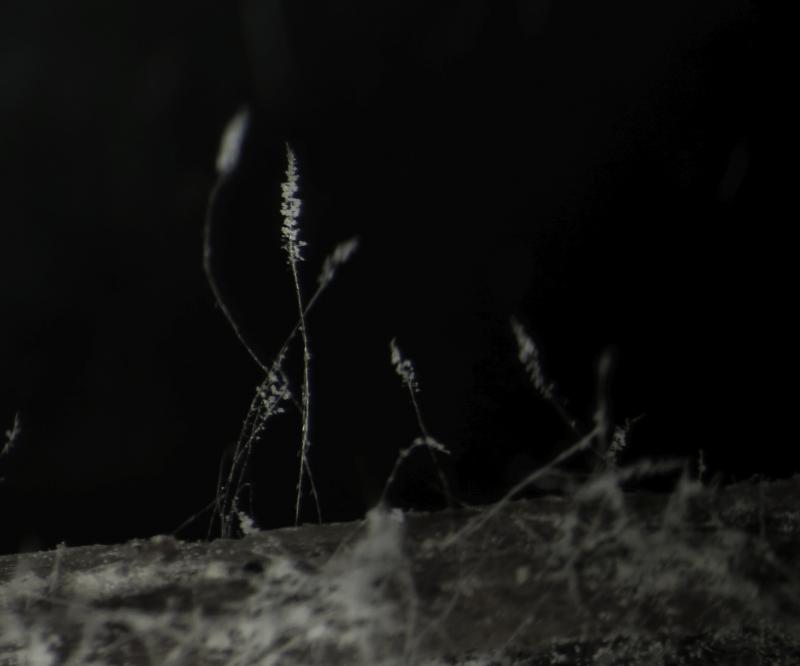
The conidiophores were septate, with occassional wart-like projections, up to 4 mm long, c. 10um wide lateral vesicle branches patent, 75-100um long including vesicle, narrowing at the base, vesicle rhomboid or biconic 12-15um long and 1bout 10um diameter; ampullae 2-4 lobed with globose-clabate heads bearing few dozens of conidia, leaving behind a small peg when shed. Conidia fusiform-ellipsoid, 5-7um long, smooth, hyaline, stains good in cotton blue.
I was thinking that the conidiophore 'stalk' must be very strong being only 8-10um thich and have to hold erect that huge mass of many vessicles and spores along a 2000-3000um long conidiophore
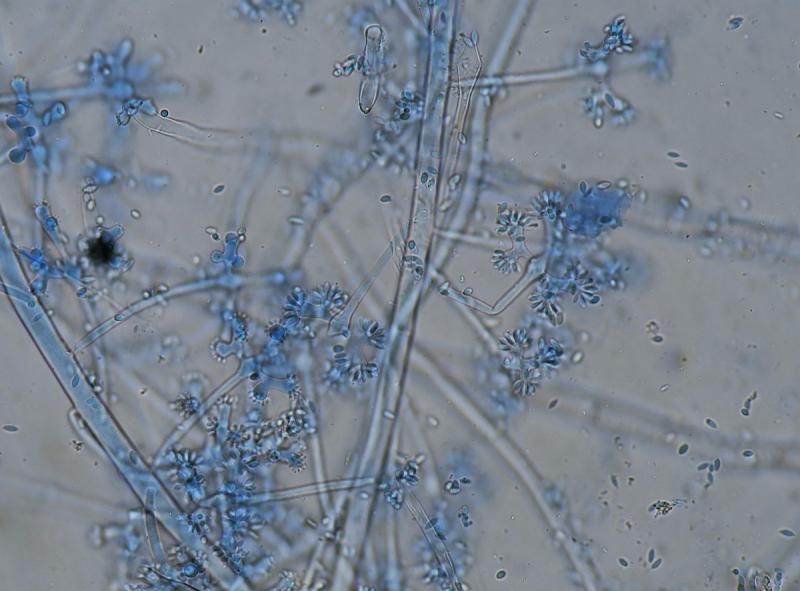
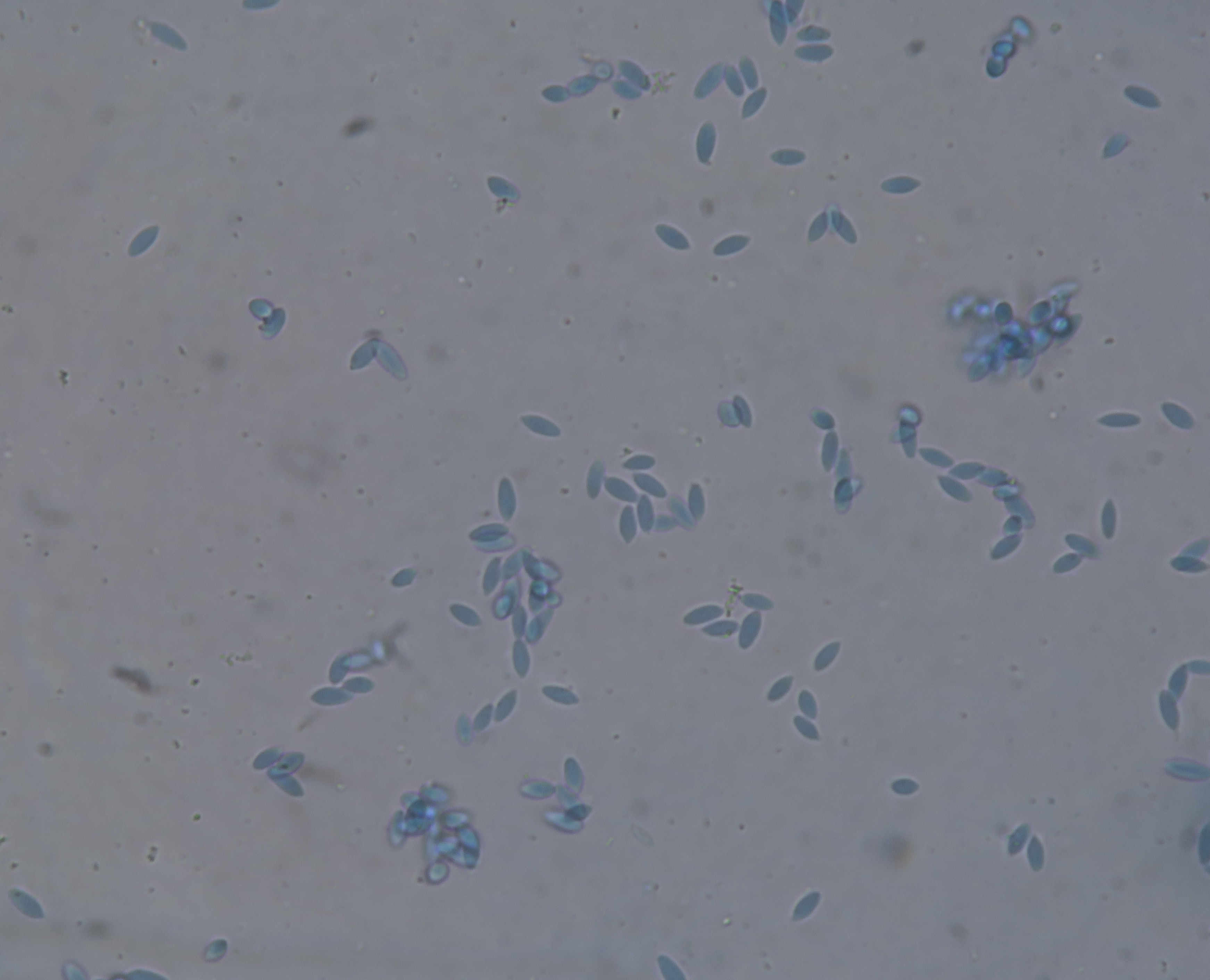 ConidioSpores c. 6um long
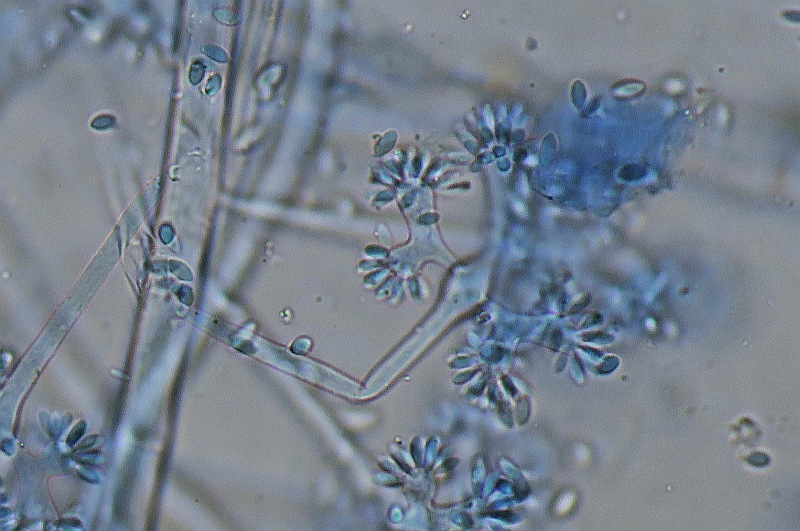 Ampullae