
27-02-2026 11:21
 Yannick Mourgues
Hi to all. Here is a specie that can may be relat
18-03-2026 13:09
 Khomenko Igor
I recently examined Celtis occidentalis branches
18-03-2026 18:42
Gonzalez Garcia MartaI have collected some lyre-shaped apothecia on the
18-03-2026 17:22
Katarina PastircakovaHi there,I'm looking for the following literature:
27-11-2025 15:41
Thomas LæssøeSpores brownish, typically 4-celled; 26.8 x 2.4;
18-03-2026 11:52
Thomas Læssøehttps://svampe.databasen.org/observations/10493688
11-03-2026 17:36
 Michel Hairaud
Bonjour, Je cherche des indices pour cette réc
17-03-2026 10:40
 Martine Vandeplanque
Bonjour à tous.Chaque année en mars ou avril, il
17-03-2026 19:41
 Bernard CLESSE
Bonsoir à toutes et tous,Pourriez-vous m'aider à
12-03-2026 19:44
 Enrique Rubio
Hi to everybody.Can you give me any suggestions ab
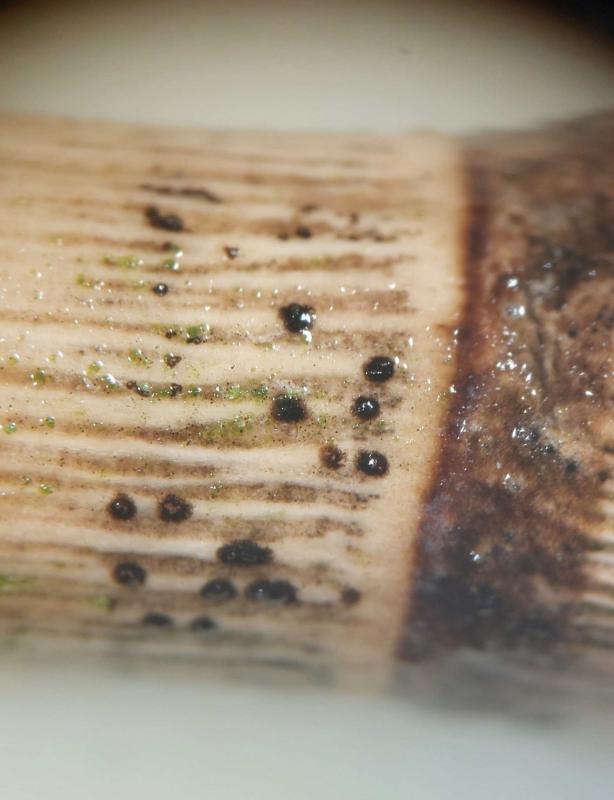
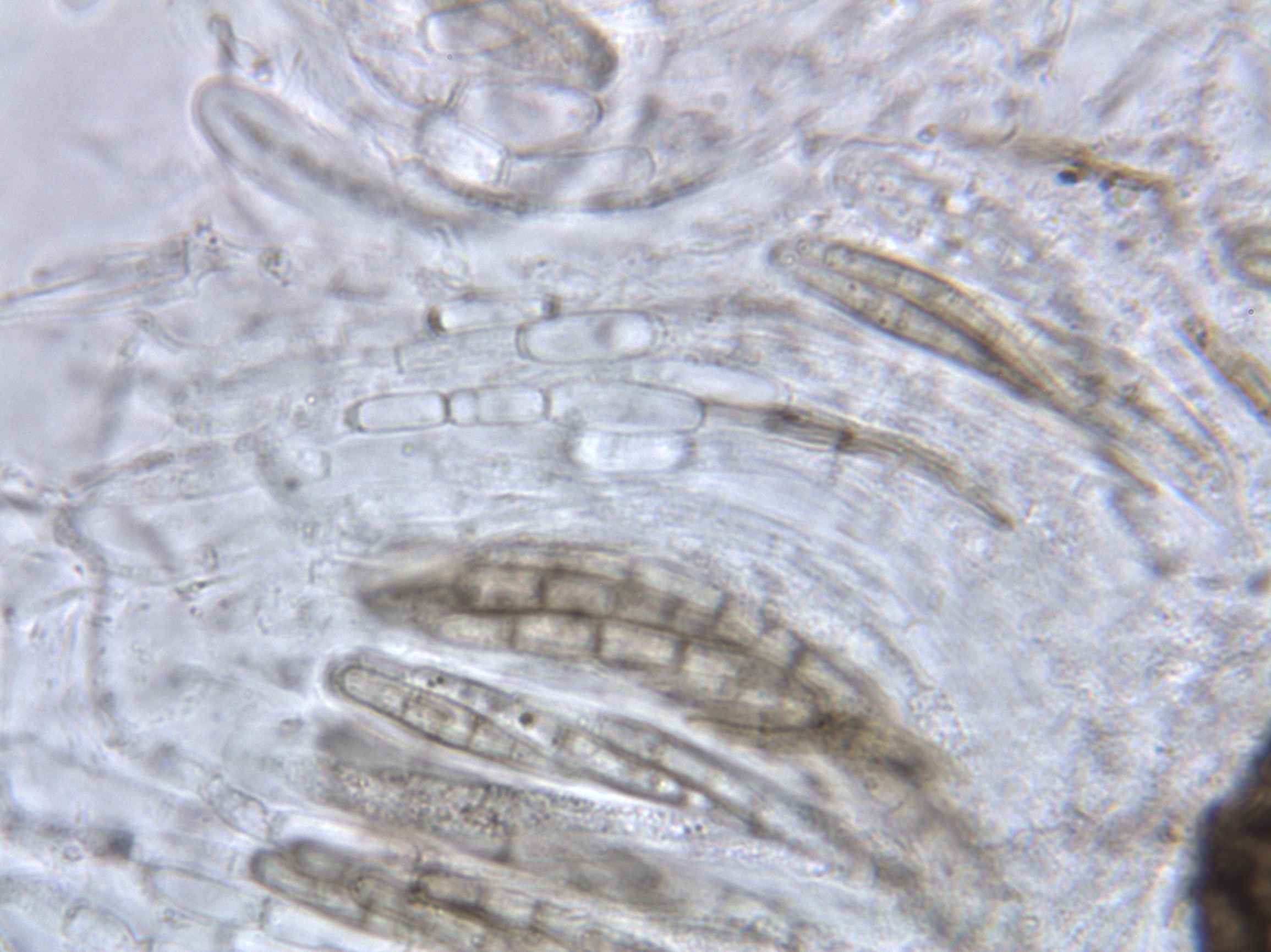
Substrate: Phragmites australis;
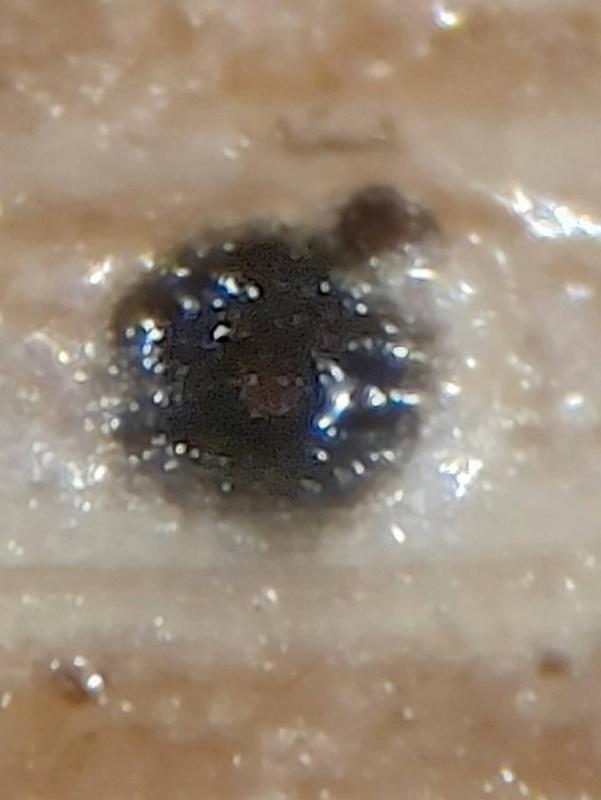
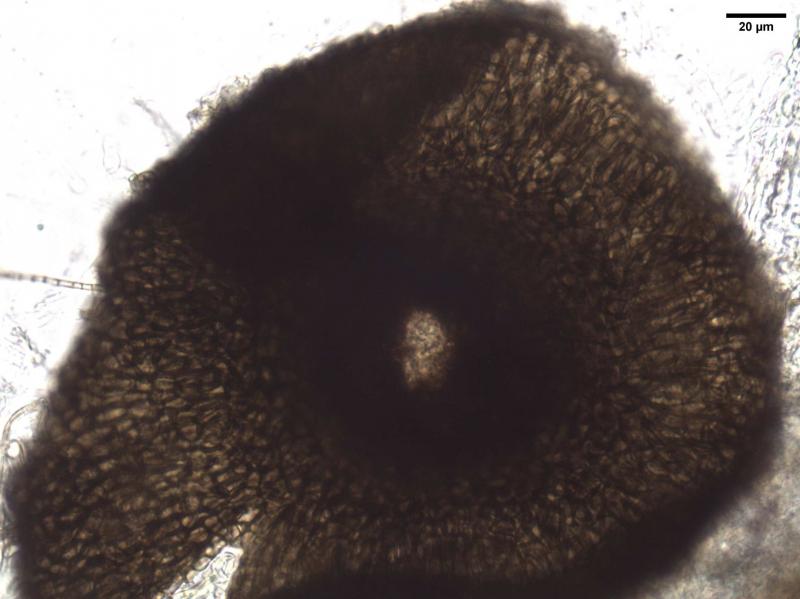
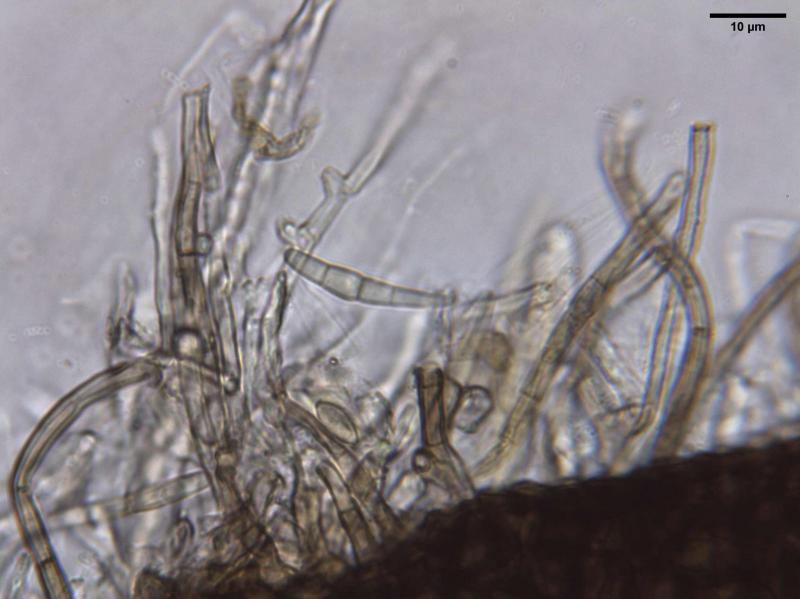
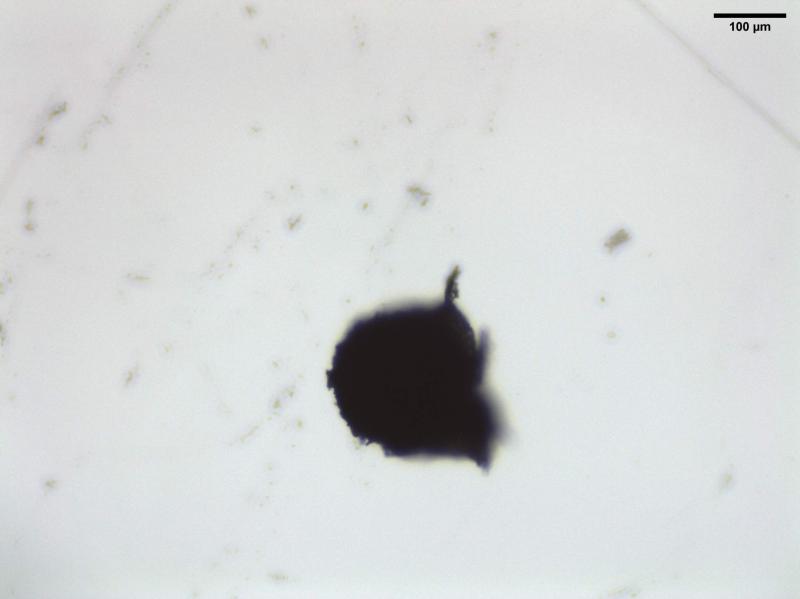
Thyriothecia: 222-235 x 220-234 µm; orbicular; covered with an irregular network of hyphae, at the margin short light brown or hyaline fringes;
Ostiole: diameter 18 µm;
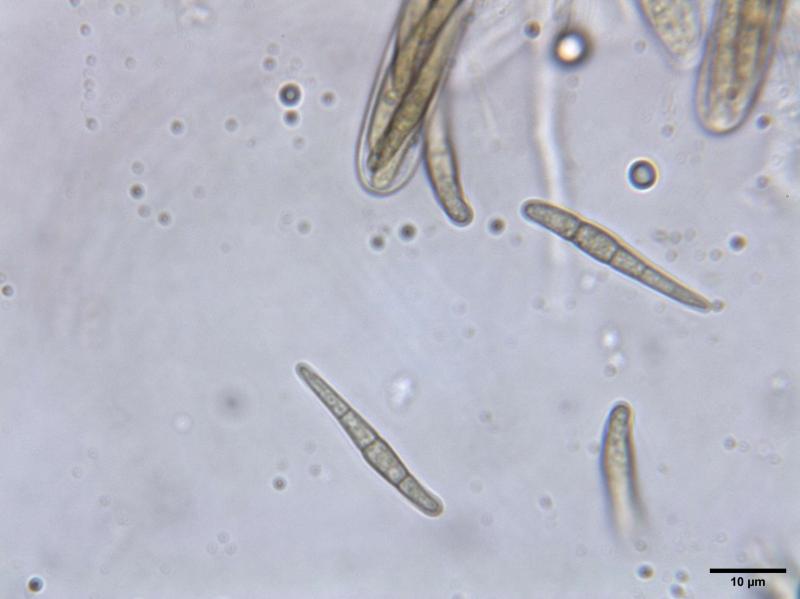
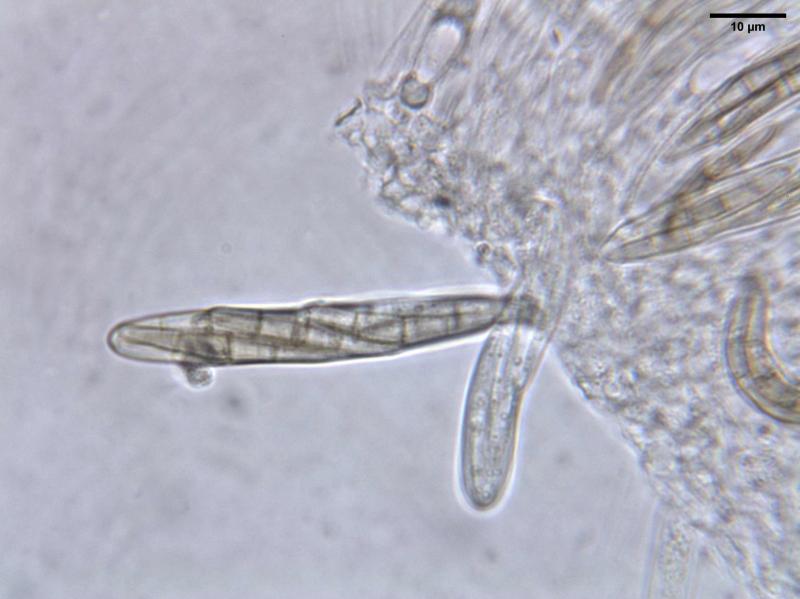
Asci: clavate, Lugol and Melzer negative, 8-spored, 54-70 x 6-9 µm;
Paraphyses: 85 x 4 µm ; filiform, constricted at the different septa, cells of different width and up to 15 µm long
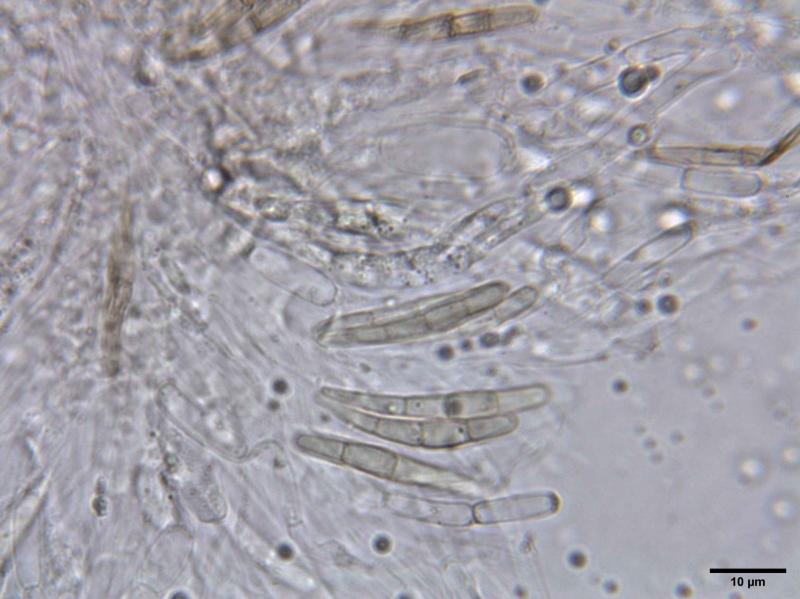
Spore: narrowly fusiform, with 1 to 4 septs, rounded at the poles and narrowing the base; 23-29 x 3.3-4 µm
Brown anchor hyphae: 70 x 5 µm.
The article "The Genera Trichothyrina and Actinopeltis in Britain" by J.P. Ellis mentions only one species with septated spores namely Trichothyrina norfolciana but with hyaline spores as substrate Carex riparial.
Any help is welcome as I have too little experience with this genus.
Many thanks, in advance,
François Bartholomeeusen
 ampar1-as-0001.jpg