
18-03-2026 18:42
Gonzalez Garcia MartaI have collected some lyre-shaped apothecia on the
18-03-2026 17:22
Katarina PastircakovaHi there,I'm looking for the following literature:
27-11-2025 15:41
Thomas LæssøeSpores brownish, typically 4-celled; 26.8 x 2.4;
18-03-2026 13:09
 Khomenko Igor
I recently examined Celtis occidentalis branches
18-03-2026 11:52
Thomas Læssøehttps://svampe.databasen.org/observations/10493688
11-03-2026 17:36
 Michel Hairaud
Bonjour, Je cherche des indices pour cette réc
17-03-2026 10:40
 Martine Vandeplanque
Bonjour à tous.Chaque année en mars ou avril, il
17-03-2026 19:41
 Bernard CLESSE
Bonsoir à toutes et tous,Pourriez-vous m'aider à
12-03-2026 19:44
 Enrique Rubio
Hi to everybody.Can you give me any suggestions ab
17-03-2026 10:09
 François Freléchoux
Bonjour, Voici la description rapide d'un petit d
Phaeohelotium fulvidulum?
Jan Knuiman,
11-08-2023 11:27
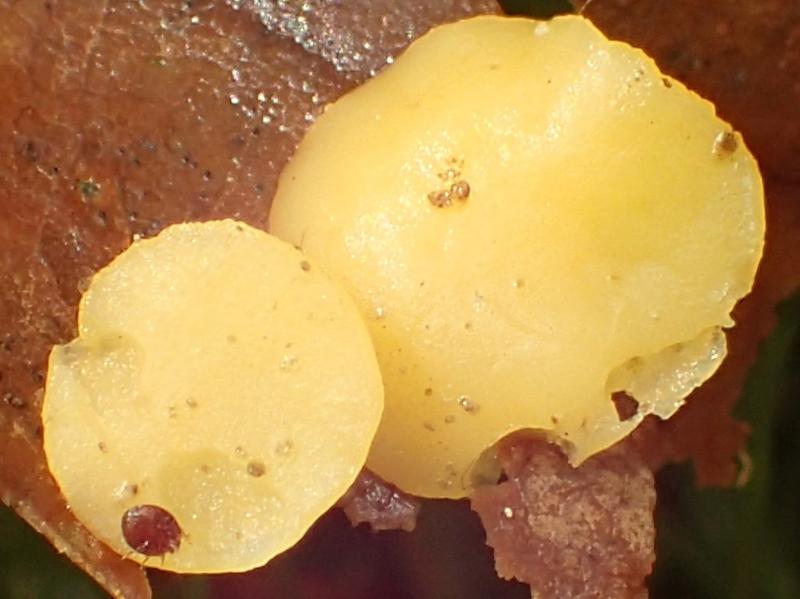
Fruit bodies were found on a dead Fagus leaf, were very short stiped and max 4 mm wide.
Spores in water measured 16 -22 x 3.5-5.0 micron. Asci (aboot 120 x 10 micron) without croziers. See pictures of ectal and medullary excipulum, spores and asci.
Could this be Phaeohelotium fulvidulum?
Kind regards, Jan
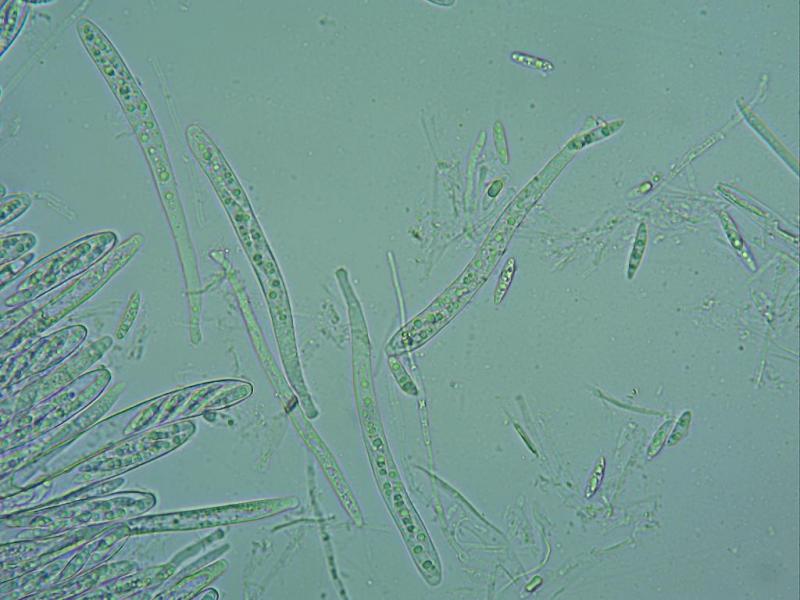
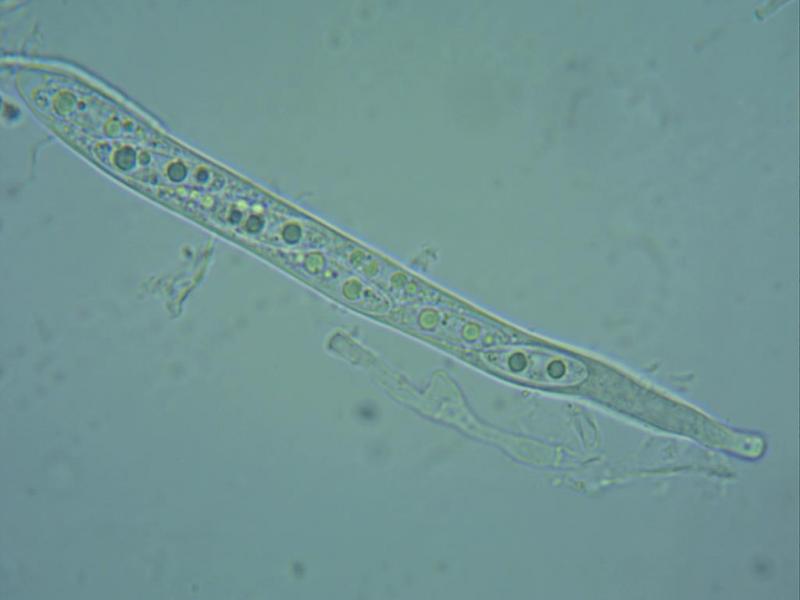
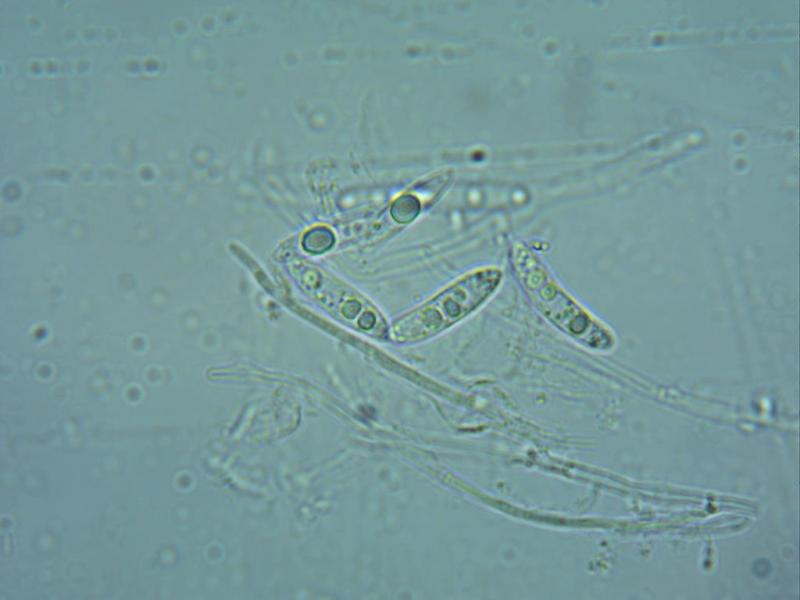
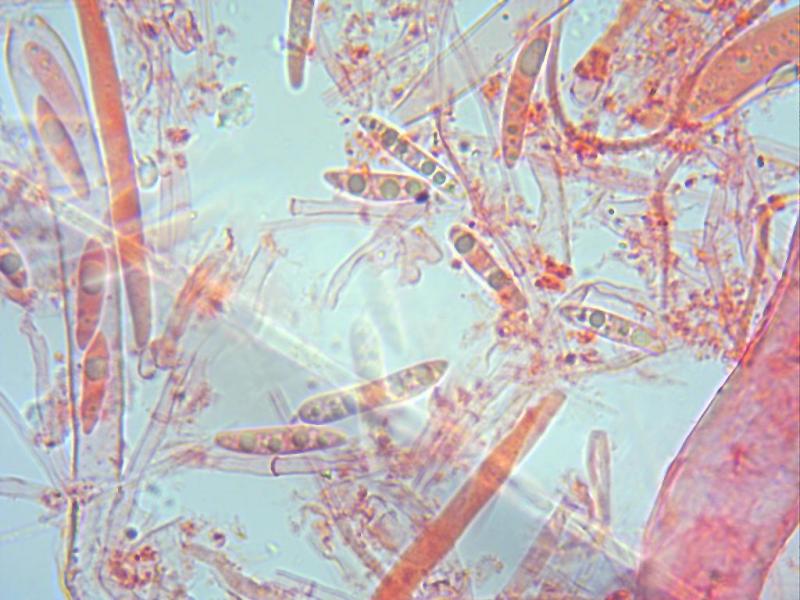
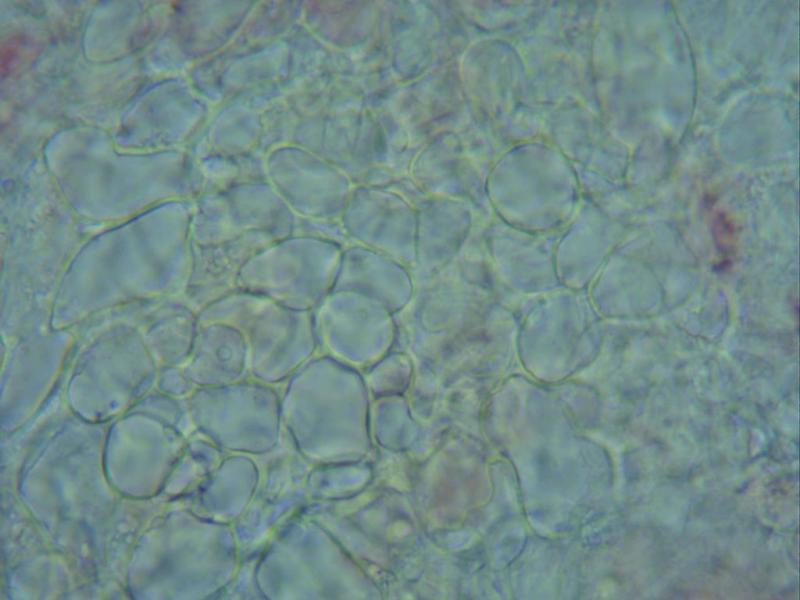
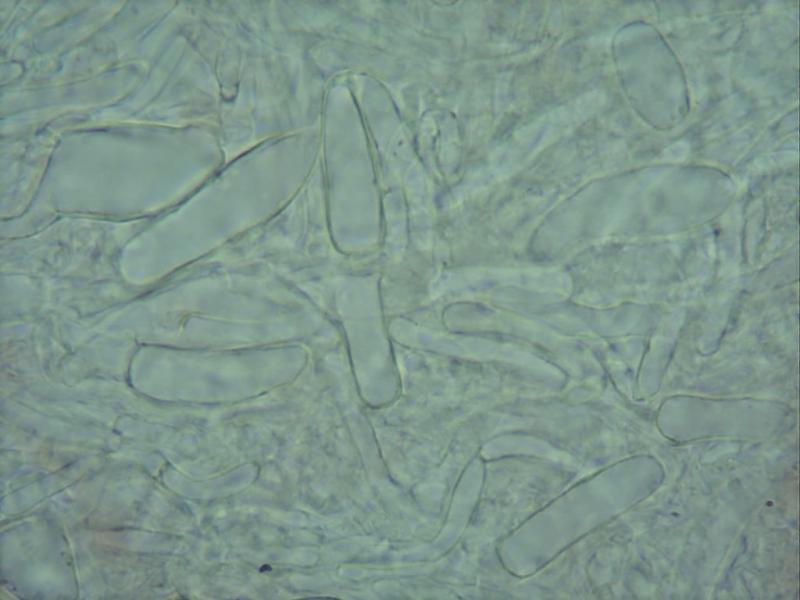
Hans-Otto Baral,
11-08-2023 11:43

Re : Phaeohelotium fulvidulum?
I tend to confirm but would prefer to see living paraphyses with their contents and the dead ascus apex in Lugol.
Jan Knuiman,
11-08-2023 12:57
Re : Phaeohelotium fulvidulum?
Hello Zotto,
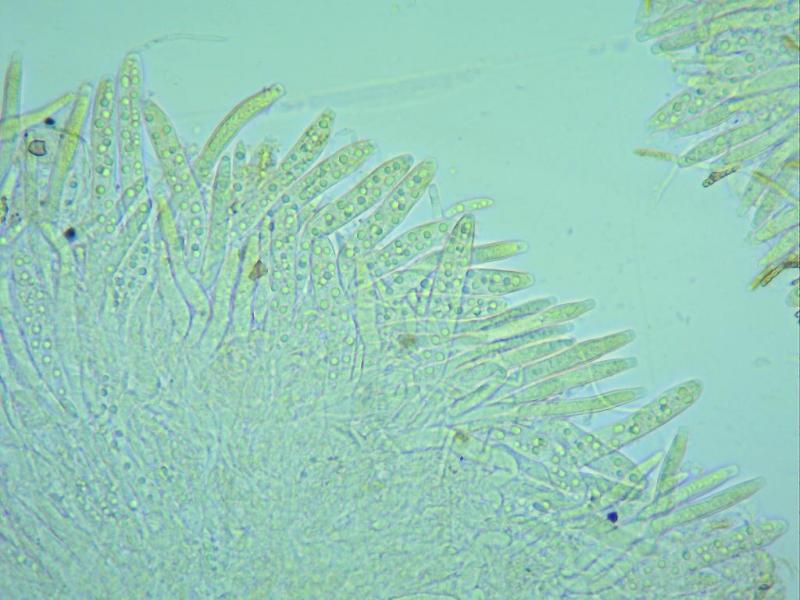
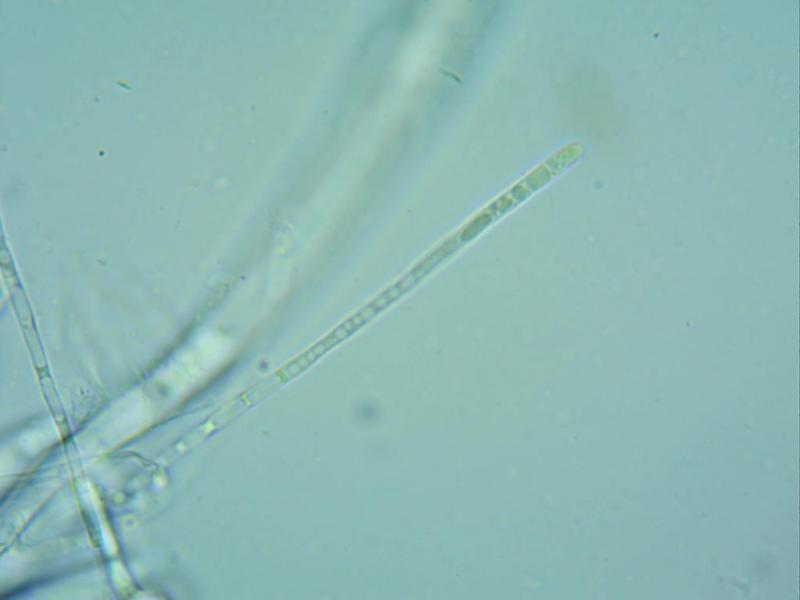
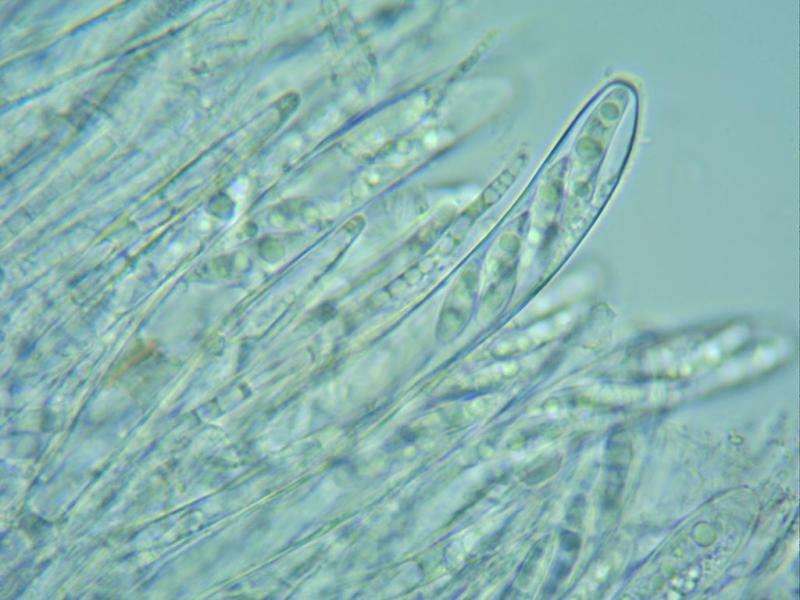
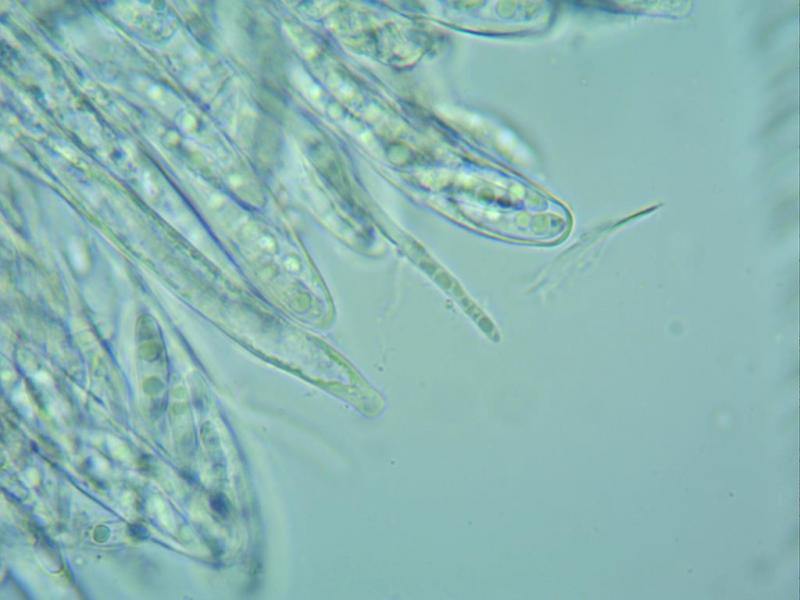
Herewith some extra pictures of paraphyses in water and asci in lugol. Hope this helps.
Jan
Herewith some extra pictures of paraphyses in water and asci in lugol. Hope this helps.
Jan
Hans-Otto Baral,
11-08-2023 18:04
Re : Phaeohelotium fulvidulum?
The VBs in the paraphyses are fine, although I know them strongly refractive. The iodine photo is much too small, I wanted to see the shape of the blue ring.
Jan Knuiman,
11-08-2023 19:35
Re : Phaeohelotium fulvidulum?
Hello Zotto,
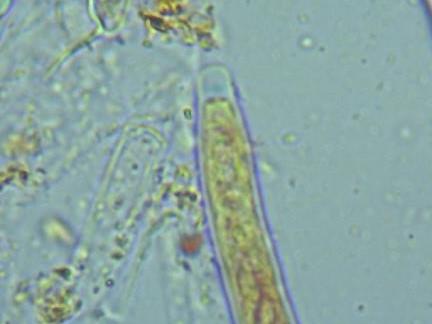
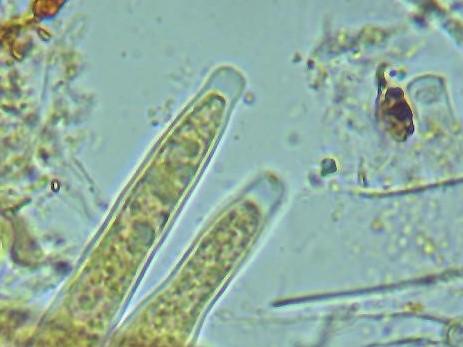
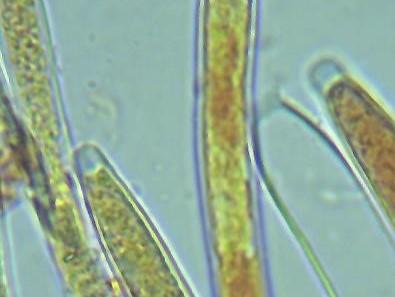
It looks to me that the blueing of the ascus top is weak if present at all. What do you think?
Jan
It looks to me that the blueing of the ascus top is weak if present at all. What do you think?
Jan
Hans-Otto Baral,
11-08-2023 20:23
Re : Phaeohelotium fulvidulum?
Indeed, this is only the inner part of the thickening where two blue lines are visible. Not really what I expected. Together with the faintly refractive paraphysis contents I am a but sceptical. I am not really sure with the absence of croziers. If present it could be P. monticola.
Patrice TANCHAUD,
11-08-2023 22:32
Re : Phaeohelotium fulvidulum?
Bonsoir,
si je ne me trompe pas, P. fulvidulum pousse plutôt dans les endroits humides ou marécageux, personnellement je ne le connais qu'en tourbières en milieu acide, il est de couleur ocre.
P. monticola est plus jaune, plus vivement coloré, mais je ne connais que son sosie, P. epiphyllum, et ici il semblerait difficile de trancher, non ? On manque d'information sur la réfringence des paraphyses à mon goût.
If I'm not mistaken, P. fulvidulum grows more in humid or marshy places, personally I only know it in peat bogs in an acid environment, it is ocher in color.
P. monticola is more yellow, more vividly colored, but I only know its look-alike, P. epiphyllum, and here it would seem difficult to decide, wouldn't it? There is a lack of information on the refraction of the paraphyses in my opinion.
P. monticola is more yellow, more vividly colored, but I only know its look-alike, P. epiphyllum, and here it would seem difficult to decide, wouldn't it? There is a lack of information on the refraction of the paraphyses in my opinion.
Patrice
Hans-Otto Baral,
12-08-2023 21:07
Re : Phaeohelotium fulvidulum?
There are some living paraphyses visible and they contain low-refractive medium-sized VB-guttules. P. epiphyllus I excluded as it has prominently multiguttulate VBs.
You are right. P. monticola is more yellow. It can be that the apical ring varies in P. fulvidulum.
Patrice TANCHAUD,
12-08-2023 22:04
Re : Phaeohelotium fulvidulum?
Oui, on voit quelques paraphyses, mais s'agissant d'un élément essentiel, en voir plus aurait été intéressant.
Yes, we can see a few paraphyses, but since it is an essential element, seeing more would have been interesting.