
10-06-2026 12:54
Steve ClementsBonjour encore, Pouvez-vous m'aider, s'il vous pl
09-06-2026 18:32
Camille MertensSur morceau de roseau immergé 0,5 - 0,7 mm de dia

10-06-2026 21:16
 François Freléchoux
Bonsoir,Le dernier du jour, en attendant votre avi
10-06-2026 21:07
François Freléchoux
Toutes les tiges de gentianes jaunes de l'an passÃ
10-06-2026 13:41
François Freléchoux
Bonjour à nouveau, Voici une trouvaille d'hier.
10-06-2026 11:53
Steve ClementsBonjour, This disco is abundant on dead stems of
10-06-2026 10:45
François Freléchoux
Bonjour à nouveau, Encore une détermination qui
08-06-2026 10:16
 Spooren Marco
I don`t have a clou about this fungus,it is not in
10-06-2026 09:24
François Freléchoux
Bonjour, J'imagine que cette détermination ne do
Phaeohelotium sp.
Yannick Mourgues,
15-12-2024 15:09

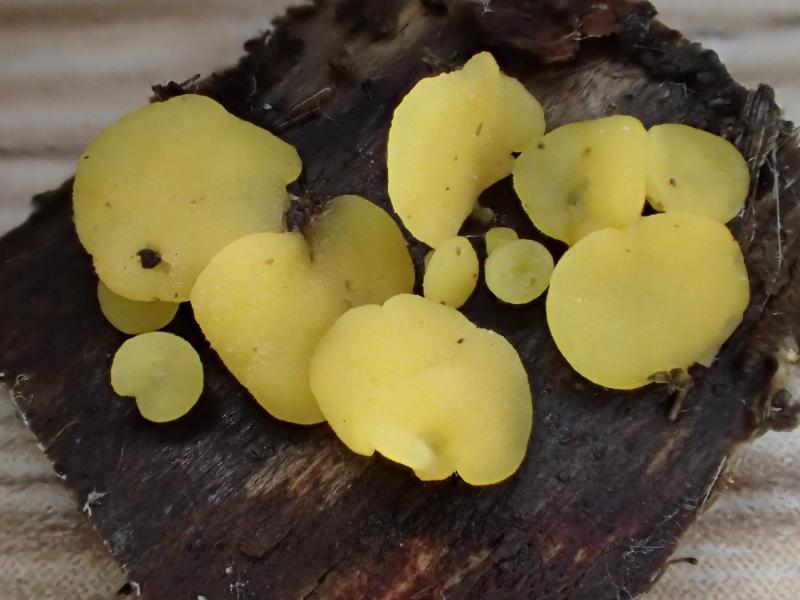
I would like your opinion on this Phaeohelotium found on decorticated wood of Betula.
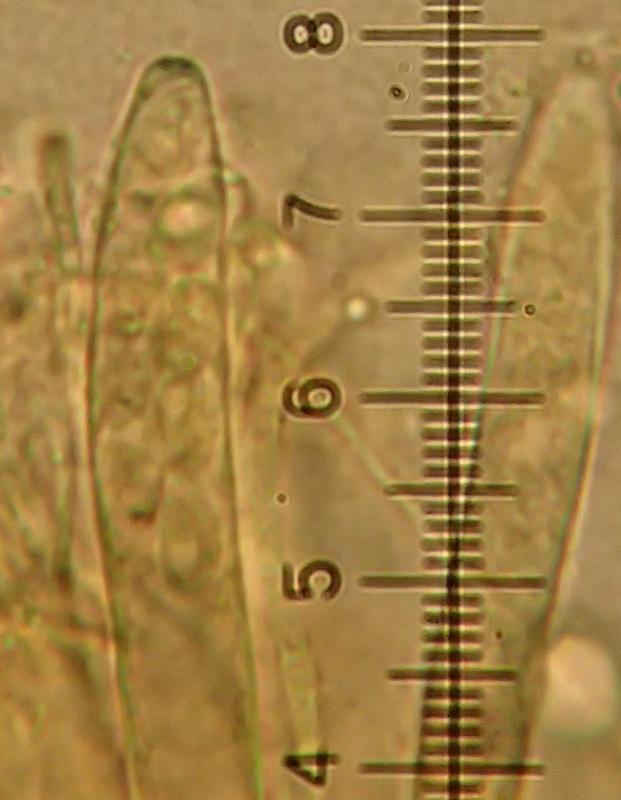
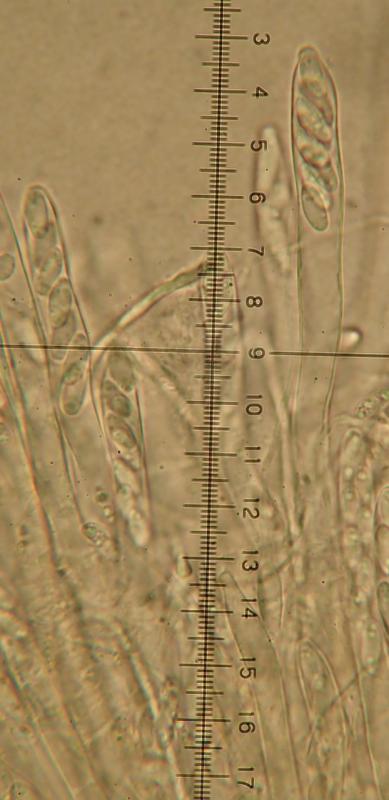
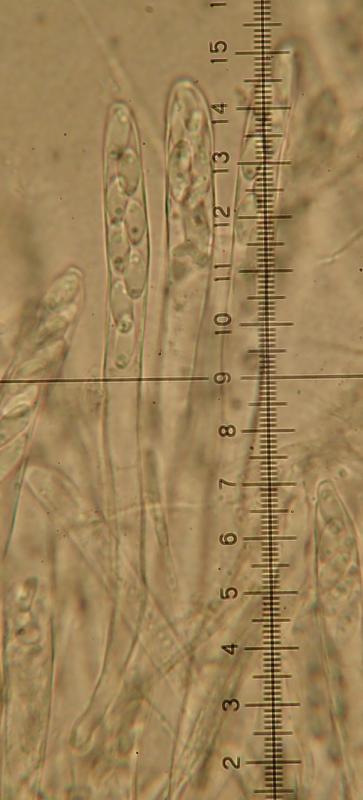
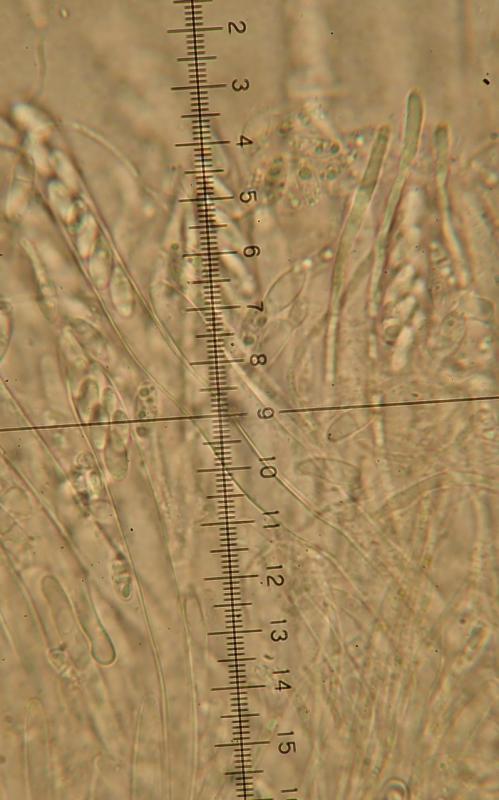
Asci IKI+, croziers+
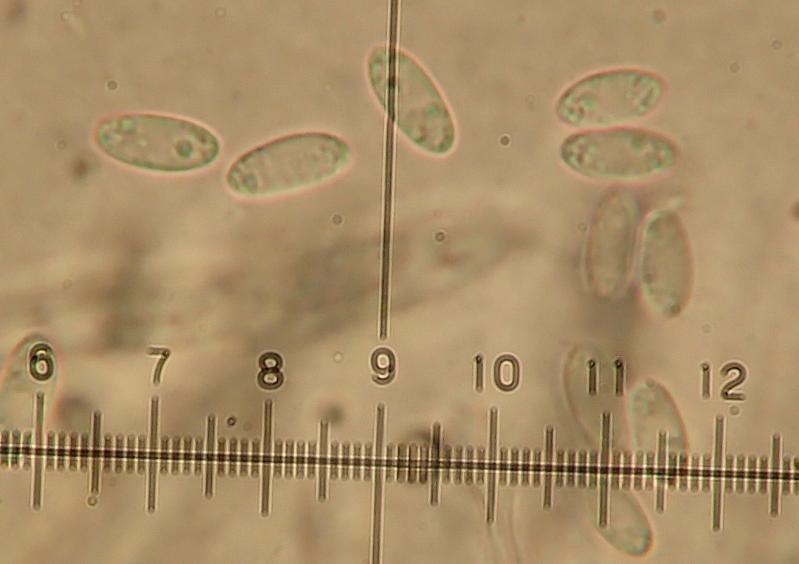
Spores 9,2-11 x 4-4,9 µm Q=2-2,3 N=30
Paraphyses filiformes
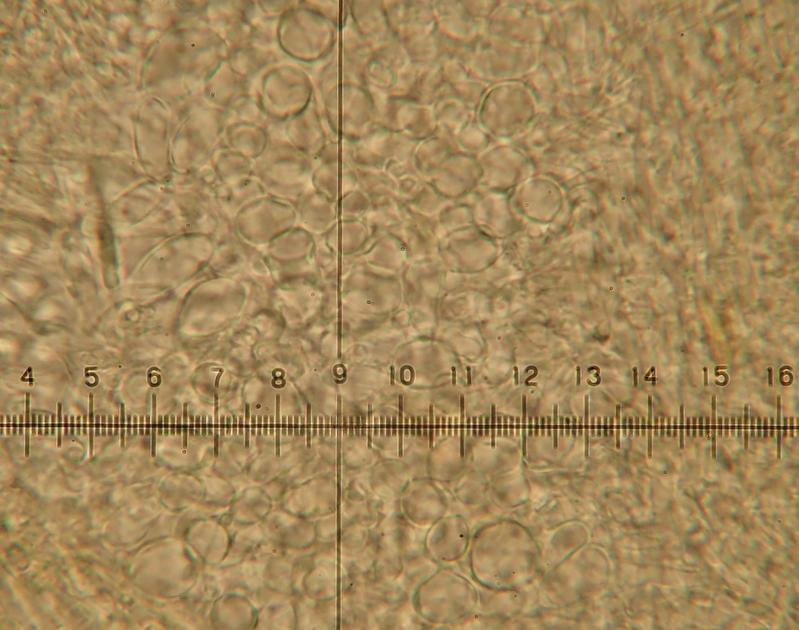
Textura globulosa
Thank's in advance.
Yannick
Hans-Otto Baral,
15-12-2024 21:06

Re : Phaeohelotium sp.
The apical ring does not look like Hymenoscyphus-type, but it should better be shown expanded in a dead ascus to show its shape.
Paraphyses are without VBs. The thin-walled excipulum of ellipsoid cells appears to exclude a Bisporella or Calycina.