
28-04-2026 20:33
Vitus SchäfftleinHello, I found Trochila ilicina on Ilex aquifoliu
28-04-2026 22:51
 Bernard CLESSE
Bonsoir à toutes et tous,Pourriez-vous m'aider à

28-04-2026 21:50
 Pablo Sandoval
Hola a todos,Espero se encuentren bien. Hace mucho
27-04-2026 18:05
 Lothar Krieglsteiner
... still attached at standing tree. The green con
28-04-2026 20:07
Lothar Krieglsteiner
... on twig in the air at standing Ceratonia siliq
27-04-2026 20:52
Lothar Krieglsteiner
Found on hanging tiwg of Olea europaea in dried-ou
27-04-2026 18:48
Tony MoverleyCollected 23rd April 2026, Norfolk, EnglandSwarms
27-04-2026 17:41
Lothar Krieglsteiner
.. Algarve, same leaf than the last post. The con
27-04-2026 17:16
Lothar Krieglsteiner
.. Algarve, moist lying.The conidiomata look like
 Good afternoon
Looking for Octospores / Lamprospores I found this on the island of Mallorca, among mosses. It turned out to be a lichen and someone suggested that it could be Sarcosagium campestre. With the little information I can find on the net microscopically it could fit with this species, but I see that nobody talks about the hairs on the margin, more than evident even macroscopically in my collection. Also macroscopically on the net I see a lot of diversity under the name S. campestre.
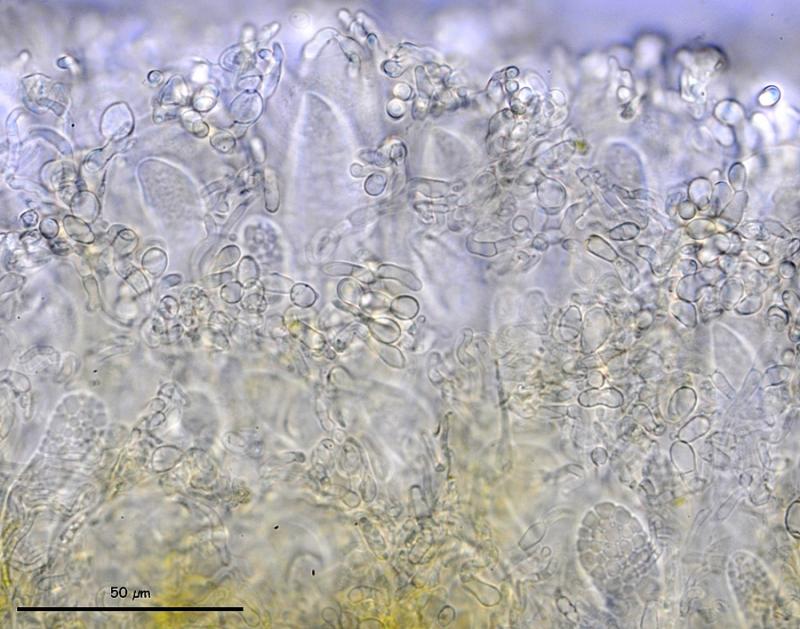
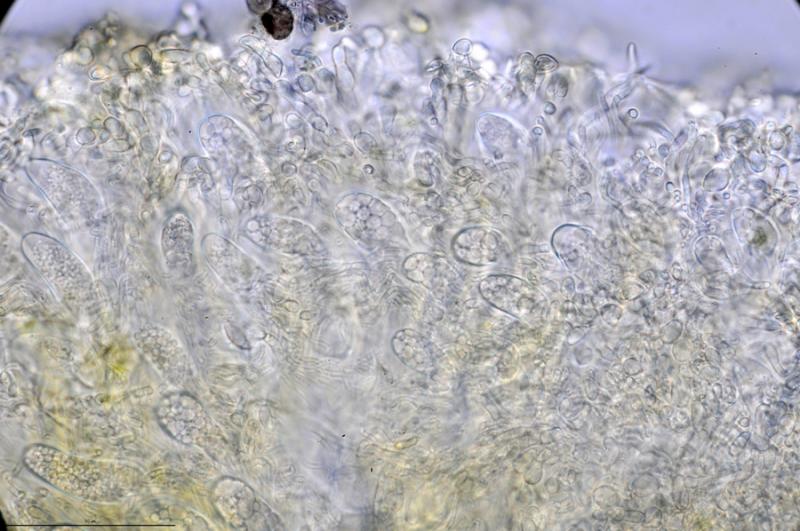
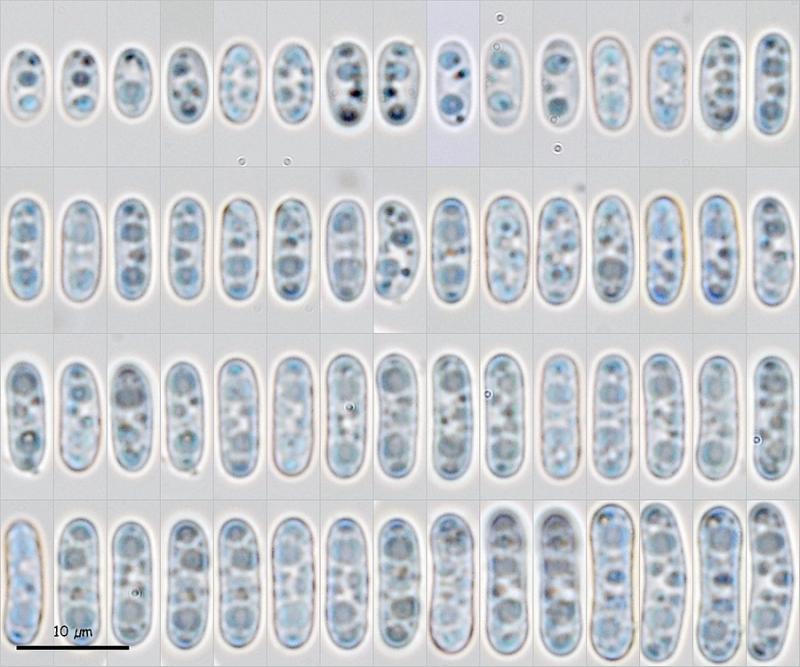
Claviform to fusiform asci with numerous ascospores inside, with a very intense bluish reaction to Melzer. Paraphyses multiseptate, strangulated at the septa and with thickened apical cell. Margin with textura angularis. Ascospores cylindrical, usually with 2 large LBs, very variable in size, (6.3) 7.4 - 11.7 (14.2) × (3.2) 3.3 - 3.8 (4.1) µm; Q = (1.8) 2 - 3.4 (4); N = 83; Me = 9.8 × 3.6 µm; Qe = 2.8.
Thank you very much for your help.
Miguel Ángel Ribes
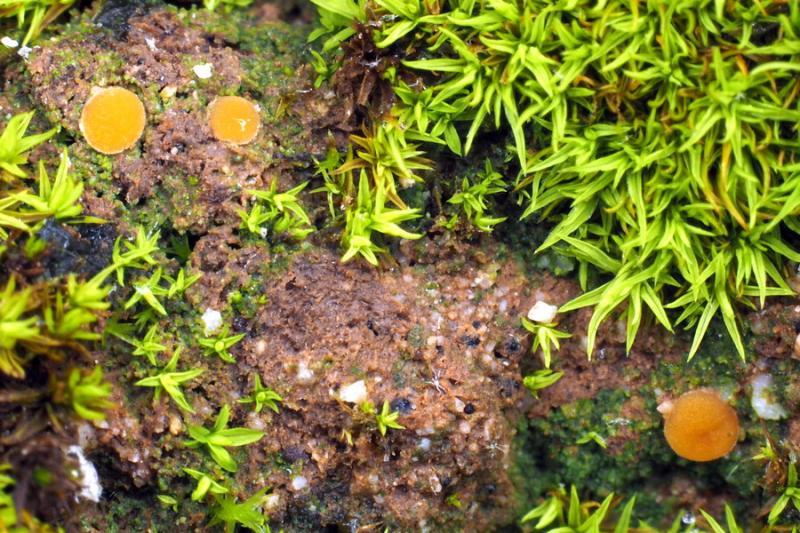
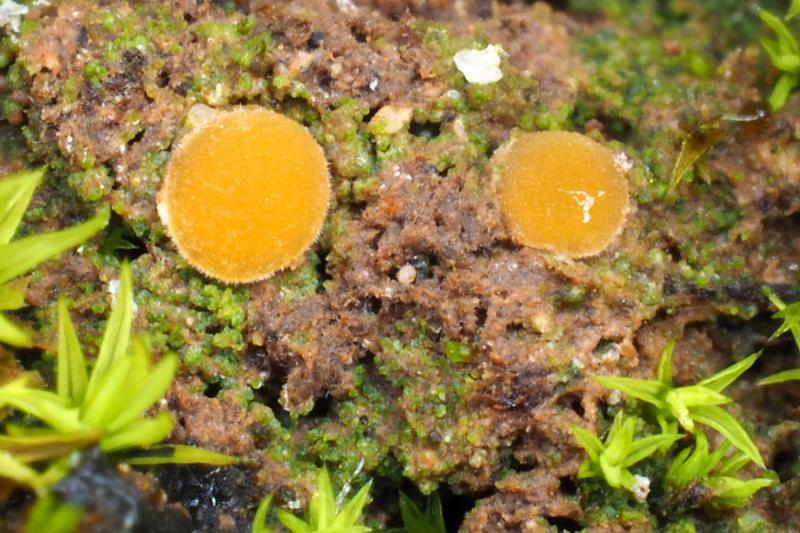
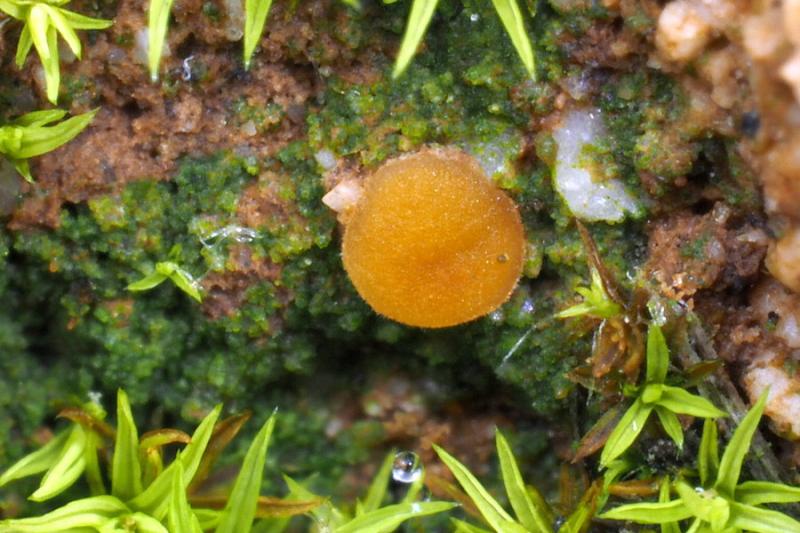
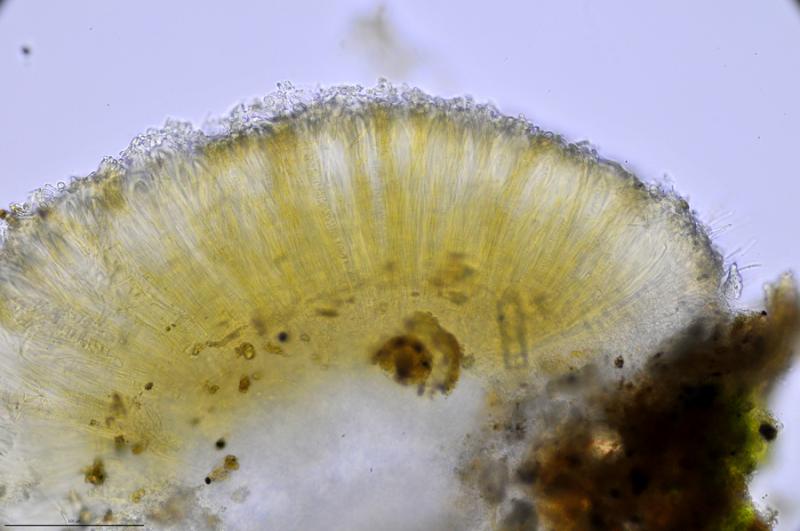
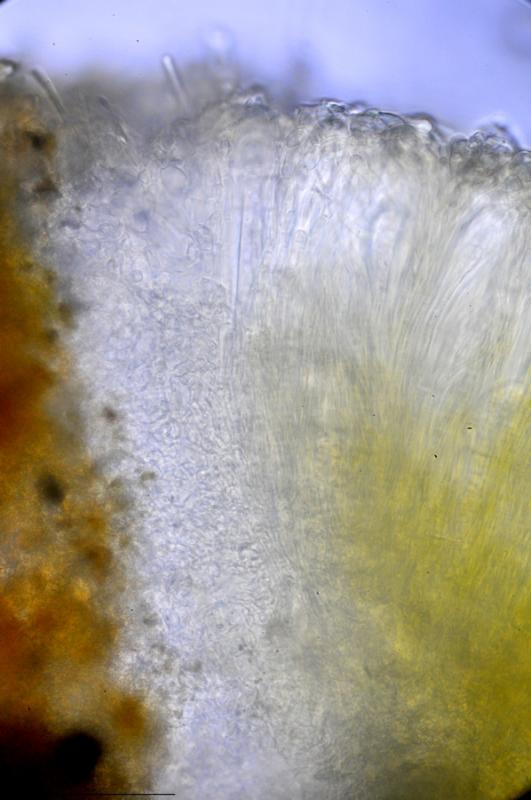
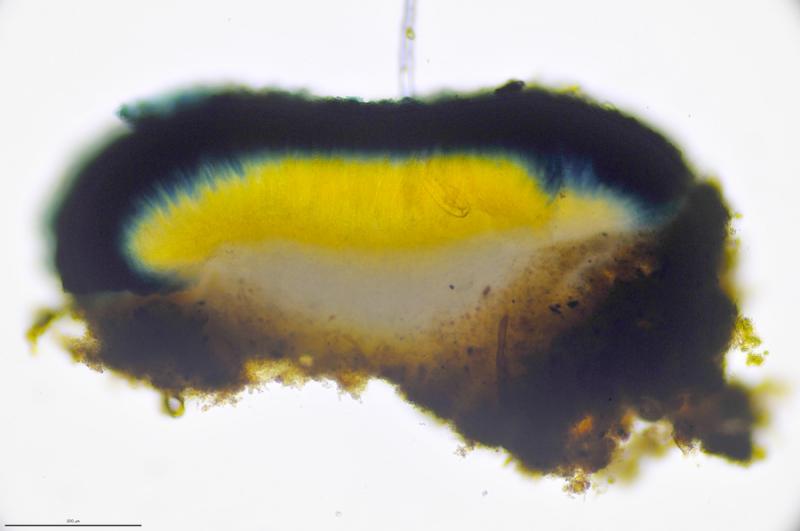
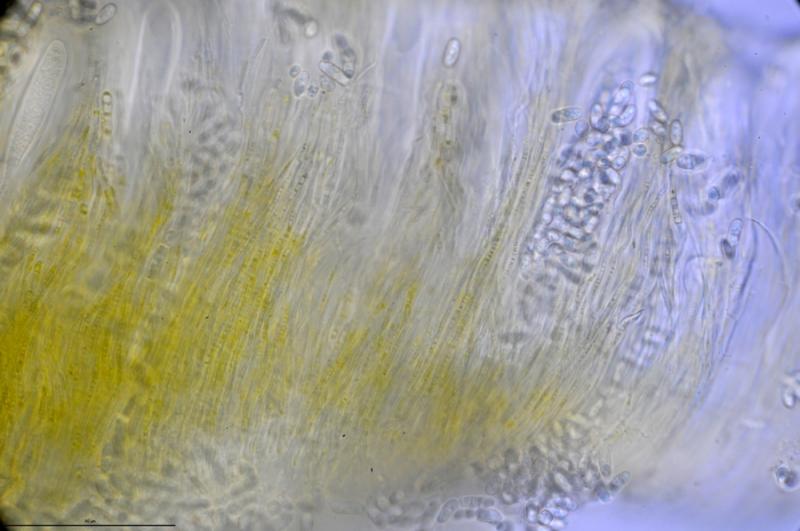
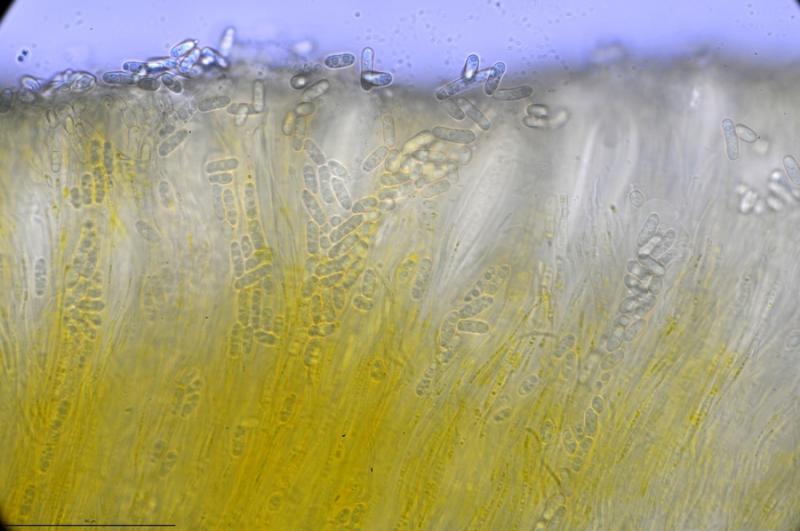
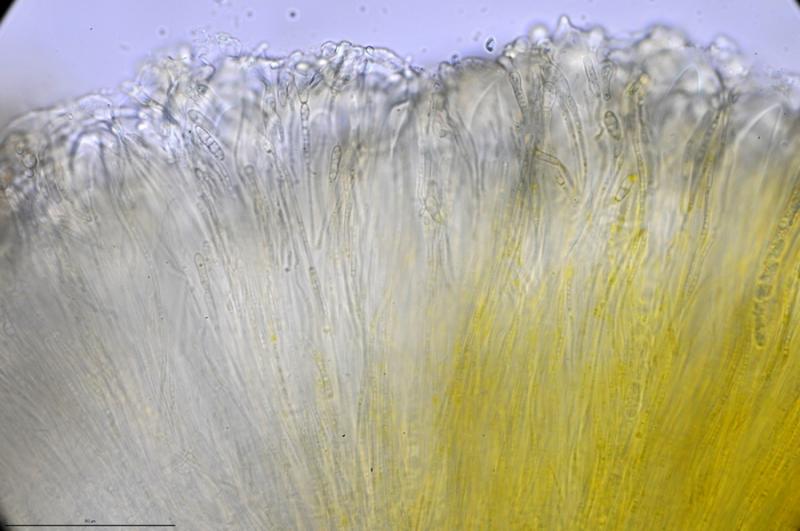
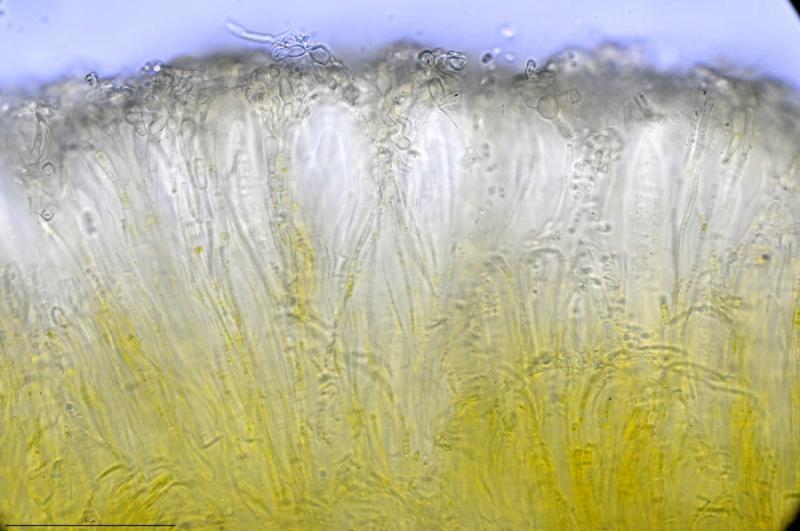
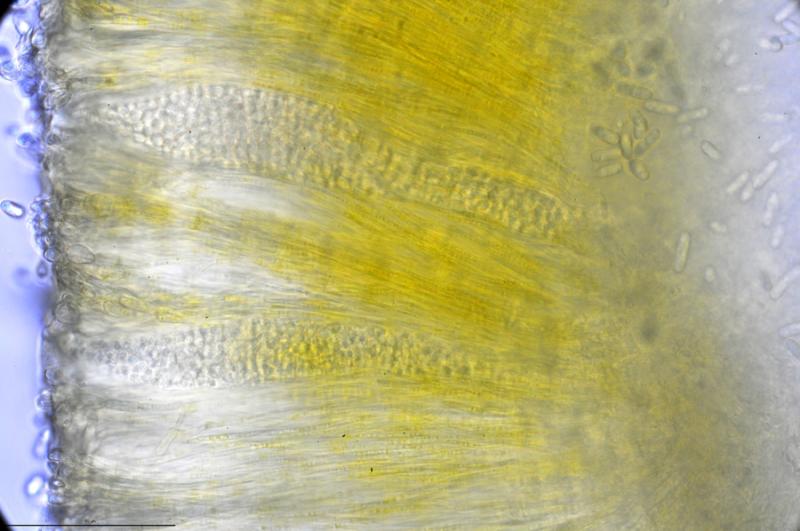
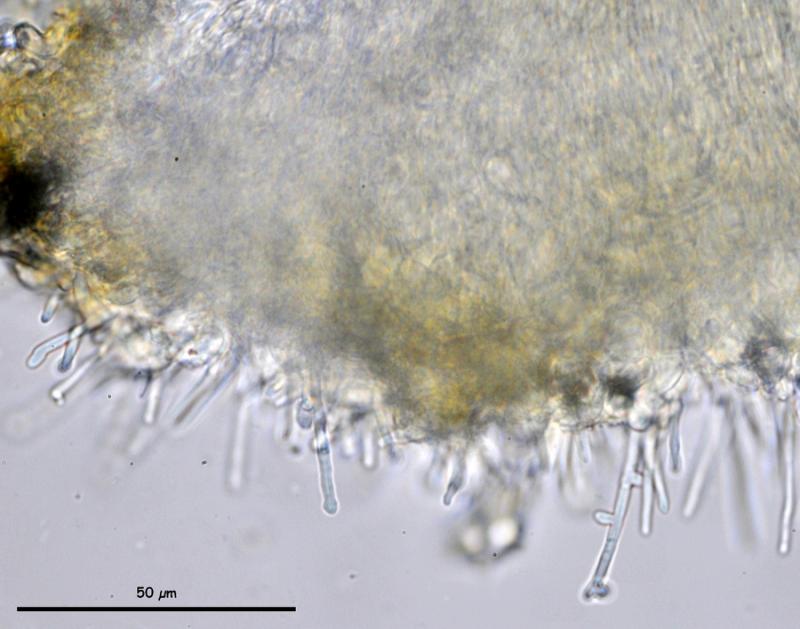


Apos size are 800-1000 microns.
One more unidentified.