27-04-2026 20:52
 Lothar Krieglsteiner
Found on hanging tiwg of Olea europaea in dried-ou
27-04-2026 18:48
Tony MoverleyCollected 23rd April 2026, Norfolk, EnglandSwarms
27-04-2026 17:41
Lothar Krieglsteiner
.. Algarve, same leaf than the last post. The con
27-04-2026 18:05
Lothar Krieglsteiner
... still attached at standing tree. The green con
27-04-2026 17:16
Lothar Krieglsteiner
.. Algarve, moist lying.The conidiomata look like
27-04-2026 12:54
Steve ClementsBonjour. Ce petit champignon blanc résupiné et
27-04-2026 09:59
Pauline. PennaBonjour Can anyone advise me on these pycnidia fo

22-04-2026 20:54
 Enrique Rubio
Hi to everybody.This Pyrenopeziza grew in moist le
 Dear collegues,
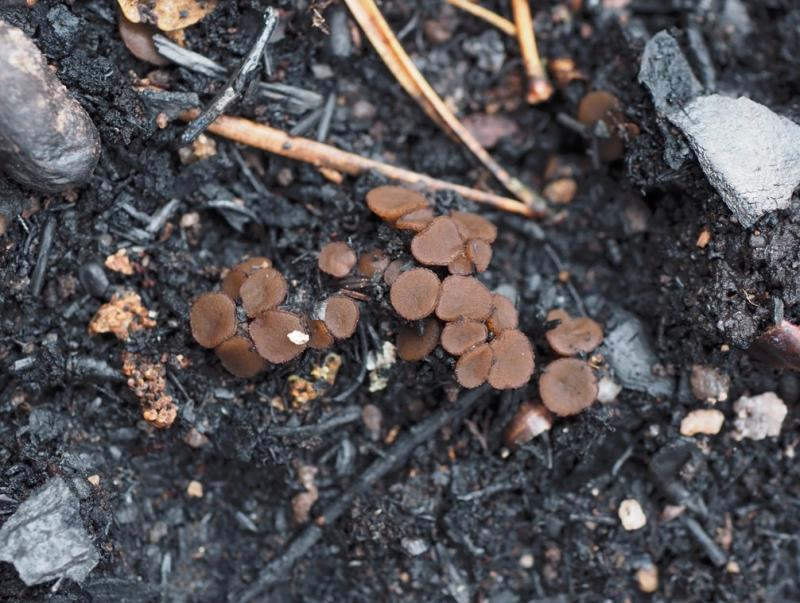
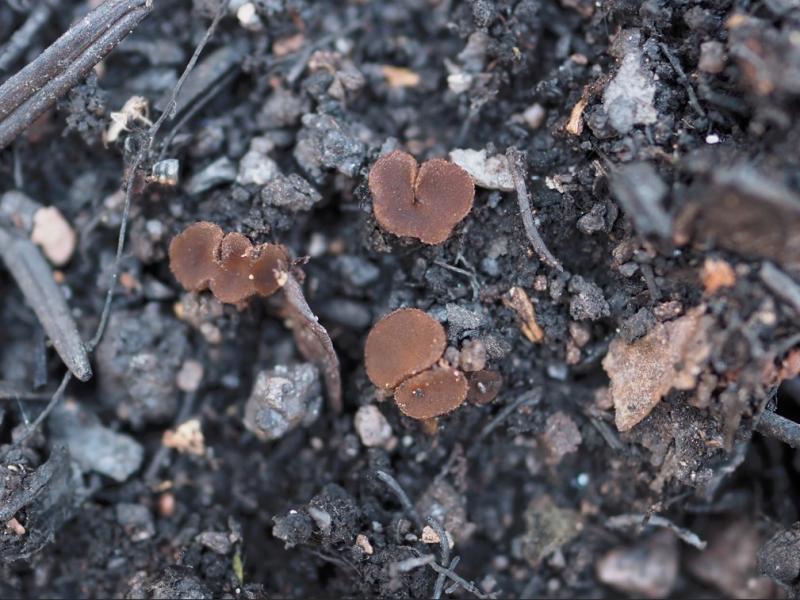
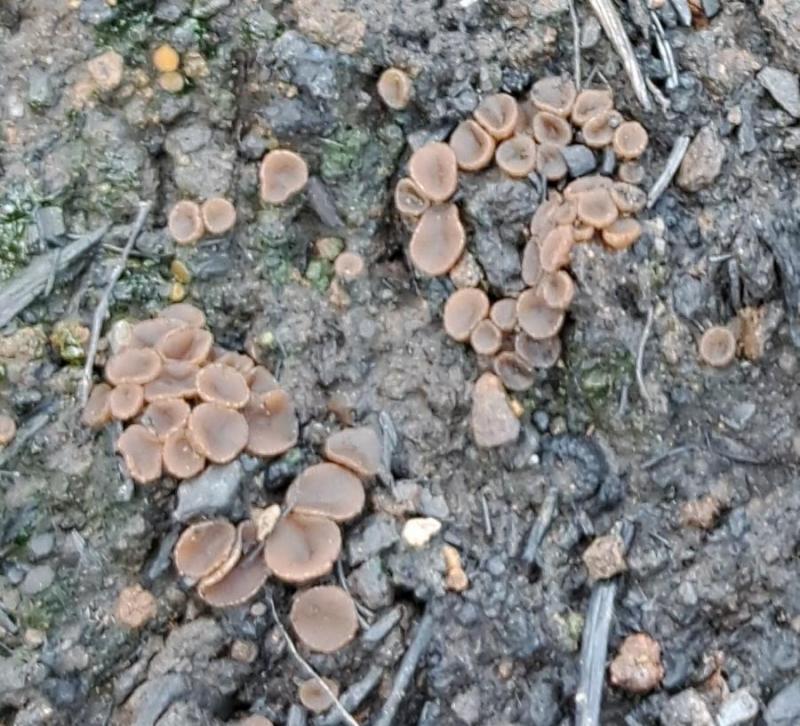
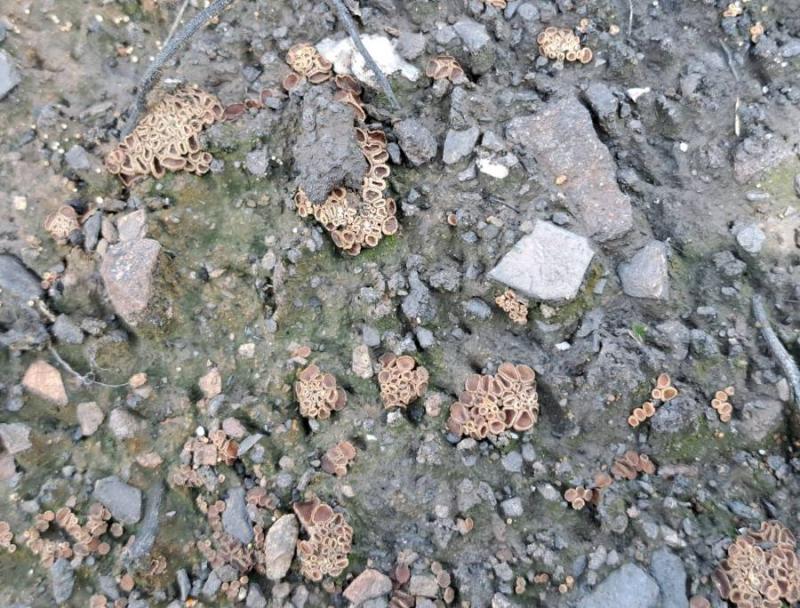
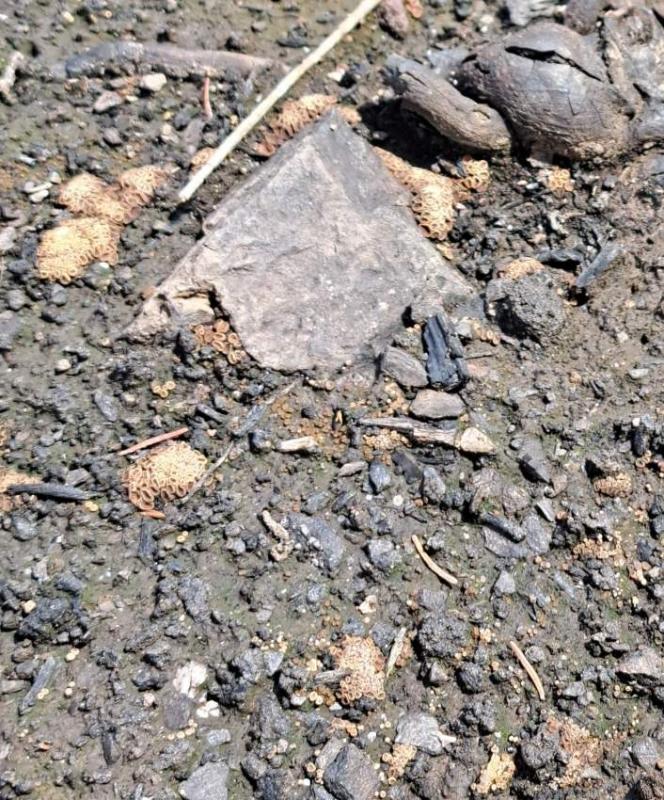
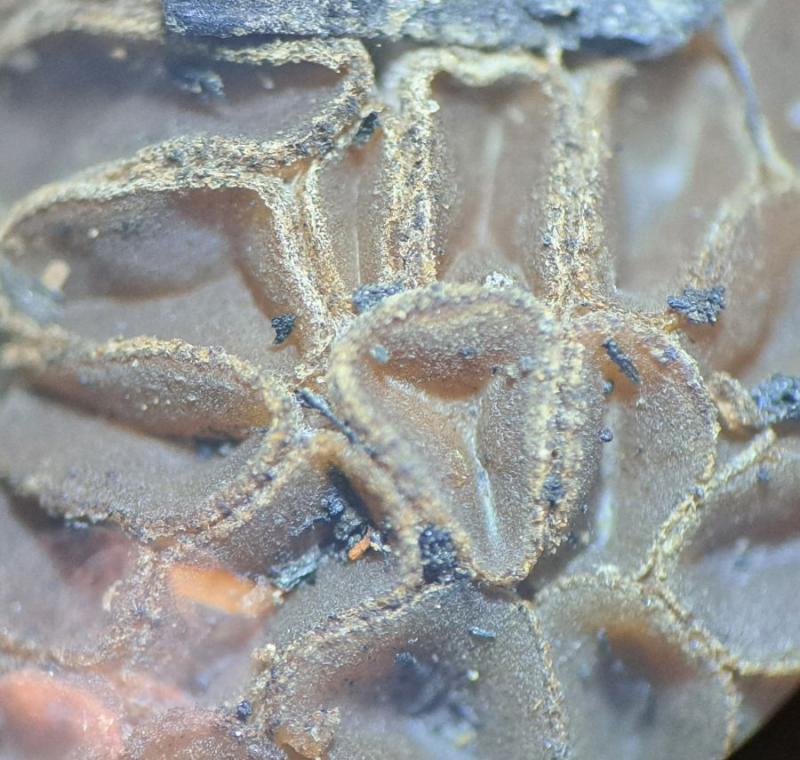
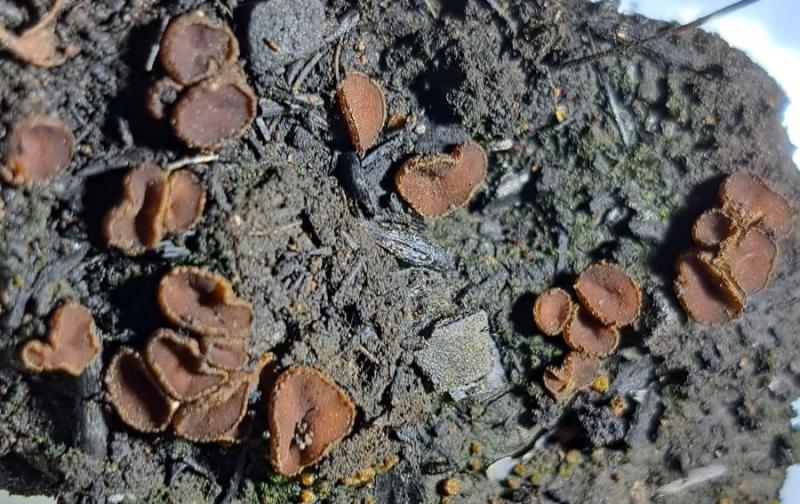
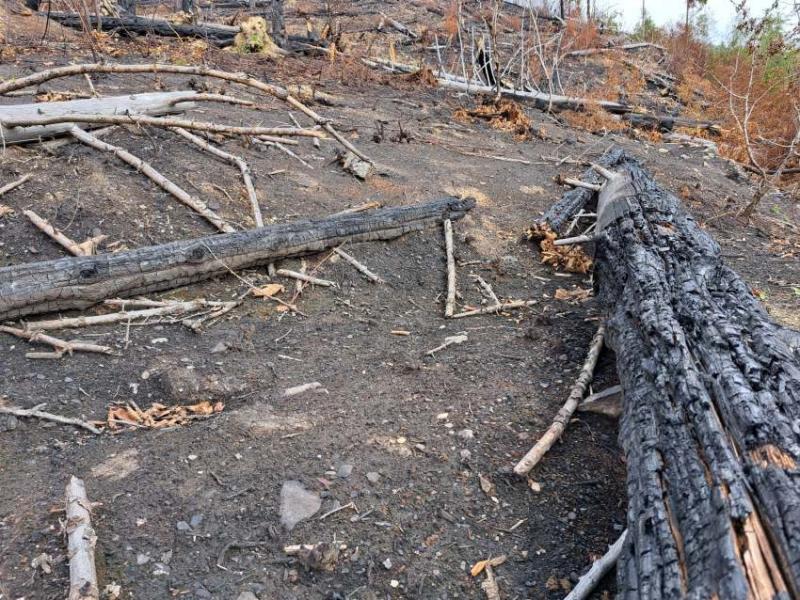
today I found on a very fresh fire place (forest fire, appr. 4 weeks ago) besides millions of Anthracobia macrocystis and A. tristes a dark brown discomycete grown in dense fascicels which I can not determine at all.
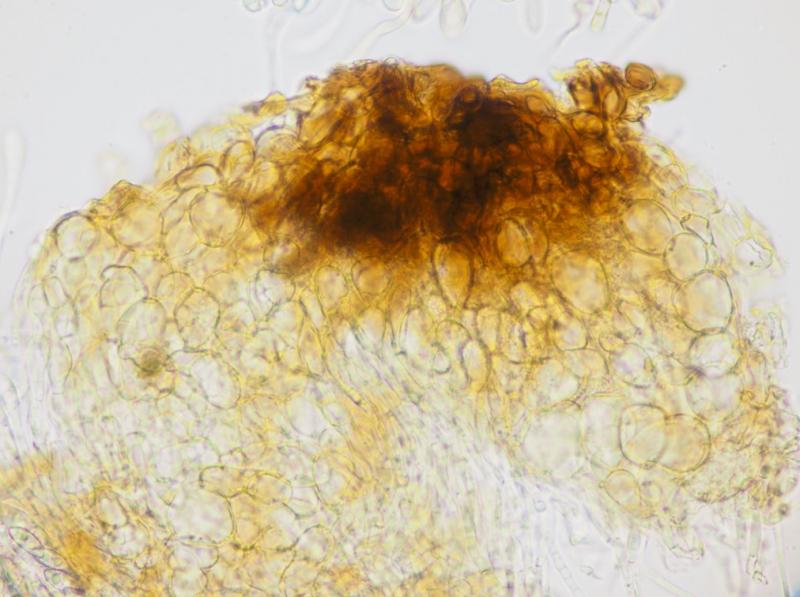
At first I thought it could be a Pseudombrophila, but it is not. The exterieur looked like beset with web-like s hairs, but it turned out to be a kind of resinous amorphous mass with only a few hyphoids between.
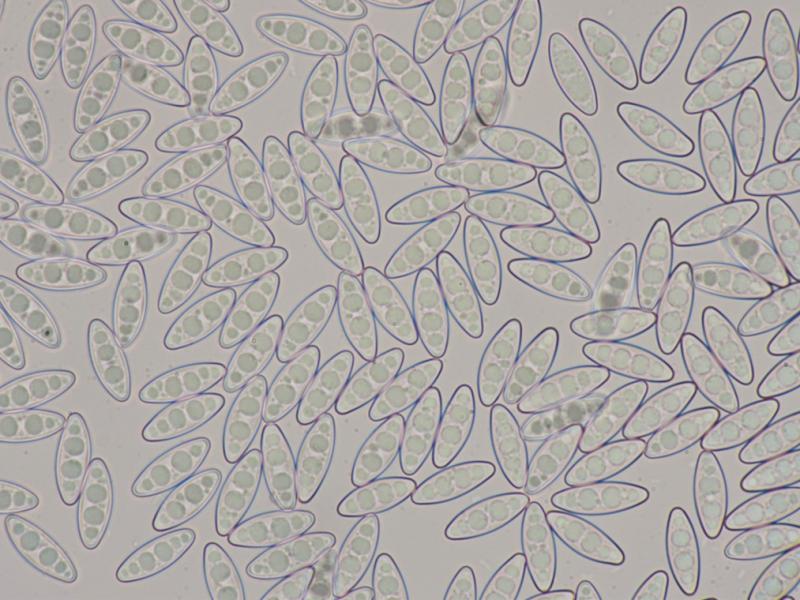
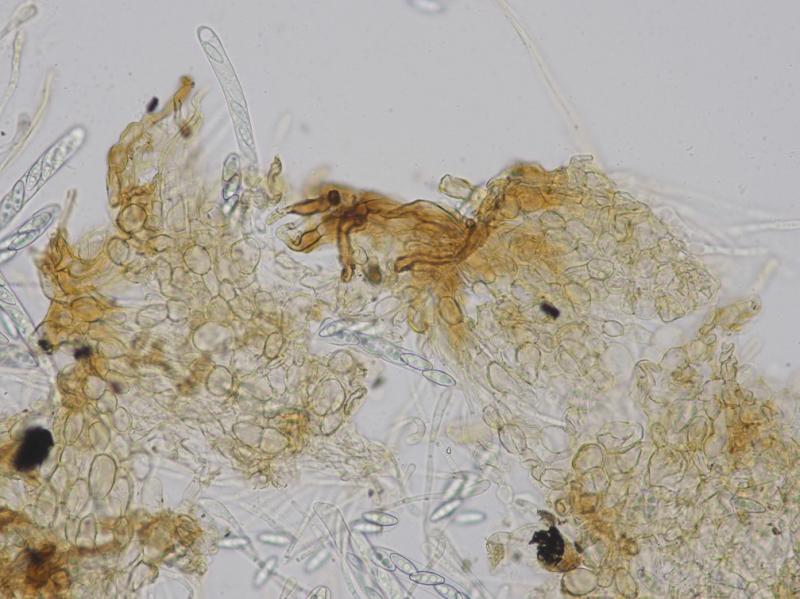
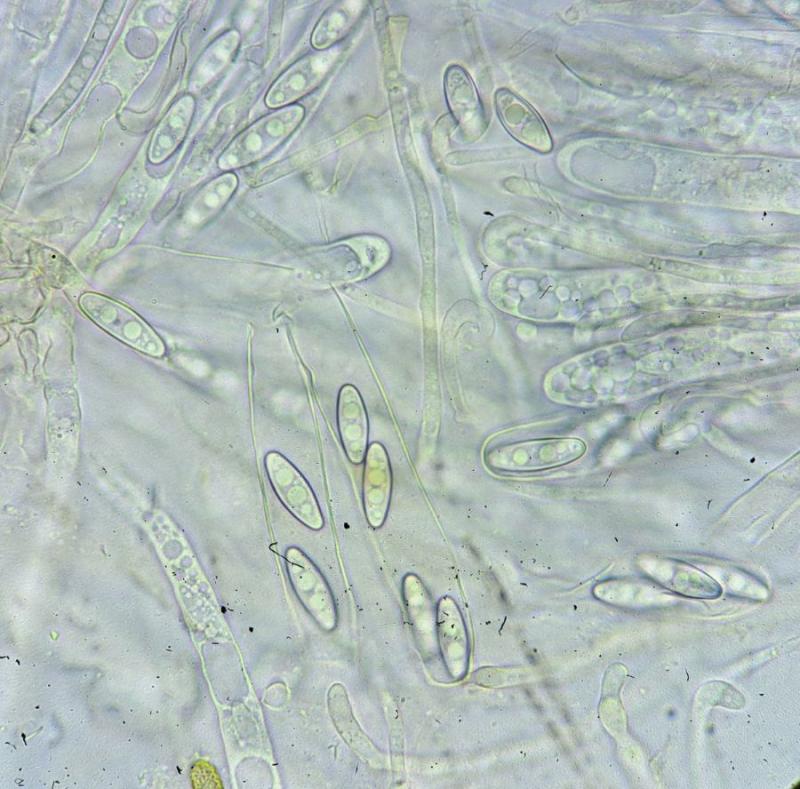
Spores are fusoid, multiguttulate, 16,5-18,5 x 6 µm.
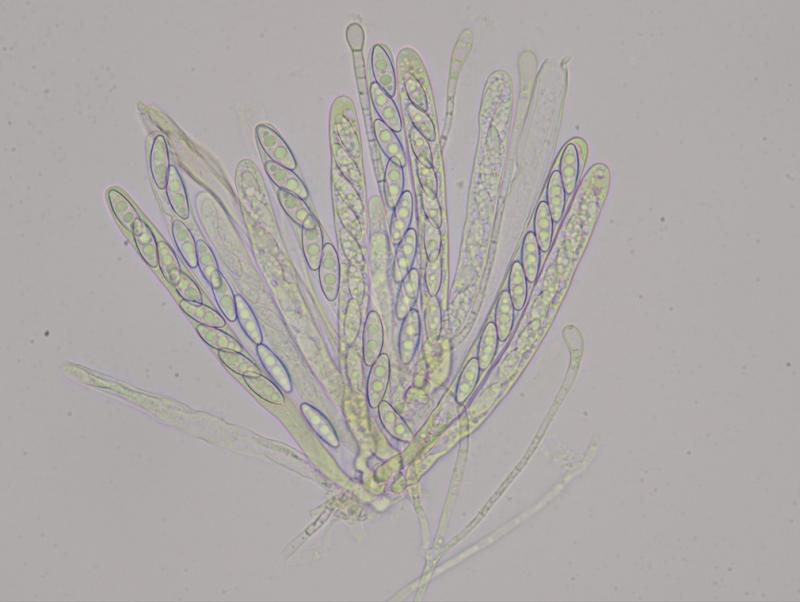
Paraphyses only slightly enlarged at the tip, often somewhat bent, but also sometimes +/- straight, no carotinoids and no guttules at all, but they seem to contain a vacuolar pigment and probably additionally some faint incrustations at the upper part, not branched.
Asci eight-spored, quite short, appr. 135 x 10 µm.
The species is growing in dense fascicules as well as gregarious or even scattered.
I was thinking of Paranthracobia rhemii, but the spores are far to small. On the other hand there is an "Anthracobia pseudorehmii ad int." annotated by Nicolas van Vooren in the Anthracobia-key of Hohmeyer & Schnackertz (doi: 10.25664/KEY-0005). This one would suite quite well, butz may be I'm complete in a wrong genus with my fungus ....
Thank you for any hints,
Andreas
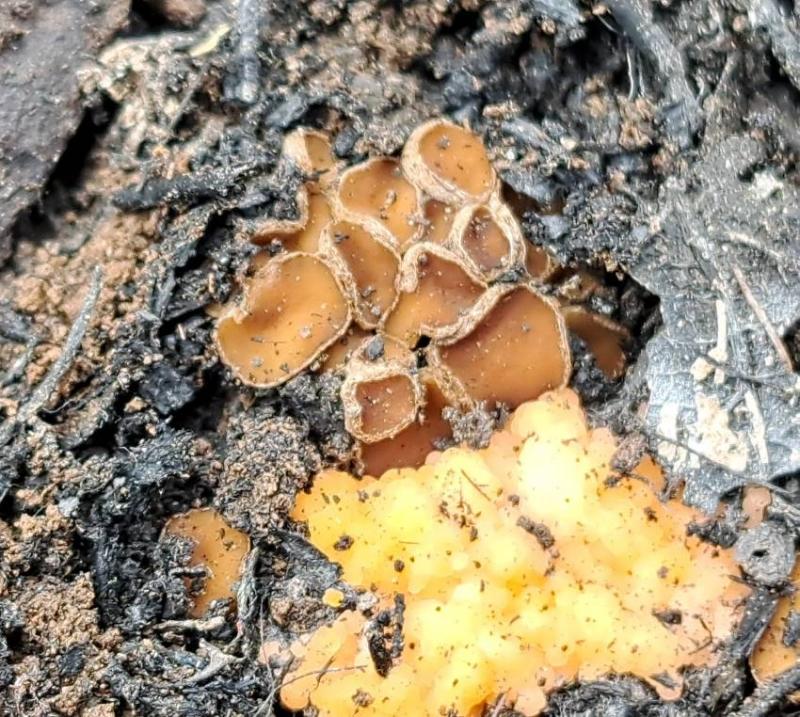
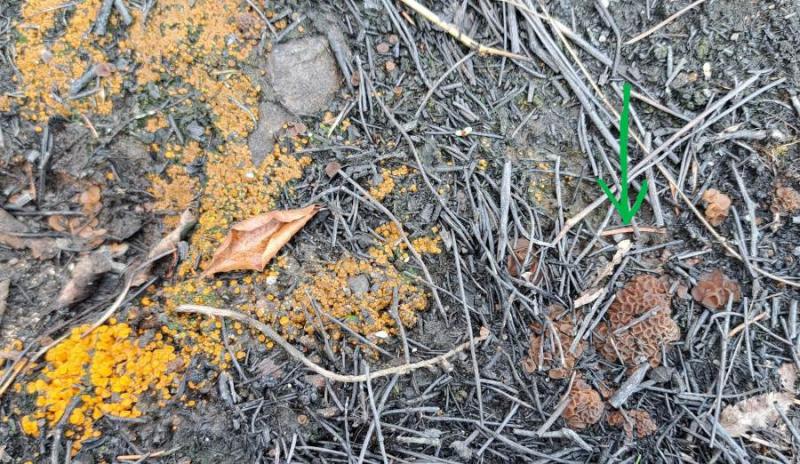

I'm working with Alexander Karich (I suppose you know him) on a revision of Anthracobia spp. Your collection of A. macrocystis is interesting for this study, because this is probably the rarest species in this genus, and we lack molecular data. So if you can send a part to me, this would be cool.
About the another species, so called "A. pseudorehmii", Alexander also found it during his survey in German burnt sites. And this is not an Anthracobia. The preliminary results place it in the genus Warcupia! I suspect also Anthracobia uncinata to belong to the same genus.
Of course, a molecular confirmation should be welcome and we can do it in the course of our study.
You can contact me if need more details.
Best.
Nicolas

Edit: what differs compared to Andreas‘ specimens is that the ascocarps have a darker brown outside compared to the hymenium- could this be because they were wet? Or this is something else..