
27-04-2026 20:52
 Lothar Krieglsteiner
Found on hanging tiwg of Olea europaea in dried-ou
27-04-2026 18:48
Tony MoverleyCollected 23rd April 2026, Norfolk, EnglandSwarms
27-04-2026 17:41
Lothar Krieglsteiner
.. Algarve, same leaf than the last post. The con
27-04-2026 18:05
Lothar Krieglsteiner
... still attached at standing tree. The green con
27-04-2026 17:16
Lothar Krieglsteiner
.. Algarve, moist lying.The conidiomata look like
27-04-2026 12:54
Steve ClementsBonjour. Ce petit champignon blanc résupiné et
27-04-2026 09:59
Pauline. PennaBonjour Can anyone advise me on these pycnidia fo

22-04-2026 20:54
 Enrique Rubio
Hi to everybody.This Pyrenopeziza grew in moist le
Leptosphaeria?
Josep Torres,
04-11-2025 14:53
 Hello.
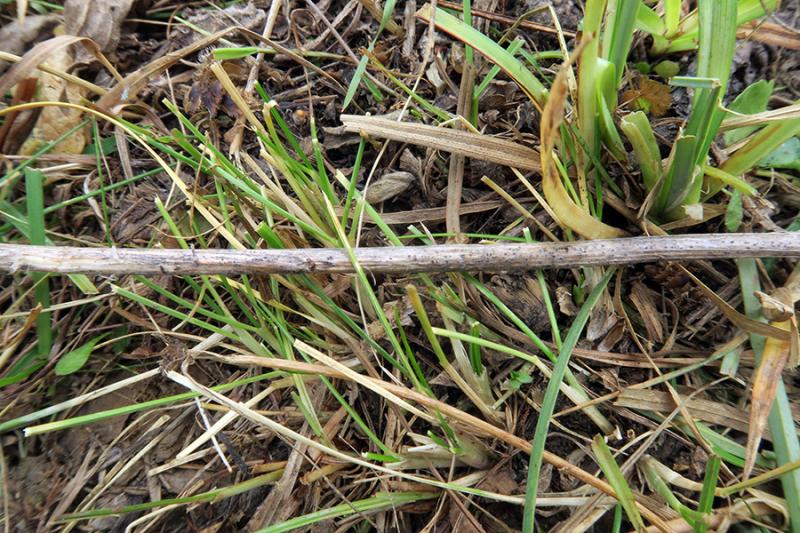
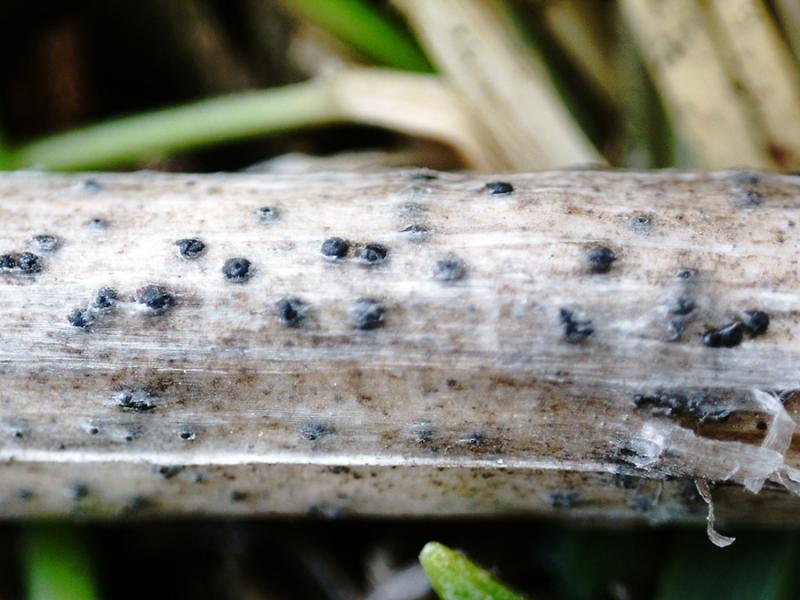
Very small, globose, mucronate perithecia, blackish in color and very uniform in size, between 0.25 and 0.30 mm in diameter, sprouting sporadically from a dry herbaceous stem still attached to the plant.
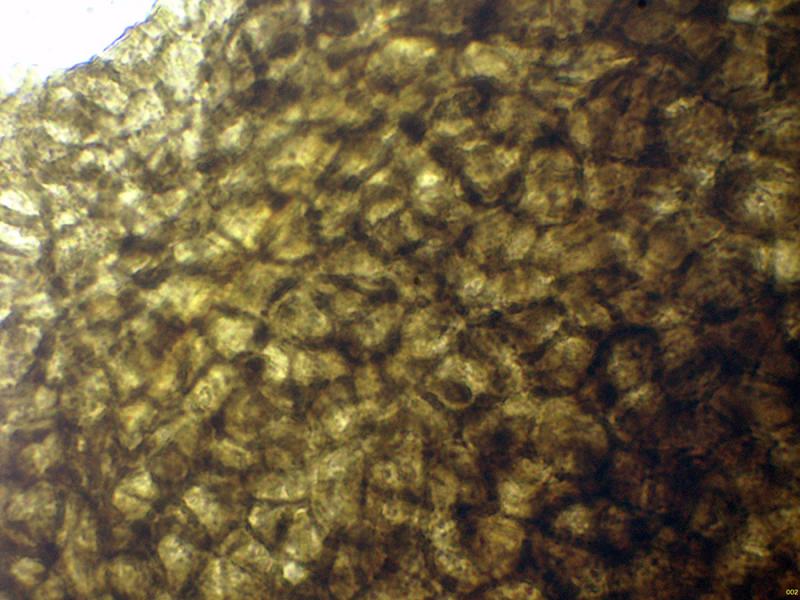
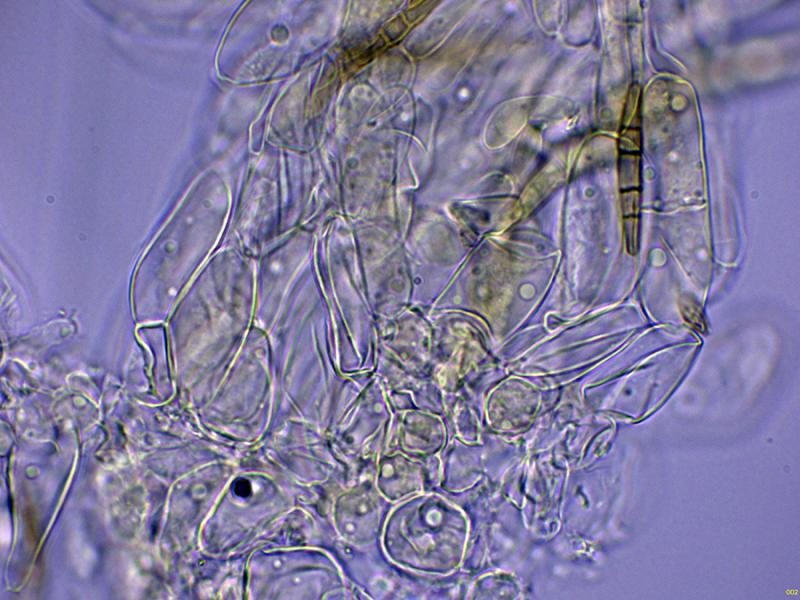
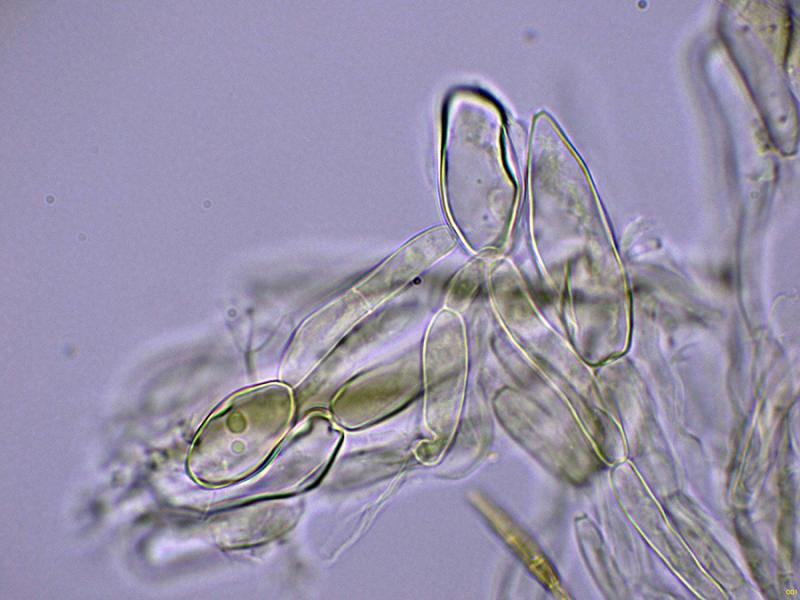
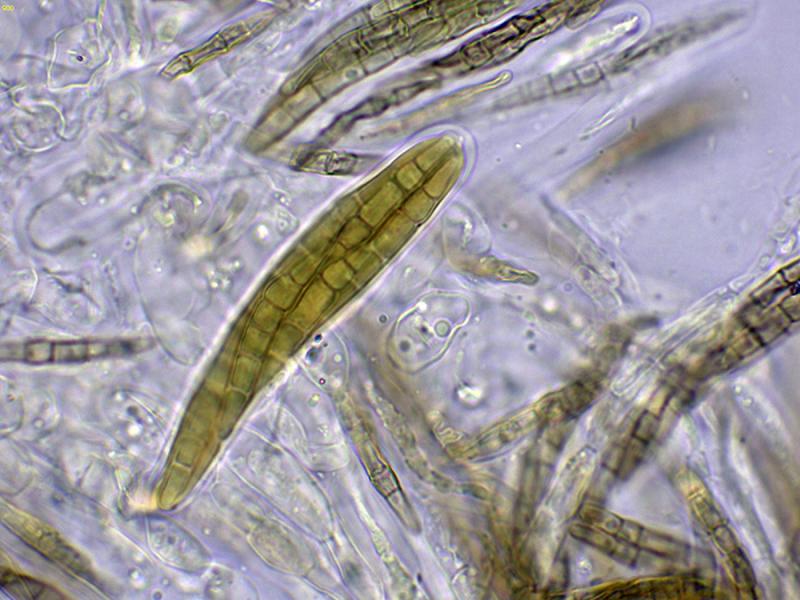
Hyphae of the perithecium wall, globose angular in texture, with an intracellular brown pigment.
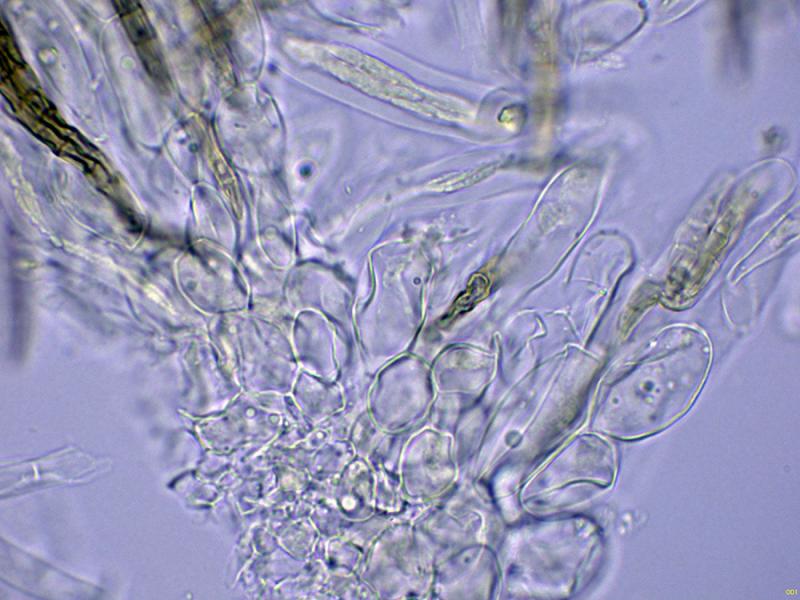
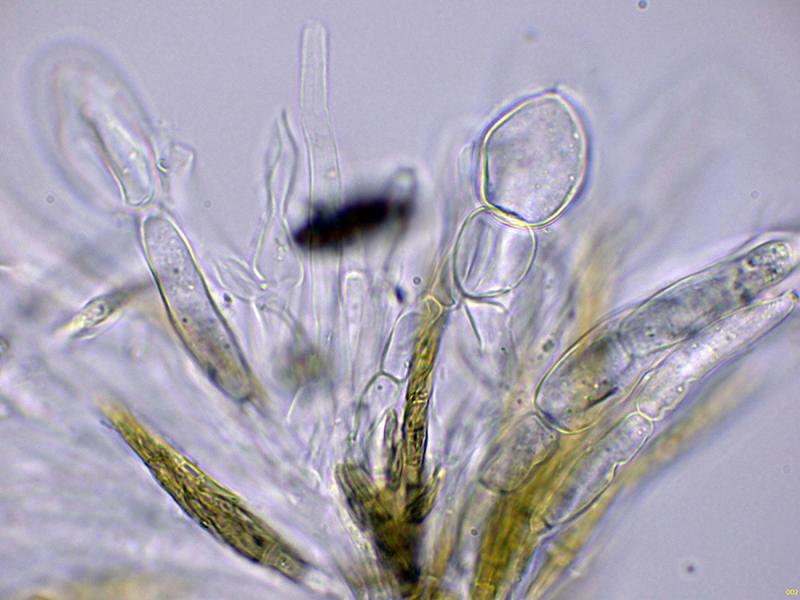
Hyphae of the excipulum globose and hyaline, from which arise paraphyses with swellings and short septa.
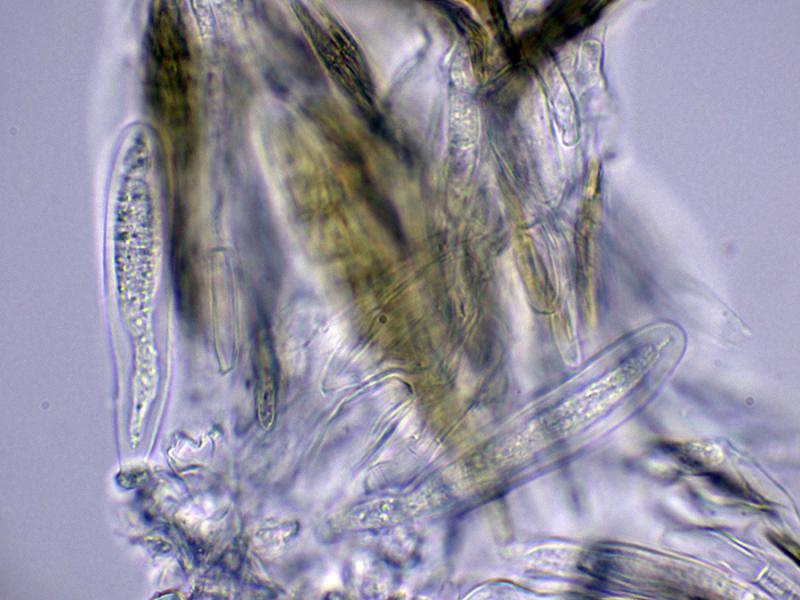
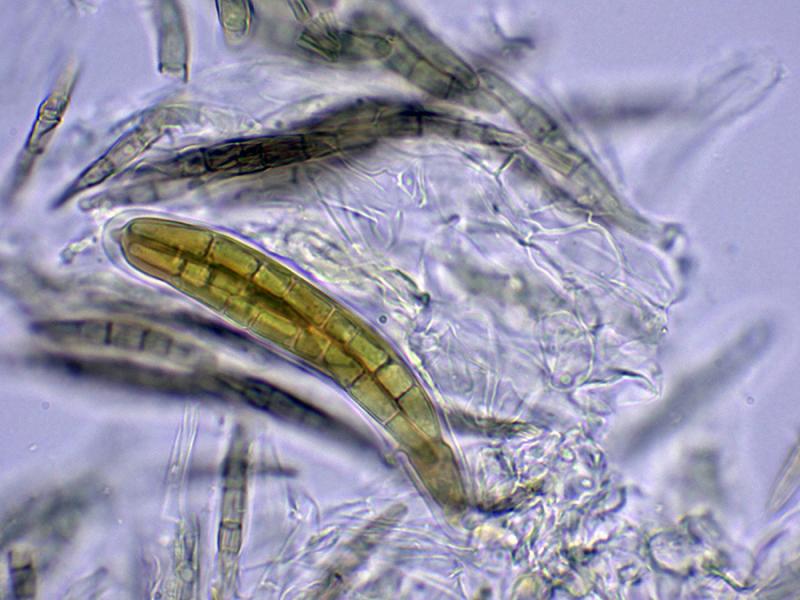
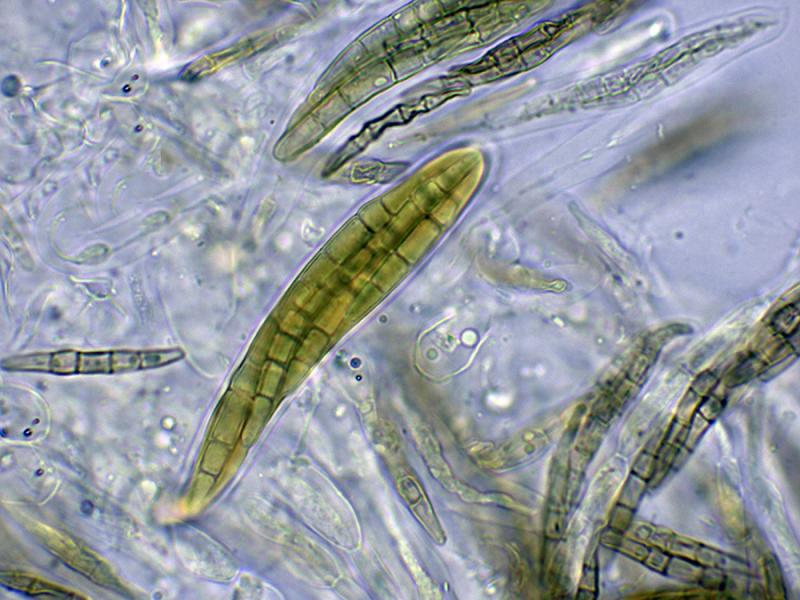
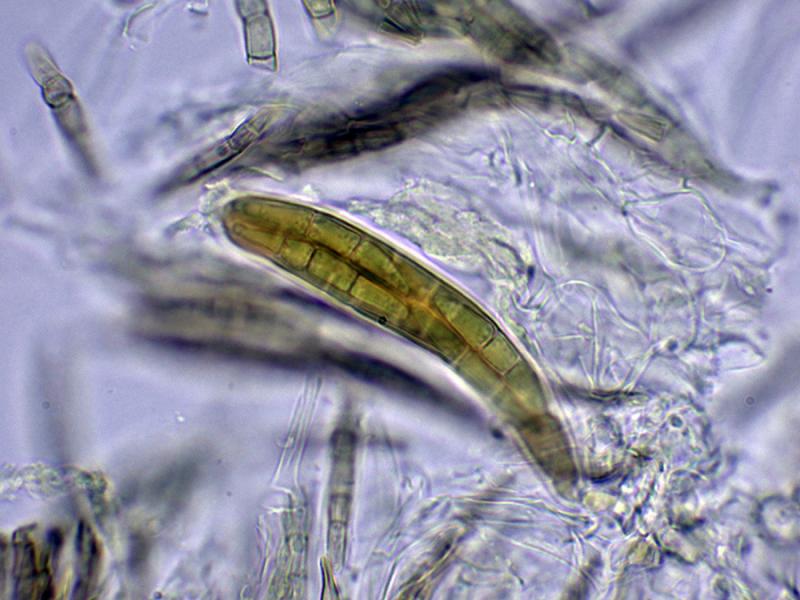
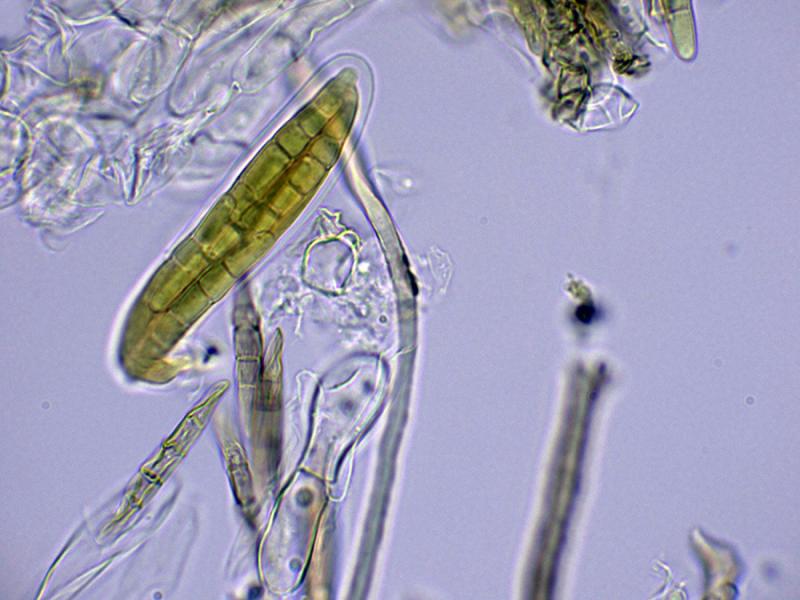
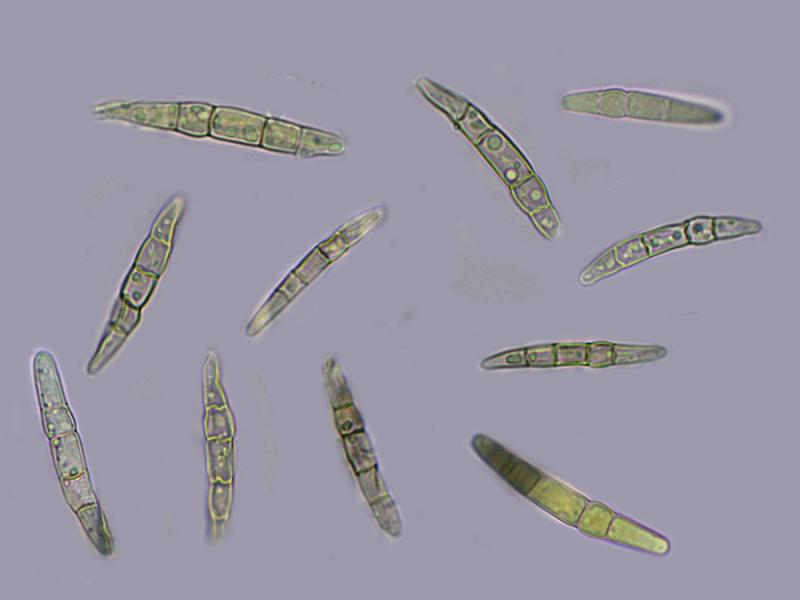
Asci apparently eight-spored, with no reaction to Melzer's reagent in their apical apparatus. Fusiform, hyaline ascospores with 2 to 4 septa, no reaction with Melzer's reagent, and with the following measurements of free spores:
(28.9) 30.4 - 42.4 (43) × (3.9) 4.5 - 6.3 (6.7) µm
Q = (5.3) 6 - 7.4 (8.5) ; N = 12
Me = 35.8 × 5.4 µm ; Qe = 6.7
Based on the microscopic data obtained, the closest match I know would be Ophiobolus sp., but I admit I'm not entirely sure.
Any suggestions would be greatly appreciated.
Thank you in advance.
Best regards.
Josep Torres,
06-11-2025 09:25
Re : Leptosphaeria?
Hello.
It seems the issue isn't with Ophiobolus, and it's most likely a Leptosphaeria, perhaps even, but only perhaps, Leptosphaeria maculans, something I can't confirm since the ascomata were already in poor condition.
http://www.ascofrance.com/search_recolte/3097
I'll edit the post.
Best regards.
It seems the issue isn't with Ophiobolus, and it's most likely a Leptosphaeria, perhaps even, but only perhaps, Leptosphaeria maculans, something I can't confirm since the ascomata were already in poor condition.
http://www.ascofrance.com/search_recolte/3097
I'll edit the post.
Best regards.
Mathias Hass,
08-11-2025 12:20

Re : Leptosphaeria?
Hi Josep,
I doubt its L. maculans, which should have 5-septate spores at least when fully developed and the firstformed septum (the one with the strongest constriction) should be the 3rd septum fom the top in the fully formed spore, and in you spores it seems to be the second septum. Finaly your sporemeasures are on the short side for L. maculans. If genuinely 4-septate that would narrow possibilities down (althoug there seems to be one 5-septate spore in one of your asci, could be an exception). Nodulosphaeria modesta might be a possibilty, but probably more fresh material is needed.
Kind regards Mathias
Josep Torres,
08-11-2025 15:42
Re : Leptosphaeria?
Thanks Mathias, you're right. I'll try to get more fresh specimens. For now, I'll leave this study as Nodulosphaeria cf. modesta = Leptosphaeria cf. modesta.
Best regards