
28-07-2011 18:31
 Alex Akulov
Dear FriendsToday I made the pdf file of Velenovsk
28-04-2026 20:07
 Lothar Krieglsteiner
... on twig in the air at standing Ceratonia siliq
04-05-2026 18:13
 Stephen Martin Mifsud
ID request for what seems to be a true aquatic fun
04-05-2026 16:39
Stephen Martin Mifsud
ID request: This specimen was collected in Malta o
04-05-2026 09:50
 Castillo Joseba
Me mandan el material seco de Galicia,(España) re
02-05-2026 12:42
Alain BRISSARDBonjour à tousJeuidi 30 avril dernier on m'a remi
02-05-2026 13:06
Pauline. PennaBonjour Please can someone help me with this id
01-05-2026 22:45
 Thierry Blondelle
Bonjour à tous, Une récolte sur bouse séchée d
14-04-2026 05:32
Ethan CrensonHi all, A few weeks back a friend pointed out som
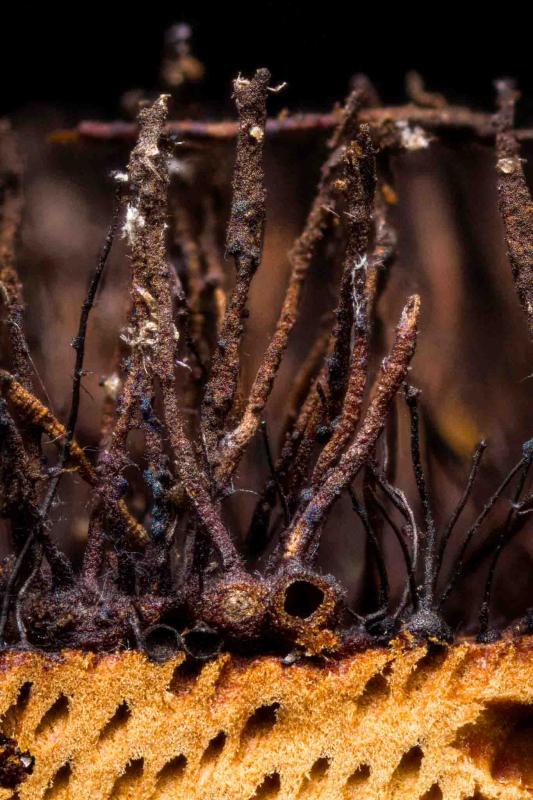
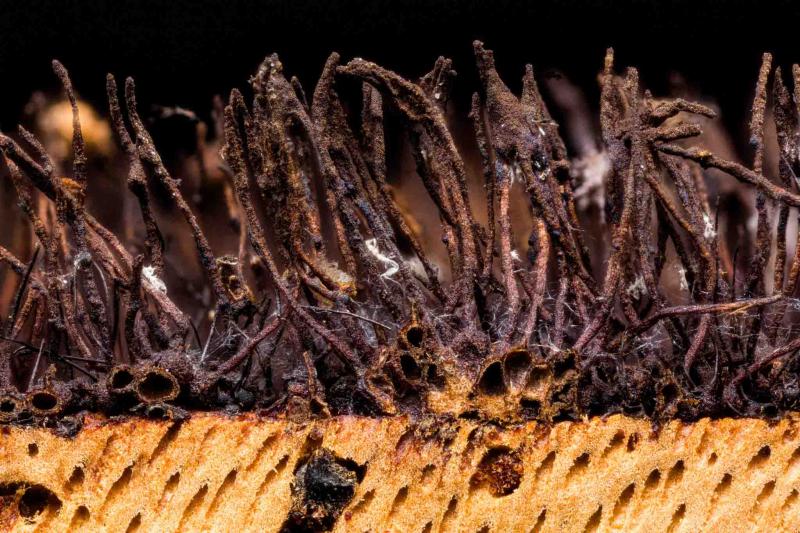
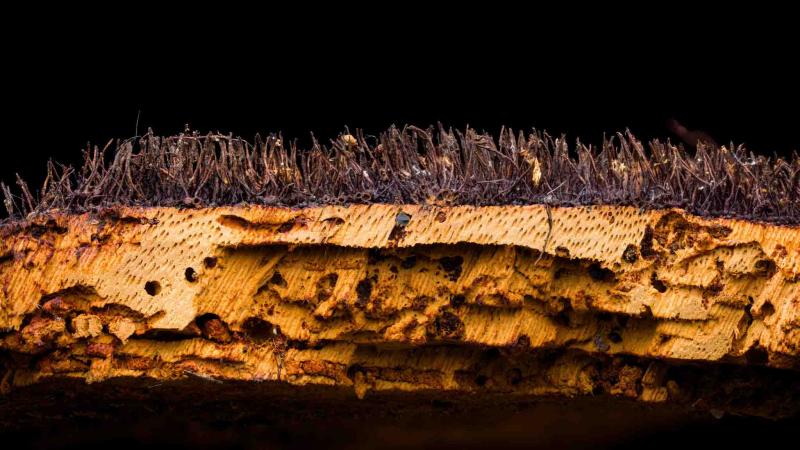
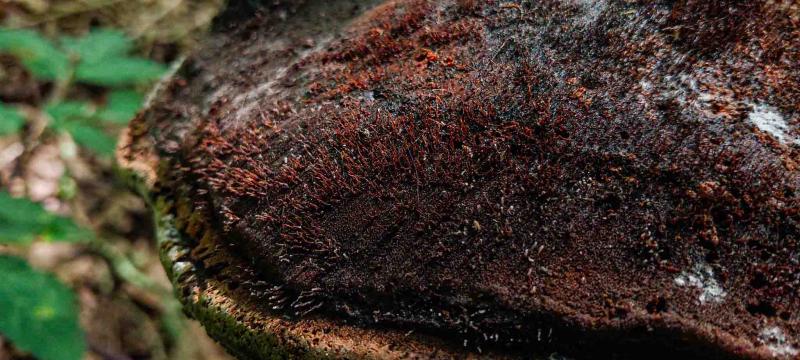
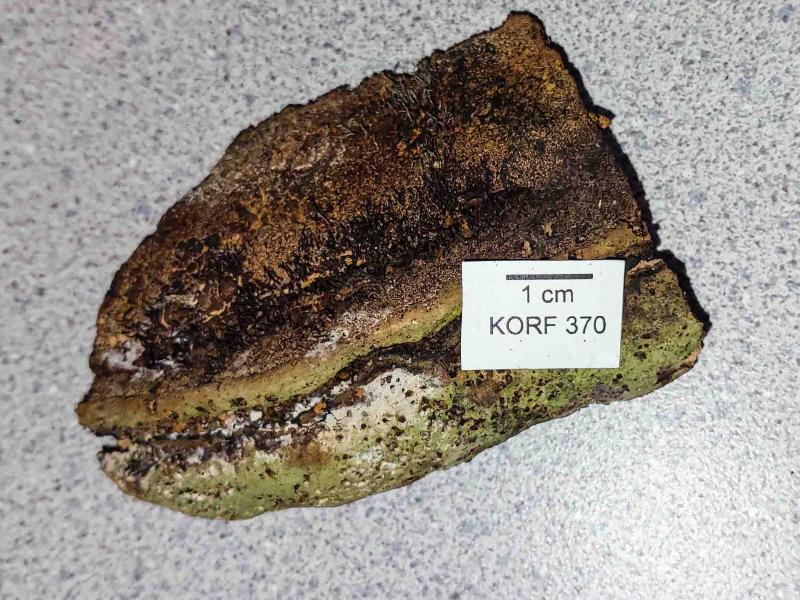
Melanospora cf. lagenaria on decaying polypore
Danny Newman,
15-12-2025 15:48
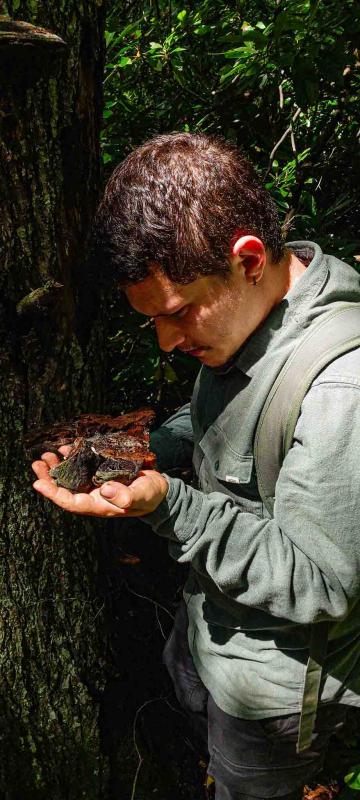
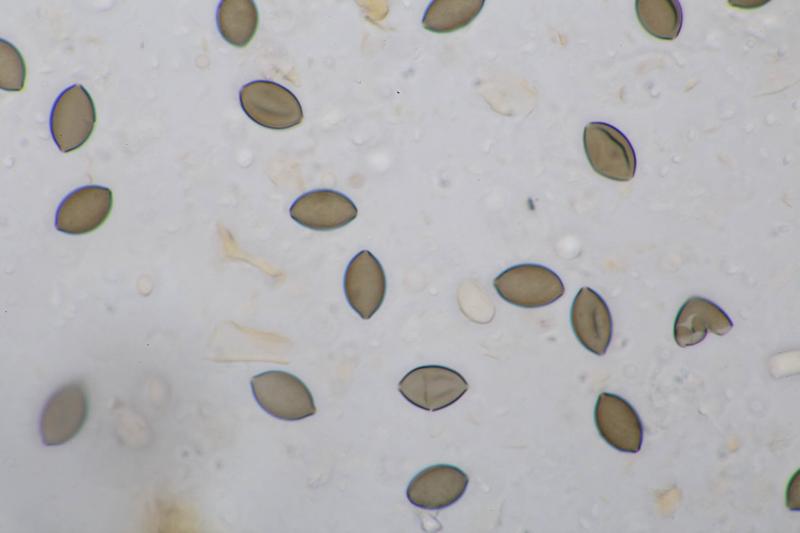
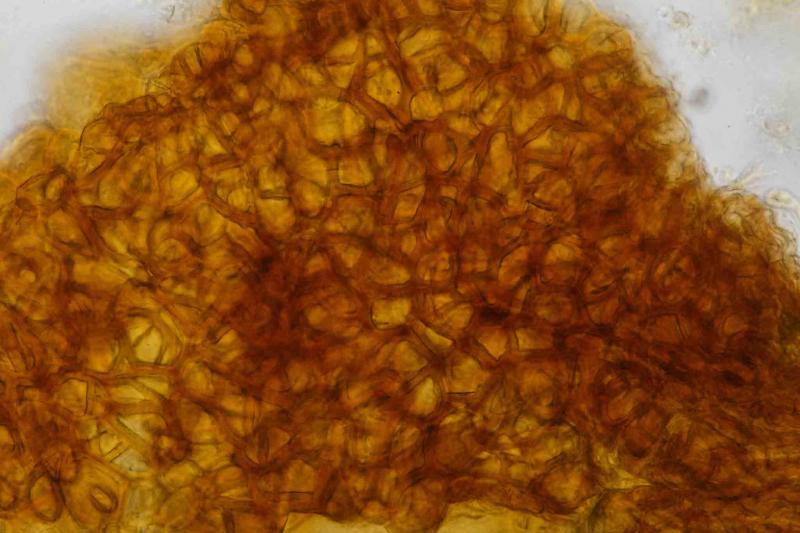
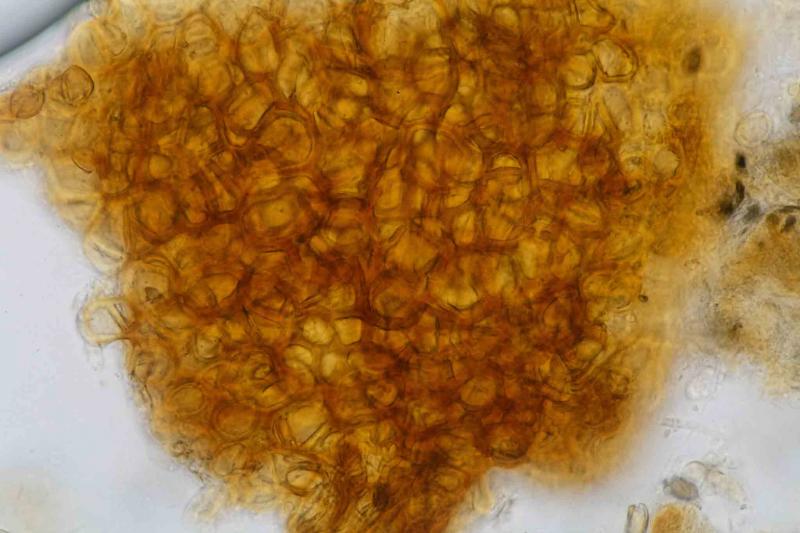
 Melanospora cf. lagenaria on old, rotting, fallen and still attached FBs of conk (possibly Fomes sp.)
near Purchase Road, Appalachian Highlands Science Learning Center, Great Smoky Mountains National Park, Haywood County, North Carolina, USA
https://www.inaturalist.org/observations/305939943
Collected during the 2025 Richard P. Korf Memorial North American Ascomycete Foray (aka "The Korf Foray), held at the Appalachian Highlands Science Learning Center in Purchase Knob, North Carolina.
no sequences available
photo credits: Danny Newman
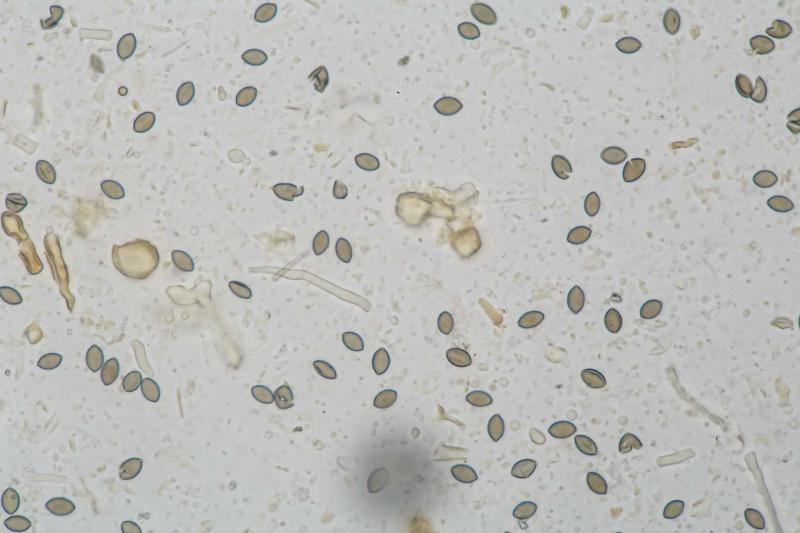
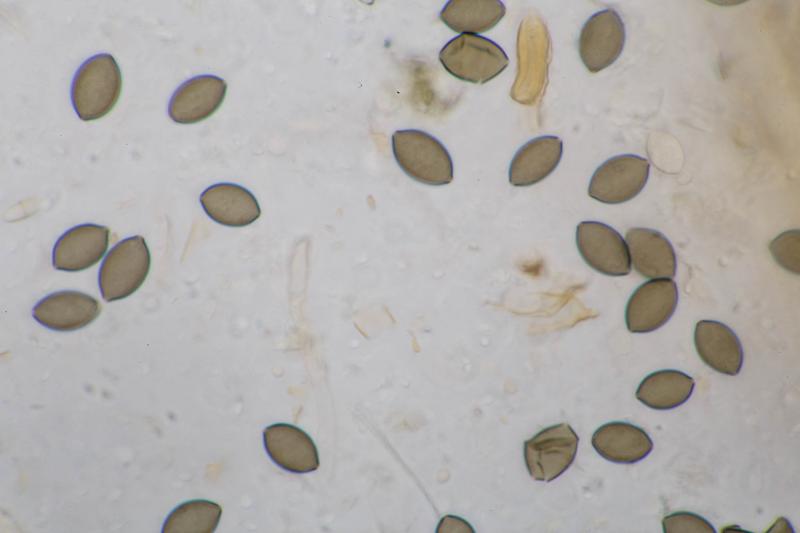
micrograph credits: Danny Newman
Of what I believe are two distinct ophiostomatoid fungi shown, the larger of them is the target organism, and it is spores from this fungus which are shown in the micrographs and in the measurements below.
Spores:
(10.7) 11.6 - 13.2 (13.7) × (6.4) 7 - 8 (8.4) µm
Q = (1.5) 1.54 - 1.7 (1.9) ; N = 20
Me = 12.3 × 7.5 µm ; Qe = 1.6
Different references give different spore size ranges for M. lagenaria, and if anything our spores seem small by comparison. Our collection would appear to constitute a range extension for M. lagenaria, if it can indeed be said to be that sp.. Is there another possibility?
Any and all help is greatly appreciated. Additional micrographs available upon request.

Enrique Rubio,
16-12-2025 18:26

Re : Melanospora cf. lagenaria on decaying polypore
Hi Danny
My own european collection on Fomitopsis (Piptoporus) betulina seems to match yours well. I think you should study the hairs.
https://www.centrodeestudiosmicologicosasturianos.org/?p=25315
My own european collection on Fomitopsis (Piptoporus) betulina seems to match yours well. I think you should study the hairs.
https://www.centrodeestudiosmicologicosasturianos.org/?p=25315