
10-06-2026 21:16
 François Freléchoux
Bonsoir,Le dernier du jour, en attendant votre avi
11-06-2026 19:01
 William Slosse
Hello all,In an attempt to make a culture of a sus
11-06-2026 19:03
 Nicolas VAN VOOREN
Chers membres d'Ascofrance,Le site sera placé en

09-06-2026 18:32
Camille MertensSur morceau de roseau immergé 0,5 - 0,7 mm de dia
10-06-2026 12:54
Steve ClementsBonjour encore, Pouvez-vous m'aider, s'il vous pl
10-06-2026 21:07
François Freléchoux
Toutes les tiges de gentianes jaunes de l'an passÃ
10-06-2026 13:41
François Freléchoux
Bonjour à nouveau, Voici une trouvaille d'hier.
10-06-2026 11:53
Steve ClementsBonjour, This disco is abundant on dead stems of
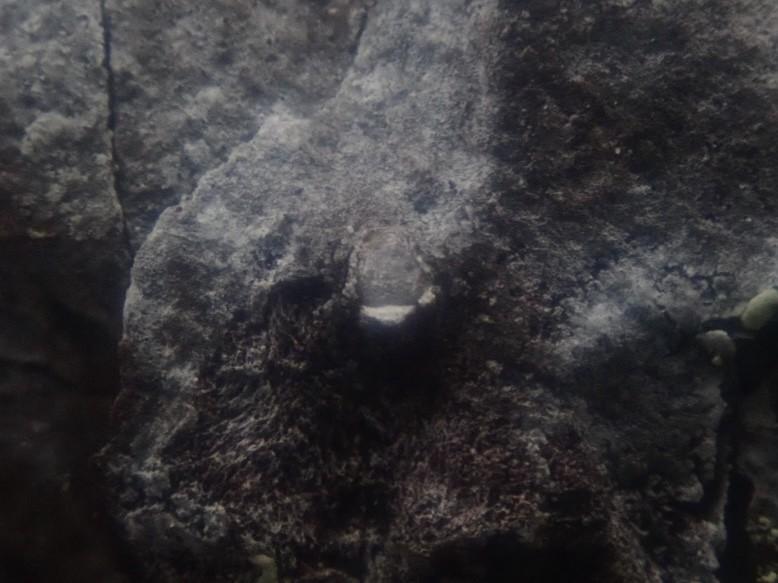
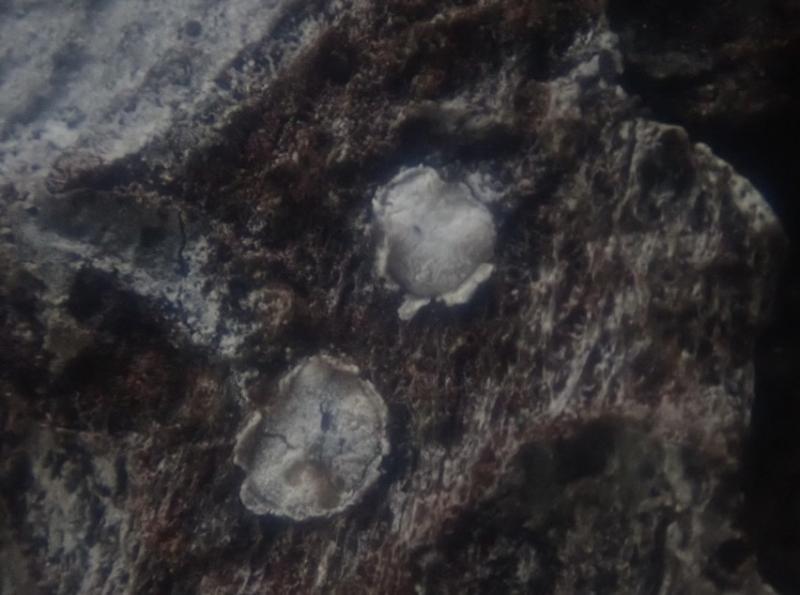
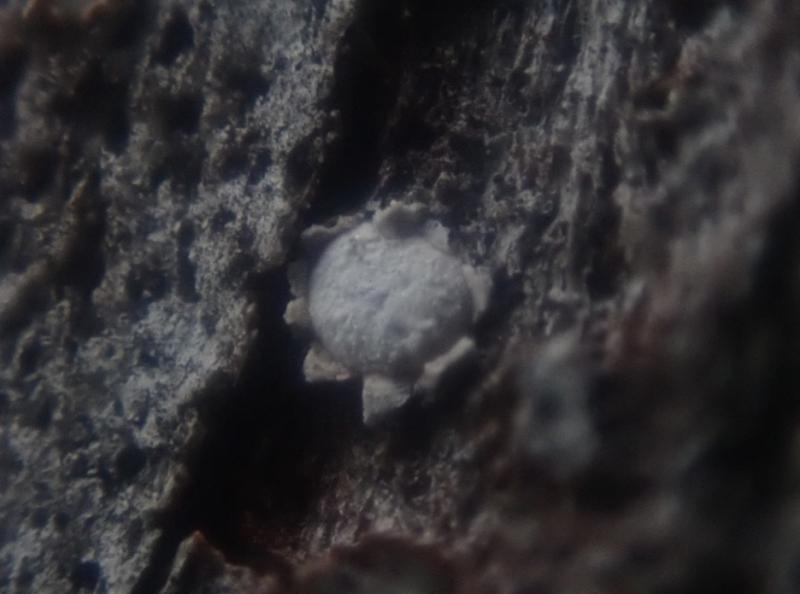
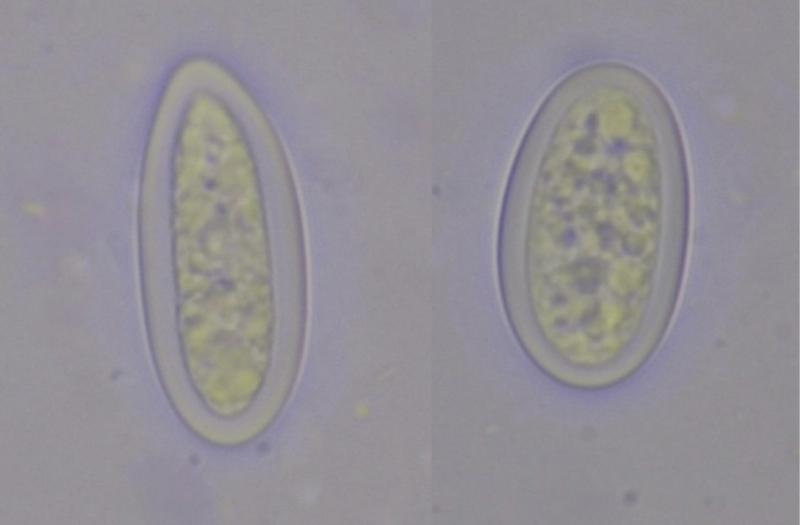
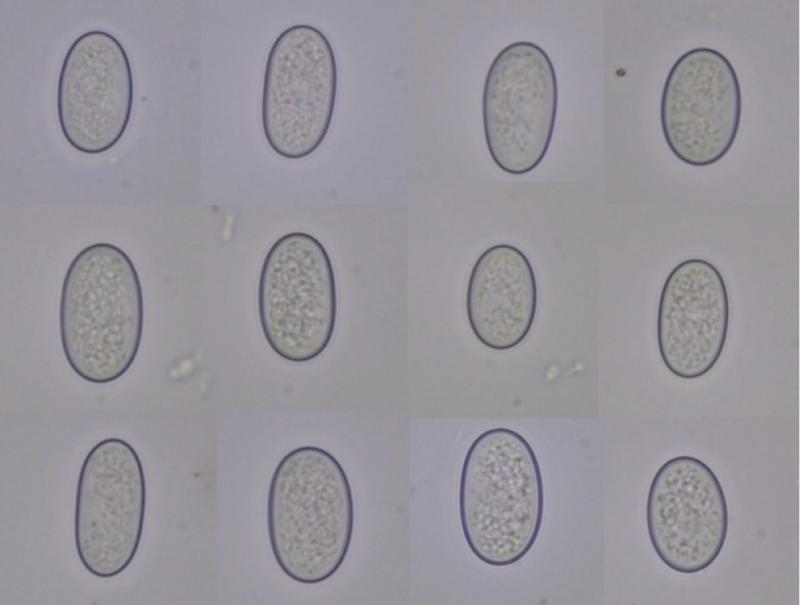
I found and collected this propoloid ascomycete scarcely growing on the bark of a living tree (Pinus sylvestris) on the 12th of December, this year. It was found in the same area as my previous post (Fagerfjell, municipality of Flesberg, Buskerud county), but on a different locality. This locality is an open, old, pine dominated forest about 610 m.a.s.l.
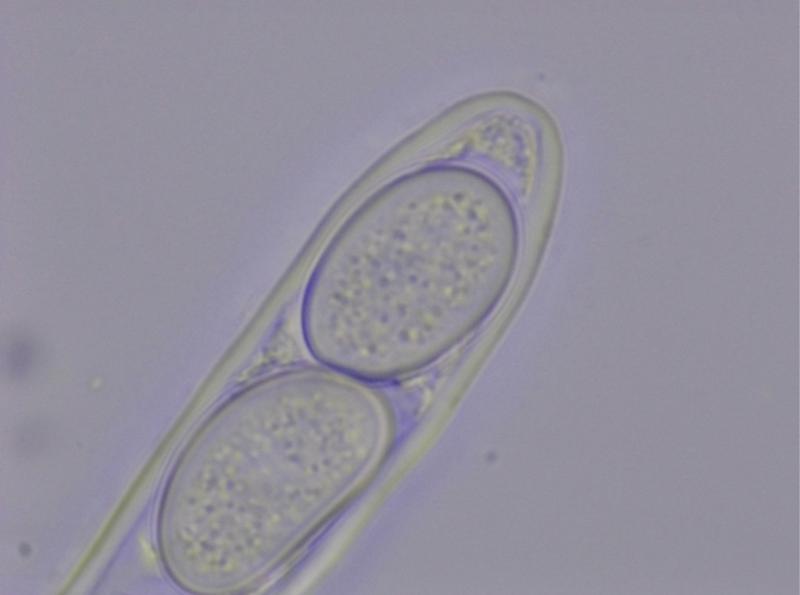
The ascospores are cylindrical to ellipsoid and are filled with small guttules.
19,2-27,2 x 11,2-14,4 µm
Me= 21,9 x 12,31 µm
The spore wall is about 0,96-1,5 µm (living) and 1,7-2,8 µm (dead)
The asci are about 126-147 x 18 µm (dead)
The spores were measured in the living state, but I was unable to obtain a spore print. The large variation in the spore measurements may be due to some of the spores being partially immature. All measurements were taken from fresh material in water.
Although the spores are a bit small I believe that this resembles Propolis leonis quite well. However, that species has primarily been recorded in areas close to the coast. Could this be the right species, and is anyone aware of P. leonis or a similar species being recorded from submontane regions inland?
Thank you in advance and best regards,
Hulda
I collected P. leonis on the bark of Pinus sylvestris in the mountainous regions (Karawanken) of Carinthia, Austria, so quite far from any coast. I briefly mention this collection in the following article: https://www.zobodat.at/pdf/CAR_207_127_0449-0492.pdf. It seems to be rare in most areas of Austria since I've not been able to find it elsewhere.
Best wishes,
Gernot

You are right, the species was at first mainly found near the Atlantic coast but a former post on Ascofrance already showed a much larger distribution (includinc Gernot's find)
See : http://www.ascofrance.fr/search_forum/70642
Amitiés Michel
To know that the species is recorded far away from the coast in other countries is very interesting.
I am confused about whether or not the two latest comments on the topic from 2021, that was linked to by Michel, was directed towards my post or to the one from 2021? Is my specimen certainly P. leonis, according to the current species concept?
Kind regards, Hulda

Yours, Lothar