
02-06-2026 17:58
Louis DENYBonjour forum, Sur feuille de Populus tremula, en
02-06-2026 14:33
 Nicolas VAN VOOREN
Hello.I'm searching for a PDF copy of the followin

28-07-2011 18:31
 Alex Akulov
Dear FriendsToday I made the pdf file of Velenovsk
11-09-2025 16:57
 Jason Karakehian
Our revision of Marthamycetales (Leotiomycetes) is
12-11-2019 10:32
 Miguel Ángel Ribes
Hi againExactly at the same place than my previous
25-12-2019 17:54
Valencia Lopez Francisco JavierHola a todos/asEstas supuestas pezizas estaban en
12-07-2015 00:05
 Nedim Jukic
This one from the same locality as the previous on

30-05-2026 21:12
Philippe PELLICIERSur branche de mélèze (Larix) près de la neige,
Trichopezizella barbata?
Gernot Friebes,
27-03-2026 15:23
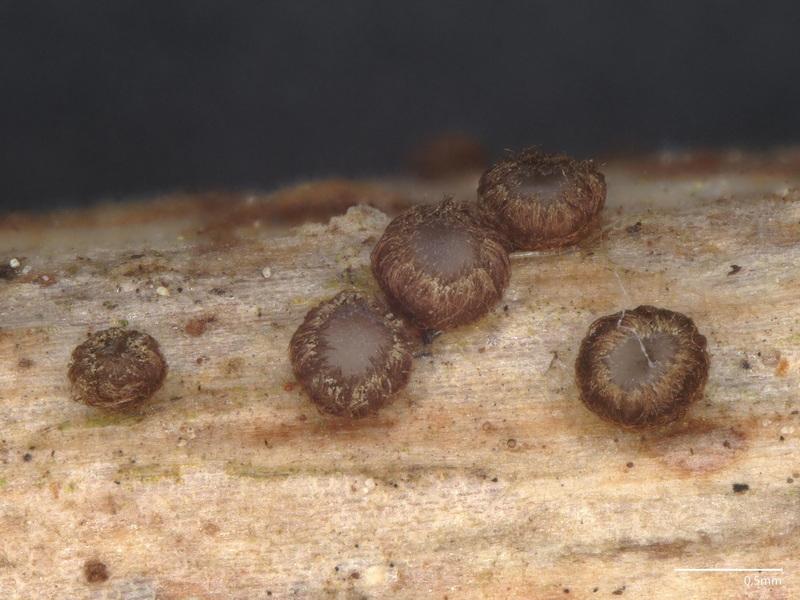
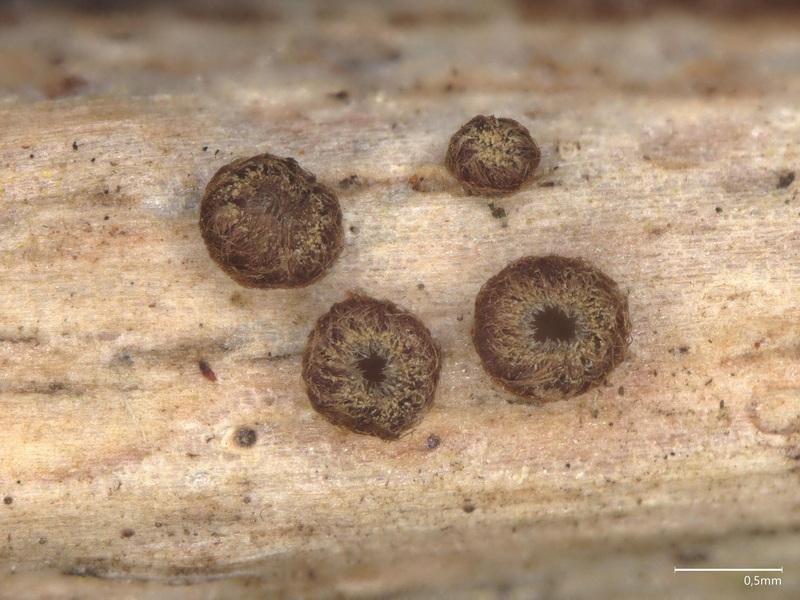
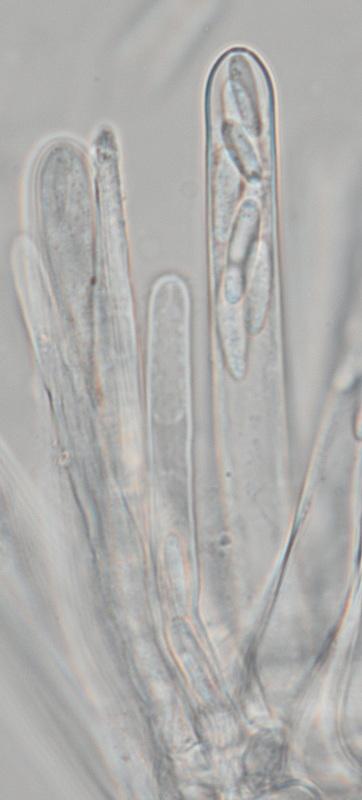
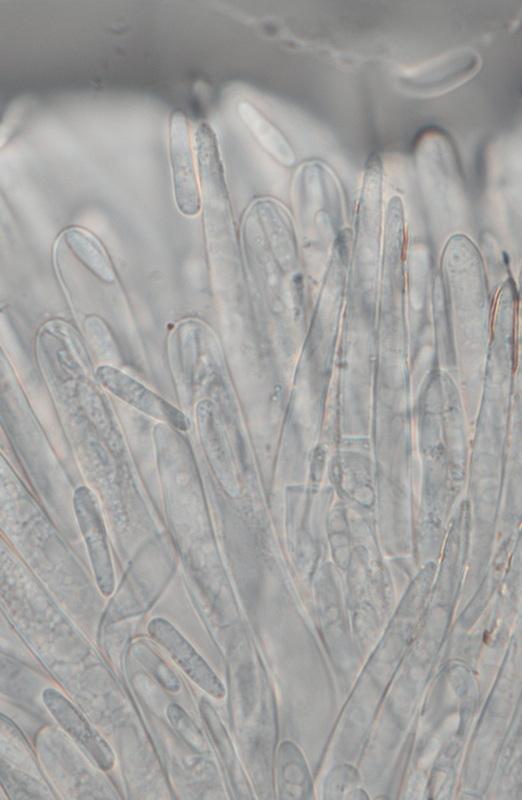
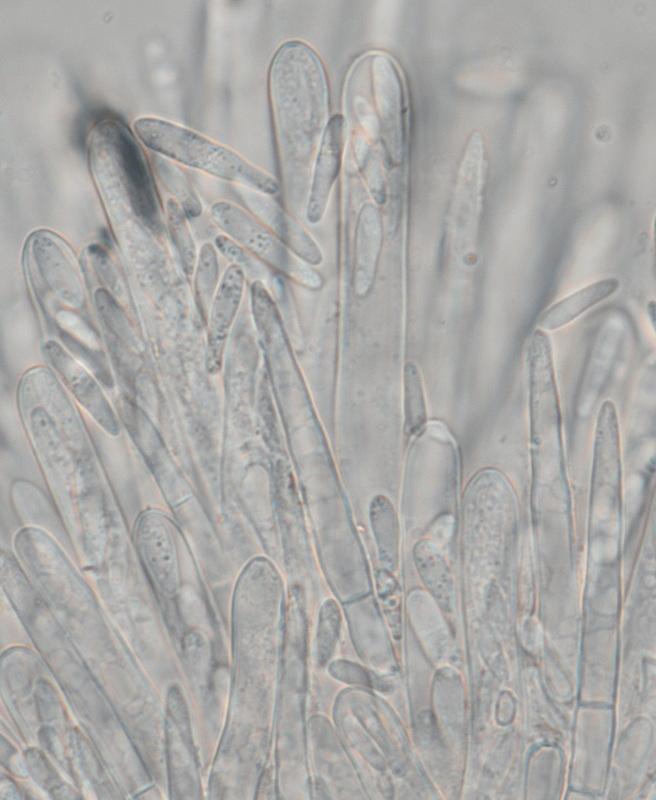
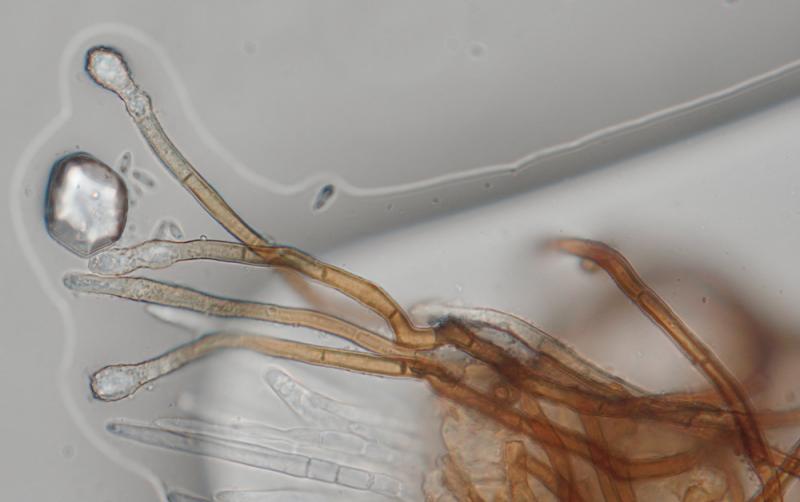
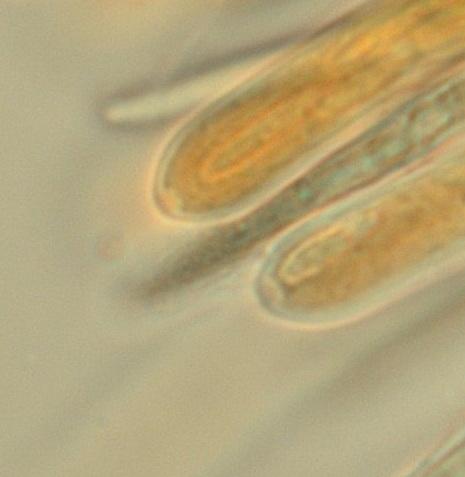
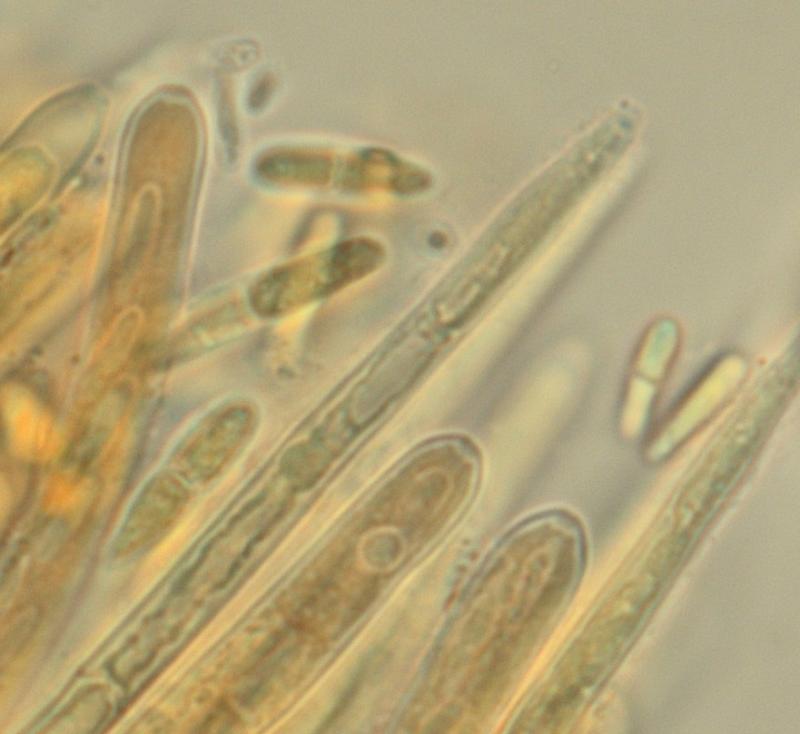
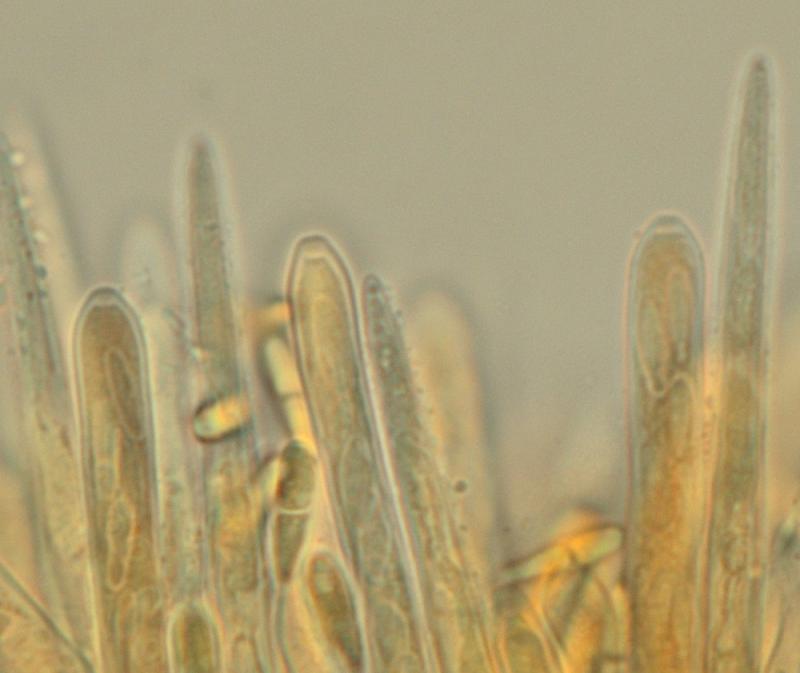
this Trichopezizella deviates from typical T. barbata by asci that are IKI- or react only very weakly. Do you think it is still T. barbata?
Found on still attached Lonicera twigs.
Ascospores: 12.6-18.7 x 2.7-3.9 µm.
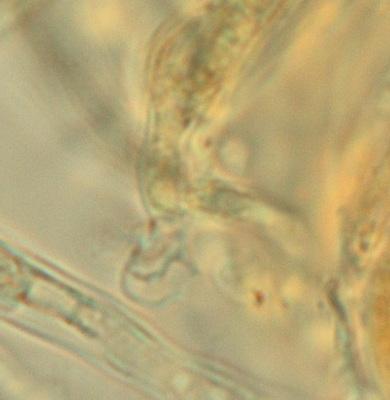
Asci: croziers +.
Paraphyses: sometimes apically warted.
Hairs: Apically inflated.
Best wishes,
Gernot
Hans-Otto Baral,
27-03-2026 17:43

Re : Trichopezizella barbata?
Hi Gernot,
I had a discussion with Bernd Fellmann recently, he sent me this and another species, both on Lonicera and sometimes in association. This one has often inflated hair apices and clavate spores, the other never inflated hairs and fusoid spores. Also the apo colour is different.
I had both species in my folders but in disorder, now they are sorted. It seemed that the one with clavate spores is typical T. barbata.
Your pale reaction is strange. Is it actually Lugol? To me it looks a bit like MLZ.
Can you tell me more collectiom data? I would like to compile descriptions of the two species.
Zotto