
09-06-2026 18:32
Camille MertensSur morceau de roseau immergé 0,5 - 0,7 mm de dia
08-06-2026 10:16
 Spooren Marco
I don`t have a clou about this fungus,it is not in
08-06-2026 17:00
François BartholomeeusenGood day everyone, On June 5 2026, I collected de
07-06-2026 15:10
 William Slosse
Hello everyone,On 05-06-26, I found following asco
05-06-2026 11:02
Thomas Læssøehttps://svampe.databasen.org/observations/10596691
07-06-2026 12:09
 François Freléchoux
Bonjour, Voici une brève description de ce qui m
07-06-2026 12:43
Steve ClementsBojour. This was a strange find on a stick on my
12-07-2015 00:05
 Nedim Jukic
This one from the same locality as the previous on
06-06-2026 17:44
Steve ClementsBonjour, This disco was on planed wood 3 x 1.5 cm
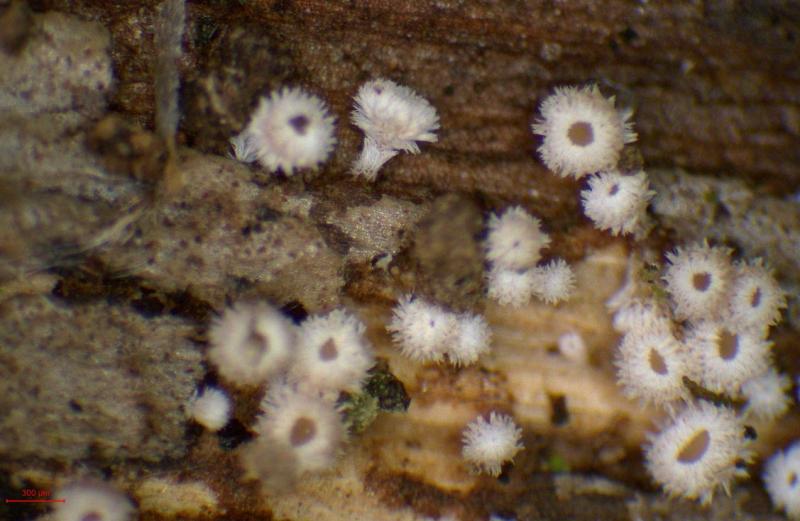
Fruitbody:
Very hairy white outside, with a white-cream hymenium, with hairy stipe.
Structure:
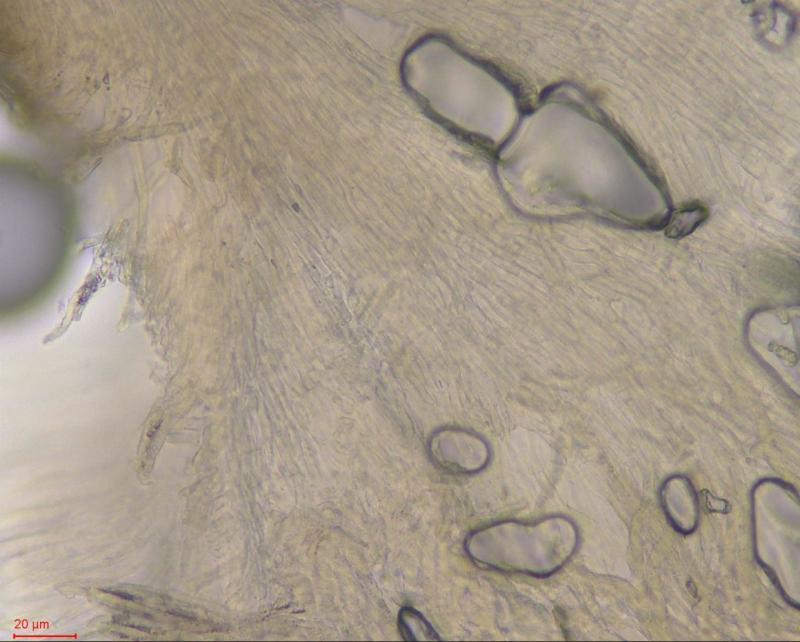
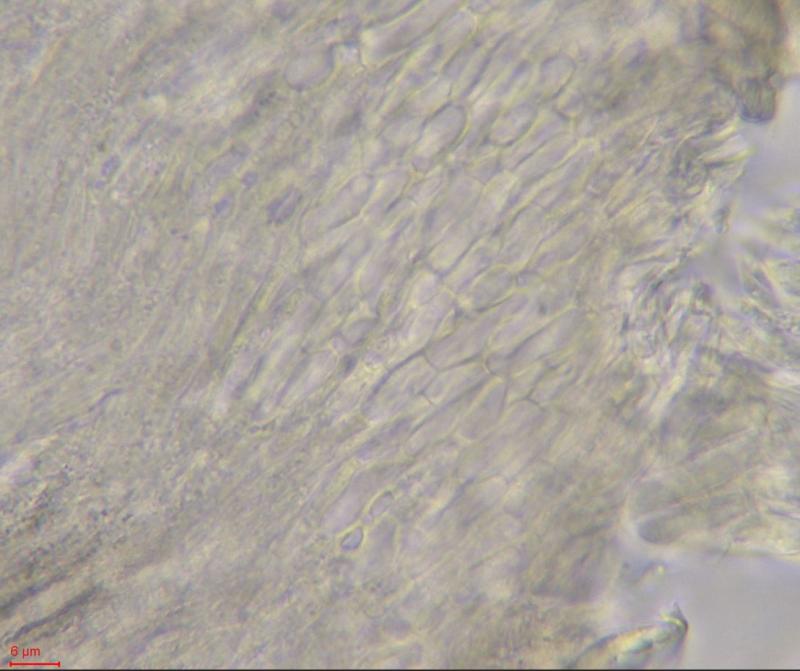
Only textura prismatica observed, difficult due to the many long hairs.
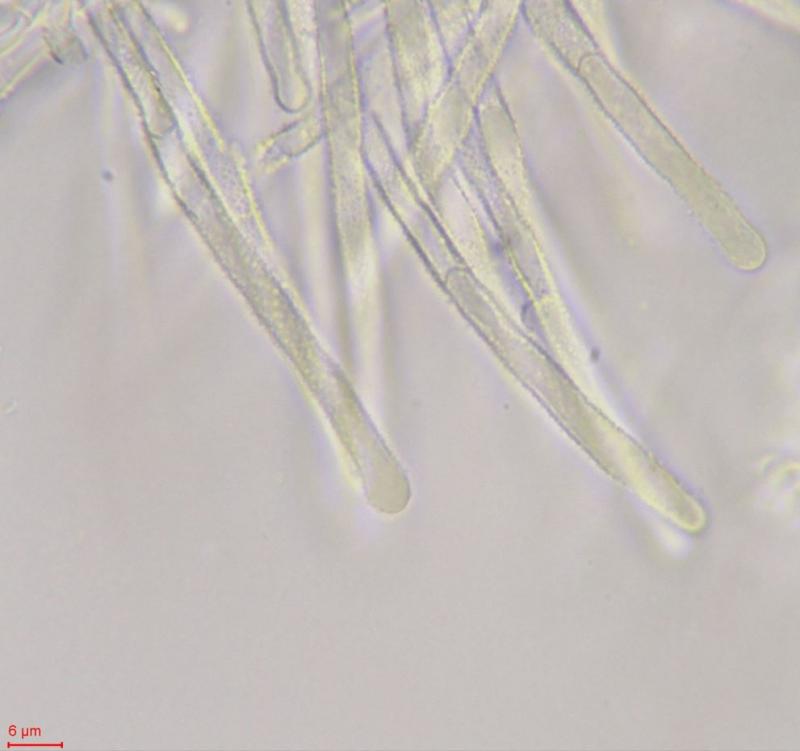
Hairs:
Incrusted to the apex, therefore Lachnum.
Cylindrical, no/hardly thickened apex, no crystals.
Flank of hairs measured in water: Me = 148.2 µm
Edge of hairs measured in water: (119.7) 119.71 - 119.8 µm
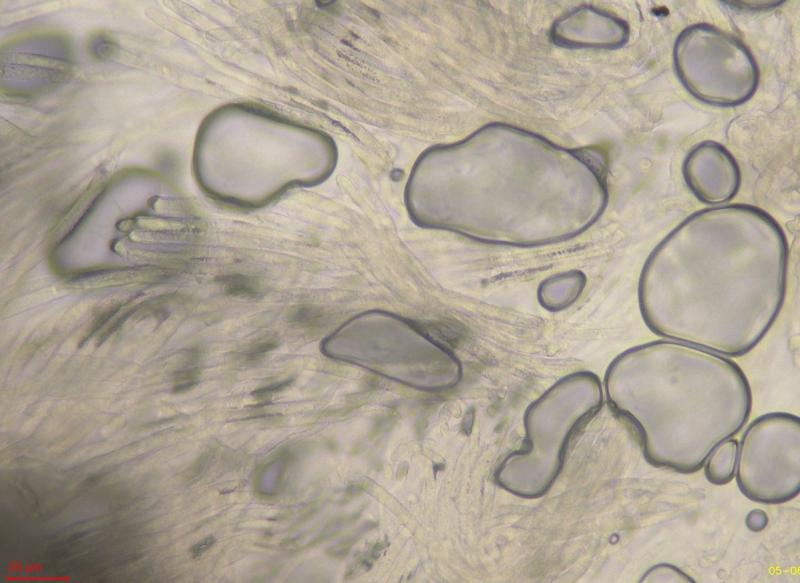
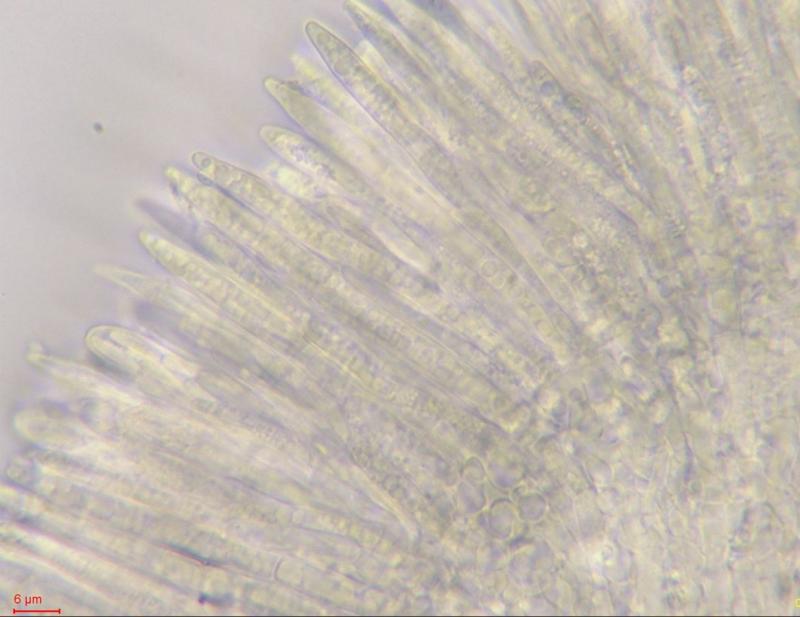
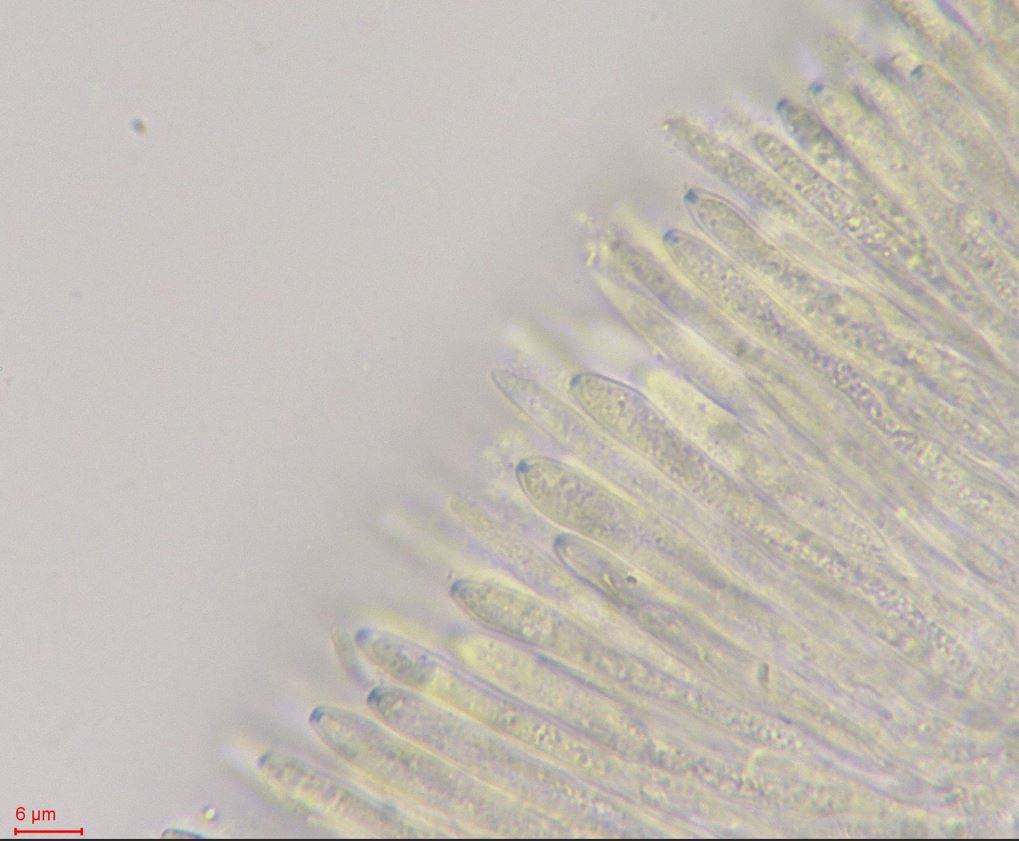
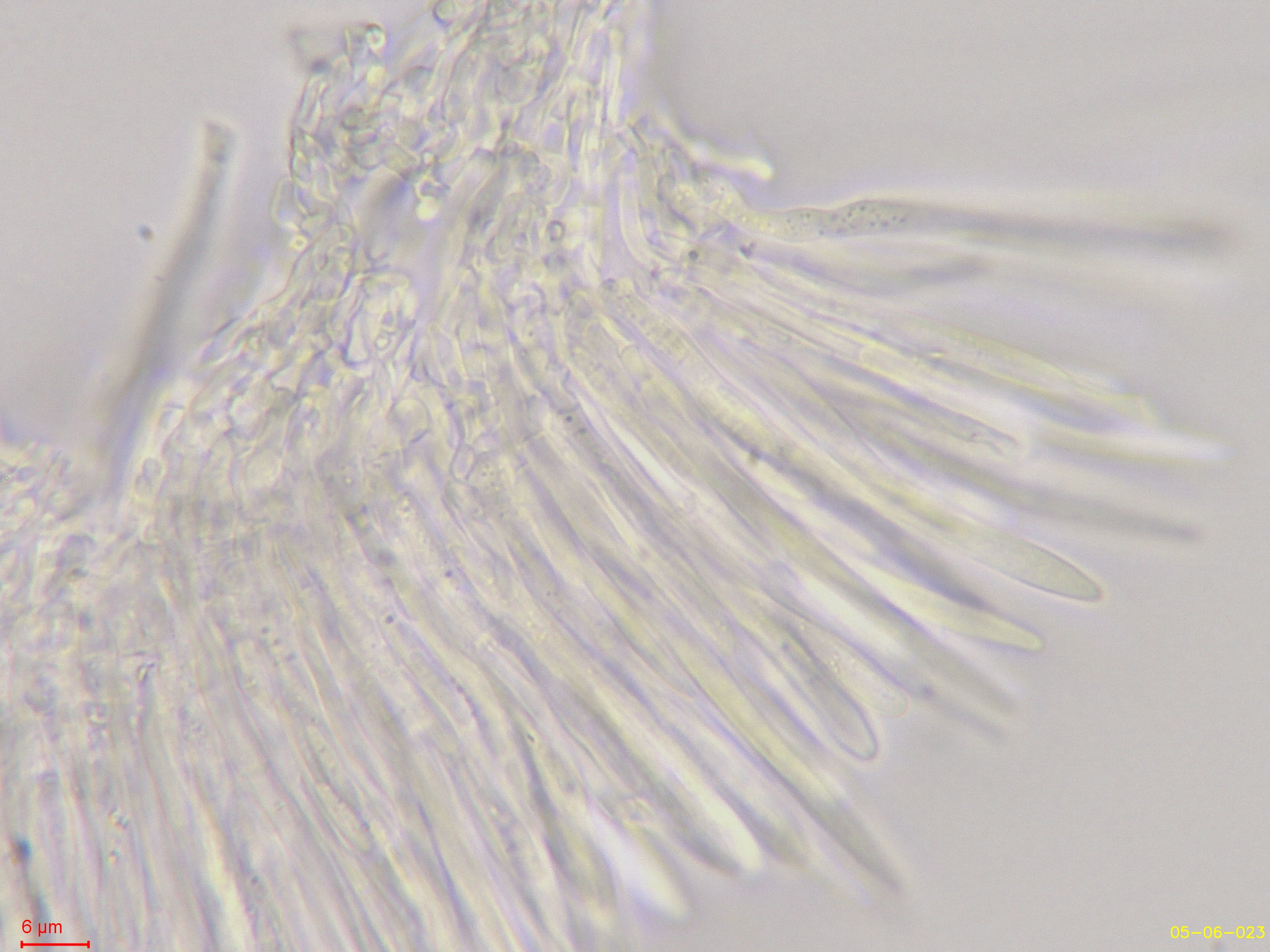
Asci:
Measured in water: 41.6 - 47.9 × 5 - 5.09 (5.1) µm
Croziers + and IKI +
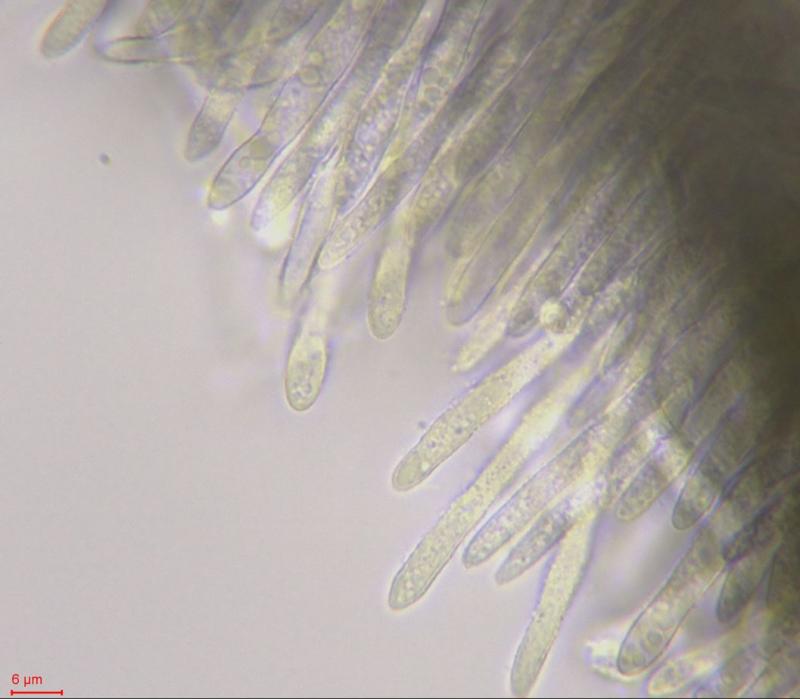
Paraphyses:
Lanceolate, full of guttules.
Width measured in water: (4.5) 4.6 - 4.7 (4.8) µm
Protruding above asci measured in water: (5.5) 5.52 - 9.17 (9.2) µm
Spores:
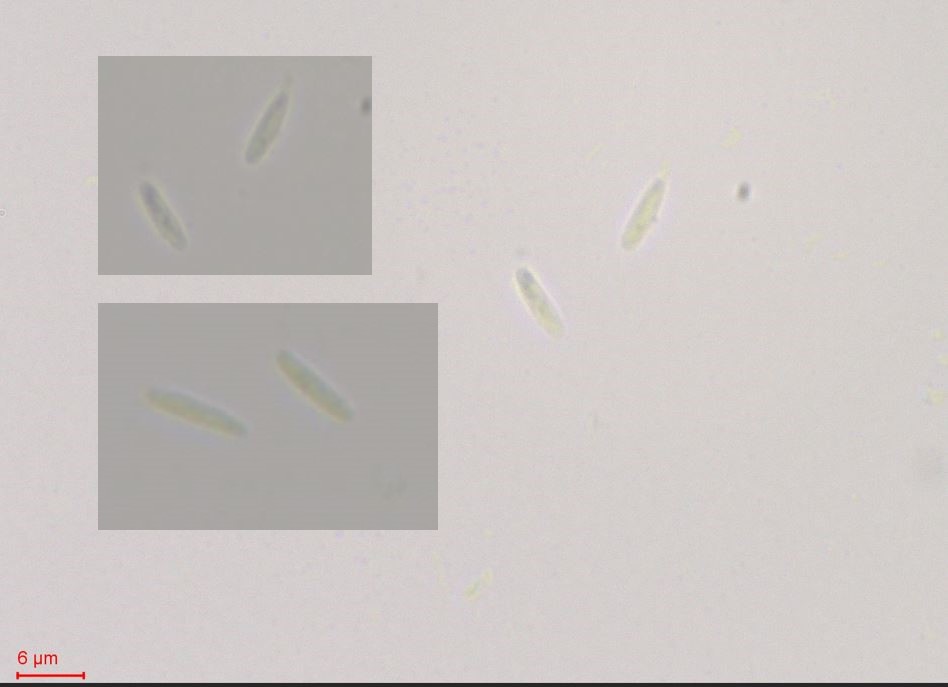
Cylindrical, sometimes narrower at one end.
Measured in water: (7) 7.4 - 9.5 (10) × (1.6) 1.7 - 2.1 (2.2) µm, Qe = 4.3
Using Baral's Lachnum key, we arrive at - - +, no crystals, no strong/medium refractive VBs, croziers +.
Subkey 5 -> Lachnum virgineum.
The only thing that doesn't quite fit is that the paraphyses should protrude 15-30 µm, we measure a max. 9 µm, and the width of the paraphyses should be 5-7 µm, we measure a max. 4.8.
Is it a different species after all?
Kind regards, Geert&Margot Vullings
 10-Knipsel-05-026-0001.JPG
 11-Knipsel-06-007-0001.JPG
 12-Mic2026-05-06-023-0001.jpg
The measurements come from Piximètre, hence down to 0.01 µm.
As you say, if we choose for VB's to be present, we do not arrive at a type that fits, therefore the choice of not strongly/medium refractive.
We keep this one on L. virgineum.