12-06-2026 14:50
 François Freléchoux
Bonjour, Voici la brève description d'une Mollis
10-06-2026 21:16
François Freléchoux
Bonsoir,Le dernier du jour, en attendant votre avi
11-06-2026 19:01
 William Slosse
Hello all,In an attempt to make a culture of a sus
11-06-2026 19:03
 Nicolas VAN VOOREN
Chers membres d'Ascofrance,Le site sera placé en

09-06-2026 18:32
Camille MertensSur morceau de roseau immergé 0,5 - 0,7 mm de dia
10-06-2026 12:54
Steve ClementsBonjour encore, Pouvez-vous m'aider, s'il vous pl
10-06-2026 21:07
François Freléchoux
Toutes les tiges de gentianes jaunes de l'an passÃ
10-06-2026 13:41
François Freléchoux
Bonjour à nouveau, Voici une trouvaille d'hier.
Frullania dilatata, Juniperus communis and Mytilinidiaceae
Alain GARDIENNET,
29-07-2009 23:37
 Bonsoir,
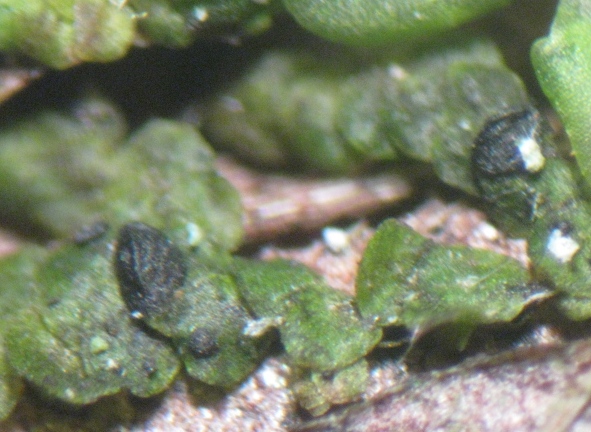
 J'ai fait ce soir juste avant la nuit (pendant mon tour de VTT) une récolte sur Juniperus communis que je qualifierai d'incroyable .
Tout d'abord trois Mytilinidiaceae, ce qui est encore commun : M. thujarum, M. decipiens et Actidium nitidum occupant la même branche.
Sur cette branche des hépatiques : Frullania dilatata.
Et bien ce qui est incroyable (à mes yeux), c'est la présence de très nombreux ascomes de Mytilinidion decipiens directement sur la Frulania. J'ai même eu la situation où une hépatique traverse une bande d'Actidium et porte quelques ascomes de M. decipiens.
Ma question est : doit-on insérer dans la liste des ascomes croissant sur Frullania dilatata, Mytilinidion decipiens ?
Je vous laisse car j'ai cru voir des petits points rouges trouant les périanthes...
Alain