12-07-2015 00:05
 Nedim Jukic
This one from the same locality as the previous on
06-06-2026 17:44
Steve ClementsBonjour, This disco was on planed wood 3 x 1.5 cm
14-08-2016 23:15
 Alex Akulov
Dear friendsCan you help me to find the descriptio

05-06-2026 11:02
Thomas Læssøehttps://svampe.databasen.org/observations/10596691
04-06-2026 11:36
Gernot FriebesHi,found on Vaccinium myrtillus.Asci: IKI –, 8-s
05-06-2026 12:10
 François Freléchoux
Capitotricha sp. sur Lonicea caerulea Caractères
19-05-2026 10:27
Patrice TANCHAUDBonjour, récolte récente sur terre retournée i
04-06-2026 18:39
Gernot FriebesHi,I collected this species in two different locat
 Hello,
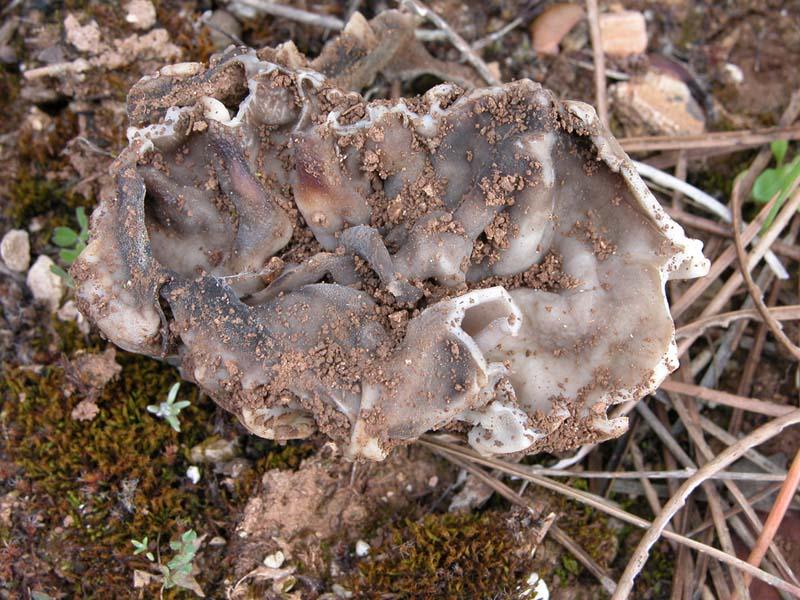
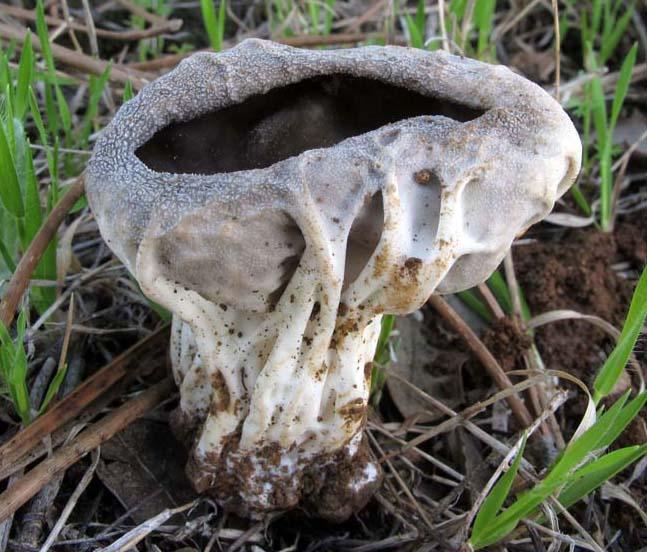
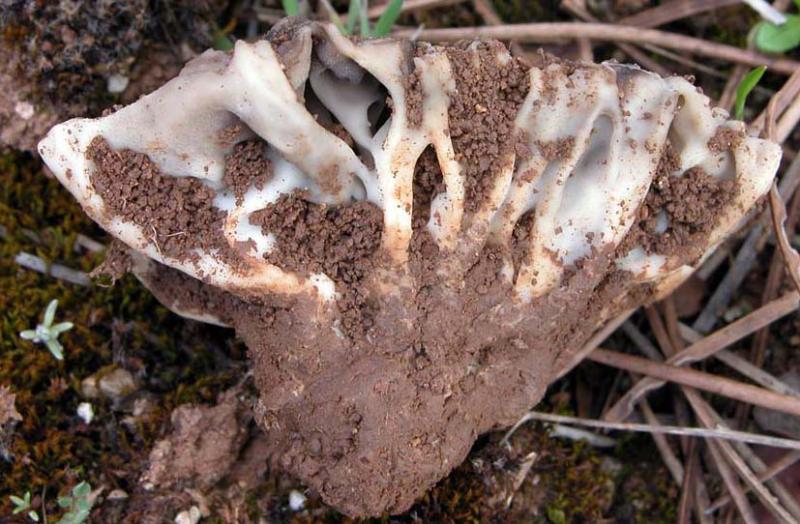
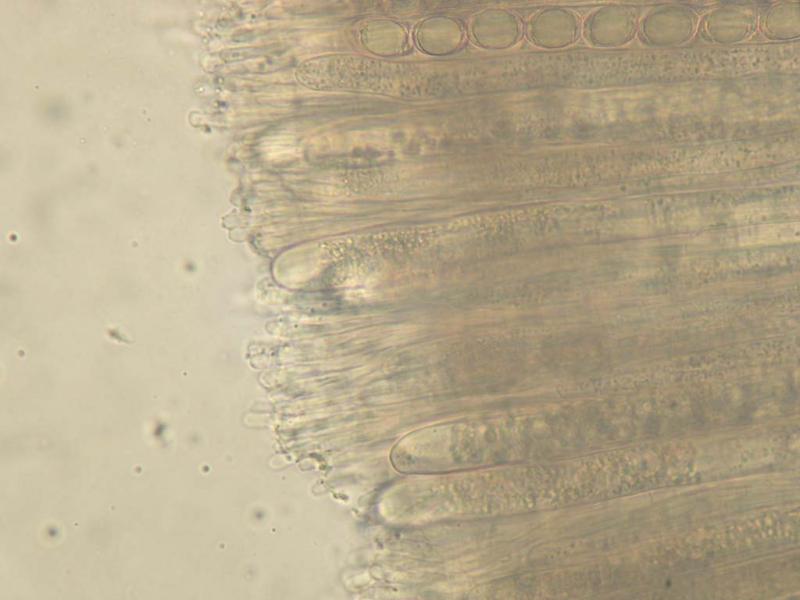
Helvella are epigeous fungi but these Helvella live entirely underground and they are fully mature underground. Macroscopic and microscopic features, at maturity, are like Helvella costifera: irregular cup-shaped, 2-9 cm broad, up to 9 cm high. Asci 250-300 x 13-15 µ, paraphyses 3-5 µ, spores 15-16 X 10-12 µm Q=1,33-1,60
Habitat: Hypogeous under Quercus ilex subsp. ballota in clay and limestone soils. Mars through May
Video: http://www.youtube.com/watch?v=1oGm4ZK7Gx4
Thanks in advance for any help you are able to provide
Antonio Rodriguez
¿Alguien conoce una Helvella hipogea?
Hola,
El género Helvella está formado por especies epigeas, pero esta Helvella completa su ciclo completamente hipogea. Nos la encontramos todos los años en terrenos arcillosos y calizos, bajo Quercus ilex subsp. ballota, desde marzo hasta mayo. Detectamos su presencia por los bultos y las grietas que hace en el terreno, pero nunca hemos llegado a verla fuera de la tierra.
Su aspecto macroscópico y microscópico es compatible con Helvella costifera: forma de copa irregular, 2-9 cm. de ancho, hasta 9 cm de alto. Ascos: 250-300 x 13-15 µ, paráfisis 3-5 µ, esporas 15-16 X 10-12 µm Q=1,33-1,60.
Vídeo: http://www.youtube.com/watch?v=1oGm4ZK7Gx4
Se agradecen opiniones
Antonio Rodríguez
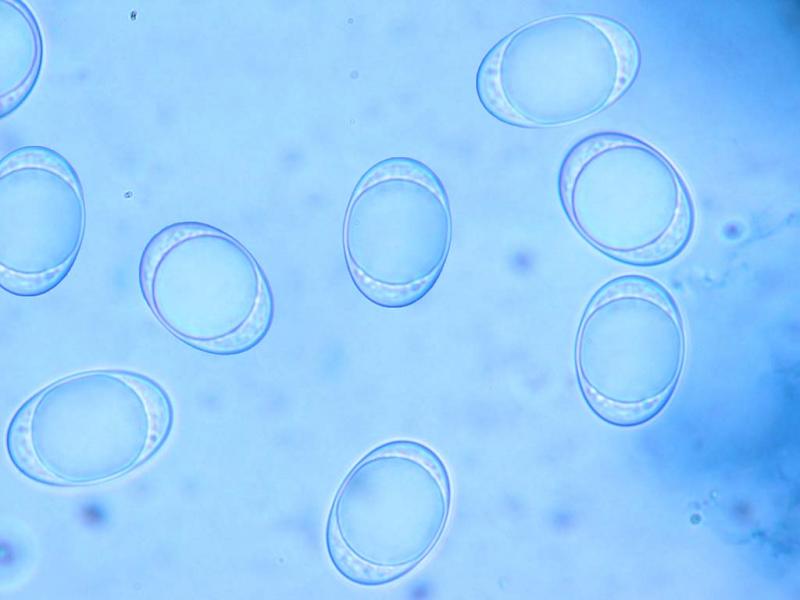
Donadini J.C. et al. 1975 [1976] Bull. Soc. Mycol. France 91(4): 555

I always harvested H. semiobruta almost buried semiobruta and a single harvest of H. astieri who was épigéeous
I did not know neither Helvella semiobruta nor Helvella astieri, but they look very different from my Helvella.
I think the hipogeous habit of this Helvella is an adaptation to dry habitats where it grows.
A future truffle!
Antonio Rodríguez
Gracias por las respuestas,
No conocía ni la H. semiobruta ni la H. astieri, pero son muy diferentes a mi Helvella.
Creo que el desarrollo hipogeo de esta Helvella es una adaptación a un hábitat demasiado seco para una Helvella.
¡Un futura trufa!
Antonio Rodríguez