30-05-2026 21:12
Philippe PELLICIERSur branche de mélèze (Larix) près de la neige,
25-05-2026 16:35
 Bernard CLESSE
Bonjour à toutes et tous,J'ai trouvé récemment,
29-05-2026 15:35
daniel FERREBonjour à tous,Je voudrais votre aide pour cette
28-05-2026 16:15
James MitchellHello,Does anyone have the original publication of
28-05-2026 11:06
Thomas Læssøehttps://svampe.databasen.org/observations/10596750
23-05-2026 11:44
 Charles Grapinet
Hello, I am having trouble identifying this copro
25-05-2026 16:44
François BartholomeeusenHi forum members,During an excursion organised by
26-05-2026 21:25
Dirk GerstnerHello everyone, I'm completely stumped by this li
26-05-2026 22:44
Ethan CrensonHi all, I think I have Incrucipulum capitatum her
22-05-2026 14:44
 Lothar Krieglsteiner
in unripe condition citrine yellow, then soon fadi
Asterotexis/Schyzothyrium
Esquivel-Rios Eduardo,
23-09-2012 00:12
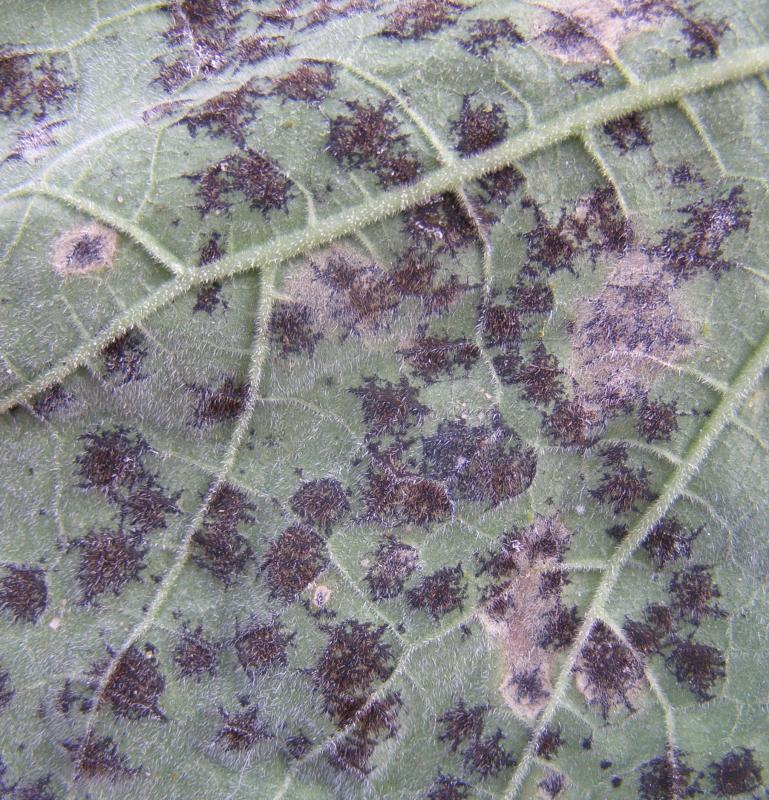
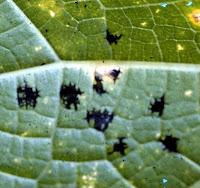
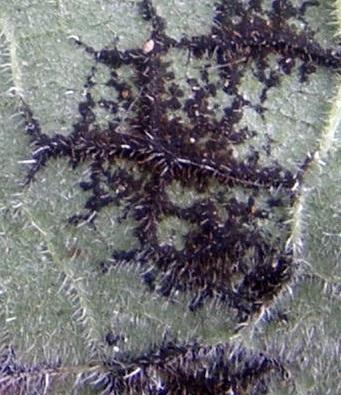
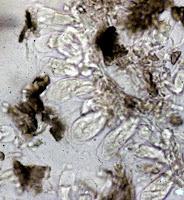
In 1993 i found a Foliar Disease of "Chayote" Sechium edule, and others Cucurbita spp. cultivated, called "Black Star Spot", and classifed as Schyzothyrium sp. The fungi grows over the leaf cuticule and apparently not penetrates host tissue, as a comensal. The fungi tissue can cover all foliar lamina, causing poor photosintesis al chlorosis of leaf. Recently, Guerrero, . et al (2011) revised this fungi and determinates is Asterotexis cucurbitacearum (Rehm) Von Arx. because found evidences of real parasitism. The two especies are identical, and the difference is the cuticule penetration by haustoria. May be any can help in this ..?
Guerrero et al. (2011) Mycology 2(2):87-90